
Blog
5 Pool Permit Sarasota FL Mistakes That Delay Approval
Avoid the 5 most common mistakes that stall a pool permit in Sarasota, FL, from wrong jurisdiction to missed inspections and safety rules.
Key Takeaways
-
Confirm the correct permitting authority first: City of Sarasota, unincorporated Sarasota County, or a neighboring municipality like Venice or North Port, since a Sarasota mailing address doesn't guarantee city limits.
-
Submit a complete package: application and checklist, current survey, scaled site plan, pool and enclosure drawings, equipment specs, and a signed Florida Residential Swimming Pool Safety Act form, with copy counts verified.
-
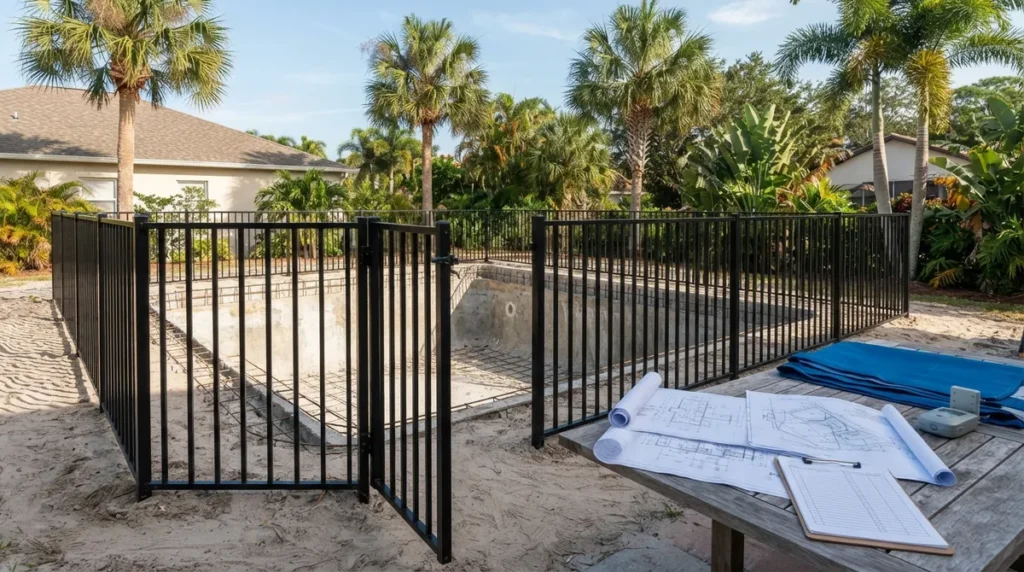
Florida Statute 515.29 requires a residential pool barrier at least four feet high on the outside, with outward-opening, self-closing, self-latching gates.
-
Choose your pool safety feature early (enclosure, safety cover, door alarms, or pool alarm) and make sure the drawings and field installation match it, as Statute 515.27 requires one for final approval.
-
Electrical final and barrier inspections must be completed before the pool is filled; confirm the inspection sequence with the authority to avoid costly delays.
-
Check project-specific items like backflow preventers, suction-outlet info, overhead and underground utility clearances, and tree protection, since overlooked items are a common cause of reviewer corrections.
Picture this: the pool crew is booked, the dream backyard is sketched out on a napkin, and then a permit reviewer sends your application back with a page of comments. It happens more than you would think, and almost always for reasons that were easy to avoid. Getting a pool permit in Sarasota, FL is not especially mysterious, but it does reward people who prepare carefully.
Whether you are a general contractor juggling five jobs, a pool and spa builder trying to keep a crew busy, a realtor helping a buyer, or a homeowner planning your first backyard project, the same handful of mistakes keep showing up. Missing documents, the wrong jurisdiction, barrier details that do not match the code, and inspections scheduled out of order top the list.
The good news? Every one of these is fixable, and better yet, preventable. In this friendly walkthrough, we will cover the five biggest mistakes that stall pool permits in Sarasota, what to do instead, and where a permitting partner can take the pressure off. Grab a coffee, and let's get your project moving.
Why a Pool Permit in Sarasota Is Worth Doing Right
A pool permit is generally required for new pool construction and many pool or spa remodels. It ties together local building review with state pool-safety and building-code requirements. Skipping it, or filing it sloppily, can mean stop-work orders, failed inspections, and trouble at resale.
Here is a quick snapshot of what a typical Sarasota pool permit involves:
- Identifying the correct permitting authority for the property
- Submitting a completed application and the jurisdiction's checklist
- Providing a current survey and a scaled site plan
- Including pool and enclosure drawings plus equipment specifications
- Signing the Florida Residential Swimming Pool Safety Act documentation
- Passing a series of inspections through final approval
Requirements, fees, and timelines are set by the jurisdiction and can vary by parcel, so always confirm details for your specific address. That is exactly where most of the mistakes below begin.
Mistake #1: Applying With the Wrong Jurisdiction
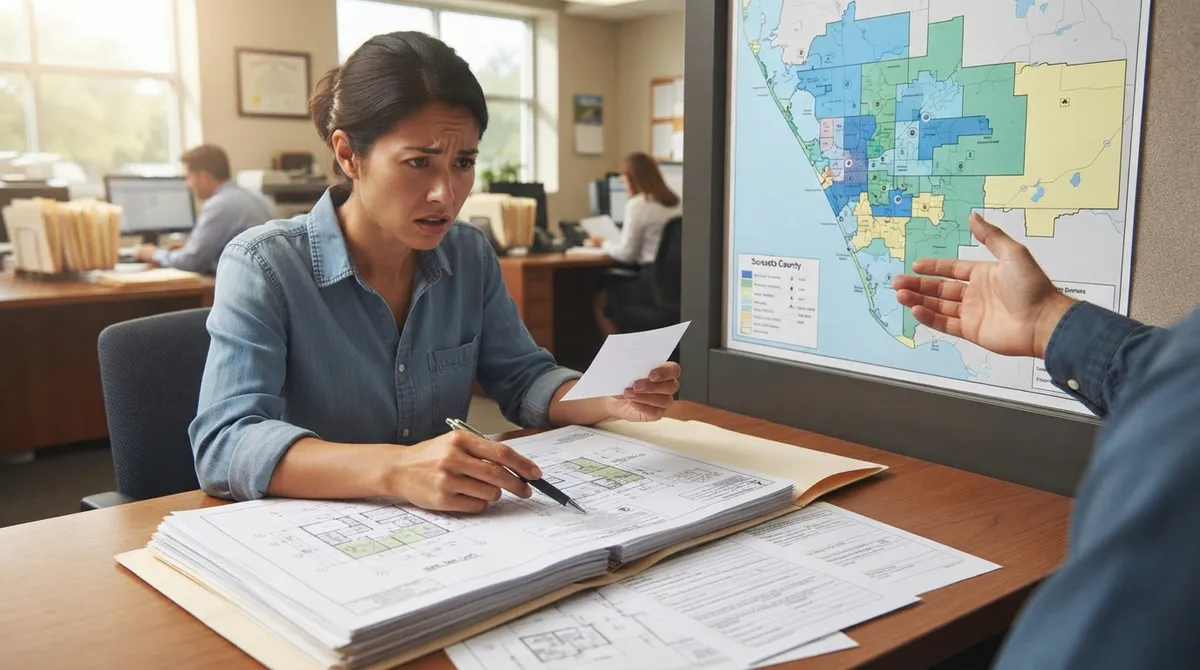
This is the most common and most frustrating error. Sarasota has both the City of Sarasota and unincorporated Sarasota County, plus neighboring municipalities such as Venice and North Port. A mailing address that says "Sarasota" does not guarantee the property sits inside city limits.
Filing with the wrong authority wastes days or weeks, and the application simply gets rejected or redirected. Before you gather a single document, confirm who actually controls your parcel.
How to Avoid It
- Look up the parcel on the property appraiser's site to see its jurisdiction.
- Run the address through a building department lookup to confirm the reviewing office.
- Call the authority to verify the current application and submittal method.
- Check for any overlay districts or flood zone designations that change the paperwork.
Not sure which office applies? Our guide on which Florida jurisdiction reviews your project walks through it step by step. You can also read more about local requirements on our Sarasota permitting page.
Mistake #2: Submitting an Incomplete Plan Package
The City of Sarasota's published pool submittal materials call for a completed application and checklist, a current survey, a scaled site plan, pool and enclosure drawings, equipment specifications, and signed safety-act documentation. Leave out even one item and the reviewer can bounce the whole package.
The minimum-plan-requirements document also specifies multiple plan copies and detailed drawings. The city's materials call for a signed original and five copies of the Residential Swimming Pool, Spa and Hot Tub Safety Act form, plus a separate scaled drawing. Copy counts can change, so verify the current requirement before you file.
What the Drawings Need to Show
Reviewers want to see the whole picture of the lot, not just the pool itself. Your drawings should clearly show:
- Property lines, structures, and the pool and deck layout
- The fence or other barrier locations
- Doors and windows that open toward the pool
- Utilities, equipment pad, and drainage
- Electrical clearances from the water's edge
In designated A or V flood zones, signed and sealed drainage or elevation and cross-section documents may also be required. That is where in-house engineering really helps, since the sealed documents come from the same team that drew the plans.
| Typical Submittal Item | Why Reviewers Want It | Common Slip-Up |
|---|---|---|
| Current survey | Confirms setbacks and lot boundaries | Using an outdated or unsigned survey |
| Scaled site plan | Shows pool, deck, equipment, and barrier placement | Missing dimensions or north arrow |
| Pool and enclosure drawings | Verifies structure and code compliance | Details that do not match the site plan |
| Safety Act form | Documents the chosen safety feature | Missing owner or contractor signature |
| Equipment specifications | Confirms electrical and plumbing scope | Generic spec sheets with no model info |
If you would rather not chase every document yourself, our permit facilitation and filing team assembles and submits the package for you.
Mistake #3: Getting the Pool Barrier and Safety Rules Wrong
Florida takes pool safety seriously, and reviewers check barrier details closely. This is where good projects get tripped up by small, avoidable misses.
Florida Statute §515.29 requires a residential pool barrier to be at least four feet high on the outside and designed to prevent a young child from passing through or climbing over it. Pool-access gates must open outward and be self-closing and self-latching.
The Safety Feature Requirement
Florida Statute §515.27 requires at least one qualifying pool-safety feature for final inspection and the certificate of completion. Options can include a compliant enclosure, an approved safety cover, specified door and window alarms or self-closing, self-latching doors, or a compliant pool alarm. If you use an exit alarm, it must meet the minimum 85 dB A sound-pressure rating at 10 feet.
The mistake is picking a safety feature late, or choosing one that does not match what is drawn on the plans. Decide early, document it on the Safety Act form, and make sure the drawings and the field installation agree.
| Safety Option | Best For | Watch Out For |
|---|---|---|
| Compliant barrier or enclosure | Most new residential pools | Gate must open outward, self-close, and self-latch |
| Approved safety cover | Spas and smaller pools | Must meet the applicable standard and be documented |
| Door and window alarms | Homes with direct pool access | Alarm rating and placement must be compliant |
| Pool alarm | Supplemental protection | Must qualify under the statute to count at final |
One more practical point from the city's checklist: electrical final and barrier inspections must be completed before the pool is filled. Confirm the current sequence with the authority, because filling early can create real headaches.
Mistake #4: Overlooking Project-Specific Technical Items
Beyond the headline documents, the city's checklist can include items that are easy to forget until a reviewer asks about them. These are project-specific, so use the current official checklist rather than a generic list you found online.
- Backflow preventer and certification, where required
- Pool energy-compliance documentation for the equipment
- Suction-outlet and drain-cover information
- Utility clearances, including 10 feet overhead and 5 feet underground from the water's edge, referencing NEC Table 680.8(A)
- Tree-protection measures when existing trees are on the site
Confirm the applicable code and site conditions with the reviewing authority, since the right answer depends on your lot. Overhead power lines near the planned pool footprint are a classic surprise. Catching them during design costs a quick plan tweak; catching them during review can cost weeks.
For deeper technical support, our MEP engineering and structural engineering teams prepare sealed documentation in house, so corrections do not depend on an outside consultant returning your call.
Mistake #5: Mismanaging Inspections and Revisions
Approval of the permit is not the finish line. A pool project moves through several inspections, and missing or mis-sequencing one can stall the whole job. The City of Sarasota's pool checklist identifies inspections that may include pool steel, plumbing pressure and rough, electrical bonding, footing, deck, electrical final, plumbing final, and pool final.
As a real-world example, a City of Sarasota permit record for a 14-by-32-foot pool with spa and paver deck (2026) shows inspections including pool steel, plumbing rough and pressure, electrical bonding, footing, deck, electrical and plumbing finals, and pool final. That is an example, not a universal schedule. Your actual list depends on the approved scope and permit conditions.
A Simple Inspection Game Plan
- Get the approved inspection list in writing from the permit.
- Schedule each inspection only when the work is truly ready.
- Keep approved plans and permit cards on site.
- Respond to any correction notice quickly, with updated drawings if needed.
- Confirm barrier and electrical finals are done before filling the pool.
When comments do come back, fast and accurate responses matter. Our revisions and resubmittals service handles reviewer comments, and our plan review coordination keeps the file moving. If your project qualifies, a private provider can sometimes keep you out of the county queue entirely.
How Long Does It Take, and What Does It Cost?
Everyone asks, and the honest answer is that it depends. Fees and timelines are set by the jurisdiction and vary with project scope, flood zone status, and how clean your submittal is. A complete, well-organized package typically moves faster than one that needs rounds of corrections.
Rather than quoting a number that may be out of date, confirm the current fee schedule and review times directly with the City of Sarasota or Sarasota County for your parcel. For general timing context across the state, see our overview of how long a building permit takes in Florida.
How a Permitting Partner Helps Different Audiences
Different readers feel different pain points, so here is how professional support typically fits in:
- General contractors and pool builders: Offload filing, tracking, and reviewer comments so crews stay scheduled. See our page for pool and spa contractors.
- Homeowners: Skip the paperwork maze and avoid costly rejections. Our homeowner resources explain the process in plain language.
- Realtors and investors: Research permit history and resolve open items before closing. Learn about realtor closing support.
- Designers and trades: Outsource drafting-only and sealed engineering without adding overhead.
At 1 Contractor Solutions, we act as Florida's outsourced permitting department. We prepare plans, file applications, track progress, work reviewer comments, and carry the permit through closeout, with same-day response and in-house sealed drawings. You can also visit us on Google — 1 Contractor Solutions to see what customers say.
What If Work Already Happened Without a Permit?
Sometimes a homeowner buys a property and discovers the pool was never permitted, or a pool permit expired before final inspection. Do not panic. There is a path forward, and it usually involves as-built drawings, an engineer letter, and an after-the-fact permit. Our after-the-fact and expired permits service handles exactly this, and our article on legalizing an unpermitted pool in Florida explains the process. If a closing is on the line, urgent permit rescue can help.
Your Next Step Toward a Smooth Pool Permit
Let's recap. The five mistakes that delay a pool permit in Sarasota, FL are filing with the wrong jurisdiction, submitting an incomplete plan package, getting barrier and safety rules wrong, overlooking project-specific technical items, and mismanaging inspections and revisions. Avoid these, and you are already ahead of most applicants.
You do not have to do it alone. Whether you are a builder with a packed schedule or a homeowner planning your first pool, we are happy to take the paperwork off your plate. Ready to move forward? Get a free quote and let our team handle the details. You can also follow us on LinkedIn or follow us on Facebook for more Florida permitting tips. For the statutory details, you can review Florida Statute 515.29 directly.
FAQs
Do I need a permit to build or remodel a pool in Sarasota, FL?
Yes, a permit is generally required for new pool construction and many pool or spa remodels. The right office depends on whether your property is in the City of Sarasota or unincorporated Sarasota County, so confirm that first. When in doubt, a quick call to the building department saves a lot of guesswork.
What inspections does a Sarasota pool permit usually involve?
Inspections can include pool steel, plumbing pressure and rough, electrical bonding, footing, deck, electrical final, plumbing final, and pool final. The exact list depends on your approved scope and permit conditions. Remember that electrical final and barrier inspections must be completed before the pool is filled.
What are Florida's pool barrier and safety requirements?
Florida Statute 515.29 calls for a residential pool barrier at least four feet high on the outside, with gates that open outward, self-close, and self-latch. Statute 515.27 also requires at least one qualifying safety feature, such as a compliant enclosure, safety cover, door alarms, or a pool alarm. Pick yours early and document it on the Safety Act form.
Can a permitting service prepare and submit my pool permit for me?
Absolutely. A Florida permitting service can coordinate documents, prepare drawings, submit the application, answer reviewer comments, and track inspections. That frees you and your crew to focus on building while the paperwork keeps moving.
How long does a Sarasota pool permit take and what will it cost?
Timelines and fees vary by jurisdiction, project scope, and flood zone, and a complete, accurate package usually moves faster. Check the current fee schedule and review times with the City of Sarasota or Sarasota County for your specific parcel before you plan your schedule.
We do this work every day across all 67 Florida counties. Call (866) 314-6931 and we will tell you what your situation actually requires — including when you do not need us.
Related services
Permit Facilitation & Filing
You have a crew scheduled, a client asking for dates, and a permit sitting somewhere in a queue you cannot see. We file it, w…
See the servicePlan Review Coordination
A permit in plan review is not one queue. On a commercial project it can be six queues, each with its own reviewer, its own c…
See the serviceReady to get your permit moving?
One call tells you which jurisdiction controls your project, what it will take, and what it will cost. Most of the time we can scope it on the phone.