
Blog
How to Get an Impact Window Permit in Tampa, FL (2026)
Learn how to get an impact window permit in Tampa in 2026: required documents, fees, product approvals, inspections, and mistakes to avoid.
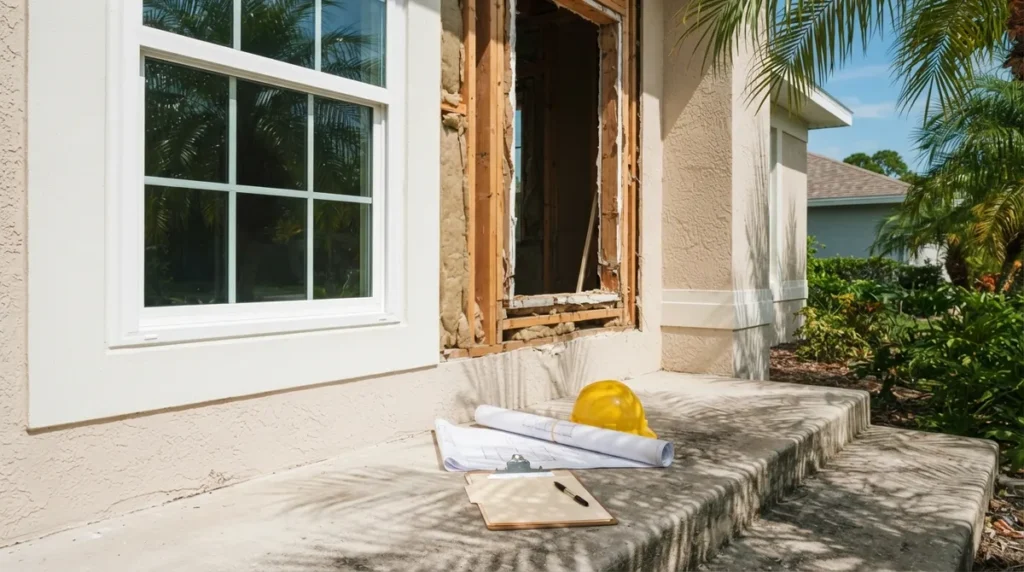
Key Takeaways
-
Most exterior window replacements in Tampa require a City building permit, even for same-size swaps, since the City classifies them as a trade-permit category that must be filed and inspected.
-
Confirm your property is inside City of Tampa limits rather than unincorporated Hillsborough County before filing, because filing with the wrong office wastes significant time.
-
Changing any window opening's size requires signed and sealed plans, product approvals, and possibly structural details, so plan for engineering costs early.
-
The City's published same-size window/door permit fee is $120, plus the Florida Building Permit Surcharge of 2.5% of permit value or a $4 minimum; verify current rates in the portal.
-
Do not cover window work before the inspector sees it; trim, stucco, or drywall installed too early can force costly teardown of finished work.
-
Close out the permit by getting it finaled, since open permits can complicate home sales, refinancing, and insurance reviews.
Picture this: you've picked out gorgeous new impact windows, your installer has a crew ready, and then someone asks, "Who's pulling the permit?" Suddenly the fun part of the project hits a paperwork wall. Don't worry, you're in good company, and this is very doable.
An impact window permit in Tampa is a building permit issued through the City of Tampa. It confirms your new windows are approved for your location, installed to code, and inspected. In 2026, the City still treats exterior window replacement as permitted work, even when the new windows are the same size as the old ones. This friendly guide walks through what to expect, what paperwork to gather, what it may cost, and how to avoid the delays that trip up homeowners, contractors, and real estate pros alike.
Whether you're a homeowner planning a hurricane-season upgrade, a general contractor juggling several jobs, or an agent helping a buyer, the steps below will keep your project moving. Details can change, so always confirm current requirements with the City before you file.
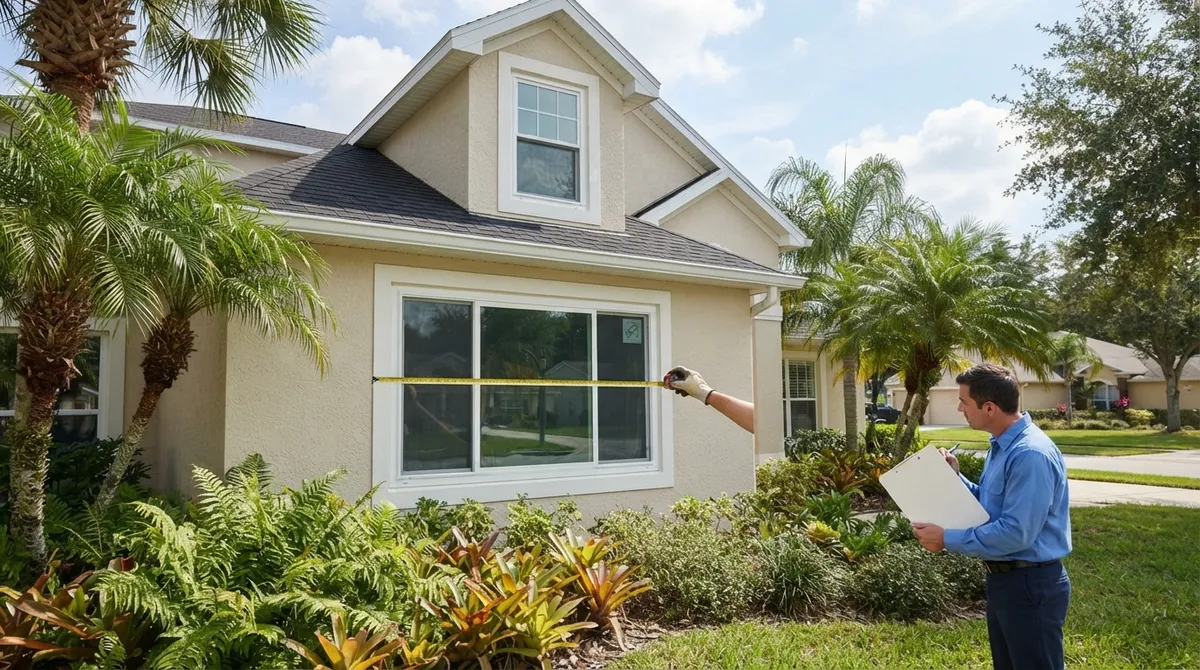
Do You Need an Impact Window Permit in Tampa?
In most cases, yes. Replacing exterior windows in the City of Tampa generally requires a building permit. The City lists same-size exterior door and window replacement as a trade-permit category, so even a straightforward swap needs to be filed and inspected.
Why the fuss? Windows are part of your home's protective envelope. In Florida's wind-borne-debris regions, glazed openings must be impact-resistant or protected by approved coverings. The permit process gives the building department a chance to verify that the product, installation, and design pressures all line up.
If you're not sure whether your address is in the City of Tampa or unincorporated Hillsborough County, check before you file. Boundaries near city lines aren't always obvious, and filing with the wrong office costs time. Our Tampa vs. Hillsborough permits guide explains how to tell which office controls your property.
Same-Size vs. Different-Size Replacement
This distinction drives everything about your paperwork. The City's published guidance treats the two situations differently:
| Scenario | What It Means | Typical Documentation |
|---|---|---|
| Same-size replacement | New window fits the existing opening | Permit application, product approval information, and any items Construction Services requests |
| Different-size replacement | Opening is widened, shortened, or otherwise altered | Standard project application, signed and sealed plans, product approvals, and possibly structural details |
| Owner applying directly | Homeowner files without a licensed contractor | Owner's Permit Affidavit plus the documents above |
Always confirm the current application type with Tampa Construction Services, since portal requirements are updated from time to time.
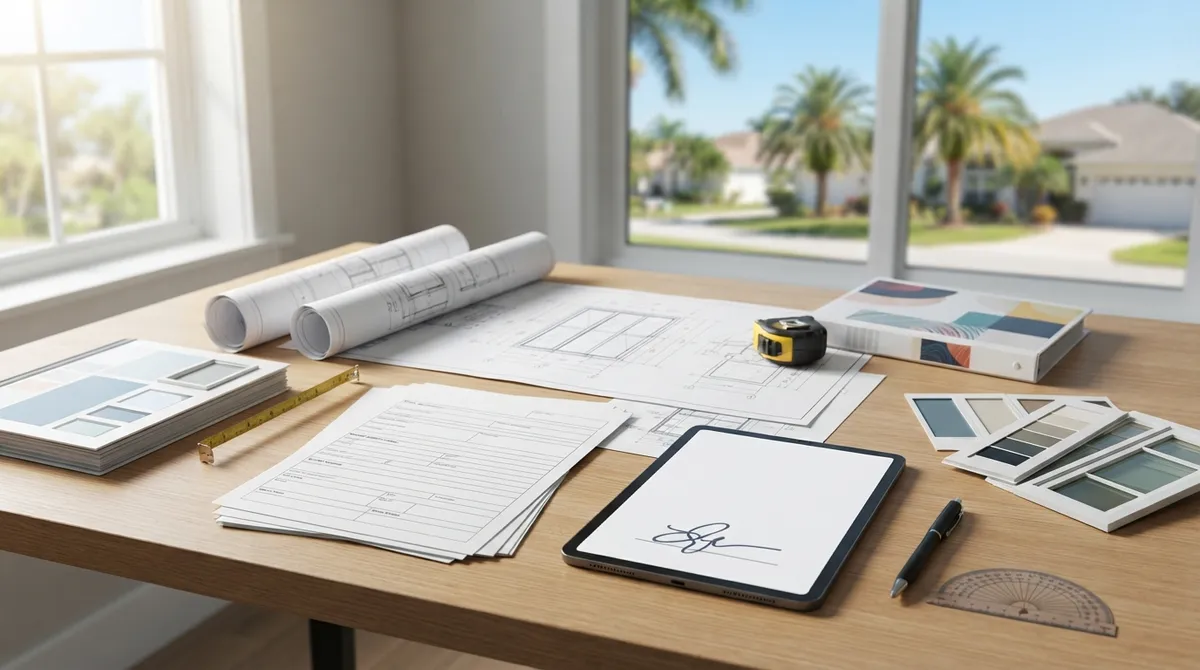
What You'll Need Before You Apply
A complete application is the single best way to avoid delays. Think of it as packing before a road trip: forgetting one item means turning around.
- Property information: address, folio or parcel number, and owner details.
- Contractor details: license information for the installing contractor, if one is pulling the permit.
- Product approval documentation: a Florida Product Approval or applicable local approval for each window model and configuration.
- Window schedule: sizes, locations, and product details for each opening.
- Site plan: the City's residential alteration guide says exterior alterations such as windows call for a site plan.
- Signed and sealed plans: required for different-size openings, and sometimes helpful for complex same-size jobs.
- Owner's Permit Affidavit: if the homeowner is applying directly.
If you'd like a deeper checklist, our guide to the 9 documents needed for a window replacement permit covers the typical paperwork in detail.
Understanding Product Approval
Product approval is where many applications stall, so it deserves its own moment. A Florida Product Approval (or an applicable local approval) documents that a specific window configuration meets the code. You can verify approvals through the state's product approval system, and your window supplier should provide the approval numbers.
Here's the important catch: an approved product isn't automatically right for every opening. The approval lists design pressure ratings, sizes, glazing types, and installation methods. Your window has to be rated for the design pressures at your specific property, and it must be installed per the approval's instructions. Reading those numbers correctly matters. Our article on how to read a Florida Product Approval number explains the format, and the same logic carries over to window approvals.
How to Get Your Impact Window Permit in Tampa, Step by Step
Here's the process in plain English. Timing varies with how complete your application is and how busy the review and inspection schedules are, so we won't promise a magic number of days.
- Confirm your jurisdiction. Make sure your property falls under the City of Tampa rather than unincorporated Hillsborough County.
- Choose and spec your windows. Select products with valid Florida Product Approval or an applicable local approval, and confirm the ratings fit your opening's design pressures.
- Decide if you're changing any openings. If any window changes size, plan on signed and sealed plans and possible structural details.
- Gather your documents. Collect the items from the checklist above before you start the application.
- Submit through the City's permitting portal. File the correct application type and upload your documents.
- Respond to reviewer comments quickly. If the City asks for clarification or revisions, answer promptly and completely.
- Pay the fees. Once the permit is approved, pay the permit fee and surcharge.
- Install per the approval. Follow the product approval and manufacturer installation instructions exactly.
- Schedule inspections. Arrange required inspections through the City and keep permit documents available on site.
- Close out the permit. Make sure the permit is finaled so it doesn't linger open on your property record.
That last step matters more than people expect. Open permits can surface during a sale, refinance, or insurance review. If you're curious how that plays out, see who pays for open permits when buying a Florida home.
How Much Does an Impact Window Permit Cost in Tampa?
Let's talk numbers, with a caveat that fees change. The City of Tampa's published trade-permit fee schedule lists $120 for same-size exterior door and window replacement. On top of that, the Florida Building Permit Surcharge applies at 2.5% of permit value or a $4 minimum.
| Fee Item | Published Amount | Notes |
|---|---|---|
| Same-size window/door replacement | $120 | From the City's trade-permit fee schedule; verify current rate |
| Florida Building Permit Surcharge | 2.5% of permit value or $4 minimum | Added to the base permit fee |
| Different-size openings | Varies | Depends on project scope; also consider plan and engineering costs |
Please treat those figures as a starting point, not a quote. We don't have a reliable citywide statistic for total project cost or processing time, because both depend on scope, application completeness, review, and inspection scheduling. Before you budget, confirm the amount in the City's current permitting portal or with Construction Services.
Wind Design, Plans, and Engineering: When Things Get Technical
For many same-size replacements, the paperwork is relatively simple. But once you start changing openings, adding larger sliding doors, or working near coastal exposure, the technical side kicks in.
Florida's wind-borne-debris criteria include locations within one mile of the coastal mean high-water line where the ultimate design wind speed is at least 130 mph, along with other code-defined areas. Whether your Tampa property falls in that region depends on the address and site conditions. Don't assume every Tampa home has identical exposure or wind pressures. Verify the address-specific design requirements.
When plans are needed, they may include the project scope, a Florida Building Code reference, Florida product approvals, exterior elevations, and structural design criteria such as wind pressures. If a header, lintel, or wall framing changes, a structural engineer may need to review it. We break down who typically signs and seals drawings in who seals structural drawings for Florida permits, and our overview of structural plans for a Florida residential permit in 2026 shows what reviewers expect to see.
For contractors who need dependable drawings without building an in-house department, structural engineering and drafting-only services can fill the gap, and the impact window and door permit service covers the whole filing process.
Inspections: Don't Cover the Work Too Soon
A permit isn't finished when it's issued. It's finished when the work passes inspection. A few ground rules keep things smooth:
- Install the approved product according to its approval and the manufacturer's installation instructions.
- Keep the permit documents available at the job site.
- Request inspections through the City as required for your permit.
- Do not cover any work that an inspector needs to see. Trim, stucco, or drywall installed too early can mean tearing finished work back open.
- Fix any failed items promptly and ask for a re-inspection.
If a final inspection doesn't go your way, it's not the end of the world. Our guide on what to do when a Florida final inspection fails lays out the recovery path.
Who Can Pull the Permit: Owner, Contractor, or Permitting Service?
Homeowners can apply directly in many situations, typically by signing an Owner's Permit Affidavit. A licensed contractor can also pull the permit as part of the installation. And a permitting service can help assemble, submit, and track the application on your behalf.
One thing never changes: the owner remains responsible for making sure the work is permitted and completed as approved. Handing off the paperwork doesn't hand off that responsibility, so choose your helpers carefully.
Here's how the options compare:
| Option | Best For | Watch Out For |
|---|---|---|
| Homeowner applies directly | Confident DIYers with a simple same-size job | Affidavit requirements and owner liability |
| Installing contractor pulls permit | Most standard replacements | Confirm who is responsible and get a copy of the permit |
| Permitting service assists | Complex jobs, multiple properties, tight schedules | Choose a team that handles tracking and revisions, not just drop-off |
Contractors weighing an outsourced option may like our comparison of an in-house team vs. an outsourced expediter, and the process is much the same for window work. If you're deciding on a helper, our guide to getting general contractor permit help in Tampa is a good read.
Common Mistakes That Delay a Tampa Window Permit
We see the same few hiccups over and over. The good news is they're all avoidable:
- Missing or mismatched product approval numbers. The window model on the permit has to match the one actually delivered.
- Treating a changed opening like a same-size swap. Different-size work needs signed and sealed plans.
- Skipping the site plan. Exterior alterations like windows call for one.
- Ignoring design pressures. Approval of a product doesn't prove it suits every opening.
- Covering work before inspection. This forces costly demolition to expose it.
- Letting the permit sit open. Unfinished permits can complicate sales and insurance.
Reviewers appreciate well-organized submissions, and a clean packet moves faster. Our tips on getting permit-ready plans that Florida officials approve and structural plans permit Tampa mistakes to avoid cover the pitfalls in more depth.
What If Windows Were Already Installed Without a Permit?
It happens more than you'd think. Maybe a prior owner swapped the windows, or a contractor skipped the permit step. The good news: there's usually a path forward, though the exact process depends on the jurisdiction. Typically it involves documenting what was installed, verifying product approvals and installation, and getting the work reviewed and inspected.
Start with these facts on getting an after-the-fact permit for windows, and see hiring mistakes with after-the-fact impact windows so you don't compound the problem. For the bigger picture, 7 steps to legalize unpermitted work in Florida walks through the process, and our after-the-fact and expired permit services handle these files directly.
How We Can Help
1 Contractor Solutions is Florida's outsourced permitting department. We prepare or review the plans, file the application, track it, work every reviewer comment, and carry it through approval and closeout. Our drafting and engineering are in house, and our own engineer signs and seals the work, so when a reviewer flags something, we fix it without waiting on an outside consultant.
We respond within 30 minutes, day or night, and se habla español. See what people say about us: Visit us on Google — 1 Contractor Solutions. You can also follow us on LinkedIn or follow us on Facebook for Florida permitting updates, and marketing support for our brand comes from Brain Buzz Marketing. Looking for local expertise? Explore our Tampa permitting page.
Ready to Get Your Windows Permitted?
Getting an impact window permit in Tampa doesn't have to be stressful. Confirm your jurisdiction, check your product approvals, decide whether your openings are changing, and keep your inspections on schedule. A little preparation up front saves a lot of rework later, and your home ends up safer and better protected for hurricane season.
If you'd rather hand off the paperwork, we're happy to help. Get a free quote and we'll tell you exactly what your project needs.
FAQs
Do I need a permit to replace impact windows in Tampa?
Yes, in most cases. The City of Tampa generally requires a building permit to replace exterior windows, even when the new windows are the same size as the old ones. Confirm the current application type with Tampa Construction Services before you file.
Do I need signed and sealed plans to change a window opening in Tampa?
Usually, yes. The City's guidance for a different-size window or door replacement calls for the standard project application, signed and sealed building plans, and product approval documentation. Changing an opening can also trigger extra structural review, so it's worth checking early.
How much does a window replacement permit cost in Tampa?
The City's published fee schedule lists $120 for same-size exterior door and window replacement, plus the Florida Building Permit Surcharge of 2.5% of permit value or a $4 minimum. Fees can change, so double-check the current amount in the City's permitting portal.
Can a homeowner apply for an impact window permit in Tampa, or must a contractor do it?
Homeowners can often apply directly, typically with an Owner's Permit Affidavit. A contractor or permitting service can also handle the filing, but the owner stays responsible for making sure the work is permitted and completed as approved.
How do I check whether a window has Florida Product Approval?
Ask your supplier for the Florida Product Approval or applicable local approval number for the exact window model and configuration, then verify it through the state's product approval system. Remember that an approved product still has to match your opening's design pressures and be installed per its instructions.
We do this work every day across all 67 Florida counties. Call (866) 314-6931 and we will tell you what your situation actually requires — including when you do not need us.
Related services
Permit Facilitation & Filing
You have a crew scheduled, a client asking for dates, and a permit sitting somewhere in a queue you cannot see. We file it, w…
See the servicePlan Review Coordination
A permit in plan review is not one queue. On a commercial project it can be six queues, each with its own reviewer, its own c…
See the serviceReady to get your permit moving?
One call tells you which jurisdiction controls your project, what it will take, and what it will cost. Most of the time we can scope it on the phone.