
Blog
5 Hiring Mistakes With After-the-Fact Impact Windows
Impact windows already installed without a permit? Learn who to hire, which mistakes to avoid, and how to legalize them in Florida in 2026.
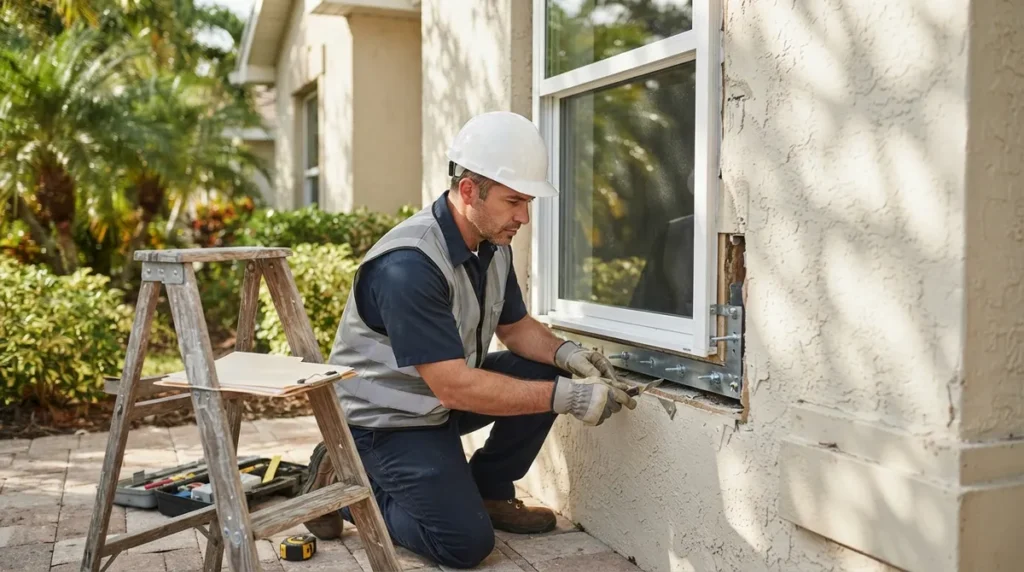
Key Takeaways
-
Call your local building department first to learn their after-the-fact window permit requirements, forms, fees, and whether inspectors will need to see fasteners or remove trim.
-
Hire a Florida-licensed contractor whose license scope covers window and door work, and verify the license status on the DBPR license search before any work begins.
-
Use a permitting service to handle paperwork, filing, and review tracking, but remember it cannot replace a licensed contractor or guarantee approval.
-
Gather product labels, Florida Product Approval or Miami-Dade NOA numbers, invoices, and anchorage photos taken before trim went on, and make sure they match the installed windows.
-
Be wary of anyone promising guaranteed approval before inspecting the site, since the building official may require an engineer letter, selective exposure, or corrections if the installation cannot be verified.
So the impact windows are already in, the house looks great, and then someone mentions the word "permit." Maybe your inspector flagged it, maybe a buyer's agent raised an eyebrow, or maybe you just bought the home and found out the previous owner skipped the paperwork. Take a breath. You are far from the first Floridian in this spot, and it is very fixable.
The real question is who should I hire for impact window after the fact Florida work? The answer is rarely one single person. It usually takes a properly licensed contractor, sometimes a design professional, and a permitting team that knows how to keep the paperwork moving. Hire the wrong one first, and you can lose weeks or even pay to redo work.
In this friendly guide, we will walk through the five most common hiring mistakes, who actually does what, and how to line up the right help in 2026. Whether you are a homeowner, a general contractor cleaning up a messy file, or a realtor trying to save a closing, you will find a clear path forward.
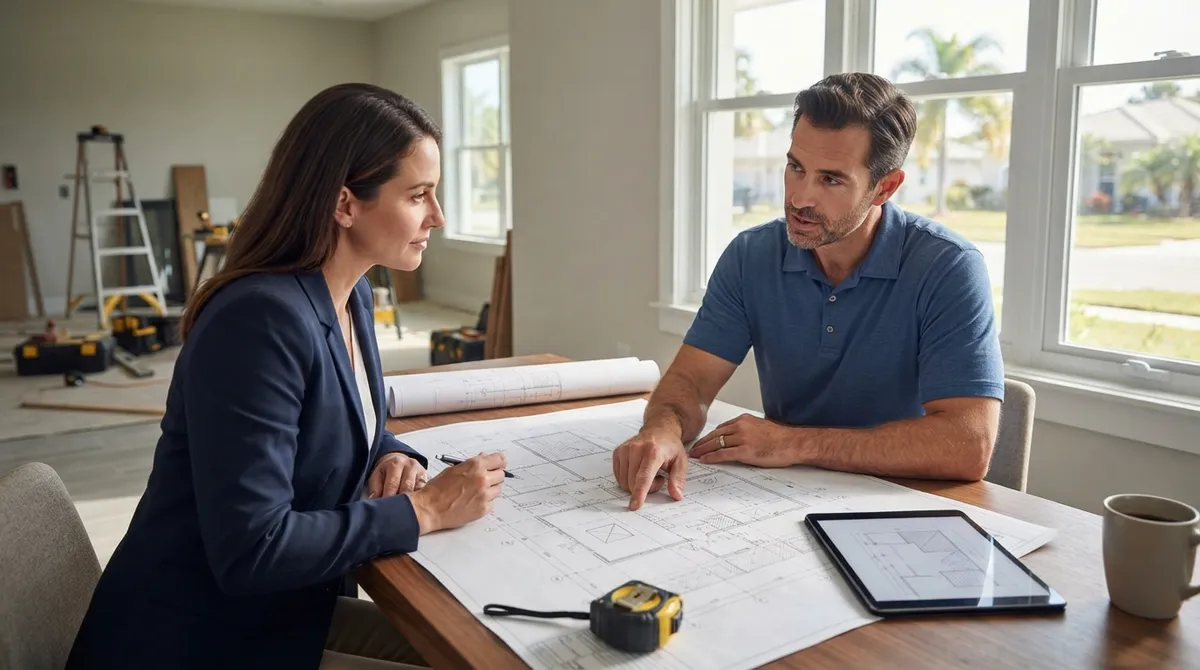
Who Actually Does What in an After-the-Fact Window Permit
Before we get into the mistakes, let's clear up the cast of characters. Each one has a different job, and mixing them up is where most trouble starts.
| Role | What They Do | What They Cannot Do |
|---|---|---|
| Licensed window/door or general contractor | Assesses the installation, pulls or supports the permit, performs corrections, and answers for the work | Guarantee the building department's approval |
| Permitting service or expediter | Assembles paperwork, files, tracks, and coordinates with the building department | Replace a licensed contractor or sign off on construction work |
| Design professional or engineer | Provides drawings, anchorage details, or engineer letters when required | Overrule the local building official |
| Building official/inspector | Decides what documentation, inspections, and corrections are acceptable | N/A (they make the final call) |
Notice that last row. Only the local building authority decides what evidence, inspections, or corrections are required. Everyone else on your team is there to help you meet that standard.
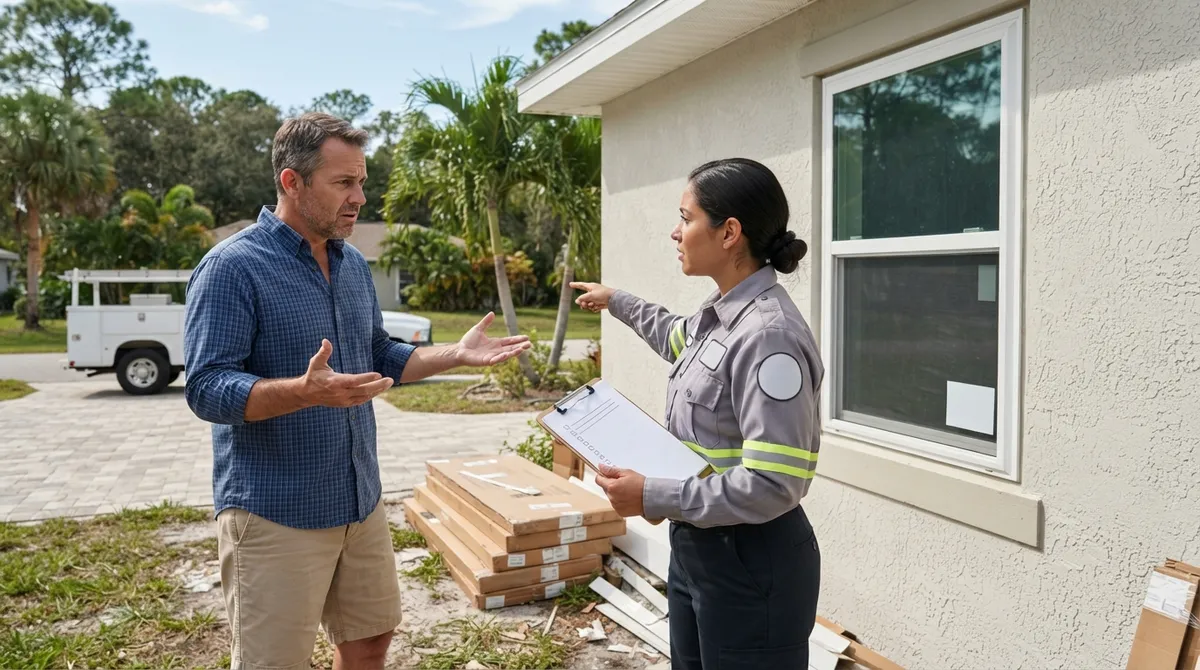
Mistake 1: Skipping the Call to the Building Department
The most common stumble is hiring someone before you know what your jurisdiction actually wants. Requirements, forms, fees, and inspection procedures vary from one city or county to the next.
A short call to the building department for the city or county where the property sits can save you a lot of guesswork. Ask how they handle after-the-fact permits for window and door replacements, and what they want to see. If you are not sure which office controls your address, our building department lookup tool can point you in the right direction.
Here are good questions to ask on that first call:
- Do you accept after-the-fact permits for impact windows and doors?
- Who is allowed to apply: the owner, the contractor, or an agent?
- What application forms and documents do you require?
- Will inspectors need to see fasteners or remove trim?
- Are there extra fees or penalties for work done without a permit?
Write down the answers. They become your shopping list when you start interviewing professionals.
Mistake 2: Hiring Someone Who Is Not the Right License
Here is the big one. When people ask who they should hire for impact window after the fact Florida cases, the first answer is a Florida-licensed contractor whose license scope covers window and door work. That is often a specialty window/door contractor, or a general, building, or residential contractor.
Do not just take someone's word for it. Verify the license and its status through the Florida Department of Business and Professional Regulation (DBPR). A friendly salesperson or an unlicensed permit runner cannot perform or certify construction work, no matter how confident they sound.
Quick License Check
- Get the contractor's full legal name and license number.
- Look it up on the DBPR license search.
- Confirm the license is active and covers window/door installation.
- Ask whether they are registered or can work in your city or county.
- Request proof of insurance before any work begins.
If you are a contractor yourself and need help with registrations, our team can walk you through Florida contractor municipality registration, and our contractor registration checklist is a handy starting point.
Mistake 3: Expecting a Permit Expediter to Do Everything
Permit expediters are wonderful at what they do. They assemble applications, submit them, follow up with plan reviewers, and track every step. That is a huge time-saver, especially when a closing date is looming.
But a permitting service does not replace a licensed contractor, a design professional, or a building official. It cannot guarantee approval or sign off on work outside its authority. Think of it as your project manager for the paperwork, not the person who stamps the windows as compliant.
The best setup pairs both. Your licensed contractor stands behind the installation, and your permitting partner handles the filing and follow-through. At 1 Contractor Solutions, we act as Florida's outsourced permitting department. We handle permit facilitation and filing, track every review, and coordinate with the jurisdiction so your contractor can focus on the work itself. You can learn more about our approach to impact window and door permits and our after-the-fact and expired permit services.
Mistake 4: Showing Up Without the Right Documents
Arriving at the building department with a pile of random papers is a recipe for delays. Before you apply, gather everything you can about the windows and the install.
The more of this you have, the smoother things tend to go:
- Window manufacturer and model information
- Product labels on the windows themselves
- Florida Product Approval or Miami-Dade Notice of Acceptance (NOA) numbers
- Invoices and contracts
- Installation photos, especially of anchorage before trim went on
- The installing contractor's name and license details
- Any prior permit records for the property
Product approval and installation instructions need to match the actual product and the actual installation. If the NOA or approval you submit describes a different window than the one in your wall, expect questions.
It also helps to understand how approvals differ by region. We break that down in our guide to Miami-Dade NOA vs. Florida Product Approval.
Why Location Matters
Impact windows must be appropriate for the property's location and design conditions. Wind-borne-debris regions and local rules vary across Florida. In the High-Velocity Hurricane Zone (HVHZ), which includes Miami-Dade and Broward, product approvals and installation requirements get especially strict. If you are in one of those areas, our pages for Miami-Dade County and Broward County are good places to start.
Mistake 5: Trusting Anyone Who Promises Guaranteed Approval
If a contractor or agent says, "Don't worry, I can get that approved, no problem," before ever looking at your site, be cautious. Nobody outside the building department can promise approval, and honest professionals know that.
Why the caution? Because the building official may need to verify things you cannot see. If concealed fasteners or anchorage cannot be verified, the official may require additional documentation, such as an engineer letter, or even selective exposure of the framing. The local authority determines what is acceptable.
| Situation | What the Building Department May Require |
|---|---|
| Documents and photos clearly show proper installation | Permit application, product approvals, and a final inspection |
| Fasteners are hidden behind trim | Selective trim removal or an engineer letter |
| No product approval or NOA can be found | Replacement or corrective work with approved products |
| Installation does not meet code | Corrections or remedial work before the permit can close |
That last scenario is the one nobody loves, but it is better to know upfront. If the existing installation cannot be documented or does not meet code, the department may require corrections or replacement before closing the permit. A trustworthy professional will review the site and local requirements first, then give you an honest picture.
When an engineer letter is on the table, our walkthrough on engineer letters and our guide to who to hire for engineer letters in Florida can help you understand what to expect.
A Simple Game Plan for Hiring the Right Help
Now that you know the pitfalls, here is a friendly step-by-step plan you can follow, whether you are a homeowner, realtor, or contractor.
- Confirm the jurisdiction. Figure out whether the city or county reviews your permit. Border areas can be tricky.
- Call the building department. Ask how they handle after-the-fact window permits and what they require.
- Check for open permits. Use our open permit search to see whether anything is already on file for the address.
- Gather your documents. Pull invoices, labels, NOA or approval numbers, and installation photos.
- Hire a properly licensed contractor. Verify the license on DBPR and confirm the scope covers windows and doors.
- Bring in a permitting partner. Let them assemble, file, and track the application.
- Add engineering only if needed. If the department wants sealed documentation, bring in an engineer.
- Schedule inspections and close the permit. Stay available in case the inspector asks for access.
For the bigger picture on legalizing work that was done without a permit, you might also enjoy our guide on how to legalize unpermitted work in Florida, and our friendly breakdown of whether you can get an after-the-fact permit for windows.
What About Cost, Selling, and Insurance?
Two questions come up constantly: what will this cost, and will it affect a sale or insurance policy?
Costs depend on your jurisdiction's fees, whether penalties apply, what documentation is needed, and whether any corrections are required. There is no single number that fits every property, so be skeptical of anyone quoting a flat price without looking at your file. Our overview of after-the-fact permit costs in Florida explains what drives the price.
As for selling or insuring, open or missing permits can slow down closings and raise questions with lenders and insurers. Getting the permit properly closed gives buyers and underwriters a clean record to work with. Realtors in particular may want to look at our realtor and closing support, and these two reads are helpful too: open permit found at closing and expired permits and insurance claims in Florida.
Tips for Each Type of Reader
- Homeowners: Start with the building department and a verified license. Keep every receipt and photo.
- General contractors: Make sure the installing sub's license and product approvals are documented before you file.
- Realtors and investors: Run a permit search early, before an offer gets too far along.
- Solar and specialty trades: If window work touches your scope, coordinate so inspections do not conflict.
Why a Permitting Partner Makes the Whole Thing Easier
Chasing a building department by phone, resubmitting forms, and decoding reviewer comments can eat up your week. That is exactly what a good permitting team is for.
1 Contractor Solutions is not a construction contractor. We are the team that handles the permit itself: filing, tracking, working every reviewer comment, coordinating revisions, and carrying the project through to closeout. Our drafting and engineering are in house, and we respond fast, with 24/7 availability. We work across all 67 Florida counties, so we know how different jurisdictions think. You can read what clients say on our reviews page or see what our 1 Contractor Solutions customers say on Google through our Visit us on Google — 1 Contractor Solutions listing.
Want to stay connected? You can follow us on LinkedIn or follow us on Facebook for Florida permitting tips as codes and procedures evolve in 2026. For a neutral look at statewide product approval rules, the Florida Building Commission is also a solid public resource.
Wrapping It Up: Hire in the Right Order
Here is the heart of it. For after-the-fact impact windows in Florida, start with the building department, hire a verified, properly licensed contractor, and pair that contractor with a permitting partner who handles the paperwork. Add an engineer only if the jurisdiction asks for one, and never rely on anyone who promises approval sight unseen.
Get the order right and the process feels a whole lot less scary. Get it wrong and you risk delays, extra fees, or redoing work. You have already done the hard part by asking the question.
Ready for a hand with your windows? Reach out and get a free quote from our team, and we will tell you which jurisdiction controls your address, what it will take, and then go do it with you.
FAQs
Who can apply for an after-the-fact impact window permit in Florida?
It depends on your local building department, but typically a properly licensed contractor or the property owner can apply. A permitting service can help prepare and submit the paperwork, but the department decides who is eligible, so a quick call to confirm is always smart.
Do I need a licensed contractor to legalize impact windows installed without a permit?
In most cases, yes, you will want a Florida-licensed contractor whose license scope covers window and door work. Verify their status on the DBPR website first, because a permit runner or salesperson cannot perform or certify construction work.
Can a Florida permit expediter get an after-the-fact window permit approved?
An expediter can be a big help with assembling paperwork, filing, tracking reviews, and coordinating with the building department. They cannot guarantee approval, though, because only the local building official makes that call.
Will the building inspector need to see the window fasteners or remove trim?
Sometimes, yes. If the fasteners and anchorage are concealed and cannot be verified, the official may ask for more documentation, an engineer letter, or selective exposure. It is up to the local authority to decide what is acceptable.
What happens if my impact windows do not have Florida Product Approval or a Miami-Dade NOA?
That can complicate things, since product approval is a key piece of the puzzle. If the installation cannot be documented or does not meet code, the building department may require corrections or replacement before closing the permit.
We do this work every day across all 67 Florida counties. Call (866) 314-6931 and we will tell you what your situation actually requires — including when you do not need us.
Related services
Permit Facilitation & Filing
You have a crew scheduled, a client asking for dates, and a permit sitting somewhere in a queue you cannot see. We file it, w…
See the servicePlan Review Coordination
A permit in plan review is not one queue. On a commercial project it can be six queues, each with its own reviewer, its own c…
See the serviceReady to get your permit moving?
One call tells you which jurisdiction controls your project, what it will take, and what it will cost. Most of the time we can scope it on the phone.