
Blog
5 Mold Assessment for Permit Naples Facts (2026)
Is a mold assessment required for a Naples permit? Learn 5 key facts on DBPR licensing, permit rules, and next steps for your 2026 project.
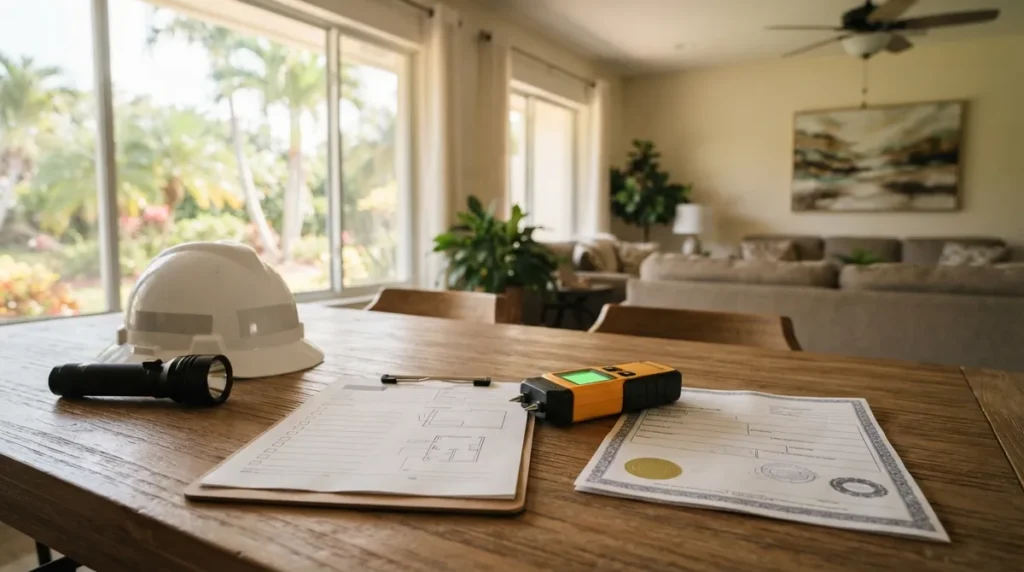
Key Takeaways
-
A mold assessment and a building permit are separate: the assessment is a professional evaluation of moisture and mold, while the permit is official authorization to perform construction work.
-
No universal Naples or Collier County rule requires a mold assessment for every permit, so confirm requirements with the local building department for your specific scope before applying.
-
Florida regulates mold assessors and remediators at the state level through DBPR; verify any provider's license type and current status in DBPR's online search before hiring.
-
As a general rule, a company that assessed a property may not remediate it within 12 months, though a limited exception exists for certain certified Division I contractors.
-
Confirm whether your property is in the City of Naples or unincorporated Collier County, since each has its own building department and permit requirements.
-
Fixing the moisture source, such as roof leaks, plumbing leaks, or HVAC condensation, matters more than removing visible mold, and the repairs are what typically trigger permits.
Picture this: you pull back a soggy piece of drywall in your Naples home, spot something fuzzy and unwelcome, and your contractor says, "We'll probably need a mold assessment before we can get a permit." Wait, really? It sounds official, but is it actually true? You're not alone in wondering. The phrase mold assessment for permit Naples gets searched a lot, and the answer is more nuanced than a simple yes or no.
Here's the friendly truth: a mold assessment and a building permit are two separate things. One is a professional evaluation of moisture and mold conditions. The other is government permission to do construction work. Sometimes they travel together on the same project, but neither automatically requires the other. In this guide, we'll walk through five practical facts that help you sort out what Naples-area homeowners, contractors, and agents really need to know in 2026, so you can move forward with confidence instead of confusion.

Fact 1: A Mold Assessment and a Building Permit Are Two Different Things
Let's clear up the biggest source of confusion right away. A mold assessment is an evaluation. A building permit is an authorization. They answer completely different questions.
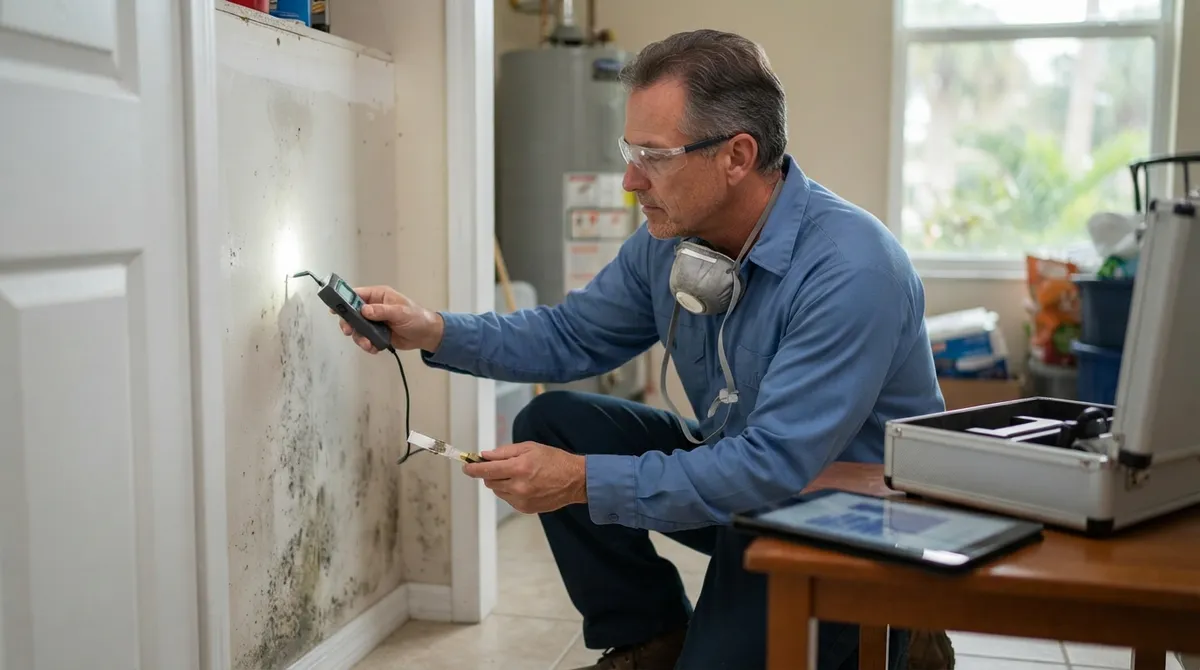
A mold assessment can document visible conditions, likely moisture sources, affected materials, and recommended next steps. It is not itself a building permit, it does not authorize construction or demolition, and it should never be presented as a substitute for permits that may be required for repair or reconstruction.
A building permit, on the other hand, is issued by the local building department. It says you are allowed to perform specific work, and it triggers plan review and inspections. Think of the assessment as the diagnosis and the permit as the prescription's paperwork.
| Item | Mold Assessment | Building Permit |
|---|---|---|
| What it is | A professional evaluation and report | Official permission to perform work |
| Who handles it | A state-licensed mold assessor | The local building department |
| Authorizes construction? | No | Yes, for the approved scope |
| Triggers inspections? | No | Yes |
| Typical purpose | Identify moisture sources and affected materials | Legally repair, rebuild, or renovate |
Is a Mold Report Required for Every Naples Permit?
The available sources do not show a blanket rule in Naples or Collier County requiring a mold assessment for every permit. Requirements can vary with the specific scope of work, so always confirm with the local building department before you apply. A quick call or counter visit can save you from paying for a report nobody asked for.
That said, there are plenty of smart reasons to get an assessment even when it is not mandatory, and we will cover those below.
Fact 2: Florida Licenses Mold Assessors and Remediators at the State Level
Here is where the mold assessment for permit Naples question gets interesting. Mold professionals are not regulated by your city or county permit office. They are regulated by the state.
Florida regulates mold assessors and mold remediators under Florida Statutes, Chapter 468, Part XVI. The Florida Department of Business and Professional Regulation (DBPR) is responsible for licensing these professionals. In fact, the Florida Department of Health directs licensing questions to DBPR, so that is your go-to agency.
Florida Statutes section 468.8419 restricts mold assessment and remediation work to people who meet the applicable statutory requirements, including documented training in water, mold, and respiratory protection. Translation: not just anyone with a flashlight and a confident attitude can legally perform this work.
How to Verify a Mold Professional Before You Hire
A little homework goes a long way. Follow these steps before signing anything:
- Ask the provider for their DBPR license number and the exact license type (assessor or remediator).
- Look up that license through DBPR's online license search and confirm it is current and in good standing.
- Confirm the name on the license matches the person or company on your contract.
- Ask for a written scope of work and a sample report so you know what you are paying for.
- Keep copies of the license verification with your project records.
This matters for permits, too. If an inspector, lender, or insurance adjuster asks for documentation, a report from a properly licensed professional is far easier to defend than one from an unverified source.
Fact 3: The Same Company Generally Cannot Assess and Then Remediate
This one surprises a lot of property owners. Florida builds in a conflict-of-interest guardrail. As a general rule, a mold assessor, or the assessor's company, may not perform remediation at a property it assessed within the preceding 12 months.
The idea is simple: the person who decides how much work is needed should not be the person profiting from doing that work. It keeps recommendations honest.
There is a qualification worth mentioning. The statute provides an exception for certain certified Division I contractors, so the rule is not absolutely universal. If a company tells you it can do both, ask them to explain exactly which provision they are relying on, and verify it independently through DBPR.
- Assessment first: an independent assessor documents conditions and writes the protocol.
- Remediation second: a separately licensed remediator follows the protocol.
- Verification third: a post-remediation check confirms the problem is resolved.
Separating these roles protects you, and it creates a cleaner paper trail if a permit, sale, or insurance claim is involved later.
Fact 4: Your Permit Authority Depends on Where the Property Sits
Here is a Naples-specific wrinkle that trips people up. The applicable authority depends on the property's location and the project scope. Is your home inside the City of Naples, or is it in unincorporated Collier County? Those are different jurisdictions with different building departments, and property addresses near boundaries are not always obvious.
Before you apply for anything, confirm which jurisdiction controls your property. Then ask that building department which permit applications, plans, inspections, or supporting documents apply to your specific repair or renovation. If you want a head start on how Naples handles typical residential projects, our guide on how to get a home addition permit in Naples, FL shows what a complete submittal tends to look like, and city vs. county stop work order help in Naples explains why that jurisdiction question matters so much.
| Question to Ask | Why It Matters |
|---|---|
| City of Naples or unincorporated Collier County? | Determines which building department reviews your work |
| Is demolition or reconstruction involved? | Removing and replacing materials may trigger permit requirements |
| Do structural, electrical, plumbing, or mechanical systems change? | May require plans, trade permits, and inspections |
| Is a supporting document requested with the application? | Confirms whether a mold report is expected for your scope |
When Water-Damage Repair Needs a Permit
Water damage often leads to mold, and the repair is where permits typically come into play. Replacing drywall, framing, flooring, or building systems may require a permit depending on how much work is involved and which systems are touched. Whether your particular scope needs one is a local determination, so confirm it before work begins. For a closer look at that side of things, see our article on what to know about a water damage repair permit in Naples.
Neighboring areas follow similar logic but different offices. If you are comparing, our piece on mold assessment vs. building permit in Sarasota walks through the same distinction one county up the coast.
Fact 5: Moisture Is the Real Villain, So Fix the Source
Here is the most useful fact of all, and it comes straight from public health guidance. Florida Department of Health guidance emphasizes addressing moisture and water intrusion to control mold. In other words, scrubbing or removing visible mold without fixing the leak is like mopping the floor while the faucet is still running.
An assessment is most valuable when it helps identify and correct the underlying moisture problem rather than treating mold removal as a lasting solution. Common culprits in Southwest Florida homes include:
- Roof leaks and failed flashing after storms
- Window and door intrusion around old or improperly sealed openings
- Plumbing leaks inside walls or beneath slabs
- HVAC condensation problems and poorly drained air handlers
- High indoor humidity with inadequate ventilation
When the moisture source involves repairs like roofing, windows, plumbing, or HVAC, permits often enter the picture on the repair side. That is the real connection between mold and permitting: the fix, not the assessment, is usually what the building department cares about.
What a Good Mold Assessment Report Should Include
Whether you need the report for a permit file, an insurance claim, or a home sale, quality matters. A useful report is clear, specific, and easy for a third party to follow. Look for these elements:
- Date of inspection, property address, and the assessor's license information
- A description of visible conditions and the areas inspected
- Identified or suspected moisture sources and moisture readings where applicable
- Affected materials and the approximate extent of the problem
- Photographs that tie observations to specific locations
- Recommended next steps or a remediation protocol written for a separate remediator
Keep the report with your project records. If permitted repairs follow, having this documentation alongside your plans and inspection records makes closeout smoother. And if unpermitted work ever surfaces during a sale, a clean paper trail helps. Our guide on open permit mistakes before closing in Naples explains why.
How to Handle a Mold-Related Project in Naples: A Simple Roadmap
Feeling a little overwhelmed? Totally understandable. Here is a calm, step-by-step path you can follow:
- Stabilize and document. Stop the water source if you can, and take dated photos of the affected areas.
- Confirm your jurisdiction. Determine whether you are in the City of Naples or unincorporated Collier County.
- Hire a licensed assessor. Verify the license through DBPR before work begins.
- Keep roles separate. Use a different licensed company for remediation, keeping the 12-month rule in mind.
- Ask the building department about repairs. Describe the full scope and ask which permits, plans, and inspections apply.
- Prepare plans if required. Structural or system changes may need drawings, sometimes with an engineer's seal.
- Complete inspections and close out. Make sure every permit reaches final approval.
If your repair involves changes to framing, roofing, or building systems, you may need professionally prepared documents. Our team can help with permit facilitation and filing, and if your project touches this topic directly, see our asbestos, mold, and environmental services page.
Who Needs to Know This? A Quick Audience Cheat Sheet
| If You Are A... | Your Key Takeaway |
|---|---|
| Homeowner | Confirm permit needs with the building department; use a licensed assessor and a separate remediator. |
| General contractor | Do not assume a mold report replaces permits; verify scope and sequence work around permitted repairs. |
| Real estate professional | Documentation of both assessment and permitted repairs protects buyers and sellers at closing. |
| Restoration or trade pro | Know when your repair crosses into permitted territory and plan accordingly. |
For general contractors juggling several jobs, our general contractor support page explains how we take permit paperwork off your plate, and homeowners can start at our homeowner page.
Where 1 Contractor Solutions Fits In
We should be upfront: 1 Contractor Solutions is not a mold assessor or remediator, and we will always point you toward a DBPR-licensed professional for that part. What we do is handle the permitting side that often follows. That includes preparing or reviewing plans, filing applications, tracking reviews, answering reviewer comments, and carrying the project through approval and closeout across all 67 Florida counties, with in-house drafting and engineering and sealed drawings when needed.
If you are curious how other homeowners feel about working with us, visit us on Google — 1 Contractor Solutions and read the reviews for our Naples-area service. And if you like staying in the loop on Florida permitting news, you can follow us on LinkedIn or follow us on Facebook. Our marketing partners at Brain Buzz Marketing help us share helpful guides like this one.
The Bottom Line on Mold Assessment for Permit in Naples
Here is the short version of everything above. A mold assessment is helpful, but it is not a permit and it is not automatically required for one. State licensing rules (through DBPR) are separate from local permitting decisions (through the building department). The same company generally cannot assess and then remediate within 12 months, with a limited exception. And no matter what, fixing the moisture source is what truly protects your home.
When in doubt, verify with both agencies and keep good records. You do not have to figure this out alone. If your Naples project needs plans, filings, or a friendly guide through the process, get a free quote from our team, and we will help you get permits approved and your project moving again.
FAQs
Do I need a mold assessment to get a building permit in Naples, Florida?
Not necessarily. The available sources do not show a universal Naples or Collier County rule requiring a mold assessment for every permit. Requirements depend on your specific scope, so confirm with the local building department before you apply.
Who is licensed to perform a mold assessment in Florida, and how can I verify the license?
Florida regulates mold assessors and remediators under Chapter 468, Part XVI, and the Department of Business and Professional Regulation (DBPR) handles licensing. You can verify any provider's current license through DBPR's online license search before you hire them.
Can the same company assess mold and perform remediation in Florida?
As a general rule, an assessor or the assessor's company may not remediate a property it assessed within the preceding 12 months. There is an exception for certain certified Division I contractors, so ask any company claiming to do both to explain which provision applies and verify it with DBPR.
Is a mold assessment the same as a building permit?
No, they are separate. A mold assessment documents conditions, moisture sources, and recommended next steps, while a building permit authorizes construction work. An assessment does not authorize repairs or demolition and cannot replace permits that may be required.
Who should I contact to confirm permit requirements for a Naples property?
First figure out whether your property is in the City of Naples or unincorporated Collier County, then contact that building department about your specific repair or renovation scope. A permitting service like 1 Contractor Solutions can also help you identify the right jurisdiction and prepare the filing.
We do this work every day across all 67 Florida counties. Call (866) 314-6931 and we will tell you what your situation actually requires — including when you do not need us.
Related services
Permit Facilitation & Filing
You have a crew scheduled, a client asking for dates, and a permit sitting somewhere in a queue you cannot see. We file it, w…
See the servicePlan Review Coordination
A permit in plan review is not one queue. On a commercial project it can be six queues, each with its own reviewer, its own c…
See the serviceReady to get your permit moving?
One call tells you which jurisdiction controls your project, what it will take, and what it will cost. Most of the time we can scope it on the phone.