
Blog
14 Hurricane Shutter Permit Naples FL Tips for 2026
Navigate a hurricane shutter permit in Naples, FL with 14 friendly tips on jurisdiction, product approvals, pressures, and inspections for 2026.
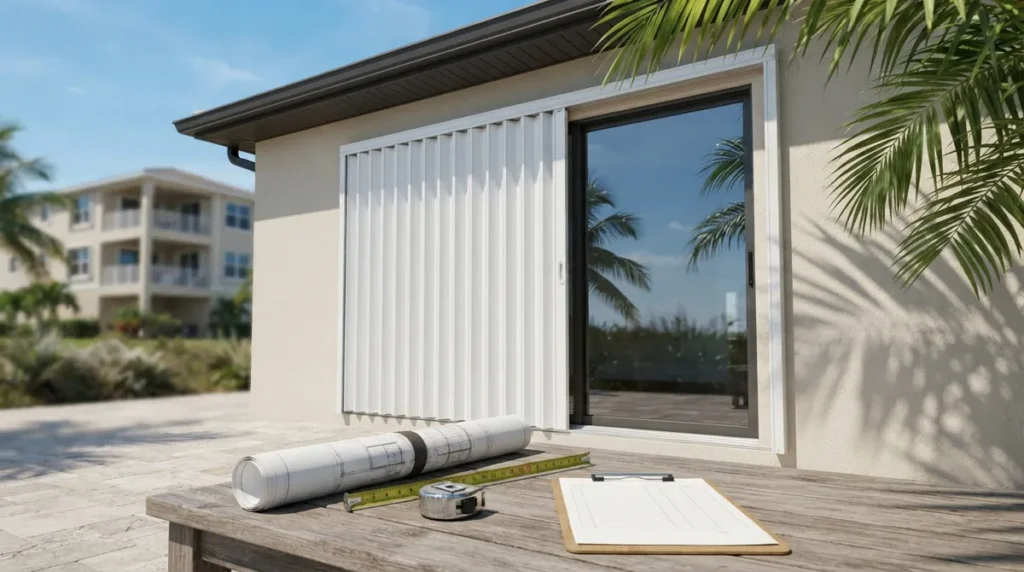
Key Takeaways
-
Verify whether your property is in the City of Naples or unincorporated Collier County before applying, since a Naples mailing address can sit in the county and go to a different office.
-
Gather a floor plan with labeled rooms, an opening schedule with sizes, Florida Product Approval or Miami-Dade NOA numbers, and existing-opening design pressures before submitting.
-
Confirm the shutter product's design pressure exceeds the wind pressure for each specific opening, since there is no single universal number and each opening may differ.
-
Install shutters strictly within the limits of the product approval, including allowed sizes, anchors, fasteners, and spacing, or the system may become non-compliant.
-
Get HOA or condo architectural approval alongside the building permit, because the association and the building department review different requirements.
-
Start the permit process in the off-season, since permit offices and installers get overloaded as hurricanes approach and timelines stretch.
If you live in Naples, you already know hurricane season isn't a someday problem. It's a every-summer, keep-an-eye-on-the-Gulf kind of problem. And when it's time to protect your windows and doors, the very first question tends to be a simple one: do I need a permit? Handling a hurricane shutter permit in Naples, FL is one of those tasks that feels confusing until someone walks you through it, and then it feels pretty doable.
Here's the friendly truth. Shutters are real structural protection, so the local building department wants to see that the system fits your openings and is installed the way its approval says. That's a good thing. It protects you, your home, and your insurance claim down the road.
In this guide, we'll walk through 14 practical tips, from figuring out which office serves your address to preparing the right paperwork, avoiding common slip-ups, and getting through inspection. Whether you're a homeowner, a general contractor, a realtor, or a design pro, you'll find something useful here. Let's get your shutters permitted without the headaches.
Start With the Basics: Who Issues the Permit?
1. Confirm Whether You're in the City of Naples or Unincorporated Collier County
This is the step people skip, and it causes the most wasted effort. Addresses inside the City of Naples generally go through the City of Naples Building Department. Properties in unincorporated Collier County use Collier County Growth Management.
Mailing addresses can be misleading, especially near city lines. A home with a "Naples" address may sit in the county, not the city. Always verify jurisdiction by the property's actual location before you apply. If you're unsure, our team can check it for you. See our Naples permitting page for more on how we handle local filings.
2. Know That a Permit Is Separate From HOA Approval
A building permit and a homeowners' association or condominium approval are two different things. Your HOA might require an architectural review, specific colors, or an approved shutter style. The building department, on the other hand, cares about code compliance and product approvals.
Get both lined up, ideally before you order anything. Nothing stings like a custom shutter order that the association rejects after it's built.
3. Treat the Permit as Part of Your Storm Plan, Not an Afterthought
Here's a friendly nudge: don't wait until a storm is spinning offshore. Permit offices and installers get slammed when a hurricane approaches, and timelines stretch. Starting in the off-season gives you breathing room, better scheduling, and less stress.
What Collier County Typically Asks For
4. Use the Right Application Path
Collier County lists shutters under its Windows, Doors, Shutters (PRSD) application requirements. The online path is Building, Remodel & Accessory Permits, with the application type set to Shutters/Doors/Windows. Then you select the work items that match your scope.
Picking the right work items matters. If your scope includes motorized or electric shutters, say so, because the application asks. Always confirm current forms and steps directly with the building department, since portals and requirements can change.
5. Gather the Core Submittal Documents
Collier County's published guidance points to a few key items. Here's a quick snapshot:
| Document | What It Shows | Why It Matters |
|---|---|---|
| Floor plan with labeled rooms | Proposed opening locations and sizes | Lets reviewers see exactly what's being protected |
| Product approval index | Florida Product Approval or Miami-Dade NOA numbers | Proves the shutter is an approved product |
| Design pressure table | Wind design pressures for existing openings | Confirms the product is strong enough for each opening |
| Application details | Scope, use, owner or contractor info | Routes your permit correctly |
Additional documents may be required depending on your scope, so treat this list as a starting point rather than a guarantee.
6. Build a Clean Opening Schedule
Reviewers love clarity. A tidy opening schedule lists each window, door, and sliding glass door with its dimensions and location, matched to the labeled floor plan. When every opening has a tag and a size, the plan reviews faster and gets fewer comments.
If you've ever seen a reviewer's correction notice, you know the small stuff trips people up. Missing dimensions, unlabeled rooms, and mismatched opening counts are classics.
Product Approvals and Wind Pressures
7. Understand Florida Product Approval and Miami-Dade NOA
Hurricane shutters must be an approved product for the intended application. In practice, that means a Florida Product Approval number or a Miami-Dade Notice of Acceptance (NOA). You'll list these in an index with your submittal.
Not sure how to decode those numbers? Our guide on reading a Florida product approval number walks through the logic, which applies in similar ways across product types.
8. Match Product Pressures to Opening Pressures
Here's where many shutter jobs succeed or stall. Collier County's published requirements call for the product's design pressures to exceed the existing-opening design pressures. There isn't one universal number, because it depends on your building and each opening.
Think of it like buying shoes. A great shoe in the wrong size doesn't help anyone. A product approval alone doesn't prove the shutter is suitable for every opening on your home. The approval document sets limits for things like permitted dimensions, fasteners, and anchorage, and your installation has to follow them.
9. Know Why the Product Approval Fine Print Matters
Every approval document spells out how the product must be installed: the allowed sizes, the anchors, the substrate, and the spacing. Installing outside those limits can turn a compliant product into a non-compliant system.
This is exactly why a sealed engineer letter or drawing is sometimes needed when an installation condition doesn't match the approval neatly. If you're curious how that works, read who seals structural drawings for Florida permits.
The Code Behind the Curtain
10. Learn the 2023 Florida Building Code Basics
The 2023 Florida Building Code, 8th Edition, took effect December 31, 2023. Its wind-borne-debris provisions generally require glazed openings in applicable regions to be impact-resistant or protected by an approved impact-resistant covering. Requirements depend on location, building characteristics, and the specific code provisions.
Here's a helpful detail from Section 1609.1.2. Applicable glazed openings within 30 feet of grade are tested for large-missile impact, while applicable openings more than 30 feet above grade use small-missile testing. That's one reason a two-story home can have different protection needs on different floors.
| Opening Height | Missile Test Category |
|---|---|
| Within 30 feet of grade | Large-missile impact |
| More than 30 feet above grade | Small-missile impact |
11. Decide Between Shutters and Impact-Rated Glazing
Shutters aren't your only path to compliance. Impact-rated windows and doors can also satisfy wind-borne-debris protection. Each route has its own permit steps, so it helps to compare before committing. If you're leaning toward replacement, our impact window and door permit services page explains how that process works.
The Process, Step by Step
12. Follow a Simple Permit Roadmap
Here's a clean, repeatable flow you can adapt to your project:
- Verify jurisdiction by address (City of Naples or unincorporated Collier County).
- Choose your shutter type and confirm its Florida Product Approval or Miami-Dade NOA.
- Measure every opening and build an opening schedule.
- Determine the design pressure for each opening and confirm the product exceeds it.
- Prepare the labeled floor plan showing opening locations and sizes.
- Complete the application, selecting the correct application type and work items.
- Respond promptly to any reviewer comments.
- Schedule and pass the required inspections after installation.
Notice how most of the work happens before you ever click submit. That's the secret. A complete package gets through review faster than a rushed one.
13. Plan for Inspections, Fees, and Timelines
Inspection requirements, fees, and review times vary by jurisdiction and scope, so always confirm current details with the building department that serves your property. Inspectors generally want to confirm the installation matches the approved plans and the product's approval documents, including anchorage and fasteners.
Timelines depend on workload, completeness of your submittal, and whether corrections are needed. If you're curious how long permitting typically runs in this area, take a look at how long a building permit takes in Naples, FL. And if you're a contractor who needs to register before filing, our guide on registering your contractor license in Naples is a great companion read.
14. Know When to Bring in a Permitting Pro
You can absolutely tackle a straightforward shutter permit yourself. But a few situations make professional help well worth it:
- Mixed opening types, sizes, or heights that complicate pressure calculations.
- Motorized or electric shutters that add electrical scope.
- A denial or correction notice you're not sure how to answer.
- Shutters installed earlier without a permit.
- A tight closing date or storm deadline.
That last one comes up a lot. If shutters were already installed without a permit, you're not out of options. Our walkthrough on getting an after-the-fact permit for windows explains the path, and the principles carry over to shutters. For a neighboring market, you might also like how to get a hurricane shutter permit in Fort Myers.
Common Mistakes to Avoid
After seeing how these permits move, a few patterns stand out. Steer clear of these and you'll save yourself time:
- Applying to the wrong office. Verify the City versus county question first.
- Skipping the pressure check. Product pressures must exceed opening pressures.
- Vague floor plans. Unlabeled rooms and missing opening sizes invite corrections.
- Ignoring the approval document. Install exactly per the approval's limits.
- Forgetting the HOA. Get association sign-off alongside the permit.
Realtors and investors, this one's for you too. Open or missing permits can complicate a sale, so it's smart to review them early. Our article on open permit mistakes before closing in Naples can help you avoid last-minute surprises.
Who Benefits From Getting This Right
Different readers care about different slices of this process, so here's a quick guide:
- Homeowners: You want protection, insurance peace of mind, and fewer headaches.
- General contractors: You want clean submittals that don't bounce back and eat your schedule.
- Realtors and investors: You want documented, closed permits that keep deals on track.
- Design and trade pros: You want reliable drafting and engineering support without staffing up.
Good documentation is a gift to everyone involved. It shortens reviews, supports inspections, and leaves a clean paper trail for future owners.
How 1 Contractor Solutions Can Help
Think of 1 Contractor Solutions as your outsourced permitting department. We handle permit filing, tracking, plan review coordination, and revisions, and our drafting and engineering are in house with our own engineer sealing the work. That means when a reviewer has a question, we answer it directly instead of waiting on an outside consultant.
We respond within 30 minutes, day or night, and we serve all 67 Florida counties, including Collier County. If you'd like to see what our customers say, you can visit us on Google — 1 Contractor Solutions and read their experiences. You can also follow us on LinkedIn or follow us on Facebook for tips and updates. Our site was built with help from Brain Buzz Marketing.
Wrapping It Up
A hurricane shutter permit in Naples, FL doesn't have to feel overwhelming. Confirm your jurisdiction, gather a clean opening schedule and product approvals, match pressures to each opening, install per the approval, and plan for inspection. Do those things in the off-season and you'll be ready long before the forecast turns ugly.
Remember, requirements, fees, and timelines can change, so always verify the latest details with the City of Naples Building Department or Collier County Growth Management. And if you'd rather hand the paperwork to someone who does this every day, we're here to help. Get a free quote and let's get your shutters permitted so you can breathe a little easier this storm season.
FAQs
Do I need a permit to install hurricane shutters in Naples, Florida?
Generally, yes. Installing or altering storm protection like shutters typically requires a building permit, so the system can be checked against the product approval and applicable Florida Building Code requirements. Confirm current rules with the City of Naples Building Department or Collier County, depending on where your property sits.
Does the City of Naples or Collier County issue the permit for my address?
It depends on your property's actual location. Addresses inside the City of Naples generally go through the City of Naples Building Department, while unincorporated properties use Collier County Growth Management. A "Naples" mailing address can still be in the county, so verify jurisdiction by address before applying.
What documents are required for a hurricane shutter permit in Collier County?
Collier County's published guidance lists a floor plan with labeled rooms and proposed opening locations and sizes, an index of Florida Product Approval or Miami-Dade NOA numbers, and a table of existing-opening wind design pressures. Additional documents may be required depending on your scope, so check with the county.
How do I know the right wind pressure rating for each opening?
Design pressures depend on your building and each opening, and the product's design pressure must exceed the pressure for the opening it protects. There's no single universal number. A design professional or permitting team can help you determine the right values for your home.
Do I need a permit for motorized shutters or for replacing existing ones?
Collier County's application specifically asks whether the work includes motorized or electric shutters, so those add scope you should disclose. Replacing existing shutters may also need a permit depending on the work involved, so confirm with the building department before you start.
We do this work every day across all 67 Florida counties. Call (866) 314-6931 and we will tell you what your situation actually requires — including when you do not need us.
Related services
Permit Facilitation & Filing
You have a crew scheduled, a client asking for dates, and a permit sitting somewhere in a queue you cannot see. We file it, w…
See the servicePlan Review Coordination
A permit in plan review is not one queue. On a commercial project it can be six queues, each with its own reviewer, its own c…
See the serviceReady to get your permit moving?
One call tells you which jurisdiction controls your project, what it will take, and what it will cost. Most of the time we can scope it on the phone.