
Blog
14 Facts: Can I Get an After-the-Fact Permit for Windows?
Wondering if you can legalize impact windows without an original permit? Here are 14 essential facts every Florida property owner should know.
Key Takeaways
-
After-the-fact permits for impact windows are generally available in Florida, but approval isn't automatic—windows must meet Florida Building Code, carry proper product approval, and be correctly installed.
-
Miami-Dade and Broward County require stricter documentation including Miami-Dade Notice of Acceptance, sealed engineering, and enhanced inspections compared to non-HVHZ counties.
-
After-the-fact permit fees typically cost 2-3 times more than standard permits with potential additional violation fees, and timelines run 4-8 weeks due to documentation review and inspections.
-
Missing documentation such as product approval numbers, invoices, installation photos, or engineering calculations can be addressed with permitting professionals, so incomplete records shouldn't prevent application.
-
Unpermitted windows can derail real estate transactions, refinances, and insurance renewals; a properly closed permit creates the official record required by lenders and insurers.
-
Windows must be rated for your specific wind zone requirements; if installed windows don't match your area's design wind speeds (130+ mph in debris regions), this creates a larger compliance problem than a missing permit alone.
So you installed impact windows a few years ago (maybe the contractor said "don't worry about the permit"), and now you're staring down a home sale, a refinance, or an insurance renewal, wondering if that decision is about to come back to bite you. Take a breath. You're not alone, and this is fixable more often than not. Florida homeowners, realtors, and even general contractors run into this exact situation constantly, and the good news is that after-the-fact permits exist precisely for moments like this.
The short answer to "can I get an after-the-fact permit for impact windows in Florida" is usually yes, but it's not automatic, and it's definitely not a rubber stamp. Your local building department has to confirm the windows meet the Florida Building Code, carry proper product approval, and were installed correctly, even if the paperwork came after the fact instead of before. Let's walk through 14 essential facts that will help you understand exactly what's involved, so you can move forward with confidence instead of anxiety.
1. Yes, After-the-Fact Permits Are Generally Available
Florida building departments do allow property owners to legalize impact windows installed without a permit. This is commonly called an after-the-fact permit, existing-work permit, or legalization permit, depending on the jurisdiction. Approval isn't guaranteed, but the pathway exists in nearly every city and county across the state, from Miami-Dade County to the Hillsborough County area.
2. Windows Almost Always Require a Permit in the First Place
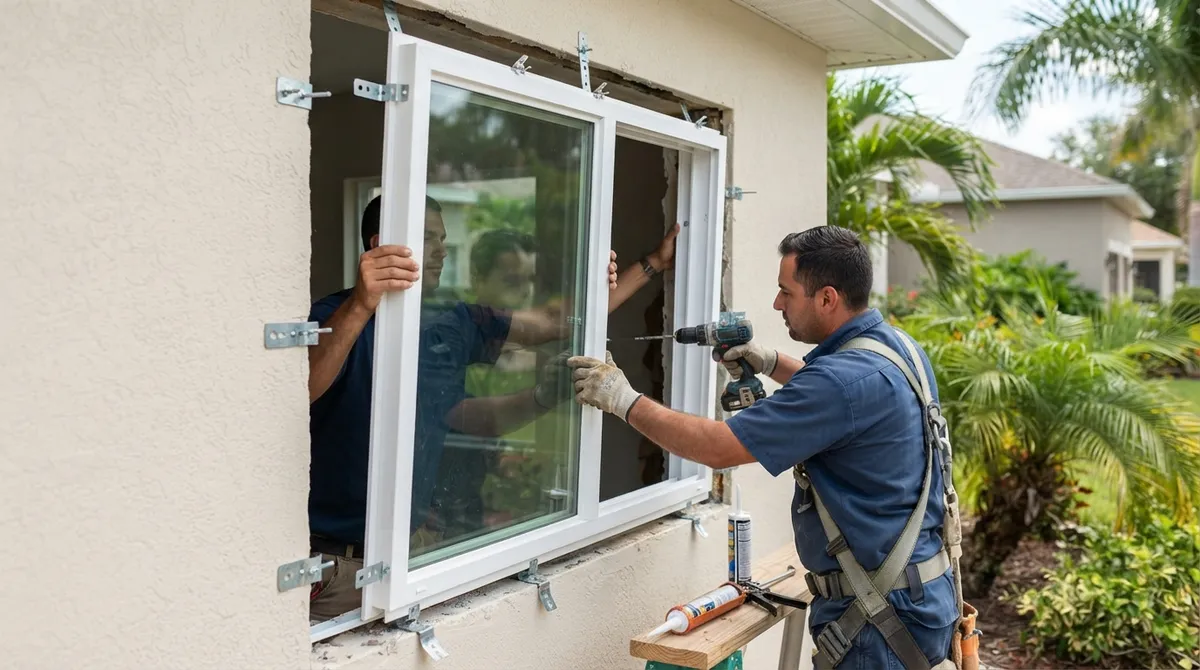
Florida Building Code sections 105.1 and Residential R105.1 require permits for work that alters, repairs, or modifies the building envelope, and window replacement falls squarely into that category. It doesn't matter if the windows look great or performed fine during the last hurricane season. If there's no permit on file, the work is technically unpermitted, and that creates a paper trail gap that eventually surfaces.
3. Miami-Dade and Broward County Are Stricter Than Most
If your property sits in the High-Velocity Hurricane Zone, meaning Miami-Dade or Broward County, expect a more rigorous review. These jurisdictions typically require a Miami-Dade Notice of Acceptance (NOA), signed and sealed engineering, and verification that anchors and framing match the approved system exactly. According to Miami-Dade County's own permit guidance, window and door work requires a permit even when the project falls below the county's general $7,500 threshold for other minor repairs.
Quick Jurisdiction Comparison
| Factor | Non-HVHZ Counties | Miami-Dade & Broward (HVHZ) |
|---|---|---|
| Product Approval Needed | Florida Product Approval | Miami-Dade NOA typically required |
| Engineering Review | Sometimes required | Almost always required |
| Inspection Rigor | Standard | Enhanced, may require destructive testing |
| Typical Timeline | 4-6 weeks | 6-8+ weeks |
4. Your Windows Need to Match Your Wind Zone
Impact windows aren't one-size-fits-all. They must be rated for your property's specific wind speed and wind-borne-debris requirements. The Wind-Borne Debris Region generally covers areas within one mile of the coast where design wind speeds reach 130 mph or higher, plus any area with design wind speeds of 140 mph or more. If your installed windows don't match your zone's requirements, that's a bigger problem than a missing permit alone.
5. You'll Need Documentation, and Lots of It
Building departments typically ask for a combination of the following before they'll even consider your after-the-fact application:
- Florida Product Approval number or Miami-Dade NOA documentation
- Manufacturer installation instructions
- Original invoices or contracts from the installer
- Photographs of the installed windows, including labels
- Engineering calculations or as-built drawings, if required
- Proof of the contractor's license, if one was used
If you're missing several of these items, don't panic. This is exactly the kind of gap-filling work a permitting professional handles daily.
6. Concealed Details Might Need to Be Exposed
Here's the part nobody loves hearing: if the inspector can't visually confirm fasteners, flashing, or framing behind the window, the department may require selective removal or destructive inspection to verify compliance. This doesn't happen in every case, but it's common enough that you should budget for the possibility, especially if the original installer didn't document the work well.
7. You Might Need a Special Inspection or Engineering Certification
When concealed conditions can't be confirmed any other way, a licensed engineer can sometimes certify the installation based on visible evidence, photos, and comparable installation standards. This is often faster and less invasive than removing drywall or stucco, and it's one of the reasons having in-house engineering support matters so much during legalization projects.
8. Fees Are Higher Than a Standard Permit
Nobody enjoys this fact, but it's better to know upfront. Secondary industry sources commonly report that after-the-fact permit fees run roughly two to three times the cost of an ordinary permit fee in many jurisdictions. The exact number depends on your municipality's fee schedule, the project's value, and any penalties assessed for the unpermitted work. Some counties also add a separate violation or investigation fee on top of the permit fee itself.
9. Timelines Run Longer Than You'd Expect
Because of extra documentation, potential inspections, and engineering review, industry estimates place typical after-the-fact legalization timelines at roughly four to eight weeks. Compare that to a standard new-installation permit, which can sometimes move faster when the paperwork is clean from day one. If your jurisdiction requires corrections or resubmittals, add more time.
Typical After-the-Fact Permit Timeline
| Step | Estimated Time |
|---|---|
| Application intake & document review | 1-2 weeks |
| Plan review / product approval verification | 1-3 weeks |
| Inspection scheduling & completion | 1-2 weeks |
| Corrections, if needed | 1-2 weeks |
| Final closeout | Days to 1 week |
10. A Permit Can't Legalize Non-Compliant Work
This is an important distinction. An after-the-fact permit is not a magic wand that makes bad work acceptable. If the windows themselves aren't rated for your wind zone, or the installation genuinely fails current code, the building department can require corrections, partial removal, or full reinstallation before it will close the permit. This is why getting an accurate assessment early, before you spend money on an application that's doomed to stall, matters so much.
11. Unpermitted Windows Can Derail a Sale or Refinance
Realtors and title companies run into this constantly. An open permit or a missing permit for structural work like windows can show up during a title search, an appraisal, or an insurance wind-mitigation inspection. Buyers get nervous, lenders get cautious, and closings get delayed. If you're a real estate professional working a deal like this, our realtor and closing support team can help you sort out the permit history before it derails your timeline.
12. Insurance Underwriters Pay Close Attention
Wind-mitigation credits and homeowners insurance premiums often hinge on documented, permitted impact window installations. An unpermitted installation might not qualify for the discount you were expecting, and in some cases, an insurer may flag the property during underwriting or renewal. A properly closed permit creates the official record insurers want to see.
13. Who Can File the Application Matters
Depending on your city or county, the homeowner, a licensed contractor, or a permitting professional may be eligible to submit the after-the-fact application. When product records are missing or engineering certification is needed, working with a licensed Florida contractor or a qualified engineer becomes especially valuable. Here's a quick breakdown of who typically handles what:
- Homeowners can often file directly for simpler cases with complete documentation.
- General contractors usually file when they installed the original windows and need to correct the paper trail.
- Permitting professionals and engineers step in when documentation is incomplete, concealed conditions need certification, or the jurisdiction is particularly strict.
If you're a general contractor managing multiple properties with this issue, or a homeowner facing it for the first time, having someone who tracks the application daily saves enormous stress.
14. The First Step Is Always Research
Before filing anything, gather what you have: window labels, invoices, product approval numbers, photos, and any contractor records. Then identify your governing municipality using a resource like our building department lookup tool or check for existing permits using our open permit search tool. Once you know exactly what jurisdiction controls your property and what's already on file, you can ask the right questions instead of guessing.
How 1 Contractor Solutions Helps With After-the-Fact Impact Window Permits
This is genuinely one of the areas where having an experienced permitting team on your side pays off. At 1 Contractor Solutions, we handle after-the-fact and expired permits across all 67 Florida counties, and impact window legalization is a project type we see constantly, whether it's a homeowner in Pinellas County, a solar company that needs structural documentation cleaned up before a system install, or a realtor trying to close a deal with an open permit hanging over it.
Our in-house team prepares drafting and sealed structural engineering documents when concealed conditions need certification, and because we're a licensed private provider, we can sometimes handle plan review ourselves instead of waiting in a county queue. We also file, track, and work every reviewer comment on your behalf, which matters a lot when you're juggling a sale timeline or a construction schedule. If you're specifically dealing with window or door permitting, our impact window and door permits service page walks through exactly what we handle.
Curious what past clients have experienced? You can visit us on Google — 1 Contractor Solutions to read real reviews, or check out our broader reviews page for more context. We also share regular updates and permitting insights if you follow us on LinkedIn or follow us on Facebook.
A Few Additional Considerations Worth Knowing
For readers researching the Florida Building Code's overall approach to windows, the Florida Building Commission's public code resources offer helpful background on how product approval categories work statewide, which is a good supplement to whatever your local building department tells you directly. Combining that general knowledge with jurisdiction-specific guidance from your city or county gives you the clearest picture.
It's also worth remembering that after-the-fact permitting isn't limited to windows. Roofs, additions, pool enclosures, and plenty of other projects run into the same unpermitted-work situation, and the same general legalization principles apply. If your property has more than one gap in its permit history, it often makes sense to address them together rather than one at a time.
Ready to Legalize Your Impact Windows?
Dealing with an unpermitted window installation doesn't have to feel overwhelming, and you genuinely don't have to figure out county-by-county rules on your own. Whether you're a homeowner in Manatee County, a realtor trying to clear a title issue before closing, or a contractor managing this across several client properties, the fastest path forward is getting an accurate read on what your specific jurisdiction requires. Our team is available around the clock, and we'd genuinely love to help you get this squared away. Reach out today to get a free quote and let's get those windows properly documented once and for all.
FAQs
Can I get an after-the-fact permit for impact windows in Florida?
In most cases, yes! Florida building departments generally allow property owners to apply for an after-the-fact or existing-work permit to legalize impact windows installed without one. Approval depends on whether the windows meet current code and product approval requirements, so it's worth gathering your documentation and reaching out to your local building department or a permitting professional to get the ball rolling.
Do I need a permit to replace windows in Florida?
Yes, replacing windows almost always requires a permit because the work alters the building envelope, and Florida Building Code sections 105.1 and R105.1 generally require permits for this type of alteration. Even if a window swap seems minor, it's structural work in the eyes of your local building department.
What happens if I installed impact windows without a permit?
You're not in trouble yet, but the unpermitted work creates a gap in your property's official record that can surface during a sale, refinance, or insurance review. The good news is that most jurisdictions offer a legalization path, so the smart move is addressing it proactively rather than waiting for it to be discovered.
Will I have to remove my impact windows to get a permit?
undefined
How much does an after-the-fact impact-window permit cost in Florida?
Costs vary by municipality, but industry sources commonly report after-the-fact fees running roughly two to three times a standard permit fee, sometimes with added penalties on top. Your exact cost depends on your project's value and your local fee schedule, so it's worth confirming directly with your building department or a permitting expert.
We do this work every day across all 67 Florida counties. Call (866) 314-6931 and we will tell you what your situation actually requires — including when you do not need us.
Related services
Permit Facilitation & Filing
You have a crew scheduled, a client asking for dates, and a permit sitting somewhere in a queue you cannot see. We file it, w…
See the servicePlan Review Coordination
A permit in plan review is not one queue. On a commercial project it can be six queues, each with its own reviewer, its own c…
See the serviceReady to get your permit moving?
One call tells you which jurisdiction controls your project, what it will take, and what it will cost. Most of the time we can scope it on the phone.