
Blog
How Do You Get an After-the-Fact Garage Permit in Florida?
Built a garage without a permit in Florida? Learn how after-the-fact garage permits work, what they cost, and how to get yours approved in 2026.
Key Takeaways
-
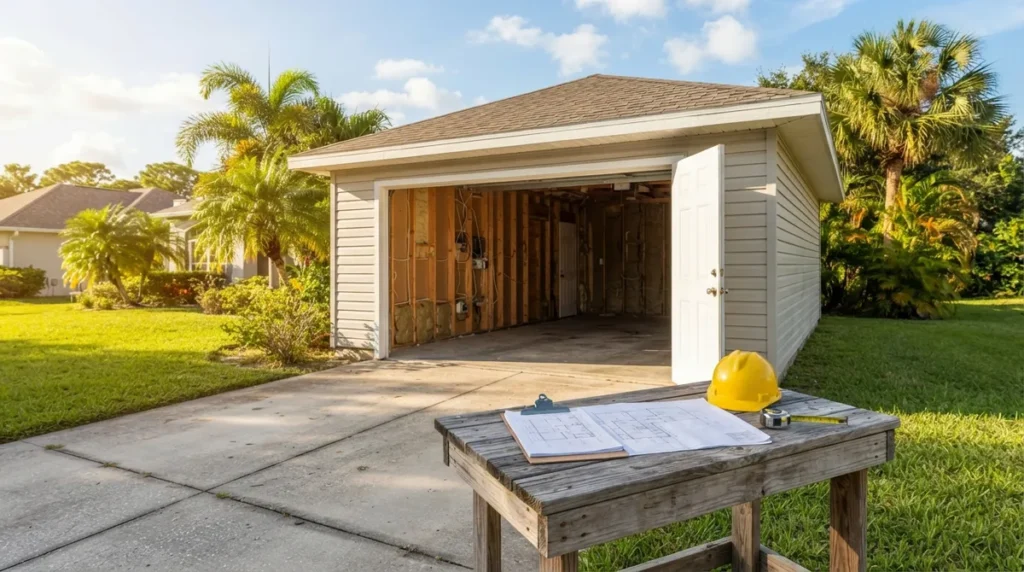
Florida has no single statewide after-the-fact garage permit; you apply through your city or county building department for the permit the work would have required, disclosing that the garage is already built.
-
Approval is not guaranteed: the existing garage must meet or be correctable to meet local building and zoning rules, so zoning issues like setbacks and lot coverage should be checked early.
-
Identify the correct permitting authority first (city versus county) by checking your property tax record and calling the office to ask how they handle unpermitted existing construction.
-
Gather as-built drawings, a site plan, photos, and any construction records before applying; incomplete or vague plans are a common cause of rejection and delay.
-
Inspectors may require concealed framing or wiring to be opened; engineer letters, construction photos, and detailed as-built drawings can reduce how much must be exposed.
-
Fees are set locally and may include an additional charge for work started without a permit under Florida Building Code §109.4, so confirm the current fee schedule with your building department.
So you bought a house with a garage that looks great, or maybe you built one yourself years ago, and now someone has asked the dreaded question: "Is that permitted?" Take a breath. You are far from alone, and there is usually a path forward.
An after the fact garage in Florida simply means a garage (new, detached, enlarged, or converted) that was built or altered before the required permit was pulled. It is one of the most common situations we see, especially during home sales, insurance reviews, and neighbor complaints. The good news is that many of these garages can be brought into compliance with the right documentation, and sometimes a little corrective work.
In this friendly guide, we will walk through what Florida law says, how the process generally works, what it can cost, and how to avoid the mistakes that slow people down. Whether you are a homeowner, a contractor cleaning up a past job, or a real estate pro staring at a closing date, you will find practical steps here. If you want a team to handle it for you, you can always get a free quote from 1 Contractor Solutions.
What Does "After the Fact" Mean for a Florida Garage?
An after-the-fact permit is a permit sought for work that already exists. Under Florida Statutes §553.79(1)(a), construction, alteration, modification, repair, or demolition of a building generally requires a permit before work begins. The local building department is the enforcing agency.
Here is a detail that surprises many people: Florida does not have one statewide, separately named "after-the-fact garage permit." Instead, you apply through your local city or county for the permit the work would have required, disclose that the garage is already built, and follow that jurisdiction's review, fee, and inspection procedures.
Common after the fact garage situations include:
- A detached garage built without any permit
- An attached garage that was enlarged or extended
- A garage converted into living space, an office, or an apartment
- A carport that was later enclosed
- A garage built by a prior owner, discovered during a sale or refinance
For a deeper look at the general process, our guide on how to get an after-the-fact permit in Florida is a great companion read.
Can You Actually Legalize a Garage Built Without a Permit?
In many cases, yes. But it is important to be honest about one thing: applying does not guarantee approval. An after the fact garage permit does not legalize a structure that cannot be brought into compliance with applicable building and zoning rules.
Approval generally depends on whether the existing garage can be shown, and corrected if necessary, to meet the code. Reviewers may look at several things beyond the structure itself.
| Review Area | What the Jurisdiction May Check |
|---|---|
| Zoning and setbacks | Distance from property lines, easements, and other structures |
| Lot coverage | Whether the garage pushes total built area past local limits |
| Foundation and structure | Slab, footings, framing, connections, and roof structure |
| Wind resistance | Garage door ratings, anchoring, and roof-to-wall connections |
| Flood requirements | Elevation and construction rules in flood zones |
| Electrical and other trades | Wiring, panels, outlets, and any plumbing or HVAC |
Because requirements vary by county and municipality, the same garage could face very different reviews in different places. If zoning is the sticking point, such as a setback violation, that can be the hardest issue to solve, so it is smart to find out early.
If you are wondering about the bigger picture of cleaning up past work, see unpermitted work in Florida and how to legalize it.
Which Office Handles Your After-the-Fact Garage Permit?
This trips up a lot of owners. Your property may be in a city, in unincorporated county land, or sitting near a boundary line where the answer is not obvious. The permitting authority is whichever government actually has jurisdiction over your parcel.
A quick way to sort it out:
- Check your property tax bill or county property appraiser record for your municipality listing.
- Use our building department lookup to identify the right office.
- Call that office and ask how they handle permits for existing, unpermitted construction.
- Request their current fee schedule and checklist for after-the-fact submissions.
If you are unsure who reviews your project, our article on which Florida jurisdiction reviews my project breaks it down. We work in all 67 Florida counties, including busy markets like Hillsborough County, Miami-Dade County, and Orange County, so we know how different these offices can be.
What Documents Do You Need for an After-the-Fact Garage Permit?
The more organized you are, the smoother things go. Think of it like packing for a trip: a little prep prevents a lot of scrambling. Most jurisdictions will want some combination of the following.
- Property information: parcel number, legal description, and owner details
- Site plan: showing the garage location, dimensions, setbacks, and easements
- As-built drawings: floor plan, elevations, and construction details of what actually exists
- Photos: exterior, interior, framing (if visible), and the roof
- Contractor information: if a contractor built it, their name and license details
- Any available plans or records: old drawings, receipts, or prior permits
- Signed and sealed documents: when the jurisdiction or project requires a Florida-licensed design professional
Our as-built drawings and site plans services are designed for exactly this stage. When a structural review is needed, an engineer letter backed by in-house sealed drawings can answer the reviewer's questions on the first pass.
The Step-by-Step Process
While details vary locally, most after the fact garage permits follow a similar rhythm.
- Identify the permitting authority. Confirm whether your city or county handles it.
- Ask about their process. Many offices have a specific path for unpermitted existing construction.
- Gather records and measurements. Document what is there today, accurately.
- Prepare the plans. Draft as-built plans and a site plan, and obtain engineering if required.
- Submit the application. Disclose that the work was already completed and pay applicable fees.
- Respond to review comments. Reviewers may ask for clarifications or corrections.
- Complete required corrections. Some work may need to be altered, strengthened, or opened for inspection.
- Pass inspections and close out. Final approval closes the permit.
A good plan review coordination partner can keep step 6 from dragging on. If your application gets kicked back, revisions and resubmittals support helps you respond quickly and correctly.
Will Inspectors Make You Open Walls or Ceilings?
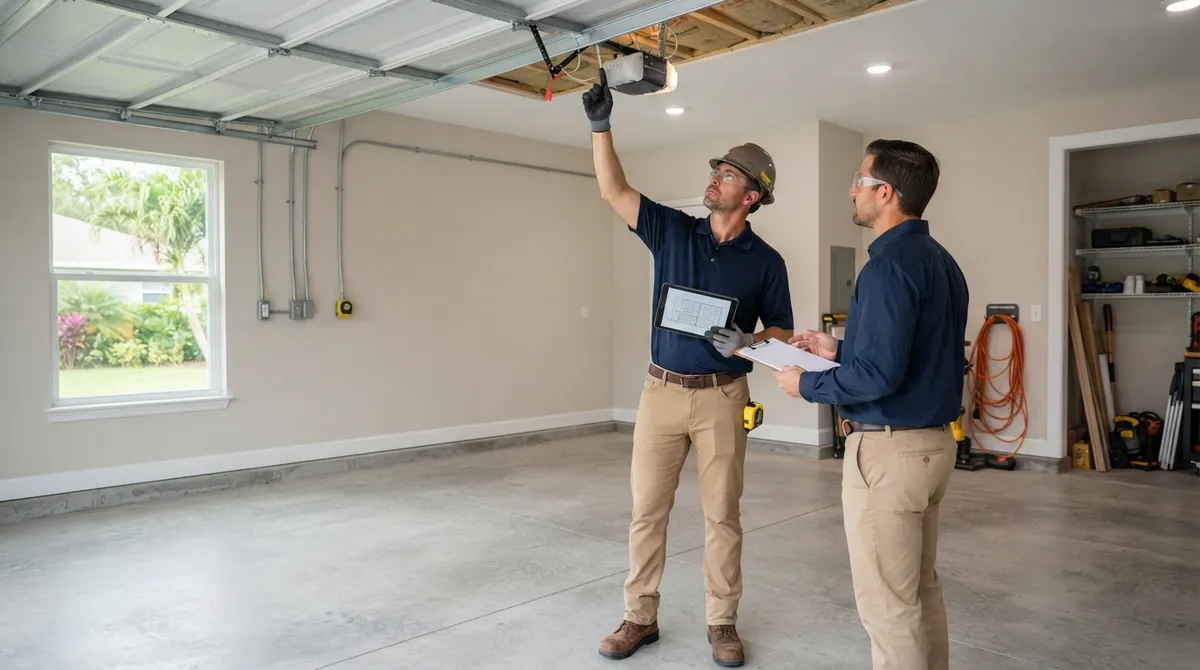
This is the question that makes most homeowners nervous, so let us be straightforward. Florida Building Code inspection provisions require that work be accessible for inspection. If framing, wiring, or other construction is concealed behind finishes, a local inspector may require those finishes to be opened up so the hidden work can be evaluated.
That does not mean every wall will be torn apart. What gets opened depends on the authority having jurisdiction, the type of garage, and what documentation you can provide. Engineer letters, photos taken during construction, and detailed as-built drawings sometimes reduce how much needs to be exposed.
A few ways to reduce surprises:
- Ask the building department in advance how they handle concealed work
- Keep any construction photos, receipts, or material records you have
- Have an engineer evaluate the structure before the inspection when appropriate
- Schedule inspections only after your documentation is complete
Our guide to what happens during a Florida ATF site inspection walks through what to expect on the day.
How Much Does an After-the-Fact Garage Permit Cost in Florida?
There is no single statewide price, and anyone quoting you one without knowing your jurisdiction is guessing. Local governments set their own permit and inspection fees. Florida Building Code §109.4 allows a local building official to assess an additional fee for work started before a permit was issued, subject to local rules. Any multiplier or investigation charge should be verified in the jurisdiction's current fee schedule.
For a sense of local variation, Charlotte County's residential garage page lists a $200 application fee for projects valued below $50,000, plus other listed review or building fees. That is one county's example, not a statewide rate, so always confirm current numbers with your own building department.
| Cost Category | What to Expect |
|---|---|
| Application and permit fees | Set locally; varies widely by county and city |
| Additional fee for work done without a permit | Allowed under Florida Building Code §109.4; check the local fee schedule |
| Drawings and drafting | As-built plans and site plan prepared for submission |
| Engineering | Structural or MEP letters and sealed documents, if required |
| Corrective work | Depends entirely on what the review finds |
For more on budgeting, read our breakdown of after-the-fact permit cost in Florida.
What Happens If the Garage Does Not Meet Code or Zoning?
Let us talk about the scenario no one loves to think about. If the garage does not comply with applicable code or zoning requirements, the owner may need to provide additional documentation, make corrections, or remove or alter the noncompliant work.
Here is how the possibilities typically sort out:
- Minor code gaps: often fixed with added connectors, a corrected garage door rating, or updated electrical work
- Structural concerns: may need engineered repairs, reinforcement, or additional documentation
- Zoning conflicts: such as setbacks or lot coverage, can require a variance, a redesign, or partial removal
- Unsafe or unfixable construction: may need to be altered or removed
The key is to find out which category you are in before you spend money on fees. A short pre-application conversation or a professional feasibility review can save you from paying for a permit you cannot obtain. If you are weighing options, our piece on after-the-fact permits versus starting fresh can help.
Do You Need a Permit for a Detached Garage or Conversion?
Generally, yes. A new detached garage is a building, and Florida's permit requirement applies. Converting a garage into living space is also a significant alteration, often involving egress, ventilation, electrical, energy code, and sometimes flood or zoning considerations.
Garage conversions are especially tricky because they can change a home's parking count, occupancy, and required systems. Many homeowners discover this only when a lender, appraiser, or buyer flags it. We cover this topic in more depth in can I get an after-the-fact garage conversion permit in FL.
Who Needs This Most, and Why?
Different people land in this situation for different reasons, and the best approach shifts a bit depending on who you are.
- Homeowners: Often discover the issue during a refinance, insurance claim, or sale. A clear plan keeps stress low.
- Real estate professionals and investors: A permit hold can derail a closing. Our realtor closing support is built for tight timelines.
- General contractors: Cleaning up a prior job or inherited project requires accurate drawings and clean filings.
- Design and trade professionals: Outsourced drafting and engineering keeps your team focused on billable work.
If a closing is on the line, you may also want to read whether a permit hold can delay a Florida real estate closing.
Common Mistakes to Avoid
After helping with permits across Florida, we see the same stumbles again and again. Here is how to sidestep them.
- Guessing which office to call. Verify city versus county first.
- Submitting incomplete drawings. Vague plans invite rejection and delay.
- Ignoring zoning until late. Check setbacks and lot coverage at the start.
- Assuming approval is automatic. A permit application is not a guarantee.
- Skipping professional help when it is needed. Some jurisdictions require signed and sealed documents from a Florida-licensed design professional.
- Waiting for a violation notice. Voluntary applications are usually less stressful than responding to enforcement.
If you have already received a notice, code compliance violation support can help you respond correctly and on time.
Why Work With a Florida Permitting Team?
Handling an after the fact garage on your own is possible, but it can feel like juggling flaming torches while the county watches. A dedicated team takes the load off.
1 Contractor Solutions acts as Florida's outsourced permitting department. We prepare or review plans, file the application, track it, work every reviewer comment, and carry it through approval and closeout. Our drafting and engineering are in-house, and our own engineer signs and seals the work, so when a reviewer flags something, we fix it without waiting on an outside consultant. We also respond within 30 minutes day or night, and se habla español. Learn more about our after-the-fact and expired permit services, and see what customers say when you visit us on Google — 1 Contractor Solutions.
Prefer to keep up with us between projects? You can follow us on LinkedIn or follow us on Facebook for Florida permitting tips and updates.
Your Next Steps
Getting a garage legalized in Florida is very doable when you approach it calmly and methodically. Start by identifying your permitting authority, gather your property records and photos, and get accurate as-built drawings together. Then decide whether you need engineering support, and ask the building department how they handle concealed work.
Remember the big takeaways: permits are required before covered work begins under Florida law, there is no single statewide after-the-fact garage process, fees and any additional charges are set locally, and approval depends on whether the garage can meet applicable code and zoning. You do not have to figure it all out alone.
Ready to turn that unpermitted garage into a fully permitted asset? Get a free quote from our team today, and let us take the paperwork, the plans, and the inspections off your plate. You have got this, and we are here to help.
FAQs
How do I get an after-the-fact permit for a garage in Florida?
Start by identifying whether your city or county issues permits for your property, then ask how they handle unpermitted existing construction. Gather a site plan, as-built drawings, photos, and any records, then submit the application and disclose that the garage is already built. From there, you will follow the local review, fee, and inspection process.
Can I get a permit for a garage that was built without one in Florida?
Often you can, but it is not guaranteed. Approval depends on whether the existing garage meets, or can be corrected to meet, applicable building and zoning requirements. If it cannot be brought into compliance, you may need to alter or remove the noncompliant work.
Will Florida inspectors make me open walls in an unpermitted garage?
They might. Florida Building Code requires work to be accessible for inspection, so an inspector may ask for finishes to be opened to evaluate concealed construction. Good documentation, photos, and an engineer letter can sometimes limit how much needs to be exposed.
How much does an after-the-fact garage permit cost in Florida?
There is no single statewide price because local governments set their own fees. Florida Building Code §109.4 allows an additional fee for work started before a permit, so check your jurisdiction's current fee schedule. Charlotte County, for example, lists a $200 application fee for projects under $50,000, plus other fees.
Do I need a permit for a garage conversion in Florida?
Generally yes, since converting a garage is a significant alteration that can involve electrical, egress, energy code, and zoning rules. Requirements vary by county and city, so confirm with your local building department before or after the work.
We do this work every day across all 67 Florida counties. Call (866) 314-6931 and we will tell you what your situation actually requires — including when you do not need us.
Related services
Permit Facilitation & Filing
You have a crew scheduled, a client asking for dates, and a permit sitting somewhere in a queue you cannot see. We file it, w…
See the servicePlan Review Coordination
A permit in plan review is not one queue. On a commercial project it can be six queues, each with its own reviewer, its own c…
See the serviceReady to get your permit moving?
One call tells you which jurisdiction controls your project, what it will take, and what it will cost. Most of the time we can scope it on the phone.