
Blog
Proving Unpermitted Work Is Correct in Florida: 2026 Guide
Learn how to prove unpermitted work is code-compliant in Florida through after-the-fact permits, records, and sealed engineering evaluations.
Key Takeaways
-
The strongest proof that unpermitted work was done correctly is an after-the-fact permit with passed inspections; contractor verbal assurances and receipts alone carry little weight with building officials.
-
Proof is local, not statewide: the building official in your city or county decides what evidence is acceptable, so confirm your jurisdiction and its specific after-the-fact process first.
-
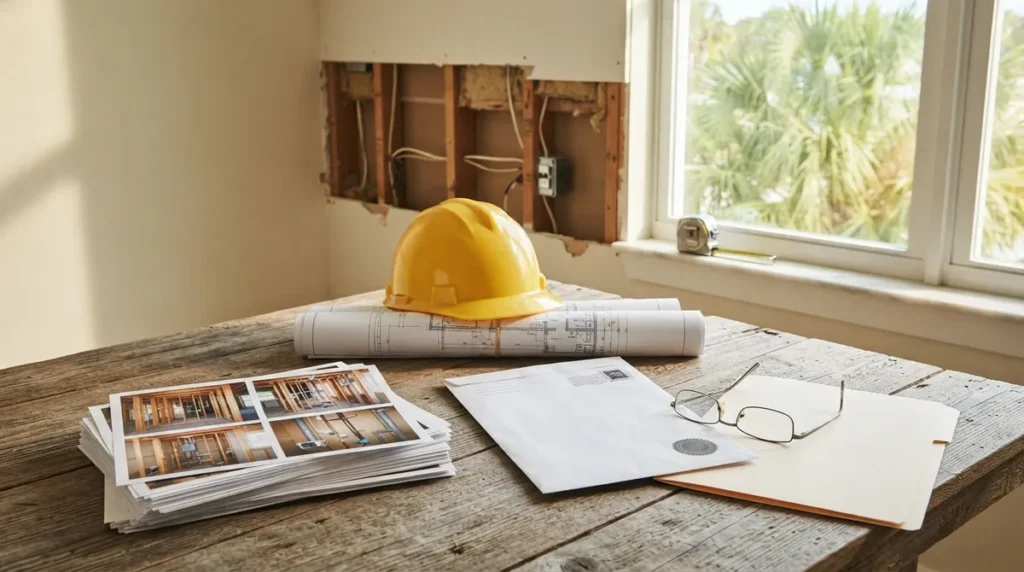
Build an evidence package with dated construction photos of concealed work, invoices describing scope, as-built drawings, product approvals, and third-party inspection reports.
-
For work hidden behind walls, flooring, or roofing, a Florida-licensed engineer or architect can inspect and issue a sealed report, though it supports rather than replaces official approval.
-
Do not open finished surfaces or alter evidence on your own; get written direction from the building department first to avoid unnecessary demolition and repair costs.
-
A permit issued after work is finished is only the start; a final approval after passed inspections is the real proof of compliance, and failed items must be corrected and reinspected.
So the work is already done, and now someone wants to know whether it was done right. Maybe a buyer's inspector flagged it. Maybe a lender is asking questions. Maybe you just bought the house and found a patio enclosure nobody mentioned. First, take a breath. This happens to Florida property owners all the time, and there is a clear path forward.
Here is the honest short answer to how do i prove work was done correctly without a permit in florida: a contractor's word or a stack of receipts will not do it by themselves. The strongest proof comes from disclosing the work to your local building department and completing its after-the-fact permitting process, including plan review, inspections, and any required corrections.
That said, records and a Florida-licensed engineer's evaluation can carry a lot of weight along the way. In this guide, we will walk through what counts as evidence, what building officials actually accept, how concealed work gets handled, and how to avoid the mistakes that slow people down in 2026.
Why a Permit Matters More Than a Promise
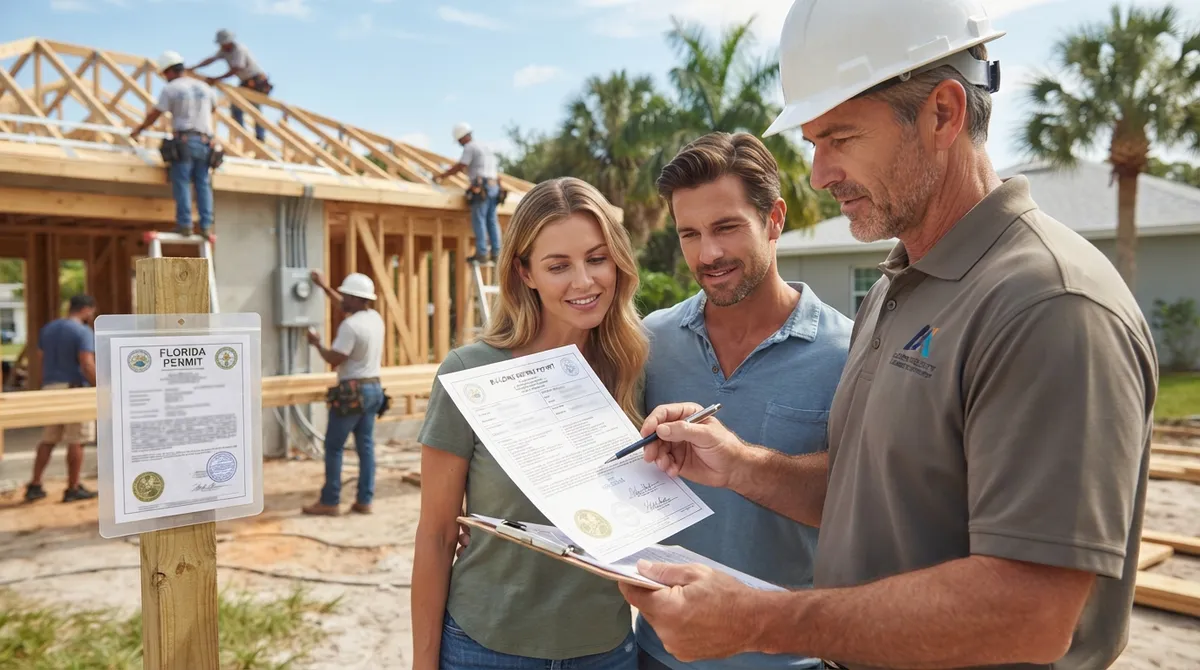
Under Florida Statutes §553.79(1)(a), covered construction, alteration, repair, or demolition generally requires a permit before work begins. Whether your specific job needed one depends on the work itself and your local enforcing agency.
When the permit step gets skipped, there is no inspection record. That record is what lenders, insurers, appraisers, and buyers look for. Without it, nobody can verify that the framing, wiring, plumbing, or connections meet code.
Here is the key point many owners miss: there is no single statewide document that automatically proves unpermitted work was done correctly. Proof is local. It comes from the building official in your city or county, who decides what evidence is acceptable.
Step One: Find the Authority Having Jurisdiction
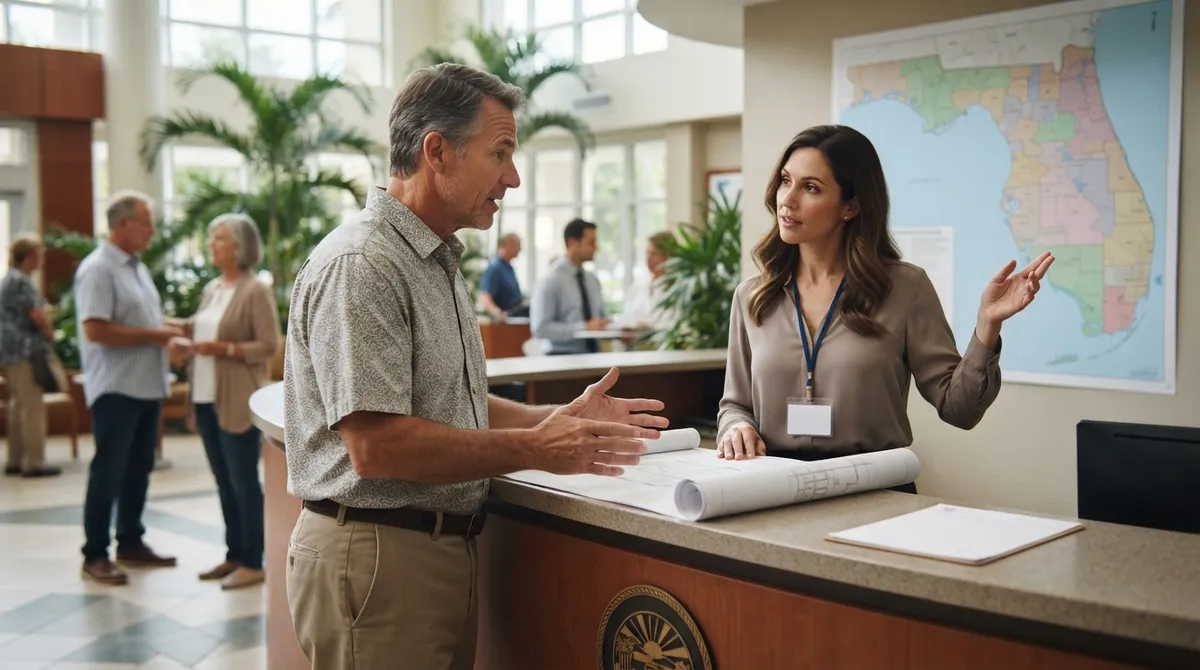
Before you gather anything, figure out who actually controls your property. In Florida, that could be a city building department, a county office, or a special district. Near city lines, the answer is not always obvious.
Our free building department lookup tool can help you identify the right office. You can also run an open permit search to see whether any prior permits, open or expired, are tied to the address.
Why does this matter? Because requirements, fees, and acceptable evidence vary from one jurisdiction to the next. What Miami-Dade accepts may differ from what Charlotte County or Hillsborough County wants.
What Counts as Evidence That Work Was Done Correctly
No single item settles the question, but a well-organized evidence package makes your case much easier to review. Think of it as helping the building official understand what was built, when, and how.
Useful Supporting Records
- Dated construction photographs showing framing, wiring, plumbing, and connections before they were covered
- Contractor invoices and scope descriptions that explain what was installed
- Approved or as-built drawings showing the finished condition
- Product approvals and specifications for windows, doors, roofing, or other regulated materials
- Inspection or test reports from any third party who looked at the work
- Contractor or design-professional certifications describing what was verified
These records help explain the work. They do not replace the local authority's permit and inspection requirements, so treat them as supporting evidence, not a substitute.
How Evidence Compares: What Helps and What Falls Short
| Type of Proof | How Much It Helps | Limitation |
|---|---|---|
| Contractor verbal statement | Very little | No documentation, no verification |
| Invoices and receipts | Moderate | Show scope and cost, not code compliance |
| Dated photos of concealed work | Strong | Must clearly show the components in question |
| As-built drawings | Strong | Must match what is actually on site |
| Sealed engineer evaluation | Very strong | Still subject to building official approval |
| After-the-fact permit with passed inspections | Strongest | Requires going through the full local process |
The Role of a Florida-Licensed Engineer or Architect
When work is hidden behind drywall, under flooring, or inside a roof system, an inspector cannot simply look at it. This is where a Florida-licensed professional engineer or registered architect often comes in.
A professional can evaluate the work through direct inspection, document the verification method, and prepare a sealed report or letter. Miami-Dade County's January 2026 work-without-permit guidance is a good local example. It describes a work-without-permit certificate prepared and sealed by a Florida-licensed professional engineer or registered architect, based on direct inspection and an explanation of how the work was verified.
Charlotte County takes a different route with its Affidavit Program, which involves architect or engineer affidavits, inspection reporting, and signed-and-sealed as-built drawings. Both are local programs, not statewide rules, so always confirm what your jurisdiction offers.
If you need this kind of documentation, our in-house team handles engineer letters, as-built drawings, and structural engineering with our own engineer signing and sealing the work.
The Concealed Work Problem
Concealed work is the biggest obstacle in most cases. Inspectors may need to see framing, wiring, plumbing, connections, or other components that are no longer visible.
Depending on the jurisdiction, the building official may require one or more of the following:
- Selective demolition to expose key components
- Testing of systems or connections
- Photographs or construction records showing the work before it was covered
- Evaluation and certification by a Florida-licensed architect or engineer
A practical tip: do not open finished surfaces on your own. Get written direction from the building department first, so you only expose what is actually needed. That can save you a lot of repair cost and frustration.
The Step-by-Step Path to Proving Compliance
Every jurisdiction has its own quirks, but the general route looks like this:
- Identify the authority having jurisdiction. Confirm whether your city or county controls the property.
- Research the permit history. Check for open, expired, or missing permits tied to the address.
- Disclose the work. Contact the building department and ask about their after-the-fact or work-without-permit process.
- Gather your records. Collect photos, invoices, drawings, product approvals, and any prior reports.
- Commission professional documentation if needed. This may include as-built plans and a sealed engineer evaluation.
- Submit the application. File the plans, documents, and any required forms.
- Complete plan review and inspections. Respond to reviewer comments promptly.
- Correct anything that fails. Fix deficiencies and request reinspection.
- Close out the permit. A final approval is your real proof of compliance.
If this sounds like a lot to juggle, that is exactly what our after-the-fact and expired permit services are built for. Our guide on how to legalize unpermitted work in Florida goes deeper on the process.
A Permit Issued Late Is Not a Free Pass
Here is something that surprises many owners. A permit issued after the work is finished does not, by itself, establish code compliance. The building official may still require plans and specifications, access to inspect, and evidence addressing the applicable code requirements before approving the permit or closing it out.
In other words, getting the permit number is the beginning, not the end. Passed inspections are what count.
What About Fees and Penalties?
Costs vary widely. Florida Statutes do not set a single statewide after-the-fact permit fee. Some local ordinances impose additional or double fees for work done without a permit, and others charge standard rates.
| Cost Factor | What Can Affect It |
|---|---|
| Permit fees | Local fee schedule; some jurisdictions add penalty multipliers |
| Plans and drawings | Size and complexity of the work |
| Engineering evaluation | Type of work, access, and testing required |
| Selective demolition and repair | How much concealed work must be exposed |
| Corrections | Whether the work passes review or needs fixing |
For a closer look at pricing, see our article on after-the-fact permit costs in Florida and the rundown of penalties for building without a permit.
What If the Work Fails Inspection?
It can happen, and it is not the end of the world. If the work fails review or inspection, you may need to correct the deficiency and request reinspection. Sometimes that means a modest fix, like adding a missing connector. Other times it can involve more significant corrections.
This is exactly why a professional evaluation before you submit can be so valuable. Finding a problem on your own timeline is far better than discovering it during an official inspection.
Who This Matters Most To
Homeowners and Buyers
If you bought a property with unpermitted work, you generally want to resolve it before it blocks a refinance, insurance claim, or future sale. Our homeowner services are designed for exactly this situation.
Realtors and Investors
Unpermitted work discovered mid-transaction can derail a closing. Early research and a clear plan keep deals moving, and our realtor closing support is built for that pressure. See also how a permit hold can delay a Florida closing.
Contractors and Solar Companies
If a job was completed without a permit, documenting and legalizing it protects your license and your reputation. Our team supports general contractors and solar contractors with filing, tracking, and revisions.
Mistakes to Avoid
- Hiding or altering evidence. Never conceal, remove, or change the work before the building department weighs in.
- Opening walls without direction. Get written guidance first so you do not tear into finished surfaces unnecessarily.
- Relying on a contractor's say-so. A verbal assurance has no standing with a building official.
- Ordering certifications blindly. A professional letter helps only if your jurisdiction will accept it.
- Assuming one county's process applies everywhere. Local rules differ, so confirm yours.
How We Can Help
At 1 Contractor Solutions, we act as Florida's outsourced permitting department. We prepare or review the plans, file the application, track it, work every reviewer comment, and carry it through approval and closeout. Because our drafting and engineering are in house, and our own engineer signs and seals the work, we can fix issues quickly instead of waiting on an outside consultant.
A permitting consultant can assemble the application and evidence, but only the building official decides what is accepted locally. We will always tell you that plainly. You can read what other owners say on our reviews page, or Visit us on Google — 1 Contractor Solutions. For Florida code and permitting background, the official Florida Statutes §553.79 is worth a read, and you can also follow us on LinkedIn or follow us on Facebook for updates.
Final Thoughts
Proving that unpermitted work was done correctly in Florida comes down to one reliable idea: let the local building official verify it. Records, photos, and sealed engineering reports all help build your case, but the after-the-fact permit and passed inspections are what turn a question mark into a clean record.
The sooner you start, the more options you have. Identify your jurisdiction, gather your documents, avoid disturbing evidence, and get professional help where it counts. You do not have to figure this out alone.
Ready to move forward? Reach out to our team and get a free quote. We respond within 30 minutes, day or night, and se habla español.
FAQs
Can I get a permit after work has already been completed in Florida?
In many Florida jurisdictions, yes. You generally disclose the work to your local building department and follow its after-the-fact permit process, which usually includes plan review, inspections, and any needed corrections. Procedures and fees vary by city and county, so confirm with your local office first.
Will the building inspector make me open walls for unpermitted work?
Possibly, if key components are hidden and cannot be verified another way. The jurisdiction may instead accept photos, records, or a sealed engineer evaluation, but the building official decides what is acceptable. Ask for written direction before opening anything on your own.
Can a Florida engineer or architect certify work that was done without a permit?
Yes, a Florida-licensed engineer or architect can evaluate the work through direct inspection and prepare a sealed report. Miami-Dade's 2026 guidance is one local example. Just remember that the letter supports your case but does not replace the building official's approval.
Are after-the-fact permit fees higher in Florida?
It depends on where you are. Florida Statutes do not set one statewide after-the-fact fee, and some local ordinances add penalty or double fees. Check your city or county's current fee schedule to know what to expect.
What happens if unpermitted work fails inspection?
You will typically need to correct the issue and request a reinspection. Some fixes are small, while others take more effort, which is why a professional evaluation before submitting can save you time and money.
We do this work every day across all 67 Florida counties. Call (866) 314-6931 and we will tell you what your situation actually requires — including when you do not need us.
Related services
Permit Facilitation & Filing
You have a crew scheduled, a client asking for dates, and a permit sitting somewhere in a queue you cannot see. We file it, w…
See the servicePlan Review Coordination
A permit in plan review is not one queue. On a commercial project it can be six queues, each with its own reviewer, its own c…
See the serviceReady to get your permit moving?
One call tells you which jurisdiction controls your project, what it will take, and what it will cost. Most of the time we can scope it on the phone.