
Blog
Can You Legalize an After-the-Fact ADU in Florida?
Built an ADU without a permit? Learn how after the fact ADU approval works in Florida, from zoning checks to plans, inspections, and costs.

Key Takeaways
-
Florida has no statewide after-the-fact ADU process; zoning, plan requirements, inspections, and fees depend on your city or county, so start by identifying the local authority having jurisdiction.
-
Legalization is never automatic: first confirm the ADU is allowed under local zoning (lot size, setbacks, size limits, owner occupancy, homestead rules), then confirm the structure meets the Florida Building Code as built or can be corrected.
-
Expect to document the as-built condition with measured drawings, site plans, structural and MEP details, and engineer or architect certification where required; inaccurate drawings are a common reason submittals get rejected.
-
Concealed work may require exposing portions of walls or a third-party engineering evaluation, but targeted inspection windows, photos, contractor records, and testing can sometimes reduce the exposure.
-
Some jurisdictions double the permit fee for after-the-fact work and may assess impact fees or penalties, so verify current fees with the local building department before budgeting.
-
Do not rent or occupy the unit while the permit is pending without confirming with the building department and your insurer, and always close out the permit with a final inspection so the issue does not resurface at sale or refinance.
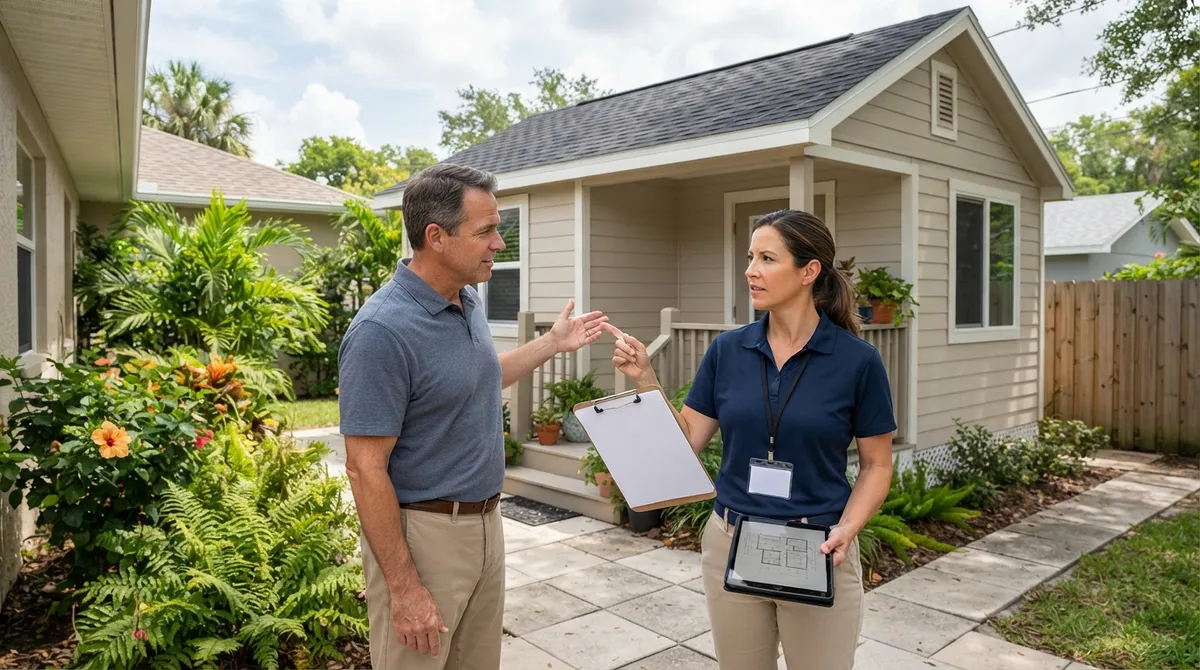
So you have a granny flat, a garage apartment, or a backyard cottage on your property, and somewhere along the way you realized nobody ever pulled a permit for it. Take a breath. You are in good company, and in 2026 there is a real path forward for many Florida owners. An after the fact ADU in Florida is simply an accessory dwelling unit that was built or altered without the required approvals and is now being reviewed so it can be made legal.
The catch is that Florida does not have one statewide application for this. Zoning rules, plan requirements, inspections, and fees all depend on the city or county where your property sits. That is why a friendly, step-by-step approach matters. In this guide, we will walk through what after-the-fact ADU approval really means, what reviewers look for, what documents you will need, and how to avoid the mistakes that slow people down. Whether you are a homeowner, a buyer, a realtor, or a contractor helping a client, you will leave with a clear roadmap.
What Does After-the-Fact ADU Mean in Florida?
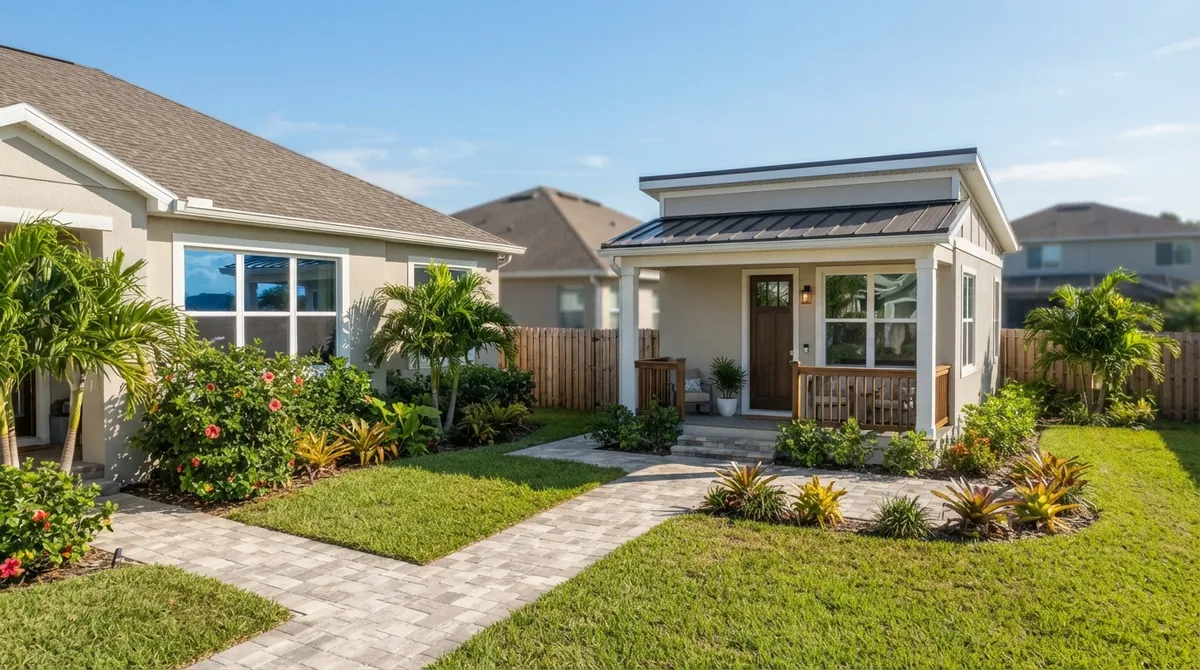
An accessory dwelling unit is a secondary living space on the same lot as a primary home. It might be a detached cottage, a converted garage, a room above a garage, or an attached in-law suite with its own kitchen and bath. When that unit gets built or converted without a building permit, it becomes an unpermitted structure.
Florida Statutes section 553.79 generally makes it unlawful to construct, erect, alter, modify, repair, or demolish a building without first obtaining the required permit. The local enforcing agency, usually your city or county building department, administers permits and sets the fees. When an owner tries to correct a missed permit, the process is commonly called an after-the-fact, retroactive, or as-built permit.
If you want a broader overview of how this works across the state, our guide on what is after-the-fact permitting in Florida is a helpful companion read.
Common Ways ADUs End Up Unpermitted
- A previous owner converted a garage or added a cottage and never mentioned it at closing
- A contractor said they would handle the permit and never did
- An owner did the work thinking a small unit did not need approval
- A rental income plan moved faster than the paperwork
- Hurricane repairs expanded the footprint without a new permit
Can You Actually Legalize an ADU After It Is Built?
Often, yes, but it is never automatic. Legalization depends on two big questions. First, is an ADU even allowed on your lot under local zoning? Second, can the structure meet the Florida Building Code as built, or be corrected to meet it?
Here is where the details matter. Local ADU rules vary a lot. Orange County's published guidance, for example, limits ADUs to qualifying homestead properties, requires the main home and ADU to stay under the same ownership, and requires the owner to occupy one of the units. Miami-Dade County's published guidance lists a 7,500-square-foot minimum lot size along with other zoning, area, parking, and impact-fee considerations. Those are local examples, not statewide rules, which is exactly why checking your specific jurisdiction first saves so much time.
If the unit violates zoning, such as sitting inside a required setback, being larger than allowed, or being on a lot that does not qualify, you may need a separate zoning approval or variance before the building permit can move forward. In some cases, the unit cannot be approved as built, and corrective changes become part of the plan.
Zoning Versus Building Code: Two Different Hurdles
| Review Type | What It Checks | Possible Outcome |
|---|---|---|
| Zoning and land use | Whether an ADU is allowed, lot size, setbacks, size limits, parking, owner occupancy | Approved, approved with conditions, variance needed, or denied |
| Florida Building Code | Structure, electrical, plumbing, mechanical, egress, wind loads, energy | Approved as built, corrections required, or exposed work inspected |
| Local enforcement | Open violations, notices, fines, liens | Case closed after permit finaled, or penalties continue |
Understanding which hurdle you are facing helps you plan realistically. If you are already dealing with a notice, our page on code compliance violations explains how those cases are typically resolved alongside the permit.
Step-by-Step: How After-the-Fact ADU Permitting Typically Works
Every jurisdiction has its own flavor, but most follow a similar rhythm. Here is a practical workflow that reflects how permitting professionals approach these projects:
- Identify the authority having jurisdiction. Confirm whether your property is governed by a city, the county, or a special district. Property near city lines can be tricky. Our building department lookup tool can point you in the right direction.
- Check zoning and ADU eligibility. Confirm lot size, homestead or ownership rules, setbacks, height, maximum unit size, parking, and utility requirements.
- Pull existing records. Look for prior permits, surveys, and any open permits or violations. You can start with our open permit search.
- Document the as-built condition. A site visit and measured drawings capture what was actually built, including the layout, structure, and systems.
- Prepare plans and professional certifications. Depending on the jurisdiction, this can include site plans, floor plans, structural details, and MEP information, with engineer or architect certification where required.
- Apply for the after-the-fact permit and any zoning approvals. File the package with the building department and track it through review.
- Address inspection findings. Complete any corrective work, schedule inspections, and respond to reviewer comments.
- Close out the permit. Obtain final approvals and, where required, a certificate of occupancy or related documentation.
That last step is worth emphasizing. A permit that is never finaled can still cause trouble later, so closing it properly is part of the job, not an optional extra.
What Documents and Plans Will You Need?
Miami-Dade County says legalizing an ADU follows the same general process as a new project and requires a building permit. Its stated submittals include scaled plans showing the property and the work, such as a site plan, floor plan, finish-floor elevation, and applicable structural, electrical, mechanical, plumbing, and roofing details. Some projects may use certification by a licensed design professional. Other Florida jurisdictions ask for similar packages, though the exact list varies.
| Document | Why Reviewers Want It |
|---|---|
| Site plan or survey | Shows setbacks, lot coverage, and location of the ADU |
| As-built floor plan | Documents room layout, egress, kitchen, and bath locations |
| Structural information | Confirms foundation, framing, roof, and wind-load compliance |
| Electrical, plumbing, and mechanical details | Confirms systems meet code and are safely connected |
| Engineer or architect letter or seal | Certifies the existing work where the jurisdiction requires it |
| Zoning and ownership proof | Supports ADU eligibility, such as homestead or occupancy rules |
This is where in-house drafting and engineering can make a big difference. Services like as-built drawings, site plans, and engineer letters are often the heart of an after-the-fact package. When one team drafts and seals the work, reviewer comments get fixed faster instead of bouncing between outside consultants.
Will Inspectors Make You Open Walls?
This is the question that keeps owners up at night, and the honest answer is: sometimes. Unpermitted work may need to be exposed or otherwise documented so inspectors or qualified professionals can evaluate concealed construction, such as framing, wiring, plumbing, and insulation. St. Lucie County, for example, notes that concealed work may require a third-party engineering analysis.
The good news is that this is not always a demolition party. Depending on the jurisdiction, alternatives might include:
- Opening small inspection windows in drywall rather than removing entire walls
- Providing photographs, material records, or contractor documentation
- Using a licensed engineer to evaluate and certify what can be verified
- Performing targeted testing of electrical or plumbing systems
What your building department accepts is up to the local official. A calm, well-organized approach with solid documentation usually goes a long way toward keeping the exposure minimal.
How Much Does an After-the-Fact ADU Permit Cost?
There is no single statewide fee schedule, and anyone quoting you one number for all of Florida is guessing. Costs vary by jurisdiction and project size. As one local example, St. Lucie County's building FAQ says its after-the-fact permit fee is double the standard fee. That is a local example, not a statewide rule, and other counties handle penalties differently.
Here are the main cost buckets to plan for:
- Permit fees: Standard fees, plus any after-the-fact surcharge your jurisdiction applies
- Impact fees: Some areas assess impact fees on ADUs, which can be significant
- Drafting and engineering: As-built plans, structural review, and MEP documentation
- Corrective construction: Any repairs needed to meet code
- Fines or liens: If a violation case is already open
For a deeper look at typical numbers and how to estimate, see our breakdown of after-the-fact permit costs in Florida. Always verify current fees with the relevant local building department before budgeting.
What If the ADU Violates Zoning Rules?
This is the toughest scenario, and it deserves honesty. If the unit sits in a setback, exceeds the allowed size, or is on a lot that does not qualify, the building permit alone will not fix the problem. You may need a variance, a special exception, or a design change before the building department can approve anything.
Depending on the situation, your options could include:
- Requesting a zoning variance or administrative relief where the code allows
- Reducing the footprint or modifying the structure to meet setbacks
- Changing the use, such as removing the kitchen so the space is no longer a dwelling unit
- Converting the space to a permitted accessory use instead
These are decisions to make with a professional who knows your local code, because the right answer depends on your lot, your goals, and what your jurisdiction will accept. Our team handles this kind of research every day, and our guide to legalizing unpermitted work in Florida covers the wider decision tree.
How Do Local Rules Differ Across Florida?
Florida is a big state with very different building departments. A process that is smooth in one county can look completely different an hour away. Here is a quick comparison of how local factors tend to vary:
| Factor | What Varies by Jurisdiction |
|---|---|
| ADU eligibility | Homestead requirements, owner-occupancy, lot size minimums |
| Plan requirements | Level of detail, who may certify, sealed drawings required or not |
| Fees and penalties | Standard fee, doubled fee, fines, or liens |
| Inspection approach | Exposure of concealed work versus engineer certification |
| Timelines | Review queues, resubmittal cycles, backlog |
If you are in a high-demand area, check our county pages for Miami-Dade County, Orange County, Hillsborough County, and the rest of Florida for local context. Because no reliable statewide count of unpermitted ADUs or legalization success rate has been established, you should treat any blanket claims about approval odds with healthy skepticism and focus on your own jurisdiction's rules.
Can You Rent or Occupy the ADU While the Permit Is Pending?
This is a very common question, especially for owners counting on rental income. The answer varies by jurisdiction and by your situation. In many places, occupying or renting a unit with open violations or without a certificate of occupancy can create additional legal, insurance, and safety risks. An open case may also affect lenders, insurers, and future buyers.
The safest move is to ask your local building and zoning department what is allowed while the permit is pending, and to confirm with your insurance provider as well. Do not assume that applying for the permit automatically gives you permission to rent.
Why Closing the Permit Matters for Sellers and Buyers
If you are buying or selling a Florida home with an unpermitted ADU, you may run into appraisal issues, lender questions, or a title or permit hold. The earlier you deal with it, the more options you have. Realtors and investors often find that a clean, finaled permit protects value and keeps closings on track.
Our realtor closing support was built for exactly these moments, and our article on what to do when an open permit is found at closing walks through the typical pressure points. For contractors who inherit a messy job, our general contractor support keeps the permit work moving so your crew stays busy.
Common Mistakes to Avoid
- Skipping the zoning check. A perfect building plan will not save a unit the zoning code does not allow.
- Assuming a statewide process. Rules differ by city and county, so always start with the local authority.
- Ignoring open notices. Unresolved violations can lead to fines or a lien.
- Guessing at the as-built condition. Inaccurate drawings are a top reason for rejected submittals.
- Starting corrective work before confirming the plan. Changes made without approval can create more rework.
- Treating the final inspection as optional. Without a finaled permit, the problem can resurface at sale or refinance.
When to Bring in a Permitting Professional
You can try to navigate this alone, and some owners do. But after-the-fact ADU projects involve zoning research, field documentation, engineering, and ongoing communication with reviewers, all at once. A professional can identify the right jurisdiction, prepare accurate plans, coordinate certifications, and handle revisions so you are not decoding reviewer comments at midnight.
At 1 Contractor Solutions, we act as Florida's outsourced permitting department. We are not a construction contractor. We handle after-the-fact and expired permits, prepare the drawings, file and track the application, and work every comment through to closeout, with in-house drafting and engineering and our own sealed drawings. If you want to see how others feel about working with us, visit us on Google — 1 Contractor Solutions to read reviews.
You can also follow us on LinkedIn or follow us on Facebook for permitting tips as rules evolve. For official statute language on permit requirements, the Florida Legislature publishes Section 553.79 of the Florida Statutes online.
Conclusion: Your Next Step Toward a Legal ADU
An unpermitted ADU is stressful, but it is rarely the end of the road. The key is to confirm your jurisdiction, check zoning eligibility, document the as-built condition, and move through the permit and inspection process with accurate plans and professional support. Legalization is not guaranteed, but with the right preparation, many Florida owners get there and finally enjoy their space with confidence.
Ready to find out where your ADU stands? Get a free quote and let our team tell you which jurisdiction controls your property, what it will take, and how fast we can get your permit moving. Permits approved. Projects moving.
FAQs
Can I legalize an ADU in Florida after it has already been built?
Often you can, but it is not guaranteed. The unit generally has to satisfy your local zoning rules and the Florida Building Code, either as built or after corrections. Start by confirming your jurisdiction and ADU eligibility, then prepare accurate as-built plans.
What permits and plans are needed for an after-the-fact ADU permit in Florida?
You will typically need a building permit supported by scaled plans such as a site plan, floor plan, and structural, electrical, mechanical, and plumbing details. Some jurisdictions also ask for an engineer or architect certification. The exact list varies by city and county, so always confirm with the local building department.
Will I have to open walls for inspections of unpermitted ADU work?
Sometimes, because inspectors may need to see concealed framing, wiring, or plumbing. Many departments allow alternatives like small inspection openings, documentation, or an engineer's analysis. What is accepted depends on the local official, so it helps to ask early.
What happens if my unpermitted ADU violates zoning setbacks or lot-size rules?
A building permit alone will not fix a zoning violation. You may need a variance, a design change to meet the rules, or a change of use so the space is no longer a dwelling unit. A permitting professional can help you weigh the options for your specific lot.
Can I rent or occupy the ADU while the after-the-fact permit is pending?
It depends on your jurisdiction and your situation, and an open permit or violation can create legal, insurance, and safety concerns. Check with your local building and zoning department and your insurer before renting or occupying the unit. Do not assume that filing the permit automatically allows occupancy.
We do this work every day across all 67 Florida counties. Call (866) 314-6931 and we will tell you what your situation actually requires — including when you do not need us.
Related services
Permit Facilitation & Filing
You have a crew scheduled, a client asking for dates, and a permit sitting somewhere in a queue you cannot see. We file it, w…
See the servicePlan Review Coordination
A permit in plan review is not one queue. On a commercial project it can be six queues, each with its own reviewer, its own c…
See the serviceReady to get your permit moving?
One call tells you which jurisdiction controls your project, what it will take, and what it will cost. Most of the time we can scope it on the phone.