
Blog
After-the-Fact Solar Installation in Florida: A 2026 Guide
Solar already installed without a permit? Learn how after-the-fact solar installation works in Florida, including documents, engineering, and inspections.
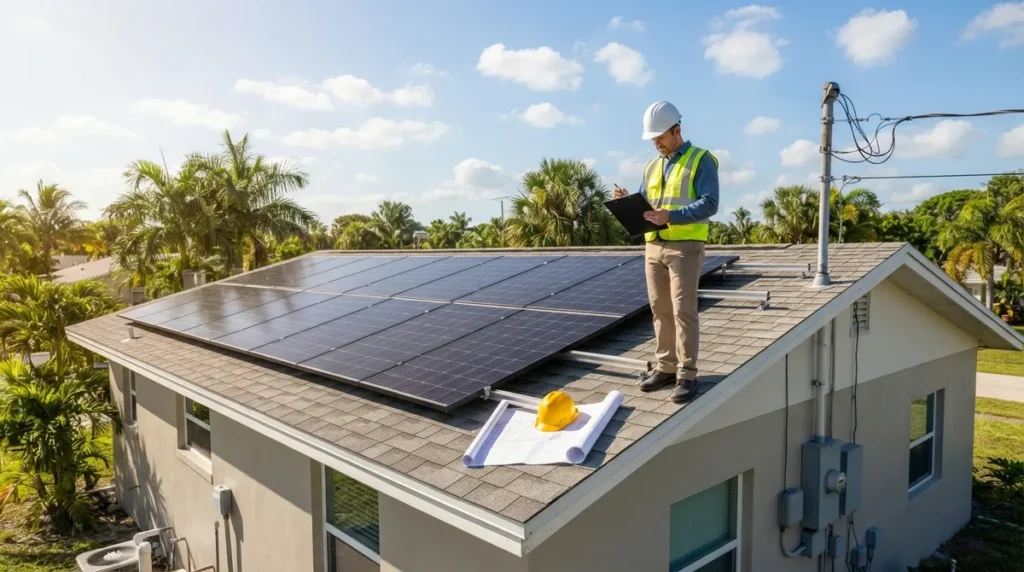
Key Takeaways
-
Florida law makes proceeding with solar installation without a required permit unlawful under §553.79(1)(a), but retroactive (after-the-fact) permits can often bring the system into compliance if it passes review.
-
Whether an after-the-fact solar permit is accepted, and what it requires (engineering letters, plans, corrective work, inspections), is decided by the local building department, with no statewide fee schedule.
-
Expect structural review focused on roof attachment and wind uplift, and often a signed and sealed letter from a Florida-licensed professional engineer; confirm your jurisdiction's requirements before commissioning one.
-
Florida's owner-builder exemption does not cover solar-panel wiring, so a licensed electrical contractor is generally required for the electrical work, including interconnection.
-
A building permit does not approve utility interconnection or permission to operate; those approvals must be obtained separately from the utility.
-
Ask the building department early what inspection evidence they accept, since inspectors may require concealed wiring or attachments to be exposed if they cannot be verified otherwise.
So the solar panels are already on the roof, humming along and shaving dollars off the power bill, and then someone asks, "Was that permitted?" If your stomach just dropped, take a breath. You are far from the first Florida homeowner, buyer, or installer to find themselves in this spot, and there is a real path forward.
An after-the-fact solar installation in Florida simply means a photovoltaic (PV) system went in before the required building or electrical permit was obtained. It happens more often than you might think: a contractor who skipped steps, a prior owner who cut corners, or a lender or appraiser who spotted something during a sale. The good news is that many of these situations can be resolved with the right documentation, engineering, and inspections.
In this guide, we will walk through what the law says, how the process typically works, what documents building departments ask for, and how to avoid the most common mistakes. Whether you are a homeowner, a solar company, a general contractor, or a real estate professional, you will find practical steps you can use right away.
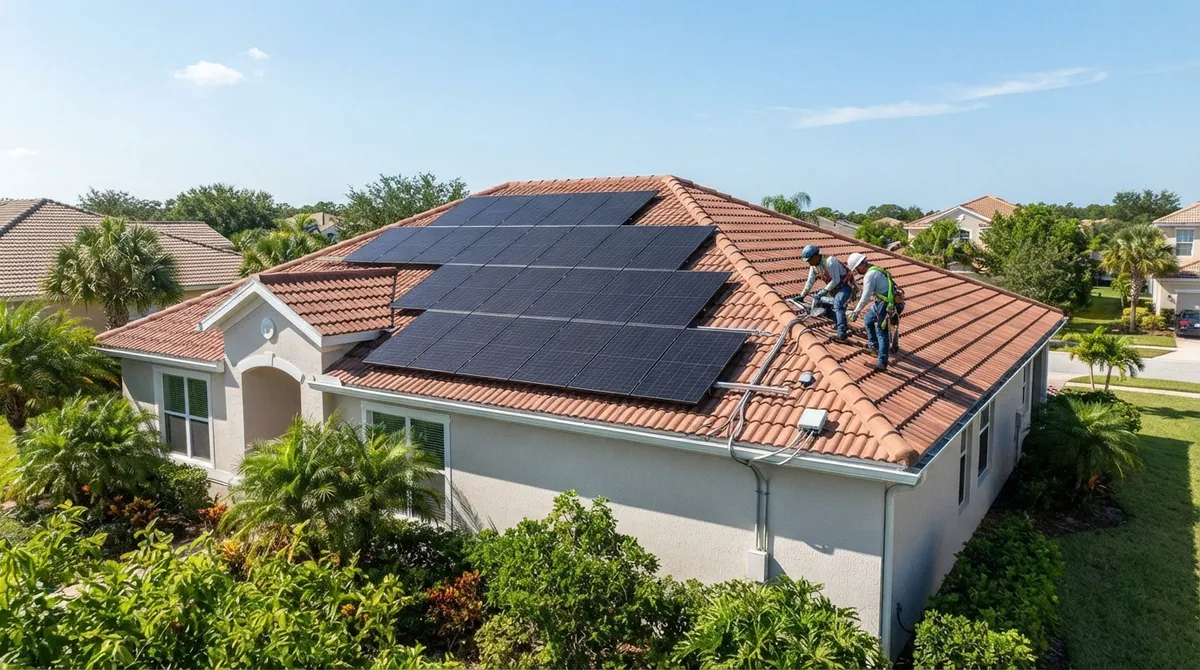
What Does After-the-Fact Solar Mean in Florida?
Florida law is clear on the starting point. Under Florida Statutes §553.79(1)(a), it is unlawful to proceed with covered construction, alteration, modification, repair, or demolition without first obtaining the required permit. Rooftop and ground-mounted PV systems generally fall under that umbrella.
When a system is installed without that permit, the property is carrying what the industry calls unpermitted work. An after-the-fact (ATF) permit is the process of bringing that work into the official record by applying for permits retroactively and proving the installation meets code.
Here is the part that surprises many people: getting a permit after the work is done does not automatically legalize or approve the system. The local building department decides whether it will accept a retroactive application, what documentation it needs, whether corrective work is required, and which inspections must be passed. Requirements and fees vary by jurisdiction, and there is no single statewide fee schedule or penalty chart for after-the-fact solar permits.
If you want a broader look at how this works outside solar, our guide on how to get an after-the-fact permit in Florida covers the fundamentals.
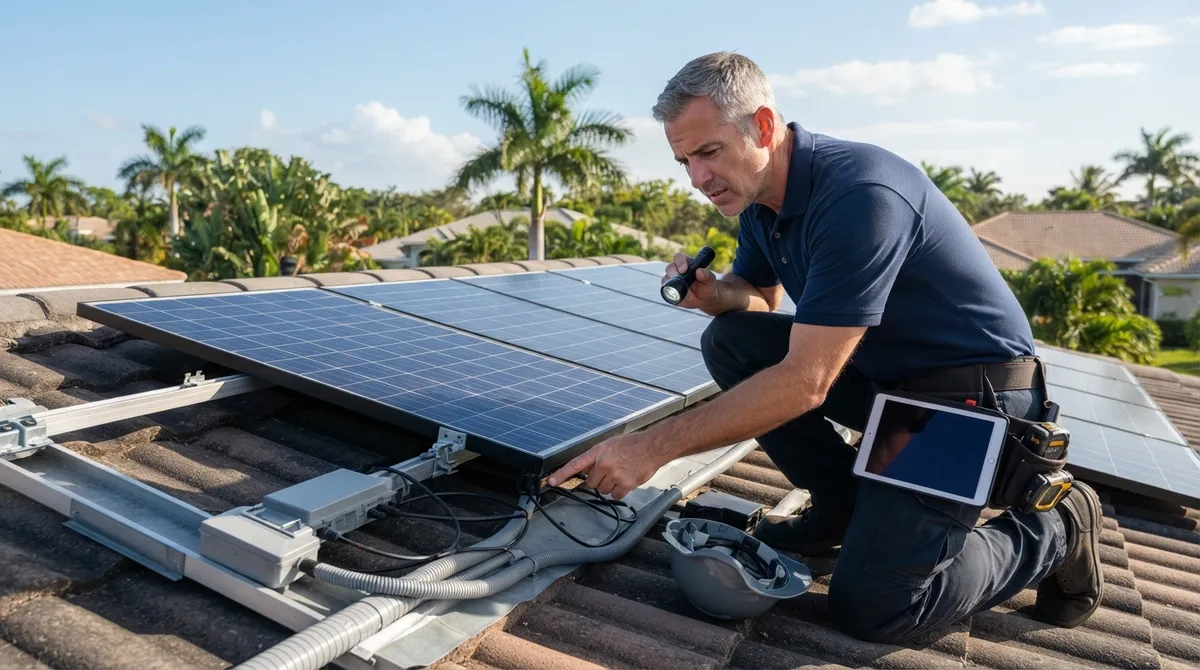
Why Unpermitted Solar Becomes a Problem
An unpermitted PV system can quietly sit there for years, until something forces the issue. Common triggers include:
- Home sales and closings: A buyer's inspector, appraiser, or title company flags the system.
- Refinancing or insurance reviews: Lenders and insurers may ask for permit records.
- Code enforcement complaints: A neighbor report or a drive-by can lead to a notice.
- Utility interconnection issues: The utility may ask for proof of permit and inspection.
- Storm damage or system failure: Claims can get complicated if the work was never inspected.
Real estate professionals will recognize the pattern, because a surprise permit issue can stall a closing in a hurry. If that sounds familiar, take a look at our article on how a permit hold can delay a Florida real estate closing.
What Building Departments Typically Review
Solar is not just an electrical project. Building departments generally look at two big safety areas, and sometimes a third.
| Review Area | What Gets Checked | Why It Matters |
|---|---|---|
| Electrical | Wiring, disconnects, grounding, inverter placement, labeling, connection to the existing service | Fire and shock safety, plus utility interconnection readiness |
| Structural | Roof attachment, racking, load path, wind resistance | Florida's high-wind conditions make attachment critical |
| Zoning (when applicable) | Setbacks and placement, especially for ground-mounted systems | Location can trigger separate zoning review |
Charlotte County, for example, identifies building, electrical, and zoning reviews depending on system location and scope. Miami publishes its own solar-specific plan and structural documentation requirements. These are local examples, not a statewide checklist, so always confirm what your jurisdiction expects. If you are not sure which office controls your address, our building department lookup tool is a handy place to start.
A Practical Step-by-Step Path to Resolution
Every jurisdiction does things a little differently, but most successful ATF solar projects follow a similar sequence.
- Pause any further unpermitted work. Do not add panels, batteries, or wiring until the permit situation is sorted out.
- Contact the correct building department. Ask whether they accept after-the-fact applications for PV and what they require. The property's actual jurisdiction matters, and city lines can be tricky.
- Gather your records. Collect the installer contract, equipment spec sheets, invoices, photos, warranties, and any utility correspondence.
- Prepare plans and documentation. This usually means system diagrams, equipment specifications, mounting details, and information on the existing electrical service.
- Apply for the required permits. File the application and pay the applicable fees, which vary locally.
- Complete any requested engineering or corrective work. Reviewers may ask for a structural evaluation or electrical corrections.
- Pass required inspections. Expect electrical and building inspections, and be ready for questions about concealed work.
- Obtain permit closure. Make sure the permit is finaled and properly closed in the system.
For a deeper dive on this flow, see our walkthrough of 6 steps to fix a retroactive permit in Florida.
Documents Commonly Required
The exact packet depends on the jurisdiction, but building departments commonly ask for the following.
| Document | Purpose |
|---|---|
| Permit application | Formally opens the review |
| Site plan and system layout | Shows array location and placement on the property |
| Electrical one-line diagram | Documents how the system connects and where disconnects sit |
| PV module and inverter spec sheets | Confirms listed, code-compliant equipment |
| Racking and mounting details | Verifies attachment method and spacing |
| Structural documentation or engineer letter | Shows the roof can support the system and resist wind loads |
| Existing electrical service information | Confirms panel capacity and interconnection approach |
Miami's published guidance, for instance, calls for PV and inverter specifications, system diagrams, mounting and support details, and structural documentation. Again, treat that as one example rather than a universal rule.
When You Will Likely Need an Engineer
Many after-the-fact solar projects benefit from a Florida-licensed professional engineer, and some jurisdictions require one. The reason is simple: when the installation cannot be verified from standard installer documents, the building department wants an independent professional to vouch for the work.
Miami's guidance, for example, requests a signed and sealed engineer letter addressing structural effects, including hurricane conditions. A solid engineering package typically evaluates the roof framing, the attachment method, and how the array handles wind uplift. Because every jurisdiction differs, confirm what yours expects before commissioning an evaluation, so you do not pay for a letter that misses the mark.
This is where having drafting and engineering under one roof pays off. At 1 Contractor Solutions, our engineer letter service is handled by our in-house team, so a reviewer comment can be answered quickly instead of waiting on an outside consultant. You can also explore our structural engineering and as-built drawings services for the documentation side of the job.
Inspections: The Part That Decides Everything
Inspections are the heart of resolving unpermitted work. Because the inspector was not there during installation, they may need extra evidence to confirm that what they cannot see was done correctly.
- Electrical inspection: Checks wiring, grounding, labeling, disconnects, and equipment placement.
- Building or structural inspection: Verifies roof attachments and mounting.
- Possible exposure of concealed work: If wiring or attachments cannot be verified otherwise, the authority may require some work to be opened up.
Please do not assume an inspection can be passed without opening finished work. Ask the building department up front what evidence or access they need, since photos, installer records, or limited exposure may be accepted in some places. Our overview of what happens during a Florida ATF site inspection sets expectations nicely, and our inspections service can help you prepare.
Licensing, HOAs, and Interconnection: Three Common Misunderstandings
These topics get tangled together, so let's separate them.
Who Is Allowed to Do the Electrical Work?
Florida Statutes §489.103(7) provides a limited owner-builder exemption for certain residential work, but it does not exempt solar wiring. The statute states that an owner must use a licensed electrical contractor for solar-panel wiring, including interconnection to residential wiring. In other words, an owner-builder route is not a shortcut for the electrical side of PV. If you are weighing options, our owner-builder permits page explains what is and is not covered.
Do HOA Rules Replace a Permit?
No. Florida Statutes §163.04 generally protects the ability to install solar energy devices from prohibitions by local ordinances and certain private restrictions. But it does not waive building, electrical, permitting, or safety requirements. HOA or deed-restriction questions are a separate matter from permit compliance.
Does a Building Permit Mean the Utility Approved It?
Not at all. Utility interconnection approval and permission to operate are separate from local building-permit approval. A closed permit is a major milestone, but you still need to confirm your utility's requirements before the system is considered properly authorized to run.
Costs, Timelines, and Local Variation
If you were hoping for a single number, here is the honest answer: there is no statewide count or uniform fee schedule for after-the-fact residential solar permits. Fees, enforcement consequences, documentation, and inspection procedures are set and administered locally. Some jurisdictions charge penalty multipliers or additional fees, while others simply apply standard rates.
| Factor | How It Can Affect Your Project |
|---|---|
| Jurisdiction | Sets fees, penalties, and required documents |
| System size and type | Roof-mounted vs. ground-mounted changes review scope |
| Quality of existing records | Good installer documentation can shorten the process |
| Need for engineering or corrections | Adds time and cost but often unlocks approval |
| Concealed work | May require exposure to verify installation |
For a general sense of budgeting, you can review our article on after-the-fact permit costs in Florida, and our Florida solar permit timelines guide for schedule expectations.
Tips for Each Type of Reader
For Homeowners and Buyers
Start by finding out whether a permit was ever issued. Our open permit search tool can help you look. If the system is unpermitted, talk to the building department early and gather every contract and spec sheet you can find. Our homeowner resources are a good starting point.
For Solar Companies and Contractors
If a past install slipped through without a permit, getting ahead of it protects your license and your customer relationship. Clean, code-compliant structural and electrical documentation speeds things up dramatically. See how we support solar contractors and our guide on whether solar companies can legalize unpermitted installs.
For Real Estate Professionals
Surface permit issues before the contract deadline, not after. Early research and a clear remediation plan keep deals on track. Our realtor and closing support exists for exactly this kind of situation.
Common Mistakes to Avoid
- Ignoring the problem: Unpermitted systems tend to surface at the worst possible moment.
- Hiring an engineer before confirming local requirements: You may pay for a letter that does not match what the jurisdiction wants.
- Assuming the permit approves the interconnection: It does not.
- Skipping licensed electrical work: The owner-builder exemption does not cover solar wiring.
- Expecting a pass without opening concealed work: Ask first, and plan accordingly.
Let Us Help You Get Back on Track
An unpermitted solar system is stressful, but it is usually solvable with patience, good documentation, and the right team. At 1 Contractor Solutions, we act as Florida's outsourced permitting department across all 67 counties, handling plans, sealed engineering, filing, tracking, and reviewer comments through closeout. Learn more about our after-the-fact and expired permits work, or see our urgent permit rescue option if a deadline is looming.
Ready to move forward? Get a free quote and tell us your address, and we will help you figure out which jurisdiction controls it and what it will take. You can also see what our 1 Contractor Solutions customers say on Google, and follow us on LinkedIn or follow us on Facebook for more Florida permitting tips. For the statutory language itself, you can read Florida Statutes §553.79 on Online Sunshine.
FAQs
Can I get an after-the-fact permit for solar panels in Florida?
Often, yes, but it is up to your local building department. They decide whether they will accept a retroactive application and what plans, engineering, corrective work, fees, and inspections they need to verify the system meets code.
What happens if solar panels were installed without a permit in Florida?
Florida law generally makes proceeding without a required permit unlawful, so you may face code enforcement notices, fees, and complications during a sale, refinance, or insurance claim. Consequences vary by jurisdiction, and the best move is to contact the building department and start the permitting process.
Will I have to remove my solar panels to pass inspection?
Not necessarily, but inspectors may require concealed wiring or attachments to be exposed if they cannot be verified any other way. Ask your building department what evidence or access they will accept before you assume anything.
Does a solar building permit also approve utility interconnection?
No, they are two separate approvals. A closed local building permit is a big step, but utility interconnection approval and permission to operate must be handled separately with your utility.
Do I need a licensed professional to permit an existing solar installation?
Yes, in most cases. Florida requires a licensed electrical contractor for solar-panel wiring, even under the owner-builder exemption, and many jurisdictions ask for a signed and sealed letter or plans from a Florida-licensed professional engineer.
We do this work every day across all 67 Florida counties. Call (866) 314-6931 and we will tell you what your situation actually requires — including when you do not need us.
Related services
Permit Facilitation & Filing
You have a crew scheduled, a client asking for dates, and a permit sitting somewhere in a queue you cannot see. We file it, w…
See the servicePlan Review Coordination
A permit in plan review is not one queue. On a commercial project it can be six queues, each with its own reviewer, its own c…
See the serviceReady to get your permit moving?
One call tells you which jurisdiction controls your project, what it will take, and what it will cost. Most of the time we can scope it on the phone.