
Blog
After-the-Fact Permits vs. Starting Fresh: Which Wins?
Wondering if after-the-fact permitting is allowed in Florida? Compare it to standard permits and see which path truly fits your situation.
Key Takeaways
-
After-the-fact permitting is legal in Florida but carries double fees, investigation charges, and potential civil penalties compared to standard permitting, making it a costly corrective tool rather than a loophole.
-
Unpermitted work discovered during home sales, code enforcement inspections, or title searches requires after-the-fact permits to proceed with closings; acting quickly saves money and stress.
-
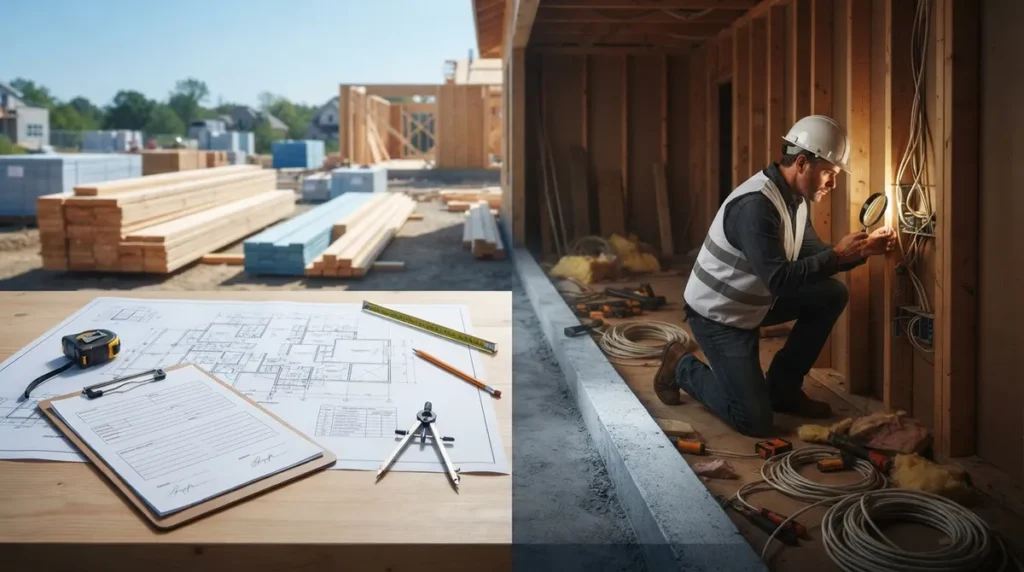
Inspectors may require opening walls and exposing concealed work to verify code compliance for after-the-fact permits, making sealed as-built drawings from licensed engineers essential to minimize exposure.
-
Standard permitting before construction starts is always cheaper and less stressful than after-the-fact permitting, with predictable timelines and minimal penalty risk.
-
Florida law allows civil penalties up to $500 per day for unpermitted work, and jurisdictions handle after-the-fact applications differently, so confirming local requirements before submitting is critical.
-
After-the-fact permits can take longer than standard permits due to investigations and required corrections, but they remain the only legitimate path to bring existing unpermitted work into compliance.
So you built the lanai, finished the garage conversion, or swapped out the electrical panel, and now someone is asking about the permit that never quite happened. Deep breath — you are not alone, and you are definitely not the first Florida property owner to find yourself in this spot. The good news? Is after the fact permitting allowed in Florida? Yes, it is. The real question is whether applying for one after the work is done is actually the smarter move compared to what you'd face starting a permit the traditional way, before any hammer swings. Let's walk through both paths together so you can make a confident, informed decision.
At 1 Contractor Solutions, we spend our days helping general contractors, solar installers, realtors, and homeowners across all 67 Florida counties untangle exactly this kind of situation. We've seen the relief on a homeowner's face when a stalled closing finally clears, and we've seen contractors breathe easy once a stop-work order gets lifted. So grab a coffee, and let's compare after-the-fact permitting to the standard permitting route, feature by feature.
What Is After-the-Fact Permitting, Really?
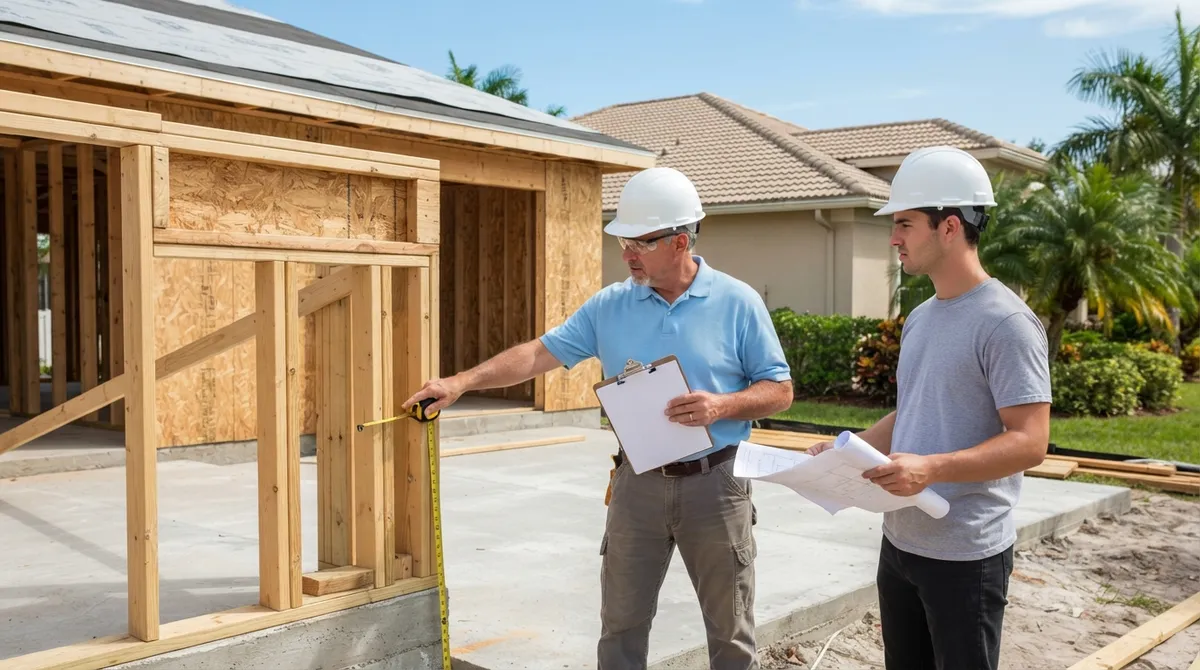
After-the-fact (ATF) permitting, sometimes called retroactive or as-built permitting, is the process of applying for a permit for work that has already started or finished without one. It is a corrective tool, not a loophole. Florida Statutes Section 553.79 makes it unlawful to build, alter, or repair a structure without first obtaining the required permit, and Florida Statutes Section 489.127 separately prohibits performing permit-required work while no permit is in effect. So while ATF permitting is allowed, it does not erase the fact that a rule was broken along the way.
Every Florida city and county building department handles this a little differently. That's one reason our building department lookup tool exists — to help you figure out exactly which office controls your address before you even pick up the phone.
After-the-Fact Permitting vs. Standard Permitting: The Head-to-Head Comparison
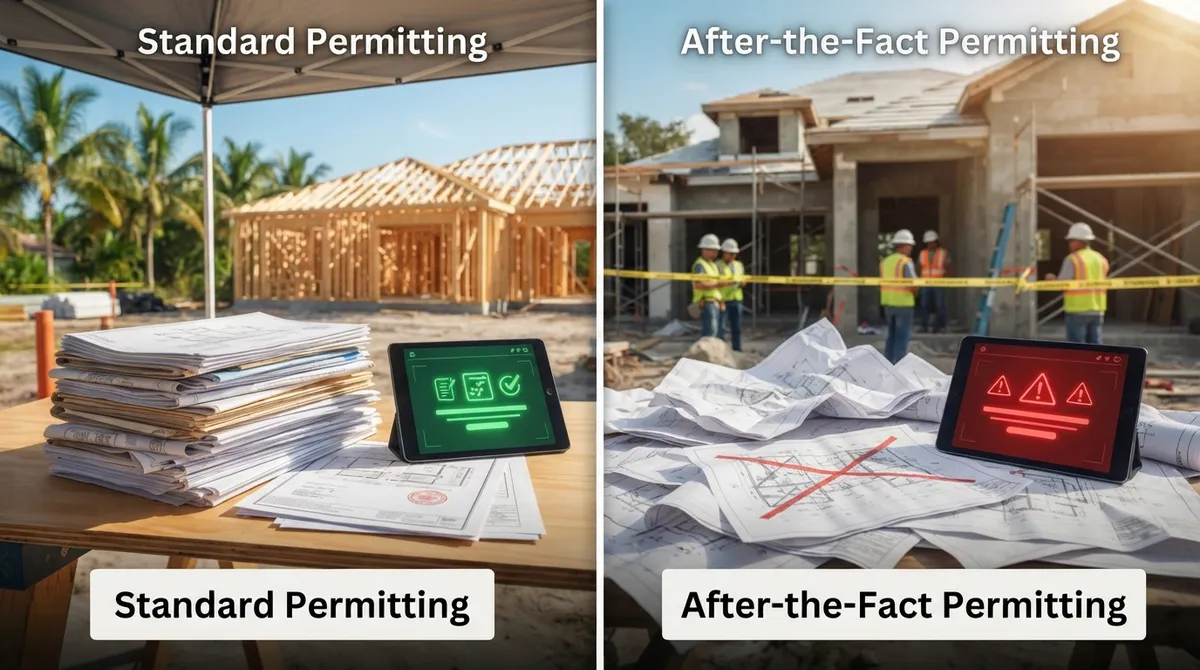
Let's put these two paths side by side. Neither is inherently "bad," but they carry very different costs, timelines, and stress levels.
| Factor | Standard (Before-Work) Permit | After-the-Fact Permit |
|---|---|---|
| Legal Standing | Fully compliant from day one | Corrective; violation may still apply |
| Fees | Standard permit fee | Often double the fee, plus investigation charges |
| Inspection Access | Work inspected as it's built | May require opening walls, exposing framing, or removing finishes |
| Documentation Needed | Plans submitted upfront | As-built drawings, often sealed by a licensed engineer |
| Risk of Penalties | Minimal, if code-compliant | Possible civil penalties, stop-work orders, misdemeanor exposure |
| Timeline | Predictable, jurisdiction-dependent | Can be longer due to investigation and corrections |
| Resale Impact | Clean permit history | Must be resolved before or during a sale |
Notice a pattern? Standard permitting is smoother almost every time. But life happens — maybe a previous owner skipped a permit, maybe a contractor promised to "handle it" and never did, or maybe a quick weekend project turned into something bigger than planned. When that's your reality, ATF permitting isn't a failure. It's the responsible next step.
Why Would Someone Choose (or Need) After-the-Fact Permitting?
Nobody sets out to build without a permit on purpose in most cases we see. Here are the common scenarios that lead property owners and contractors to our door:
- A home inspection during a sale uncovers unpermitted work, and the closing is now on hold
- Code enforcement flags a structure during a routine drive-by or complaint
- A previous contractor disappeared before pulling the permit
- A solar installation was completed without proper structural or electrical documentation
- A homeowner didn't realize a permit was required for the type of work performed
In every one of these cases, ATF permitting is the path forward — it's the mechanism Florida provides to bring the work back into compliance. Our team handles after-the-fact and expired permits daily, and we've learned that acting quickly almost always saves money and stress compared to waiting.
The Cost Comparison You Need to See
Let's talk numbers, because this is where the two paths really diverge. A standard permit fee is set by your local jurisdiction based on project value and scope. An after-the-fact permit frequently adds a penalty on top of that same base fee.
| Cost Component | Typical Range or Note |
|---|---|
| Standard permit fee | Jurisdiction-specific, based on project scope |
| ATF penalty surcharge | Some jurisdictions charge 100% additional or double the base fee |
| Investigation fee | Varies by county/city building department |
| Civil penalties | Some local ordinances allow up to $500 per day in certain cases |
| Sealed as-built drawings | Roughly $3,000–$10,000 for residential engineering, project-dependent |
These figures come from a mix of statute language and jurisdiction-specific guidance, so your exact number will depend on where the property sits. That's why we always recommend checking directly with your local office or letting a permitting specialist confirm the fee schedule before you budget for the fix.
The Step-by-Step Process for Each Path
Here's how the two journeys typically unfold, side by side.
Standard Permitting Steps
- Prepare plans and, if required, sealed engineering drawings
- Submit the application to the correct building department
- Wait for plan review and address any comments
- Begin construction once the permit is issued
- Schedule inspections at each required stage
- Receive final approval and closeout
After-the-Fact Permitting Steps
- Stop any further unpermitted work immediately
- Contact the local building department to confirm violation status
- Prepare as-built drawings, often requiring a Florida-licensed architect or engineer
- Submit the ATF application along with required fees and penalties
- Allow inspectors to verify the work, which may include opening walls or exposing concealed components
- Complete any corrective construction if the work doesn't meet current code
- Pass all required inspections until the permit is fully closed
See that extra step in the ATF process about opening walls or exposing concealed work? That's the part that catches people off guard. Inspectors need to actually verify code compliance, and finished drywall or siding can hide a lot. This is exactly why sealed as-built drawings and a knowledgeable engineer matter so much in these cases — they can often reduce how much needs to be exposed.
Who Needs to Pay Close Attention to This Comparison?
Different readers face this decision from different angles, and it's worth calling out how it applies to you specifically.
General Contractors
If you inherited a project with unpermitted history, or a client's previous contractor skipped steps, you need reliable general contractor permitting support to sort out what's owed and what's fixable before your crew touches anything else.
Solar Companies
Distributed energy projects installed without proper structural or electrical documentation can trigger utility interconnection delays. Solar contractor permitting services that understand ATF nuances can keep your pipeline moving instead of stalling on a single flagged install.
Real Estate Professionals
An open or missing permit discovered during a title search can delay or kill a closing. Realtor and closing support services exist specifically to research, resolve, and document these issues fast so deals stay on track.
Florida Homeowners
Maybe you just want peace of mind before selling, or you got a letter from code enforcement. Homeowner permitting assistance can walk you through exactly what's required without the jargon overload.
Which Path Actually Wins?
If you haven't started work yet, standard permitting wins every time — it's cheaper, less stressful, and keeps inspectors happy from the start. But if unpermitted work already exists, after-the-fact permitting isn't really competing against the standard process anymore. It's competing against doing nothing, which risks fines, insurance complications, and a frozen sale. In that comparison, ATF permitting wins hands down because it's the only legitimate way forward.
We've helped countless clients move through plan review coordination and revisions and resubmittals for exactly these situations, whether the property sits in Hillsborough County, Pinellas County, or Miami-Dade County. Each jurisdiction has its own rhythm, and knowing that rhythm makes all the difference.
A Word on Doing This the Right Way
According to the Florida Statutes governing building permits, the requirement to permit covered work before it begins is not optional, and an ATF application doesn't automatically wipe away enforcement exposure. That said, jurisdictions generally want compliance, not conflict. Most building officials would rather see a completed, safe structure with a closed permit than an ongoing dispute. Bringing in a licensed contractor for corrective work, when required, also protects you — Florida law restricts issuing permits to unlicensed individuals for regulated work.
We're proud of the relationships we've built with clients across the state, and we love hearing how a stressful situation turned into a resolved one. You can visit us on Google — 1 Contractor Solutions to see what folks have to say, or check out our latest project updates when you follow us on LinkedIn and follow us on Facebook for permitting tips and county-specific updates.
Final Thoughts: You've Got This
Whether you're staring down a stop-work order, prepping a home for sale, or just trying to do the right thing after discovering a gap in the paperwork trail, remember this: after-the-fact permitting exists precisely because Florida wants to help people fix mistakes, not punish them forever. Yes, there are fees. Yes, there might be some drywall that needs to come down temporarily. But on the other side of that process is a clean permit history, a safer structure, and one less thing keeping you up at night.
Ready to stop guessing and start solving? Our team at 1 Contractor Solutions handles this exact situation every single day across Florida, from Sarasota to Fort Lauderdale and everywhere in between. Reach out today and get a free quote — we'll tell you exactly what your jurisdiction requires and get your permit moving toward approval.
FAQs
Can I get an after-the-fact permit for unpermitted work in Florida?
Yes, you generally can! Florida building departments allow property owners to apply for an after-the-fact permit to bring unpermitted work into compliance. Just know it's a corrective process, not a free pass, so fees and inspections still apply.
How much does an after-the-fact permit cost in Florida?
It varies quite a bit by city and county, but many jurisdictions charge double the standard permit fee or add a penalty surcharge on top. We always recommend confirming the exact number with your local building department or having a permitting specialist check for you.
Will Florida inspectors make me open walls for an after-the-fact permit?
Sometimes, yes — inspectors need to verify that concealed work like framing or wiring actually meets code, and finished surfaces can hide that. Having sealed as-built drawings ready can sometimes minimize how much needs to be exposed.
Do I need an engineer or architect for an after-the-fact permit in Florida?
For structural, electrical, or otherwise complex work, most jurisdictions will require sealed as-built drawings from a Florida-licensed architect or engineer. It's one of those steps that feels like extra work but actually protects you in the long run.
Can I sell a Florida home with unpermitted work?
Technically you can list it, but unpermitted work often surfaces during inspections or title searches and can delay or derail your closing. Most sellers find it's much smoother to resolve the permit beforehand with help from a team experienced in closing support.
We do this work every day across all 67 Florida counties. Call (866) 314-6931 and we will tell you what your situation actually requires — including when you do not need us.
Related services
Permit Facilitation & Filing
You have a crew scheduled, a client asking for dates, and a permit sitting somewhere in a queue you cannot see. We file it, w…
See the servicePlan Review Coordination
A permit in plan review is not one queue. On a commercial project it can be six queues, each with its own reviewer, its own c…
See the serviceReady to get your permit moving?
One call tells you which jurisdiction controls your project, what it will take, and what it will cost. Most of the time we can scope it on the phone.