
Blog
How Do As-Built Plans After the Fact Work in Florida?
Learn how as-built plans after the fact work in Florida, what building departments require, and how to legalize unpermitted work step by step.
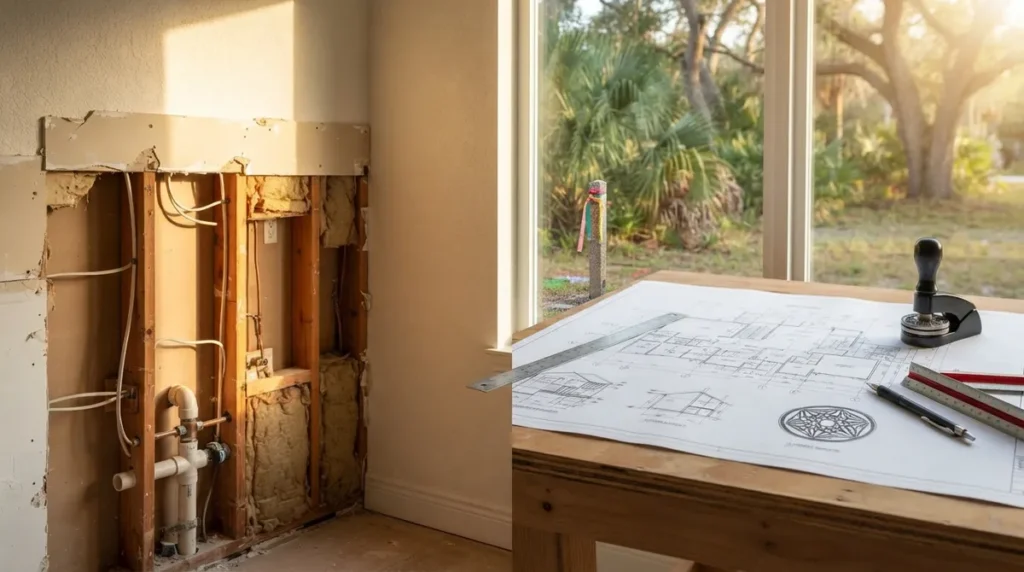
Key Takeaways
-
Florida requires as-built plans documenting actual construction conditions for unpermitted work like additions, structural changes, and accessory structures; requirements vary by county, so always confirm your local building department's current checklist before spending money on drawings.
-
Structural work typically requires plans and reports signed and sealed by a Florida-licensed architect or engineer, while simpler non-structural items may have lighter requirements; ask your building department which specific items need a seal to avoid unnecessary expenses.
-
As-built plans alone don't prove concealed work meets code—many jurisdictions require a combination of sealed as-built plans, an as-built survey showing setbacks, and an engineer's inspection letter documenting testing methods and findings.
-
Inspectors may require selective exposure of framing, wiring, or connections to verify concealed structural, electrical, or plumbing work; a qualified engineer can often identify strategic inspection openings instead of requiring full demolition.
-
Unpermitted work discovered during sale, refinance, or appraisal can delay or derail closing; resolving it with an after-the-fact permit before listing typically leads to smoother transactions and prevents title company issues.
-
Common submission errors that slow approval include submitting drawings showing how work should look rather than actual conditions, skipping surveys when setbacks matter, and ignoring Notice of Commencement requirements—each jurisdiction's rules differ significantly.
So you just found out that the deck, the garage conversion, or the screen enclosure on your property never got a permit. First, take a breath. You are far from alone, and in most cases there is a real path forward. In Florida, that path very often starts with as built plans after the fact in Florida: a set of drawings that shows the construction exactly as it exists today, not as someone once imagined it.
Maybe a prior owner skipped the paperwork. Maybe a crew you hired never pulled the permit. Maybe a buyer's home inspection just flagged something, and your closing date is suddenly wobbly. Whatever brought you here, this guide walks through what as-built plans are, when they are required, what building departments typically expect, and how to move from "uh-oh" to a closed permit without losing your mind.
We will keep it practical and friendly. Along the way, you will see where requirements differ by city and county, because in Florida the local building department calls the shots.
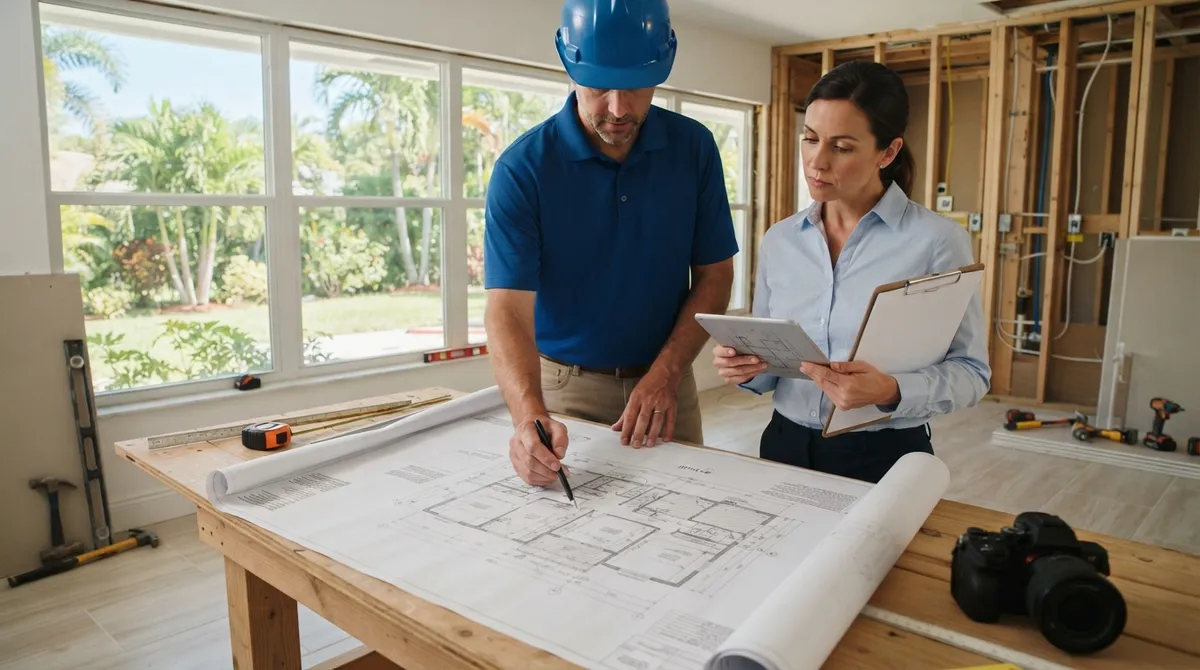
What Are As-Built Plans After the Fact in Florida?
As-built plans document the conditions that actually exist on a property. Regular permit drawings show a proposed design. As-builts show what was really constructed, including the dimensions, structural members, electrical layouts, plumbing runs, and mechanical equipment.
When the work was done without a required permit, those drawings usually become part of an after-the-fact (ATF) permit application. Florida Statutes §553.79 generally requires a building permit before covered construction, alteration, repair, or demolition begins. The local enforcing agency reviews plans and administers permits and inspections. An ATF application does not legalize anything on its own. It simply opens the door to a review process where the building department decides whether the work can be approved, corrected, or removed.
If you want the bigger picture of how this process works, our guide on what after-the-fact permitting in Florida is is a great companion read.
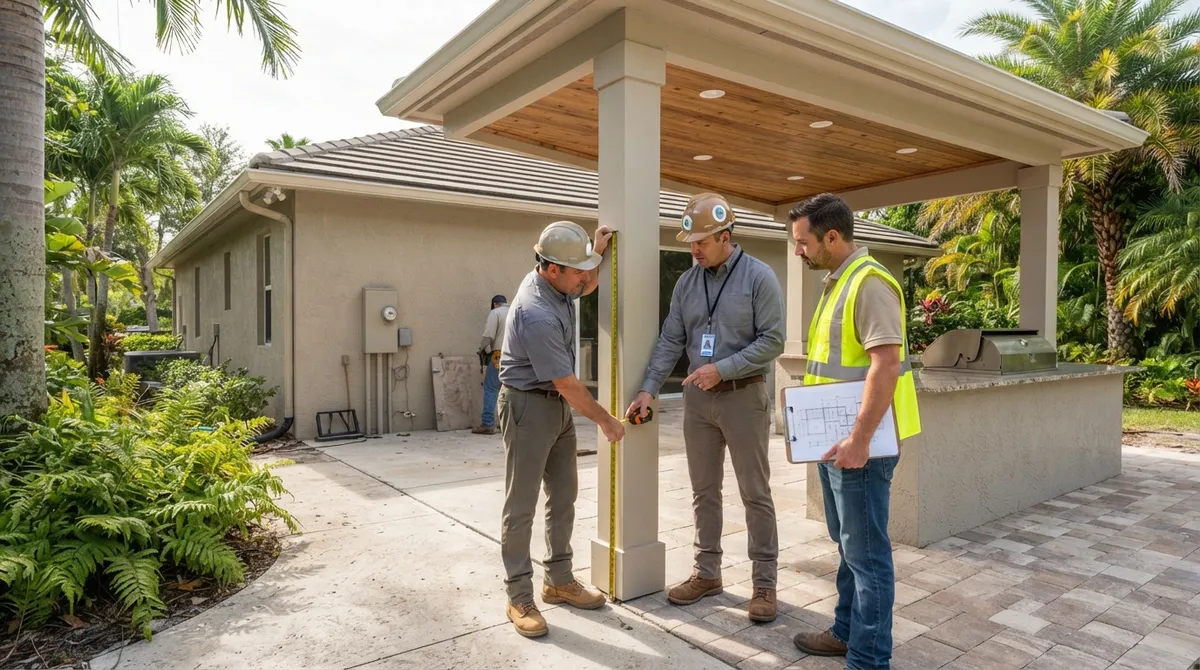
When Does Florida Require As-Built Plans for Unpermitted Work?
There is no single statewide checklist. Florida has 67 counties, and permitting is administered locally by each enforcing agency. That means the requirements, fees, and review steps can look quite different from one jurisdiction to the next.
That said, as-built plans commonly come into play in situations like these:
- Unpermitted additions, such as enclosed patios, room expansions, or garage conversions
- Structural changes like removed walls, new openings, or altered roof framing
- Screen enclosures, pool cages, carports, and similar accessory structures
- Electrical, plumbing, or mechanical work completed without a permit
- Work discovered during a sale, refinance, appraisal, or insurance review
- A code enforcement notice or stop work order
Sometimes the issue is not brand-new unpermitted work but an existing permit that was never finished. In that case, the fix may be a revision to the original permit instead of a fresh ATF application. Our article on revision after-the-fact plans in Florida explains how that differs.
As-Built Plans vs. As-Built Survey: What Is the Difference?
These two documents sound similar, and people mix them up all the time. They serve different purposes, and neither one alone proves your hidden work is code-compliant.
| Document | What It Shows | What It Does Not Prove |
|---|---|---|
| As-built building plans | Floor plans, elevations, framing, structural details, and systems as constructed | That concealed work meets code without inspection or testing |
| As-built survey | Location, dimensions, setbacks, and site conditions | Structural, electrical, plumbing, or mechanical compliance |
| Engineer's inspection letter or report | A licensed professional's findings on existing conditions and code basis | Local approval, since the building department still decides |
Many ATF packages need a combination of these. A survey or site plan confirms the structure sits where it should. The as-built plans describe the construction. An engineer's report may fill in the gaps for anything covered by drywall, flooring, or stucco. If you want more on the drawings themselves, see our page on as-built drawings and our site plan roadmap.
What Do Building Departments Usually Ask For?
Checklists vary, but most departments want to see some version of the following in an ATF submittal:
- A completed permit application for the work already performed
- As-built construction documents showing existing conditions
- A site plan or survey showing location and setbacks
- Product approvals or specifications for items like windows, doors, or roofing
- Trade documentation for electrical, plumbing, or mechanical work
- Calculations, testing reports, or engineering letters where structural work is involved
- Proposed remediation details if something does not meet current code
For example, Indian River County guidance calls for sealed construction documents for structural alterations or additions. It also calls for a Florida-licensed design professional's inspection and certification for structural work that is no longer open for inspection, plus a site plan or survey showing location and setbacks. The same guidance notes that a Notice of Commencement is required before the first inspection when job value exceeds $2,500. Always confirm current thresholds with your local department, since those details can change.
Do As-Built Plans Need to Be Signed and Sealed?
This is one of the most common questions we hear, and the honest answer is: it depends on the scope of work and the jurisdiction.
For structural work, many departments require plans and reports signed and sealed by a Florida-licensed architect or engineer. Tampa's legalization guidance, for instance, describes as-built plans and a certificate that addresses the actual condition of the work, the code basis, the inspection or testing performed, and any remedial work needed. For simpler, non-structural items, requirements may be lighter.
The takeaway: do not assume. Ask the building department which items need a seal before you spend money on drawings. Our team can help sort that out through structural engineering and engineer letters, and we have a helpful read on whether a sealed drawing is required for after-the-fact permits.
Will They Make Me Open Up Walls or Ceilings?
Sometimes, yes. If structural, electrical, or plumbing work is concealed, the inspector cannot verify it just by looking at a drawing. Some jurisdictions accept a licensed engineer's inspection and signed report that describes the methods used and any testing performed. Others may require selective exposure of framing, wiring, or connections.
This is where a little planning pays off. A good engineer can often identify a few strategic inspection openings instead of a full demolition. To understand what to expect on inspection day, check out what happens during a Florida ATF site inspection.
Step-by-Step: How to Get As-Built Plans Approved After the Fact
Here is a practical roadmap you can follow. It is the same general flow we use when guiding clients through the process.
- Identify the authority having jurisdiction. Near city lines, this is not always obvious. Our building department lookup tool can help.
- Check permit and violation history. Use the open permit search to see whether you are dealing with an ATF permit, an expired permit, or a revision to an existing one.
- Get the jurisdiction's current checklist. Do not rely on an old PDF or a neighbor's experience.
- Document existing conditions. This means measured as-built plans, photos, and a site plan or survey.
- Add engineering where needed. Structural or concealed work often calls for a sealed report.
- Submit and respond to comments. Reviewers may ask for clarifications or corrections.
- Complete inspections and corrections. If something fails code, you may need to fix or remove it.
- Secure final permit closure. The job is not done until the permit is finaled.
If you would like a longer walkthrough, see how to get an after-the-fact permit in Florida.
What Does It Cost, and Are There Penalties?
Florida Statutes §553.79(1)(a) sets the general requirement to obtain a permit before covered work, but it does not establish one uniform statewide ATF fee. Each local department sets its own fee schedule, and some add penalty or investigation fees for work done without a permit. Your total cost also includes drawings, any engineering, testing, and corrective work.
For a deeper breakdown, read our guide on after-the-fact permit costs in Florida.
What If the Work Does Not Meet Code?
This is the part everyone worries about, so let us be straight with you. Local enforcement can require you to obtain an ATF permit or otherwise cure the violation, and that can include correcting or removing the work. Pasco County's ordinance, for example, treats failure to obtain an ATF permit after notice as a violation. It also includes a local exception for certain work completed before January 1, 1985. That is a local rule, not a statewide cutoff, so please do not count on it elsewhere.
The good news: many issues are fixable. Reviewers often accept remediation, such as adding connectors, upgrading a fastener schedule, or correcting a setback issue through a variance process. If you are facing a notice, our code compliance violations team can help you map out a response. You may also find whether you will really have to demolish unpermitted work reassuring.
Who Needs This Most? Real-World Scenarios
Different readers come to this topic with different pressures:
- Homeowners: You bought a home with an enclosed lanai and just learned it was never permitted. As-built plans plus an engineer's letter may be your route to legal status.
- Real estate professionals: A buyer's inspector found unpermitted work two weeks before closing. Speed and clear documentation matter. Our realtor closing support is built for this.
- General contractors: A sub skipped a permit on a job you inherited. You need drawings the building department will accept and a clean closeout.
- Solar companies: An older install lacks a permit or structural documentation. See how solar companies can legalize unpermitted installs.
- Design and trade professionals: You need dependable outsourced drafting without adding headcount. Our drafting-only service lets you keep your own seal and your own client.
Common Mistakes That Slow Things Down
After years of guiding Florida projects through review, a few patterns come up again and again:
- Submitting plans that show how the work should look instead of how it actually exists
- Skipping the survey or site plan when setbacks are in question
- Assuming a drawing alone proves concealed work is safe
- Using another county's checklist
- Ignoring a Notice of Commencement requirement
- Waiting until a closing is days away to start
Avoiding these keeps your timeline shorter and your reviewer happier. If a closing is on the line, our article on fixing a Florida closing held up by unpermitted work offers a calm, step-by-step plan.
How 1 Contractor Solutions Can Help
At 1 Contractor Solutions, we act as Florida's outsourced permitting department. Our drafting and engineering are in house, so when a reviewer flags something, we fix it without waiting on an outside consultant. We work across all 67 Florida counties, we answer within 30 minutes day or night, and we handle everything from measuring and drafting as-builts to filing, tracking comments, and carrying the permit through closeout.
You can learn more about our after-the-fact and expired permit services, or see what clients say by reading 1 Contractor Solutions reviews on Google. Prefer to stay connected? You can follow us on LinkedIn or follow us on Facebook for Florida permitting updates.
For the statutory background, you can read the text of Florida Statutes §553.79 directly on the Florida Legislature's website.
Final Thoughts
Unpermitted work feels stressful, but it is a solvable problem. As-built plans after the fact in Florida give the building department an accurate picture of what exists, which is the first step toward approval, correction, and a closed permit. Start by confirming your jurisdiction, gather the right documents, bring in engineering where it counts, and respond to reviewers promptly.
Ready to move from worry to a finished permit? Reach out today and get a free quote for your as-built plans and after-the-fact permitting. Permits approved. Projects moving.
FAQs
How do I get an after-the-fact building permit in Florida?
Start by identifying the local building department that has jurisdiction, then get its current ATF checklist. You will typically submit as-built plans, a site plan or survey, and any engineering or trade documentation, then complete inspections and corrections until the permit is closed. We make that process a lot less stressful when you have a partner in your corner.
Do as-built plans for unpermitted work need to be signed and sealed in Florida?
It depends on the work and the jurisdiction. Structural alterations and additions commonly require sealed documents from a Florida-licensed architect or engineer, while simpler non-structural items may not. Always confirm with your local building department before ordering drawings.
What is the difference between as-built plans and an as-built survey?
As-built plans describe the construction itself, including framing, systems, and layout. An as-built survey documents location, dimensions, setbacks, and site conditions. Neither one alone proves that concealed work meets code, so many ATF packages include both plus engineering where needed.
Will Florida require me to open walls or ceilings for an after-the-fact inspection?
Possibly. If structural, electrical, or plumbing work is hidden, some jurisdictions accept a licensed engineer's inspection and signed report, while others want select areas exposed. A good engineer can often limit how much needs to be opened.
Can I sell or refinance a Florida property with unpermitted work?
Sometimes, but it can complicate things. Buyers, lenders, appraisers, and title companies may flag unpermitted work, which can delay or derail a closing. Resolving it with an after-the-fact permit before listing usually leads to a smoother sale.
We do this work every day across all 67 Florida counties. Call (866) 314-6931 and we will tell you what your situation actually requires — including when you do not need us.
Related services
Permit Facilitation & Filing
You have a crew scheduled, a client asking for dates, and a permit sitting somewhere in a queue you cannot see. We file it, w…
See the servicePlan Review Coordination
A permit in plan review is not one queue. On a commercial project it can be six queues, each with its own reviewer, its own c…
See the serviceReady to get your permit moving?
One call tells you which jurisdiction controls your project, what it will take, and what it will cost. Most of the time we can scope it on the phone.