
Blog
ATF Pool Permit vs. Tear-Out in Florida: Which Wins?
Unpermitted pool in Florida? Compare legalizing it with an after-the-fact permit versus a tear-out, plus costs, documents, and steps for 2026.
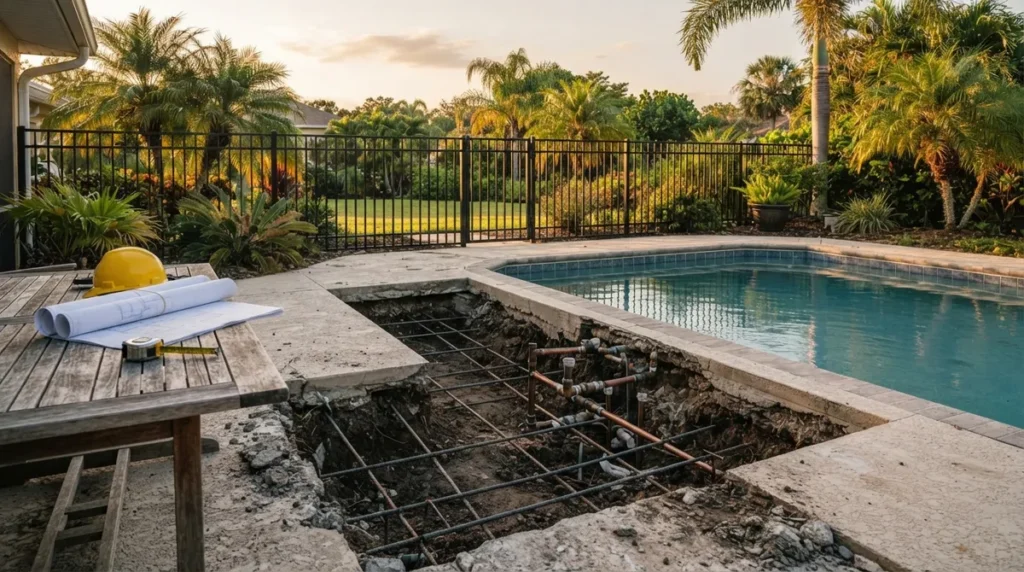
Key Takeaways
-
Florida has no statewide after-the-fact pool permit; your city or county building department sets its own forms, fees, and inspection rules, so call them first before altering anything.
-
An ATF permit is not a rubber stamp: the department can require corrections, engineering, or exposure of concealed work such as pool steel, plumbing, and bonding.
-
Legalizing an existing pool is usually far cheaper and less disruptive than a tear-out, which typically becomes necessary only when work cannot be verified or has serious structural or setback problems.
-
Gather whatever documents you have (contracts, receipts, photos, surveys) and have a professional prepare as-built drawings and a current site plan to fill in gaps.
-
Verify the safety barrier early: Florida Statutes §515.29 generally requires a barrier at least 4 feet high with self-closing, self-latching gates that open away from the pool.
-
A sealed engineer letter can sometimes resolve questions about concealed work and avoid costly demolition, though the local authority having jurisdiction makes the final decision.
So you just found out your pool was built without a permit. Maybe you bought the house last spring and the paperwork never turned up. Maybe a previous owner skipped the process, or a contractor promised to "take care of it" and then vanished. Take a deep breath. You are far from alone, and there is a real path forward.
When it comes to an after the fact pool permit in Florida, most owners face one big question: do we legalize what is already there, or do we tear it out and start over? The answer depends on what an inspector can verify, how the pool was built, and where your property sits. In 2026, building departments across the state are still seeing a steady stream of these cases, and most can be solved with the right documents and a little patience.
In this friendly guide, we compare the two main routes side by side, walk through the steps, and show you where a permitting team can save you weeks of back-and-forth. Whether you are a homeowner, a general contractor, a realtor, or a pool builder, you will find practical, plain-English answers below.
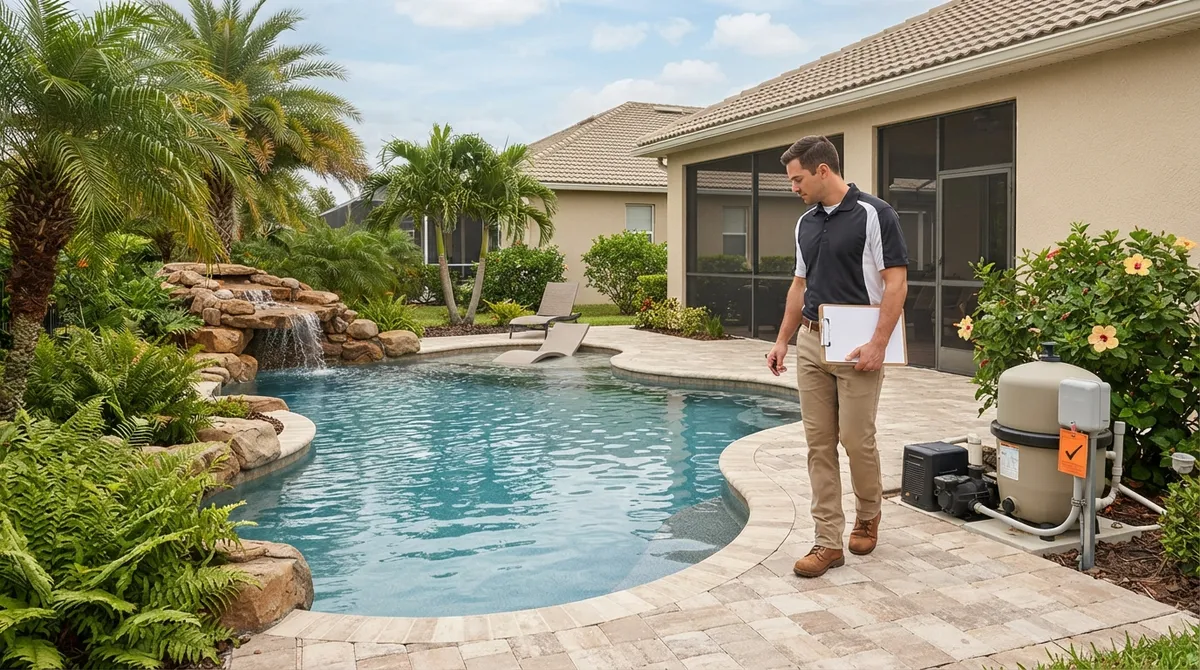
What Is an After-the-Fact Pool Permit in Florida?
An after-the-fact (ATF) pool permit is a local building permit application filed after pool construction, or related work, has already started or been completed without the required permit. Think of it as asking your building department to review what exists and confirm that it meets the Florida Building Code.
Here is the part that surprises many people: Florida does not have one statewide ATF application. Your city or county building department, often called the authority having jurisdiction (AHJ), sets its own forms, fees, documents, and inspection rules. Florida Statutes §553.79 generally requires a permit before covered construction. It also lets a local enforcing agency require plans and inspections to determine whether existing work complies with the code.
If you are not sure which office actually controls your address, especially near city lines, our building department lookup tool is a great place to start.
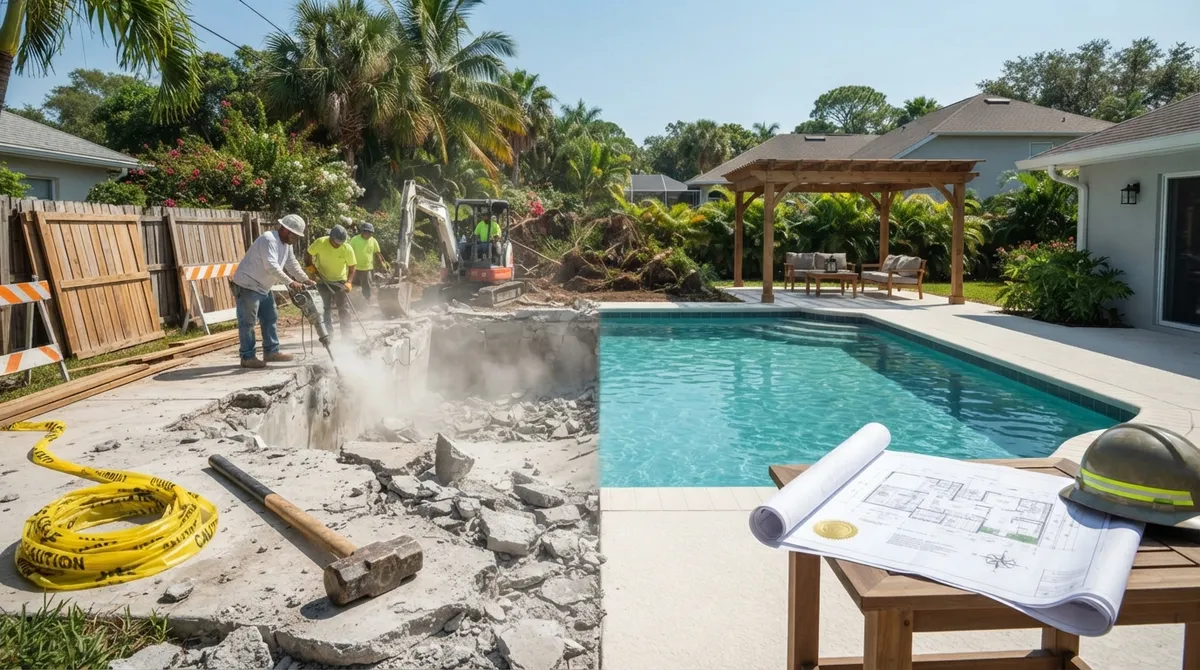
The Big Showdown: Legalize It vs. Tear It Out
Let us put the two paths head to head. Both have a place, and the right choice depends on your pool.
| Factor | ATF Permit (Legalize) | Tear-Out and Rebuild |
|---|---|---|
| Cost | Usually lower: permit fees, plans, inspections, and any corrections | Typically far higher: demolition, hauling, and a brand-new build |
| Timeline | Often weeks to a few months, depending on the jurisdiction | Often several months or more |
| Disruption | Low to moderate; the pool stays in place | High; yard, landscaping, and decking are torn up |
| Risk | Work that cannot be verified may need to be exposed or corrected | Low code risk, but a big financial hit |
| Best for | Pools that are built soundly and can be documented | Pools with serious structural or safety defects |
In most cases, owners start with the ATF route because it protects the investment already in the ground. A tear-out usually only enters the conversation when the building department cannot verify that the work is safe or compliant. For a broader look at this decision, see our article on after-the-fact permits vs. starting fresh.
Why an ATF Permit Does Not Automatically Legalize Everything
Here is the honest truth, said with love: an after the fact pool permit in Florida is not a rubber stamp. The permit does not magically legalize noncompliant work. The building department can require:
- Corrections to anything that does not meet the code
- Additional engineering or inspections
- Exposure of concealed work so inspectors can see it
- In the worst case, removal or reconstruction of work that cannot be shown to comply
That is why preparation matters so much. The more complete and professional your package is on day one, the smoother the review tends to go. If you want to dig deeper into this idea, our guide on whether the Florida Building Code allows after-the-fact permits covers the legal groundwork.
What Documents Do You Need?
Every jurisdiction is a little different, so always confirm with your local building department first. That said, a typical ATF pool submittal may include the items below.
| Document | Why It Matters |
|---|---|
| Permit application | Starts the formal review with your AHJ |
| Site plan or survey | Shows pool location, setbacks, and property lines |
| Pool and structural plans | Documents the shell, depth, and construction details |
| Equipment and electrical details | Covers pumps, heaters, bonding, and lighting |
| Contractor information | Identifies who is licensed and responsible for the work |
| Barrier documentation | Proves the pool meets Florida safety requirements |
Many owners are missing one or more of these, and that is perfectly okay. As-built drawings and a current site plan can fill in the gaps by documenting what exists today.
The Safety Barrier: A Non-Negotiable
Pool safety is the heart of the code, and Florida takes it seriously. Under Florida Statutes §515.29, a residential pool barrier is generally required to be at least 4 feet high, designed to prevent a young child from passing through or climbing over it. Gates must be self-closing and self-latching, and they should open away from the pool. Florida Building Code materials published by local governments also cite a 48-inch minimum barrier height.
Before you schedule anything, walk your property with a critical eye:
- Is the fence or screen enclosure tall enough and in good repair?
- Do the gates close and latch on their own every time?
- Are there any climbable objects near the barrier, like furniture or planters?
- Do doors leading to the pool have the required alarms or protections?
Always confirm the currently adopted code and any local interpretations with your permitting authority. If your pool also has a screen enclosure, our article on why your Florida pool cage needs a permit is worth a quick read.
Step-by-Step: How to Get an After-the-Fact Pool Permit
Here is a simple roadmap you can follow. Keep it handy.
- Identify your AHJ. Confirm whether your city or county controls the permit. Do not assume.
- Call before you touch anything. Contact the building department before altering the pool or submitting plans, and ask about its ATF process and current fee schedule.
- Gather what you have. Collect any old plans, contracts, receipts, photos, surveys, and contractor details.
- Document the existing pool. Have a professional prepare as-built drawings, a site plan, and any engineering the department requests.
- Submit the application package. File with complete documents so the reviewer does not have to chase you.
- Answer reviewer comments. Respond quickly and thoroughly to corrections or requests for more information.
- Pass the inspections. Expect inspections tied to the pool, barrier, and electrical bonding, plus any exposure of concealed work.
- Close out the permit. Get the final approval so the record is clean for insurance, resale, and peace of mind.
For a more detailed walkthrough, check out our post on how to get an after-the-fact pool permit in Florida and our 7 steps to legalize an unpermitted pool.
What About Concealed Work?
This is where many ATF projects get tricky. Pool steel, plumbing, bonding, and electrical often get buried under concrete and decking. If an inspector cannot verify those elements, the building department may ask you to expose them, or to provide other proof such as engineering letters, photos, or testing.
This is the moment where having an engineer in your corner pays off. A sealed engineer letter can sometimes resolve questions that would otherwise force you into costly demolition. It is not guaranteed, since the AHJ makes the final call, but it is often the difference between a short fix and a long headache.
How Much Does an ATF Pool Permit Cost?
Great question, and the honest answer is: it depends. Permit fees, reinspection charges, and penalties are set and administered locally. There is no single statewide surcharge or penalty, and no reliable statewide average exists. Some departments charge a higher fee for work done without a permit, while others follow their standard schedule.
Your total cost usually includes a few moving parts:
- The local permit fee and any ATF surcharge or penalty
- Drafting, survey, and as-built documentation
- Engineering or structural review, if requested
- Corrections to the barrier, equipment, or electrical
- Reinspection fees if something does not pass the first time
Ask your building department for its current fee schedule and enforcement policy before you budget. Our guide on the cost of an after-the-fact permit in Florida can help you plan.
A Quick Word on Public and Commercial Pools
If your pool is a public pool, such as one at a condo, HOA, hotel, or business, there are extra rules. Under §553.79, a local agency may not issue a building permit for construction, development, or modification of a public pool without proof of an application for an operating permit under §514.031. A certificate of completion or occupancy requires issuance of that operating permit. If a commercial property is part of your project, our Certificate of Occupancy and Certificate of Use pages explain how those pieces fit together.
Who Benefits Most From Getting This Right?
Different readers come to this topic from different places. Here is how it usually plays out:
- Homeowners: You want to keep your pool, protect your insurance coverage, and sleep well at night.
- Realtors and buyers: An unpermitted pool can stall a closing. Resolving it early keeps deals moving. See our realtor and closing support services.
- General contractors: You may inherit an unpermitted pool on a remodel or sale. Clean documentation protects your project and reputation.
- Pool and spa contractors: A past job without a permit can create liability. Fixing it quickly keeps your license and clients safe.
- Design and trade professionals: Outsourced drafting and engineering help you deliver complete packages without adding staff.
When Is a Tear-Out the Smarter Choice?
We always like to be fair about both sides. Sometimes starting over really is the better call. A tear-out may make sense when:
- The pool shell has serious structural defects that cannot be engineered around
- Setback or zoning problems cannot be resolved with a variance
- Critical concealed work cannot be verified and exposing it would cost more than rebuilding
- The pool cannot reasonably be brought into compliance with barrier and electrical safety rules
These situations are less common than most owners fear. Many pools that seem hopeless turn out to be very fixable once an engineer and a drafter take a careful look. You can read more about when demolition is truly on the table in will you really have to demolish unpermitted work.
How a Florida Permitting Team Can Help
You do not have to do this alone. At 1 Contractor Solutions, we act as Florida's outsourced permitting department. We work across all 67 counties and have filed in more than 400 municipalities, so we know how each office tends to handle ATF requests. Our in-house drafting and engineering team prepares as-built drawings, site plans, and sealed letters, and we handle filing, tracking, reviewer comments, revisions, and closeout.
That means if a reviewer flags something, we fix it directly instead of waiting on an outside consultant. You can learn more about our after-the-fact and expired permits service, our permit facilitation and filing, or our support for pool and spa contractors. If a stop work order or a stalled closing has you in a time crunch, our urgent permit rescue team can step in fast.
Curious what other owners say? Read feedback and visit us on Google — 1 Contractor Solutions. You can also follow us on LinkedIn or follow us on Facebook for helpful permitting tips.
For official statute language, you can review Florida Statutes Section 553.79 directly on the Online Sunshine website.
Quick Comparison: Which Path Fits You?
| Your Situation | Likely Best Path |
|---|---|
| Pool is structurally sound, documents are missing | ATF permit with as-built drawings |
| Concealed work cannot be verified | ATF permit with engineer letter or limited exposure |
| Closing is coming up fast | ATF permit with urgent expediting support |
| Serious structural or setback failures | Evaluate tear-out or redesign |
| Public or commercial pool | ATF permit plus operating permit coordination |
The Bottom Line
For most Florida owners, an after the fact pool permit is the more practical, affordable, and less disruptive route than tearing the pool out. It is not automatic, and it is not the same everywhere, but with solid documents, a compliant barrier, and the right professional support, many unpermitted pools get approved and closed out cleanly.
The best first move is to stop guessing and start documenting. Call your building department, gather what you have, and get a clear plan. If you would like a friendly team to take the heavy lifting off your plate, get a free quote today and we will help you figure out the fastest, smartest path to a clean permit record.
FAQs
How do I get an after-the-fact pool permit in Florida?
Start by contacting your city or county building department, since there is no single statewide application. Then gather your documents, such as a site plan, pool plans, equipment details, and barrier information, submit the package, and pass the required inspections. A permitting team can prepare and file everything for you.
Can I keep an unpermitted pool if it passes inspection?
Often, yes. If the building department can verify the pool meets the Florida Building Code and safety rules, the work can usually be permitted and closed out. However, noncompliant or unverifiable work may require corrections, exposure of concealed items, or even reconstruction.
How much does an after-the-fact pool permit cost in Florida?
There is no single statewide price. Fees, reinspection charges, and any penalties are set locally, so costs vary by jurisdiction and the details of your pool. Ask your building department for its current fee schedule, and budget for drafting, engineering, and possible corrections too.
Does an existing Florida pool need a fence or safety barrier to get permitted?
Yes, a compliant barrier is a core requirement. Florida Statutes §515.29 generally calls for a barrier at least 4 feet high with self-closing, self-latching gates that open away from the pool. Always confirm the currently adopted code and local interpretations with your permitting authority.
Can a Florida permitting service help with plans and inspections for an after-the-fact pool permit?
Absolutely. A good permitting service can prepare as-built drawings and site plans, coordinate sealed engineering, file the application, respond to reviewer comments, and help you through inspections. That support can save you time and reduce costly back-and-forth with the building department.
We do this work every day across all 67 Florida counties. Call (866) 314-6931 and we will tell you what your situation actually requires — including when you do not need us.
Related services
Permit Facilitation & Filing
You have a crew scheduled, a client asking for dates, and a permit sitting somewhere in a queue you cannot see. We file it, w…
See the servicePlan Review Coordination
A permit in plan review is not one queue. On a commercial project it can be six queues, each with its own reviewer, its own c…
See the serviceReady to get your permit moving?
One call tells you which jurisdiction controls your project, what it will take, and what it will cost. Most of the time we can scope it on the phone.