
Blog
7 Steps to Legalize an Unpermitted Pool in Florida (2026)
Own an unpermitted pool in Florida? Follow these 7 friendly steps to confirm jurisdiction, document the pool, meet safety rules, and close out the permit.
Key Takeaways
-
Unpermitted pools in Florida require after-the-fact permitting through your local building department, which may demand full applications, inspections, and corrections to meet current code—simply paying a fee does not automatically legalize the pool.
-
Florida Statutes §515.27 requires at least one qualifying safety feature (compliant barrier, approved cover, qualifying alarms, or self-closing doors) for residential pools to pass final inspection, regardless of permit status.
-
Confirm jurisdiction first before applying, as properties near city lines or in annexed areas may answer to a different authority than the mailing address suggests, and applying to the wrong department wastes weeks.
-
Search for existing permit records before assuming no paperwork exists; you may find an expired permit or one that was never closed out, which often has an easier fix than a pool with no record.
-
Plan for costs across permit fees, penalty charges, as-built drawings, engineering, corrections (barrier upgrades, electrical fixes), and inspections—some counties charge up to four times the base permit fee for unpermitted work.
-
Avoid common delays by responding promptly to enforcement notices, submitting complete drawings with dimensions and setbacks, ensuring safety features are in place, and confirming the permit is fully closed out after passing final inspection.
So you bought a house with a gorgeous backyard pool, or maybe you built one years ago and just realized nobody ever pulled a permit. Take a breath. You are far from alone, and in most cases an unpermitted pool in Florida is a problem with a path forward.
Florida's sunshine makes pools almost standard equipment, and that means plenty of them were built over the decades without the right paperwork. Sometimes a prior owner skipped it. Sometimes a contractor promised to handle it and never did. Sometimes the permit was issued but never closed out. Whatever the story, the pool is still tied to your property, your insurance, and your ability to sell.
The good news is that building departments deal with this regularly. The even better news is that you do not have to figure it out alone. In this friendly guide, we walk through seven practical steps to bring an unpermitted pool into compliance, what it may cost, what inspectors look for, and how to avoid the most common mistakes. Whether you are a homeowner, a realtor with a closing on the line, or a contractor cleaning up a client's file, this roadmap is for you.
Why an Unpermitted Pool in Florida Matters
Florida pool permitting is run locally. The building department with jurisdiction over your address decides what documents it needs, what inspections apply, and how it handles work that was built without approval. That means there is no single statewide process for fixing an unpermitted pool, and no single statewide fine.
What is statewide are the residential pool safety rules in Chapter 515 of the Florida Statutes. Those rules exist to protect young children, and they apply whether or not your pool was permitted. Here is how the two layers fit together:
| Layer | Who Controls It | What It Covers |
|---|---|---|
| Statewide safety law | Florida Statutes Chapter 515 | Required safety features, barrier height, gate requirements |
| Local permitting | County or city building department | Application, plans, fees, inspections, correction of unpermitted work |
| Local enforcement | Code enforcement or building official | Notices, penalties, deadlines, close-out requirements |
Understanding this split saves a lot of confusion. When a neighbor tells you "the county charges X," remember that your county may do things very differently.
Step 1: Confirm Who Actually Has Jurisdiction
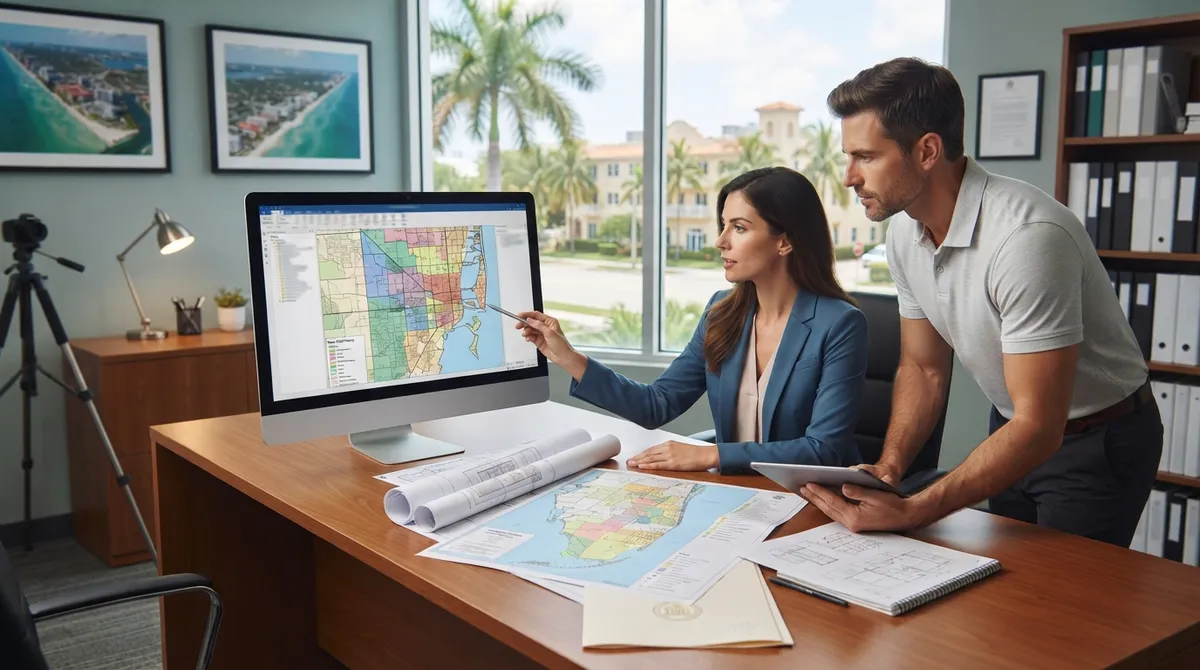
This sounds simple, but it trips people up all the time. Properties near city lines, in unincorporated areas, or in recently annexed neighborhoods may answer to a different office than the mailing address suggests. Applying to the wrong department wastes weeks.
Start by identifying the authority having jurisdiction for your parcel. Our building department lookup tool can point you in the right direction, and our guide on which Florida jurisdiction reviews your project explains the common pitfalls.
Step 2: Search for Existing Permit Records
Before assuming the pool has no paperwork at all, check. You may discover one of three situations:
- No permit ever existed. The pool was built without approval.
- A permit was issued but expired. Work happened, but inspections stalled or the permit was never finaled.
- A permit exists but was never closed. A passed final inspection is generally needed before a residential pool permit reaches complete status.
Each situation has a different fix. An expired or open permit may be easier to resolve than a pool with no record whatsoever. You can start with our open permit search tool, and if records turn up, our resources on after-the-fact and expired permits explain the next move.
Step 3: Understand What "After-the-Fact" Really Means
Many owners hope they can simply pay a fee and be done. In reality, applying for a permit after construction does not automatically legalize the pool. The building department may require a full application, plans, inspections, and correction of anything that does not meet current code.
Because pool construction hides a lot of work underground, the department may also ask to see concealed items documented. That can include steel reinforcement, bonding, electrical connections, and plumbing. The exact approach varies by jurisdiction, so be ready for questions rather than surprises.
For a deeper look at the broader process, see our walkthrough on how to legalize unpermitted work in Florida.
Step 4: Gather the Documents Most Departments Want
Pool applications are document-heavy. While every office has its own checklist, these items commonly come up:
- A site plan or survey showing the pool, the house, setbacks, and other structures.
- Construction plans or as-built drawings showing the pool's dimensions, depth, and layout.
- Equipment and electrical details including pumps, heaters, bonding, and GFCI protection.
- Barrier and safety feature information showing how the pool meets Florida requirements.
- Engineering documentation when the jurisdiction requires plans prepared or sealed by a Florida-licensed design professional.
The as-built drawing is often the heart of the file. If you need one, our as-built drawings service and site plan support are built for exactly this situation. And when a reviewer wants a professional to verify existing conditions, an engineer letter can fill the gap.
Step 5: Make Sure the Pool Meets Florida Safety Rules
This is where many unpermitted pools run into real trouble, so it deserves its own spotlight. Florida Statutes §515.27 requires a new residential swimming pool to have at least one qualifying safety feature in order to pass final inspection and receive a certificate of completion.
The qualifying options generally include:
- A compliant pool barrier
- An approved safety pool cover
- Qualifying exit alarms on doors and windows that provide direct access to the pool
- Qualifying self-closing and self-latching devices on doors that provide direct access
Barrier standards come from §515.29, which generally calls for a minimum height of four feet and design features that keep young children from going under, through, or over the barrier. Gates must meet self-closing and self-latching requirements.
Here is a quick comparison of the common safety approaches so you can talk them through with your inspector:
| Safety Feature | How It Works | Things to Check |
|---|---|---|
| Compliant barrier | Fence or wall around the pool | Height, gaps, gate latch, climbability |
| Approved safety cover | Cover that blocks access when closed | Must meet the applicable standard |
| Door and window alarms | Sounds when openings are used | Must meet qualifying requirements |
| Self-closing, self-latching doors | Doors that secure automatically | Hardware height and function |
Please confirm the current statute and your local code, since local officials interpret how these provisions apply to each property. One important note: Miami-Dade County's guidance describes a second-degree misdemeanor penalty for failing to equip a new pool with a required safety feature. That is a safety-feature provision, not a blanket statewide penalty for every unpermitted pool.
Step 6: Submit the Application and Work the Reviewer Comments
Once your documents are ready, the application goes in, and then the real conversation begins. Plan reviewers often come back with comments, and that is completely normal. It does not mean you failed. It means the review is working.
Common comment topics include missing dimensions, unclear setbacks, bonding questions, barrier details, and requests for engineering. The key is responding clearly and completely so the file does not bounce around for months. Our plan review coordination and revisions and resubmittals services exist for this stage, and our guide on why building permits get rejected can help you anticipate the usual snags.
If you want to skip the county queue, a licensed private provider can handle plan review and inspections where your jurisdiction accepts that route. Learn more about private provider inspections and how they can shorten timelines.
Step 7: Pass Inspections and Close Out the Permit
Here is the step people forget: a permit is not finished just because it was issued. Required inspections must pass, and the permit has to be closed out. Orange County, for example, states that a passed final inspection is required for a residential pool permit to reach complete status.
Closing out matters for real-world reasons. Open or expired permits can surface during a home sale, an appraisal, or an insurance review. Getting that final sign-off turns your pool from a question mark into a clean, documented asset. If you are heading toward a sale, our realtor and closing support can help keep things on schedule.
What Will It Cost to Permit an Existing Pool?
Everyone wants a number, and we wish we could hand you one universal figure. Honestly, costs depend on your jurisdiction and the condition of the work. Here are the typical categories to budget for:
| Cost Category | What Drives It |
|---|---|
| Permit and plan review fees | Local fee schedule and pool scope |
| Penalty or double-fee charges | Local ordinance for work started without a permit |
| Drawings and survey | As-built plans, site plan, engineering needs |
| Corrections | Barrier upgrades, bonding fixes, electrical corrections |
| Inspection fees | Number of required inspections and re-inspections |
For context, Charlotte County's residential pool application warns that starting work before permit issuance may result in a penalty fee of up to four times the permit fee. That is one county's example, not a statewide rate, so always verify with your local office. Our article on after-the-fact permit costs in Florida goes deeper on how fees tend to add up.
Common Mistakes That Slow Everything Down
After watching countless files move through Florida departments, a few patterns repeat. Avoid these and you will save yourself real time:
- Ignoring a notice. Enforcement deadlines matter. Responding early keeps your options open.
- Assuming a past permit covers everything. A permit for the pool does not automatically cover the enclosure, barrier, or electrical add-ons.
- Skipping the safety features. A beautiful pool without a compliant barrier or alternative will not pass.
- Submitting incomplete drawings. Missing dimensions or setbacks create avoidable resubmittals.
- Hiring unlicensed help. Work that requires a licensed contractor or sealed design must be done by one.
If a prior owner or contractor left things unfinished, you are in good company. Our guide on what to do when a prior owner skipped permits is a comforting place to start.
Who Needs This Most? A Quick Audience Guide
Different readers come to this topic with different pressures. Here is how it tends to play out:
- Homeowners usually want peace of mind and a clean path to keep enjoying the pool. See our page for homeowners and owner-builders.
- Realtors and investors often face a ticking closing clock and a buyer's lender asking questions.
- Pool and spa contractors may need to close out an old job or document existing work. Take a look at our resources for pool and spa contractors.
- General contractors sometimes inherit unpermitted pool work during a larger remodel and need it documented properly.
One quick reminder: a Florida permitting service can identify the right authority, assemble materials, coordinate licensed professionals, submit the application, and track inspections. It cannot guarantee approval or replace work that must legally be performed by a licensed contractor or design professional.
How 1 Contractor Solutions Can Help
Think of us as your outsourced permitting department. We work across all 67 Florida counties, and our drafting and engineering are in house, so when a reviewer flags something, we fix it rather than waiting on an outside consultant. We can prepare as-builts, coordinate the filing, work the comments, and carry your file through final inspection.
If your situation feels urgent, such as a stop work order or a closing in jeopardy, our urgent permit rescue team is built for exactly that. You can also visit us on Google — 1 Contractor Solutions to see what customers say, and you can follow us on LinkedIn or follow us on Facebook for Florida permitting updates.
Final Thoughts: You Can Fix This
An unpermitted pool can feel stressful, but remember the big picture. Local building departments handle after-the-fact situations all the time, the steps are manageable, and a clean, closed permit is worth the effort when you insure, refinance, or sell.
Start by confirming your jurisdiction, check for existing records, gather your documents, confirm your safety features, and work the file through to a passed final inspection. If you would rather have a team carry the load, we would be glad to help. Reach out today to get a free quote and let us turn that permit problem into a closed file.
FAQs
How do I legalize an unpermitted pool in Florida?
Start by contacting the building department with jurisdiction over your address to learn its after-the-fact process. You will typically submit an application with a site plan and as-built drawings, pass inspections, correct any code issues, and close out the permit. The exact steps vary by county and city, so always confirm locally.
Can I get a retroactive permit for a pool in Florida?
In many jurisdictions, yes, but a retroactive permit does not automatically legalize the pool. The department may require plans, inspections, fees, and corrections, and it may ask you to document concealed work. Because procedures differ by location, check with your local authority first.
What happens if my pool was built without a permit in Florida?
Consequences depend on local ordinances and the facts of your situation. They can include enforcement notices, added fees or penalties, required corrections, and complications with a sale or insurance review. There is no single statewide fine, so your local building department is the best source for specifics.
What safety features does a Florida residential pool need?
Under Florida Statutes §515.27, a new residential pool needs at least one qualifying safety feature to pass final inspection, such as a compliant barrier, approved safety cover, qualifying alarms, or self-closing and self-latching doors. Barrier rules in §515.29 generally call for a four-foot minimum height. Always verify the current statute and local code for your property.
Can an unpermitted pool affect selling or insuring my Florida home?
It can. Open or missing permits may surface during an appraisal, buyer inspection, lender review, or insurance underwriting, and they can slow or complicate a closing. Resolving the permit and getting a passed final inspection beforehand helps keep things on track.
We do this work every day across all 67 Florida counties. Call (866) 314-6931 and we will tell you what your situation actually requires — including when you do not need us.
Related services
Permit Facilitation & Filing
You have a crew scheduled, a client asking for dates, and a permit sitting somewhere in a queue you cannot see. We file it, w…
See the servicePlan Review Coordination
A permit in plan review is not one queue. On a commercial project it can be six queues, each with its own reviewer, its own c…
See the serviceReady to get your permit moving?
One call tells you which jurisdiction controls your project, what it will take, and what it will cost. Most of the time we can scope it on the phone.