
Blog
Does Florida Building Code Allow After-the-Fact Permits?
Yes, Florida allows after-the-fact permits — but approval isn't automatic. Here's how the process really works across Florida counties.
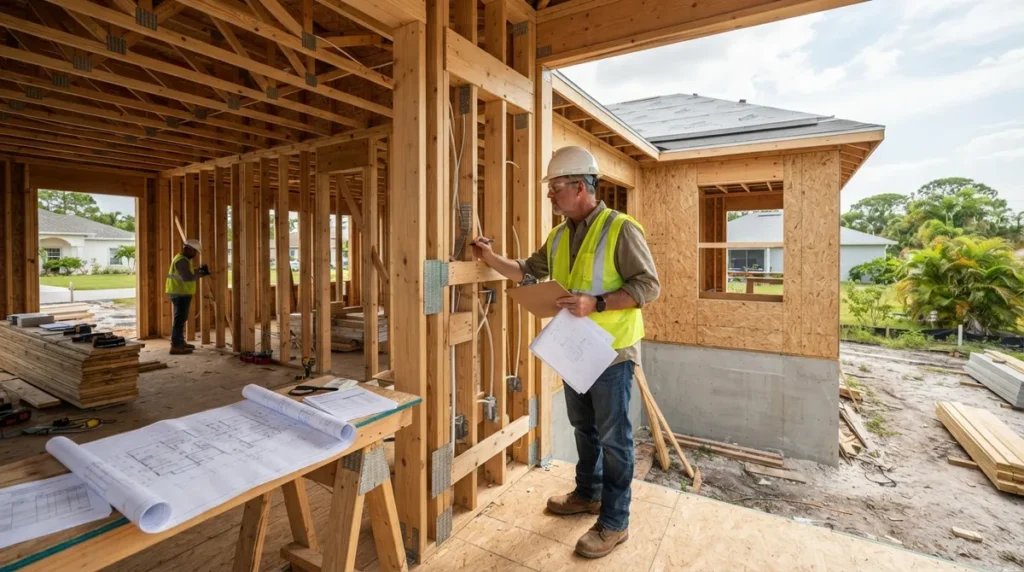
Key Takeaways
-
Florida allows after-the-fact permits for unpermitted work, but approval isn't automatic—completed work must still comply with the Florida Building Code, local ordinances, zoning rules, and floodplain requirements or face corrections or removal.
-
After-the-fact permit rules, forms, and fees vary by jurisdiction; what works in one Florida county may differ significantly in another, making direct contact with your local building department essential before submitting.
-
Review timeframes for complete applications range from 5 business days for single-family work under $15,000 to 60 days for larger projects, but incomplete submissions, missing engineering, or code violations can extend timelines considerably.
-
The July 1, 2026 exemption for minor residential work under $7,500 does not apply retroactively to existing unpermitted construction—you still need an after-the-fact permit for work completed before that date.
-
Unpermitted work can surface unexpectedly during home sales, refinancing, insurance claims, or code-enforcement sweeps; addressing it proactively through the after-the-fact process prevents costly delays and growing penalties.
-
Prepare sealed engineering plans and detailed documentation before submitting an after-the-fact application to avoid delays, and inspectors may require wall or ceiling exposure to verify concealed electrical, plumbing, or structural work.
If you're staring at a screened patio, a converted garage, or a shiny new water heater and wondering whether the previous owner (or your own contractor) ever pulled a permit, you're in good company. This is one of the most common questions we hear at 1 Contractor Solutions, and the short answer is: yes, Florida generally allows you to apply for an after-the-fact permit. But that "yes" comes with a lot of fine print, and getting it wrong can cost you time, money, and a whole lot of stress. Let's walk through exactly what the Florida Building Code says, how the process actually works, and what you can expect if you find yourself needing to legalize work that's already done.
Whether you're a general contractor trying to close out a job, a solar company racing to interconnect a system, a realtor trying to save a closing, or a homeowner who just discovered a permit was never filed, this guide will give you a clear, friendly roadmap. And if at any point it feels overwhelming, that's exactly why our team exists — we handle these files every single day across all 67 Florida counties.
What Florida Law Actually Says About After-the-Fact Permits
Florida Statutes section 553.79 is the backbone of this whole conversation. It requires that most construction, alteration, repair, modification, or demolition receive a building permit before work begins. There's no statewide amnesty program that automatically forgives unpermitted work — Florida simply doesn't work that way.
Instead, when work has already been completed without the required permit, the fix is to apply for what's commonly called an after-the-fact permit through your local building department. This is a local compliance process, not a statewide one, which means the exact rules, forms, and fees depend entirely on the building department that has jurisdiction over your property.
Why This Isn't Automatic Approval
Here's the part that catches people off guard: applying for an after-the-fact permit doesn't guarantee it gets approved. The completed work still has to demonstrate compliance with the Florida Building Code, local ordinances, zoning rules, and floodplain requirements. If the work doesn't measure up, you may be asked to make corrections — or in some cases, remove portions of what was built.

How the After-the-Fact Permit Process Works
Every jurisdiction has its own quirks, but the general flow tends to follow a predictable pattern. Here's what most property owners can expect:
- Research the permit history. Before anything else, you need to confirm what was (or wasn't) permitted. Our open permit search tool is a great starting point for this.
- Determine the scope of work. You'll need a detailed description of exactly what was built or modified, often supported by photographs.
- Prepare plans and documentation. Depending on the project, this may include architectural drawings, structural calculations, or engineering letters.
- Submit the application with fees. Expect to pay standard permit fees plus additional investigation or penalty fees.
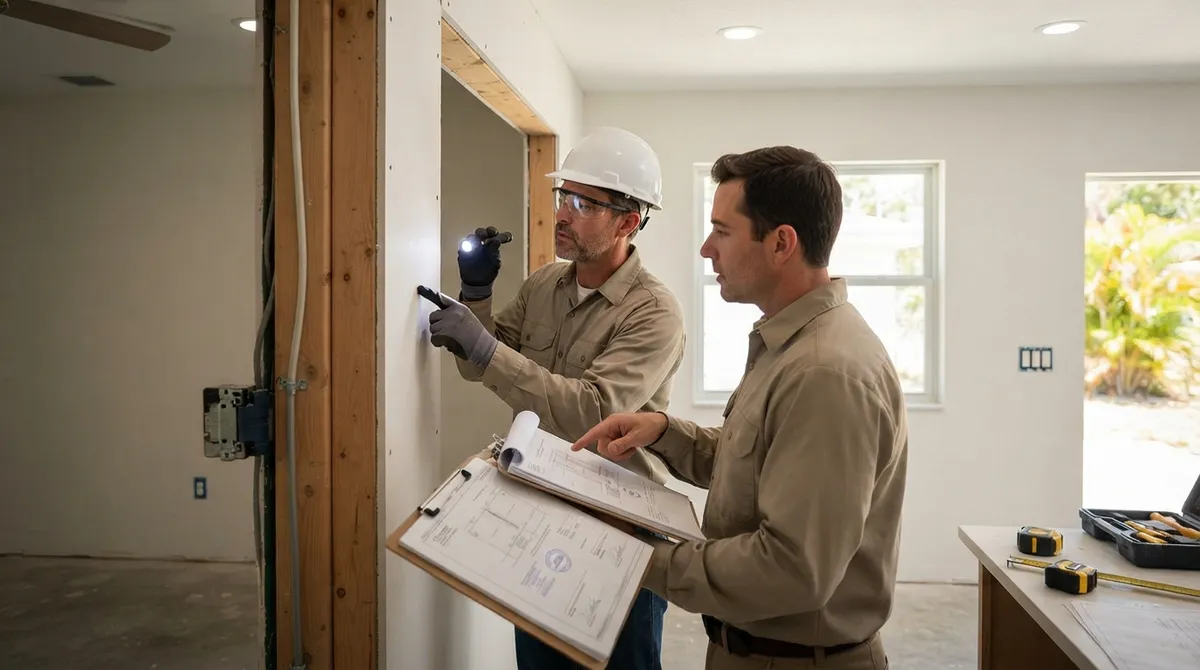
- Open up for inspection. If the work is concealed, inspectors may require walls, ceilings, or other assemblies to be exposed.
- Resolve any corrections. If the work doesn't meet code, you'll need to make the required fixes before final approval.
Documents You'll Likely Need
Local building officials vary in what they ask for, but most after-the-fact applications require some combination of the following:
- A completed permit application with detailed scope of work
- Site plans and floor plans showing the existing conditions
- Construction drawings or engineering documentation for structural, electrical, plumbing, or mechanical work
- Photographs of the completed work, including any concealed elements
- Product approval information for windows, doors, or roofing materials
- Payment of permit fees plus any applicable penalty or investigation fees
If your project involves structural or MEP components, having engineer letters or full structural engineering documentation ready before you submit can shave weeks off the review process.
Timeframes You Should Know
Florida Statutes section 553.792 sets review timeframes for complete and sufficient applications, though these targets assume your paperwork is in order — an incomplete after-the-fact application won't move nearly as fast.
| Permit Type | Review Timeframe | Notes |
|---|---|---|
| Existing single-family dwelling, work valued below $15,000 | 5 business days | Applies to complete applications only |
| Most permits for structures under 7,500 sq ft | 30 business days | Common for residential additions and remodels |
| Larger or nonresidential permit categories | 60 business days | Commercial and larger structural projects |
These numbers come straight from Florida Statutes section 553.792, and they're a helpful benchmark — but incomplete after-the-fact submissions, missing engineering, or code-enforcement complications can stretch these timelines considerably.
The 2026 Legislative Update You Should Know About
Florida lawmakers passed legislation creating a limited exemption for certain residential work valued at $7,500 or less, effective July 1, 2026. It's a welcome change for small projects, but it's important not to misread it.
| What the 2026 Exemption Covers | What It Does NOT Cover |
|---|---|
| Certain minor work under $7,500 on single-family homes | Electrical, plumbing, structural, mechanical, or gas work |
| Prospective projects starting after July 1, 2026 | Properties in certain flood-hazard zones |
| Simple, low-risk cosmetic or minor improvements | Previously completed unpermitted construction — this is NOT a retroactive amnesty |
In other words, if you already have unpermitted work sitting on your property, this new exemption doesn't erase the problem. You still need to go through the after-the-fact process for anything built before the law took effect, or anything that falls outside its narrow scope.
What Happens If the Work Doesn't Comply
This is where things get real. If an inspector determines the completed work doesn't meet current code, you generally have a few paths forward:
- Make corrective alterations to bring the work up to code
- Remove the noncompliant portion of the work entirely
- In some cases, demonstrate the work meets the code standard that applied when it was originally built — though this determination is made by the local building official and is never automatic
This is exactly the kind of situation where code compliance and violations support becomes invaluable. Having someone who knows how to negotiate with the building official — and who can produce sealed engineering on short notice — often makes the difference between a quick resolution and a drawn-out headache.
Why Unpermitted Work Creates Bigger Problems Than People Expect
Unpermitted construction doesn't just sit quietly in the background. It can surface at the worst possible moments:
- During a home sale, when a title search or realtor closing support review uncovers an open or missing permit
- During refinancing, when a lender's appraisal flags unpermitted square footage
- During an insurance claim, when the adjuster discovers the roof or addition was never properly permitted
- During a routine code-enforcement sweep, which can trigger fines that grow the longer the issue sits unresolved
We've seen this play out plenty of times in Tampa, across Pinellas County, and throughout the Manatee County area — a seemingly small unpermitted lanai enclosure suddenly becomes the thing holding up a closing date. It's far better to get ahead of it.
How a Florida Permitting Services Team Helps
You don't have to navigate this alone, and honestly, we'd encourage you not to try. Here's where professional support genuinely pays for itself:
- Permit history research. We dig through county and municipal records to figure out exactly what's on file — and what's missing.
- Plans and engineering. Our in-house team produces sealed plans and engineering documents, so there's no waiting on a third-party consultant to call back.
- Application prep and filing. We handle the after-the-fact and expired permits paperwork so nothing gets bounced back for a missing signature or form.
- Inspection coordination. As a licensed private provider, we can often perform private provider plan review and inspections ourselves instead of waiting in a county queue.
- Revisions and resubmittals. When a reviewer flags something, we handle the revisions and resubmittals quickly because our own engineer sealed the work in the first place.
A Quick Word for Each Type of Reader
General contractors juggling multiple jobs know that an unpermitted discovery can stall an entire schedule — our team can step in to keep the project moving while you focus on the crew. Solar companies racing against interconnection deadlines benefit from having structural and electrical documentation ready before an inspector ever shows up. Realtors and investors evaluating a property before purchase should always run a permit history check first, because an unresolved after-the-fact issue can delay or derail a closing. And homeowners? You're not alone — this happens more often than you'd think, especially with older Florida homes that changed hands multiple times before you bought them.
Frequently Overlooked Details That Trip People Up
A few things we see catch people off guard again and again:
- Permit rules genuinely differ by city and county — what works in Miami-Dade County may look completely different in Broward County or Orlando.
- A verbal promise from a contractor that "a permit wasn't needed" doesn't hold up with code enforcement — always verify with the local building department directly.
- Older construction is sometimes evaluated under the code edition in effect when it was built, but that determination rests entirely with the building official — it's never guaranteed.
- The Florida Building Code 8th Edition became effective December 31, 2023, and staying current on code editions matters for both new work and after-the-fact evaluations.
For a deeper dive into related topics, our guide on legalizing unpermitted work in Florida and our breakdown of penalties for building without a permit are both worth a read before you dive in.
Bringing It All Together
So, does the Florida Building Code allow after-the-fact permits? Yes — but it's a process, not a shortcut, and it requires patience, proper documentation, and often a bit of professional help to get through cleanly. The good news is that thousands of Florida property owners resolve these situations successfully every year, and there's no reason yours can't be one of the smooth ones.
At 1 Contractor Solutions, we've handled more than 5,000 permits and projects across over 400 Florida municipalities, and after-the-fact and expired permits are among the files we take on most often — including the ones other companies decline. We answer 24/7, respond within 30 minutes day or night, and se habla español. If you'd like to see what our clients say about working with us, take a look at our reviews or visit us on Google — 1 Contractor Solutions. You can also follow us on LinkedIn or follow us on Facebook for updates on Florida permitting rules as they evolve.
Ready to get your unpermitted work sorted out the right way? Get a free quote today, and let's get your permit history cleared up for good.
FAQs
Can I get an after-the-fact building permit in Florida?
Yes, you generally can! Florida's local building departments allow property owners to apply for an after-the-fact permit to address work completed without one. Just keep in mind that approval isn't automatic — the work still needs to demonstrate code compliance.
What is the penalty for building without a permit in Florida?
Penalties vary by jurisdiction and can include investigation fees, doubled permit fees, and code-enforcement fines that grow the longer the issue goes unresolved. The friendly advice here is simple: the sooner you address it, the less painful (and expensive) it usually is.
Will Florida inspectors make me open walls for an after-the-fact permit?
It's possible, especially if the work is concealed and can't be verified otherwise. Inspectors may ask to see wiring, plumbing, or framing exposed so they can confirm everything meets code — it's not personal, it's just part of doing this thing right.
Do after-the-fact permits require engineering or architectural plans?
Often, yes, especially for structural, electrical, plumbing, or mechanical work. Having sealed plans ready before you submit can genuinely speed things along, which is why so many folks lean on an in-house drafting and engineering team for this step.
Are after-the-fact permit rules different by Florida city or county?
Absolutely — this is one of the trickiest parts! Every jurisdiction sets its own forms, fees, and procedures, so what works in one county might look totally different just a few miles away. That's exactly why checking with the local building department (or having someone do it for you) is so important.
We do this work every day across all 67 Florida counties. Call (866) 314-6931 and we will tell you what your situation actually requires — including when you do not need us.
Related services
Permit Facilitation & Filing
You have a crew scheduled, a client asking for dates, and a permit sitting somewhere in a queue you cannot see. We file it, w…
See the servicePlan Review Coordination
A permit in plan review is not one queue. On a commercial project it can be six queues, each with its own reviewer, its own c…
See the serviceReady to get your permit moving?
One call tells you which jurisdiction controls your project, what it will take, and what it will cost. Most of the time we can scope it on the phone.