
Blog
Why Does Your Florida Pool Cage Need a Permit Now?
Learn how Florida homeowners can legalize an unpermitted pool cage through the after-the-fact permit process, step by step.
Key Takeaways
-
After-the-fact pool cage permits are a structured, fixable process in Florida designed to document existing structures and verify code compliance rather than punish homeowners for unpermitted work.
-
Pool cages are classified as structural work subject to Florida Building Code because of hurricane risk; HVHZ areas like Miami-Dade and Broward have stricter wind-load and product approval requirements.
-
After-the-fact permitting costs vary by jurisdiction but typically include a 2x-4x multiplier on standard fees plus engineering, drafting, and potential code enforcement penalties; get location-specific estimates.
-
The after-the-fact process requires documenting the existing structure with as-built plans, securing sealed engineering certification of wind-load capacity, and passing inspections; many jurisdictions won't require demolition if code compliance can be proven.
-
Unpermitted pool cages can derail home sales and refinances because title companies and lenders routinely run permit searches; resolving the permit before listing or closing prevents delays.
-
Pool cage permitting is separate from pool safety compliance; your property may still need compliant fencing, self-closing gates, door alarms, or electrical permits even after the cage is legalized.
So you're standing in your backyard, looking up at a pool cage that's been shading your lanai for years, and someone just mentioned the word "permit." Maybe it came up during a home sale, a refinance appraisal, or a neighbor's casual comment about code enforcement driving through. Whatever brought you here, take a breath. You're not alone, and this is fixable. Every week, homeowners, realtors, and contractors across Florida find themselves looking for pool cage after the fact permitting florida solutions because the enclosure was built without the paperwork the local building department requires.
Here's the good news: Florida's after-the-fact permit process exists precisely for situations like yours. It's not a punishment system designed to make your life miserable. It's a structured way to document what's already standing, verify it meets the Florida Building Code, and close out the file so you can move forward with confidence. In this guide, we'll walk through what triggers the need for a permit, how the after-the-fact process actually works, what it might cost, and how a permitting partner like 1 Contractor Solutions can make the whole thing feel a lot less overwhelming.
Why Pool Cages Almost Always Need a Permit in Florida
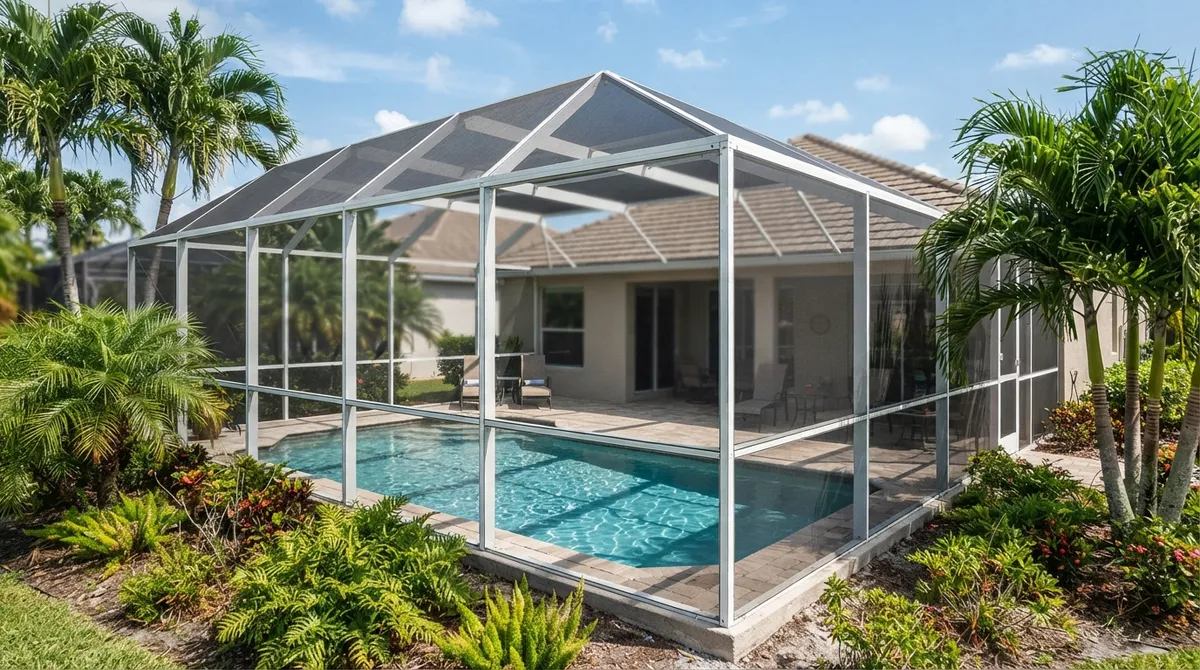
Let's clear up a common misconception first. A pool cage isn't just a decorative screen frame sitting on your patio. It's structural work. The aluminum framing, the roof panels, the anchors bolting it to your slab, and the connections tying it all together are subject to the Florida Building Code because a poorly anchored enclosure can become a dangerous projectile in a storm.
That's exactly why building departments care so much about wind-load calculations and anchor details. Florida's hurricane history isn't ancient trivia here; it's the reason your local jurisdiction wants sealed engineering behind anything overhead. If you're in Miami-Dade or Broward County, you're also dealing with High-Velocity Hurricane Zone (HVHZ) provisions, which layer on even stricter product approval and wind design requirements.
When You Might Be Off the Hook
Not every screen project triggers a full permit. If you're simply replacing torn mesh on an existing, undamaged frame with the same type of screen, that's typically treated as routine maintenance. But the moment you're resizing the frame, re-anchoring it, rebuilding sections, or materially changing the structure, you're back in permit territory. When in doubt, it's worth checking with your local building department or asking a permitting professional to review your specific situation.
What Triggers the Need to Look for Pool Cage After the Fact Permitting in Florida
Most homeowners don't wake up one day and decide to skip the permit process out of rebellion. It usually happens more quietly than that. Maybe a previous owner installed the cage decades ago. Maybe a contractor promised to "take care of the paperwork" and never did. Maybe you inherited the issue entirely.
- A property sale or refinance uncovers it. Title companies and lenders routinely run permit searches, and an unpermitted structure can stall or sink a closing.
- An insurance inspection flags the enclosure. Insurers increasingly want documentation that structures meet current wind standards, especially post-storm.
- Code enforcement notices the discrepancy. Sometimes it's a drive-by inspection, a neighbor complaint, or aerial imagery comparison against permit records.
- You're planning a remodel and the old cage surfaces in permit history. Adding a new addition or pool feature often means the building department reviews everything on the property, including that decades-old enclosure.
Whatever the trigger, the path forward is the same: document what exists, verify it meets code, and file for the after-the-fact permit with the jurisdiction that actually has authority over your property.
How the After-the-Fact Pool Cage Permit Process Works
Unlike a brand-new permit application where you design first and build second, after-the-fact permitting flips the order. The structure already exists, so the process is about proving it's safe and compliant rather than proposing something new.
Step-by-Step Overview
- Confirm the correct jurisdiction. Depending on whether your property sits inside city limits or unincorporated county land, the responsible building department could be a municipality or the county itself. This is trickier than it sounds, and it's one of the first things a firm handling after-the-fact and expired permits will nail down.
- Document the existing structure. This usually means an as-built site plan, dimensions, attachment details, product information, and structural drawings.
- Obtain sealed engineering where required. A Florida-licensed engineer or architect may need to certify the wind-load capacity and structural integrity of the enclosure as it currently stands.
- Submit the application through the local portal. Every jurisdiction has its own submission system, fee schedule, and review timeline.
- Respond to review comments. Reviewers may request additional information, corrections, or clarifications before approval.
- Schedule required inspections. Inspectors may need to see footings, anchors, and fasteners, which sometimes means opening up concealed areas of the structure.
- Close out the permit. Once everything passes, the permit is finaled and any related code case is resolved.
If that list feels like a lot, that's because it is. Coordinating jurisdiction rules, engineering, and inspections simultaneously is exactly the kind of work firms like ours handle daily. Our team at 1 Contractor Solutions provides permit facilitation and filing alongside in-house engineering so you're not bouncing between five different vendors trying to get everyone on the same page.
What Documents Are Typically Required
| Document | Purpose |
|---|---|
| As-built site plan | Shows the pool cage's exact location relative to the pool, house, and property lines |
| Structural drawings | Details framing, roof design, and connection points |
| Wind-load calculations | Confirms the structure can withstand local wind speed requirements |
| Product approval documentation | Verifies materials meet Florida Building Code standards, especially critical in HVHZ areas |
| Sealed engineer or architect certification | Required by many jurisdictions to validate the as-built condition |
| Survey (if requested) | Confirms setback compliance and property boundaries |
Will the Building Department Make You Rebuild It?
This is probably the question keeping you up at night, and the honest answer is: it depends. If the existing structure can be shown to meet code through documentation and inspection, you likely won't need to touch it. But if inspectors can't verify footings, anchors, or fasteners without opening up sections, or if the design simply doesn't meet current wind standards, some modification or partial reconstruction may be necessary.
This is where an experienced engineer earns their keep. A qualified professional can often certify existing conditions without demolishing everything, saving you significant time and money. That said, every jurisdiction and every structure is different, so it's worth getting a real assessment rather than guessing.
Common Outcomes When Legalizing an Existing Pool Cage
- Full approval with no modifications, once documentation and inspection confirm compliance
- Minor corrective work, such as adding anchors or reinforcing specific connections
- Partial reconstruction of sections that can't be verified or don't meet current code
- Requirement to add separate pool safety features, since a screen enclosure alone doesn't satisfy every barrier requirement
Understanding Costs and Fees
There's no single statewide fee for after-the-fact pool cage permits because each jurisdiction sets its own rates. Many local governments charge a multiplier on the standard permit fee as a penalty for starting work without authorization, and some layer on separate code enforcement fines if a violation was already issued.
| Cost Factor | What Influences It |
|---|---|
| Base permit fee | Set by the local building department, often based on project value |
| After-the-fact multiplier | Commonly 2x to 4x the standard fee, varies by jurisdiction |
| Engineering and drafting fees | Depends on complexity, HVHZ requirements, and whether sealed drawings are needed |
| Code enforcement penalties | Separate from permit fees; may include daily fines if a violation was already filed |
| Survey costs | Required if the jurisdiction needs updated boundary or setback verification |
Because fees vary so widely between counties and cities, getting an accurate estimate really depends on knowing your specific jurisdiction. Teams that work across multiple counties, like ours covering Hillsborough County, Pinellas County, and Manatee County, can often give you a realistic range fast because they've filed there before.
Pool Safety Rules Are a Separate Conversation
Here's something a lot of homeowners miss: getting your pool cage permitted doesn't automatically check the box for pool safety compliance. Florida's pool barrier requirements are their own animal. Your property may still need a compliant fence or barrier, self-closing and self-latching gates, door alarms, or other approved safety features depending on your local ordinance and the age of the pool.
If your enclosure includes lighting, fans, or pumps that were wired without an electrical permit, that's another layer to address. It's worth having a professional review the whole property holistically rather than treating the pool cage as an isolated issue.
How This Affects Selling or Refinancing Your Home
If you're a homeowner planning to sell, or a realtor representing one, an unpermitted pool cage can throw a wrench into closing timelines. Title searches and permit history checks are increasingly standard, and an open code case or missing permit can delay underwriting, complicate insurance approval, or spook a buyer's lender entirely.
The smart move is disclosure and resolution before the property hits the market, not after an inspector finds it during due diligence. Our realtor and closing support services exist specifically to help agents and sellers untangle these situations quickly, often before they derail a contract.
Can You Handle This Yourself as an Owner-Builder?
Florida's owner-builder exemption does allow eligible homeowners to pull certain permits on their own owner-occupied residence. But that exemption comes with real conditions, and it doesn't remove the code compliance, inspection, or safety obligations that come with the project. For structural corrective work on a pool cage, most people find it's genuinely safer and faster to work with a licensed contractor or a firm experienced in owner-builder permits who understands exactly where the pitfalls are.
Why Working With a Permitting Specialist Makes This Easier
We won't pretend this process is simple, because it isn't. Jurisdictional rules shift from county to county, HVHZ requirements add complexity in South Florida, and every reviewer comment can feel like it's resetting your timeline. That's the exact reason 1 Contractor Solutions exists: to be the team that already knows which building department controls your address, what they'll ask for, and how to get sealed engineering turned around fast because it's produced in-house rather than outsourced.
Whether you're a homeowner near Venice, a general contractor juggling multiple jobs across Lee County, or a solar company needing structural documentation alongside your electrical permits, having one point of contact who tracks the application from filing through final inspection saves real time and stress. You can browse our full range of permitting and engineering services or check out how we support homeowners specifically navigating legacy construction issues like this one.
Curious what past clients have experienced? You can visit us on Google — 1 Contractor Solutions to see reviews from real Florida homeowners and contractors who've walked this exact path. You can also follow us on LinkedIn or follow us on Facebook for regular updates on Florida permitting changes and code updates that might affect your property.
A Few Extra Considerations Before You File
- Confirm which building code edition your jurisdiction currently enforces, since Florida updates the statewide code periodically and local adoption dates can vary.
- Ask whether your jurisdiction requires exposing concealed connections for inspection, which can affect your timeline and budget.
- Check whether your enclosure uses removable screen panels, since some engineered designs require homeowner notification about seasonal removal procedures.
- Don't assume a permit from one municipality transfers if your property later gets annexed or reclassified.
For additional background on Florida's statewide building code framework, the Florida Building Commission maintains current code editions and amendment history, and FEMA's flood and structural safety resources can be useful if your property falls in a flood zone that intersects with your pool enclosure project.
Moving Forward With Confidence
Discovering that your pool cage needs after-the-fact permitting isn't a crisis, even though it might feel that way at first. It's a documented, well-established process that thousands of Florida property owners go through every year. With the right engineering, the right paperwork, and someone who knows your local building department's quirks, you can get this resolved and get back to actually enjoying your lanai.
If you're ready to stop guessing and start moving, our team is standing by to walk through your specific situation and get a free quote tailored to your county, your structure, and your timeline. We've handled thousands of permits across all 67 Florida counties, and we'd be glad to add yours to that list.
FAQs
Do I need a permit for a pool cage in Florida?
Yes, in almost all cases, because the framing, roof, and anchors are structural work regulated by the Florida Building Code. The one exception is a like-for-like screen mesh replacement on an undamaged frame, which is usually treated as routine maintenance rather than a permitted change.
Can I get an after-the-fact permit for an unpermitted pool enclosure in Florida?
Absolutely, and it's a well-worn path for homeowners in your exact situation. You'll need to document the existing structure, often with sealed engineering, and submit through the building department that has jurisdiction over your property, whether that's your city or county.
How much does an after-the-fact pool cage permit cost in Florida?
There's no single statewide fee since every jurisdiction sets its own rates, but many charge a multiplier of two to four times the standard permit fee as a penalty for unpermitted work. Engineering, drafting, and any required survey work add to the total, so getting a location-specific estimate is your best bet.
Will the county make me remove or rebuild my unpermitted pool cage?
Not necessarily. If documentation and inspection can verify the structure meets code, it often stays exactly as built. Some situations do require opening concealed connections or making minor corrective repairs, but full demolition is far from the most common outcome.
Does a pool cage count as a swimming pool barrier in Florida?
Not automatically, and this catches a lot of homeowners off guard. Your property may still need a separate compliant pool barrier, self-latching gates, or door alarms depending on local ordinance, so it's worth having the whole property reviewed together.
We do this work every day across all 67 Florida counties. Call (866) 314-6931 and we will tell you what your situation actually requires — including when you do not need us.
Related services
Permit Facilitation & Filing
You have a crew scheduled, a client asking for dates, and a permit sitting somewhere in a queue you cannot see. We file it, w…
See the servicePlan Review Coordination
A permit in plan review is not one queue. On a commercial project it can be six queues, each with its own reviewer, its own c…
See the serviceReady to get your permit moving?
One call tells you which jurisdiction controls your project, what it will take, and what it will cost. Most of the time we can scope it on the phone.