
Blog
How Do You Get Coastal Florida After-the-Fact Permitting?
Looking for coastal Florida after the fact permitting? Learn how CCCL rules, local permits, and sealed plans fit together to legalize your work in 2026.
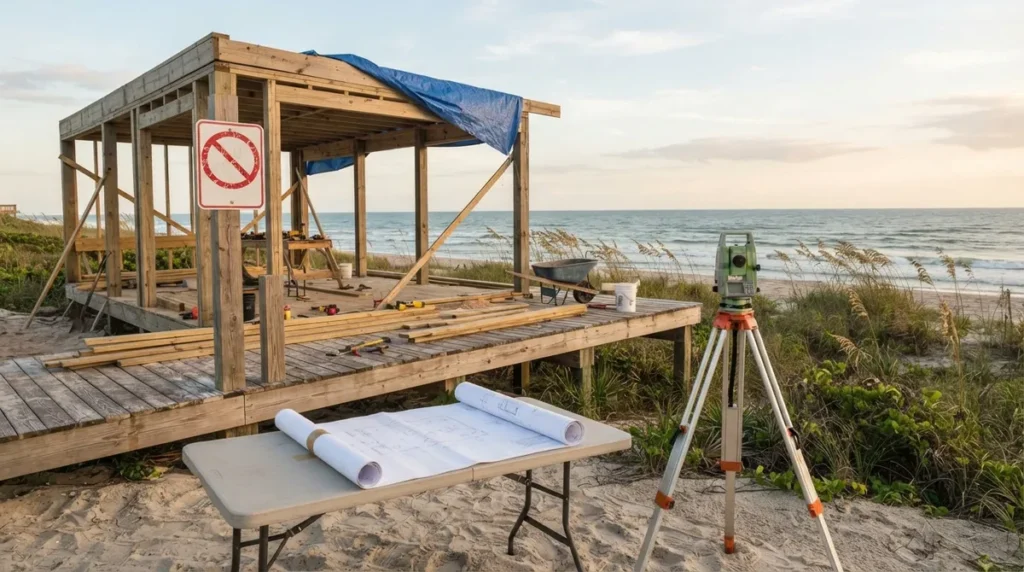
Key Takeaways
-
Work done without a permit in coastal Florida may need both a local building permit and a separate Florida DEP CCCL permit if it sits seaward of the Coastal Construction Control Line and isn't exempt.
-
Confirm your exact parcel and jurisdiction first, then check the CCCL location for your county, since filing with the wrong agency can waste weeks.
-
Retroactive approval is not guaranteed; agencies decide case by case, so accurate as-built drawings, a site plan or survey, and sealed engineering letters strengthen your application.
-
Stop work immediately if you have a stop work order or violation notice, since continuing construction can add penalties and complicate approval.
-
Get all agency guidance in writing, and don't assume an exemption from DEP waives local permit requirements.
-
Expect reviewers to request revisions and possibly open covered work for inspection, so be ready to respond quickly and document concealed or finished construction.
You finished the screen enclosure, the seawall repair, or that dreamy beachside deck, and then someone casually asks, "Did you pull a permit for that?" Suddenly your stomach drops. If you're looking for coastal Florida after the fact permitting, take a breath. You're far from the first person to land here, and there is a real path forward.
Here's the catch: coastal properties play by an extra set of rules. Beyond your local building department, the Florida Department of Environmental Protection (DEP) may have a say if your property sits near the beach. That means a bit more homework, but it's very doable with the right plan.
In this friendly guide, we'll walk through what after-the-fact permitting actually means, how the Coastal Construction Control Line (CCCL) fits in, what documents you'll likely need, and how to avoid common stumbling blocks. Whether you're a homeowner, contractor, solar installer, realtor, or designer, you'll leave knowing exactly what to do next. Let's get you from "uh-oh" to approved.
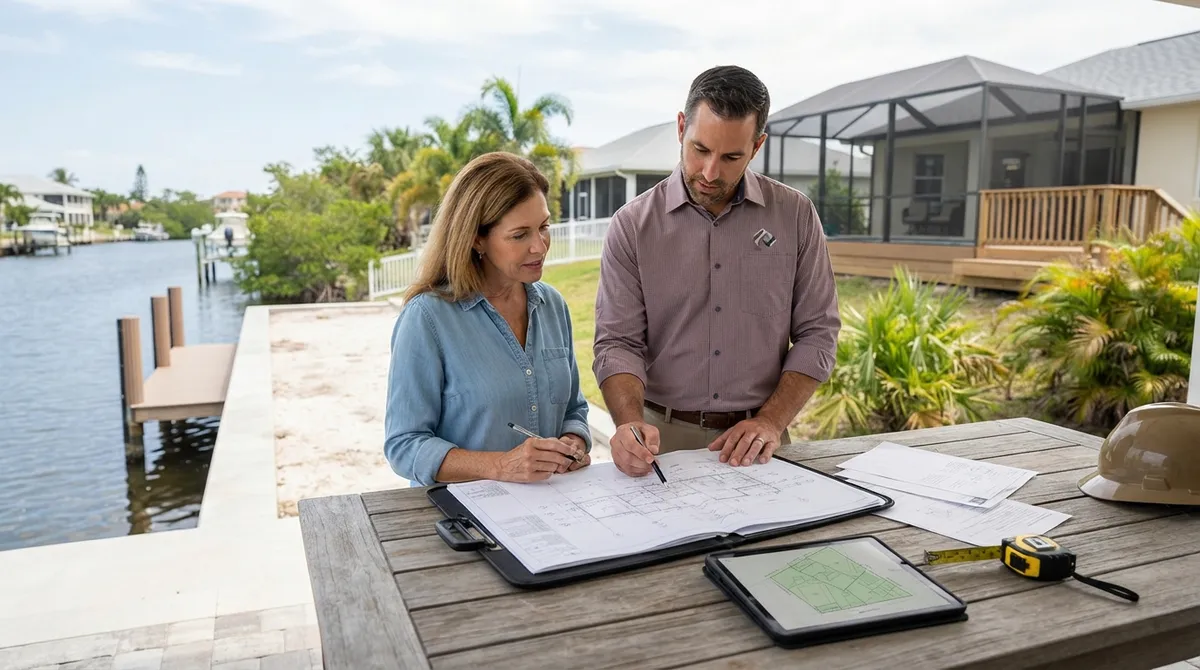
What Does After-the-Fact Permitting Mean in Coastal Florida?
After-the-fact permitting (sometimes called retroactive permitting) means asking for required approvals after work has already started or finished. It isn't one single statewide permit. Depending on your property and the work, you may need local building, zoning, or environmental approvals, and sometimes state or federal sign-off too.
Florida law generally says you can't build, alter, repair, or demolish a building without first getting a permit from the appropriate enforcing agency, unless an exception applies. That's found in Florida Statutes section 553.79. So when work skips that step, the goal becomes bringing it into compliance.
Here's the honest truth: retroactive approval is not guaranteed. Agencies decide case by case. The good news is that a well-prepared application, supported by accurate plans and engineering, gives you the strongest shot. If you want the bigger picture, our guide on what after-the-fact permitting is in Florida is a great companion read.
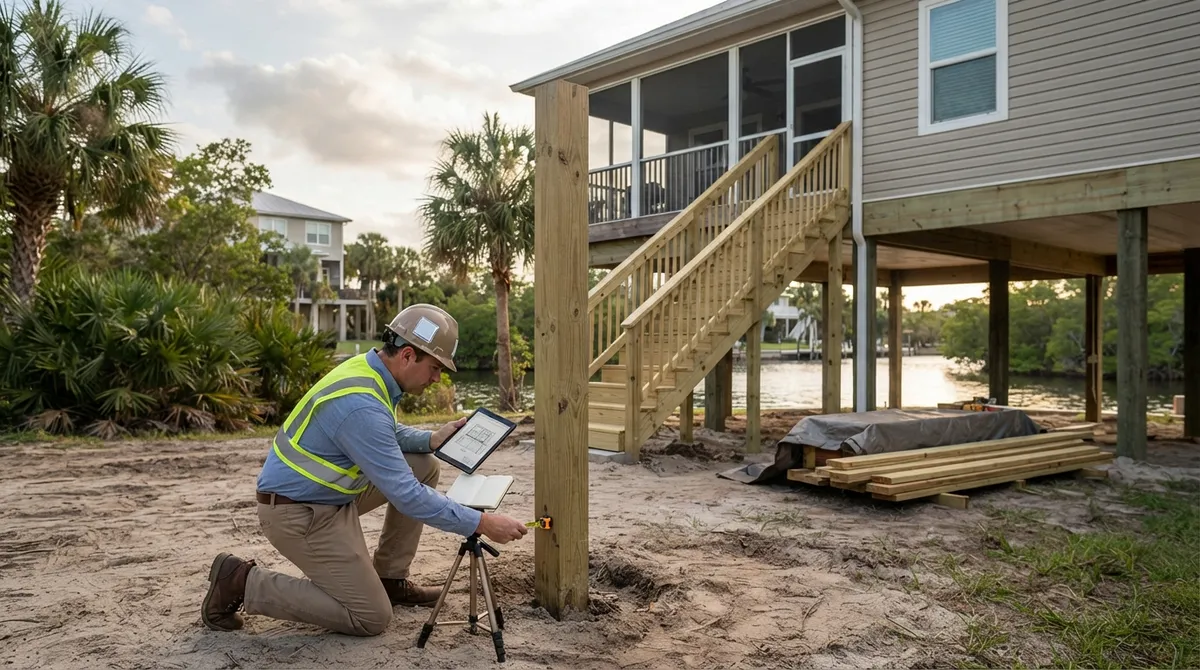
Why Coastal Properties Are Different
Inland, you mostly deal with your city or county. Near the water, there's often a second layer. The Florida DEP regulates construction and excavation seaward of the Coastal Construction Control Line, and unless your work is exempt, a DEP permit is required.
The CCCL isn't a simple no-build setback. Florida Statutes section 161.053 describes it as defining the beach-dune area subject to severe fluctuations from a 100-year storm event. It marks a jurisdictional area, not a universal prohibition.
DEP's CCCL review looks at things like:
- Potential effects on the beach and dune system
- Impacts on adjacent properties
- Native coastal vegetation
- Marine turtles and nesting habitat
- Public beach access
Siting and design standards live in Chapter 62B-33 of the Florida Administrative Code. Some eligible projects may qualify for streamlined general permits under Chapter 62B-34, which DEP describes as a 30-day process for qualifying projects. Important note: that timeline is not a general deadline for every after-the-fact application.
Local Permit vs. DEP Coastal Permit: Do You Need Both?
This is the question we hear most. A local building permit and a DEP coastal permit are two distinct approvals. Having one doesn't automatically satisfy the other.
| Approval | Who Issues It | What It Covers | When It Applies |
|---|---|---|---|
| Local building permit | County or city building department | Structural, electrical, plumbing, mechanical, zoning compliance | Nearly all regulated construction |
| CCCL permit | Florida DEP | Beach and dune impacts, siting and design standards | Work seaward of the CCCL, unless exempt |
| Other environmental approvals | State or federal agencies | Wetlands, docks, seawalls, and similar resources | Depends on location and type of work |
Florida's statute also directs coastal counties and municipalities to advise DEP within five days of receiving an application for work seaward of the CCCL, and to notify the applicant of state permit requirements within five days. Still, it's smart to verify everything yourself rather than assume someone else caught it.
If environmental permits are part of your puzzle, our FDEP environmental permits service page explains how that piece works.
How to Find Out If Your Property Is Seaward of the CCCL
Before anything else, you need to know whether DEP has jurisdiction. Here's a simple way to start:
- Confirm your exact address and parcel. Boundaries near city lines can be tricky, so verify which jurisdiction actually controls your lot. Our building department lookup tool can help.
- Check the CCCL location. DEP maintains the line for each coastal county, and the location relative to your structure matters.
- Contact your local building department. Ask what applications, plans, and inspections they'd require for your situation.
- Contact DEP if you might be seaward of the line. Ask whether your work needs a permit or qualifies for an exemption.
- Get everything in writing. Keep emails and notes so you have a clear record.
Keep in mind that exemptions are specific to the activity and location. DEP's FAQ gives examples, like certain improvements within an existing single-family dwelling's foundation limits that don't involve foundation work. Even then, an exemption from one agency doesn't waive local permits or other requirements.
The Step-by-Step Path to After-the-Fact Approval
Every property is different, but most coastal after-the-fact cases follow a similar rhythm. Here's the general flow:
- Stop and assess. If you received a stop work order or violation notice, don't keep building. Continuing can make things worse.
- Identify what was built. Document the scope of work, dates, and who did it.
- Confirm jurisdiction. Determine the local authority and whether DEP's CCCL rules apply.
- Gather plans and documentation. As-built drawings, site plans, surveys, and engineering letters are common requirements.
- Submit the application. File with the local building department and, if applicable, DEP.
- Respond to review comments. Reviewers often ask for revisions, so be ready to answer quickly.
- Complete inspections and corrections. You may need to open up covered work or fix items that don't meet code.
- Close out. Finalize the permit and, where needed, secure a certificate of occupancy or use.
Agencies may require plans, surveys, engineering information, inspections, revisions, or corrective work before deciding whether the work can be approved. Don't assume a permit will be granted retroactively, but don't assume the worst either. Many projects get legalized after the right documentation is in place. For a deeper walkthrough, see how to get an after-the-fact permit in Florida.
Documents You'll Likely Need
Think of this as your coastal permit toolkit. Not every project needs every item, but here's what commonly comes up:
| Document | Why It Matters |
|---|---|
| As-built drawings | Shows what actually exists on the property today |
| Site plan or survey | Locates structures relative to property lines, setbacks, and the CCCL |
| Sealed engineer letter | Verifies structural integrity and code compliance of completed work |
| Product approvals | Confirms windows, doors, and roofing meet Florida wind requirements |
| Photos and field verification | Documents concealed or finished work |
| Contractor and owner information | Identifies who performed the work and who is responsible |
Sealed documents matter because coastal structures face serious wind and storm demands. A licensed design professional can verify the work. Our team offers as-built drawings, engineer letters, and structural engineering in house, so you aren't chasing outside consultants.
Common Coastal Projects That End Up Needing After-the-Fact Permits
Coastal homes see a lot of improvements, and some slip through the cracks. Frequent examples include:
- Screen enclosures, lanais, and pool cages
- Decks, docks, and dune walkovers
- Seawalls, retaining walls, and shoreline stabilization
- Pool installations and pool decks
- Room additions and garage conversions
- Roof replacements and impact window or door upgrades
- Solar arrays and generators
If your project fits this list, you may find these helpful: why your Florida pool cage needs a permit, how to legalize an after-the-fact retaining wall, and how to get an after-the-fact pool permit.
Tips for Each Type of Reader
Your situation shapes your priorities, so here's some tailored advice:
- Homeowners: Start with a candid conversation with your building department, and avoid hiding the issue. Voluntary compliance often goes smoother than waiting for a complaint. Our homeowner resources can point you in the right direction.
- General contractors: If a subcontractor or prior crew skipped permits, document everything and loop in your client early. See our page for general contractors.
- Solar companies: Roof-mounted arrays near the coast need correct structural and wind documentation. Review our solar contractor support.
- Realtors and investors: Unpermitted work can derail a closing fast. Our realtor and closing support helps clear holds before deadlines hit.
- Architects, designers, and trades: Outsourced drafting and engineering can keep your own workload manageable. Learn about our drafting-only service.
Mistakes That Slow Coastal After-the-Fact Applications
A few missteps show up again and again. Watch out for these:
- Assuming a local permit covers the DEP requirement. They are separate approvals.
- Skipping the jurisdiction check. Filing with the wrong agency wastes weeks.
- Submitting incomplete drawings. Vague plans trigger rounds of comments.
- Ignoring covered work. Inspectors may need verification of what's behind walls or underground.
- Continuing construction during a stop work order. This can add penalties and complications.
- Missing product approvals. Coastal wind rules are strict about windows, doors, and roofing.
Penalties for building without a permit vary by jurisdiction, so it helps to understand your exposure. Our article on the penalty for building without a permit in Florida and the after-the-fact permit cost in Florida breakdown can help you plan.
How a Permitting Service Can Help
Let's be clear about what a permitting service can and can't do. It can't guarantee approval, and it can't replace licensed design professionals, contractors, or agency decisions. What it can do is take the paperwork maze off your plate.
A good permitting partner can:
- Identify your property's jurisdiction and the agencies involved
- Assemble applications and supporting plans
- Coordinate with local officials and DEP
- Track review comments and manage revisions and resubmittals
- Carry the project through inspections and closeout
At 1 Contractor Solutions, we act as Florida's outsourced permitting department across all 67 counties. Because our drafting and engineering are in house, when a reviewer flags something, we fix it without waiting on an outside consultant. Learn more about our after-the-fact and expired permit services and our permit facilitation and filing. If time is tight, our urgent permit rescue team handles denials, stop work orders, and held-up closings. You can also see what customers say by reading 1 Contractor Solutions reviews on Google.
Coastal County Considerations
Each coastal county runs its own building department with its own habits, forms, and timelines. A few popular coastal areas we serve include Sarasota County, Pinellas County, Lee County, Collier County, and Miami-Dade County. For a broader view, check out how coastal counties handle Florida ATF permits.
Since procedures differ, the smartest move is confirming requirements with your specific jurisdiction before you submit anything. A quick call can save weeks of back-and-forth.
A Little Self-Care While You Sort It Out
Permit problems are stressful, and stress piles up in your shoulders. If you're in the Tampa Bay area and need a breather while paperwork moves along, a relaxing session from Mobile Area Massage of Tampa Bay might be just the reset you deserve. Then you can tackle those review comments with a clearer head.
Ready to Move Forward?
Finding yourself looking for coastal Florida after the fact permitting doesn't mean you're in trouble forever. It means you're ready to do the right thing, and that's the first step toward a clean, legal, insurable property. Start by confirming jurisdiction, collect your documentation, and lean on professionals who know how coastal reviews really work.
Want a hand? Get a free quote and tell us your address and your problem. We respond within 30 minutes, day or night, and we'll map out the fastest path to approval. You can also follow us on LinkedIn or follow us on Facebook for more Florida permitting tips. Permits approved. Projects moving.
FAQs
How do I get an after-the-fact building permit in coastal Florida?
Start by confirming which jurisdiction controls your property, then contact your local building department and, if you may be seaward of the Coastal Construction Control Line, the Florida DEP. You'll typically need as-built plans, a site plan or survey, and possibly a sealed engineer letter before inspections and review. Approval isn't guaranteed, but good documentation helps a lot.
Do I need both a county building permit and a Florida DEP coastal permit?
Possibly, yes. A local building permit and a DEP CCCL permit are separate approvals, and having one doesn't replace the other. If your work is seaward of the CCCL and not exempt, you'll generally need both.
Can Florida DEP approve work that has already been completed near the beach?
It can be possible, but it's not guaranteed. DEP reviews factors like impacts to the beach and dune system, adjacent properties, native vegetation, and sea turtles. Contact DEP early to learn what plans or corrective work they may require.
Are any repairs or improvements exempt from a Florida CCCL permit?
Some work may be exempt, but exemptions depend on the specific activity and location. For example, DEP notes certain improvements within an existing single-family dwelling's foundation limits that don't involve foundation work. Even with a DEP exemption, you may still need local permits.
Can a Florida permitting service help resolve an unpermitted coastal construction issue?
Absolutely. A permitting service can identify your jurisdiction, prepare applications and plans, coordinate with local officials and DEP, and track review comments through closeout. It can't guarantee approval or replace licensed professionals, but it can make the process far smoother.
We do this work every day across all 67 Florida counties. Call (866) 314-6931 and we will tell you what your situation actually requires — including when you do not need us.
Related services
Permit Facilitation & Filing
You have a crew scheduled, a client asking for dates, and a permit sitting somewhere in a queue you cannot see. We file it, w…
See the servicePlan Review Coordination
A permit in plan review is not one queue. On a commercial project it can be six queues, each with its own reviewer, its own c…
See the serviceReady to get your permit moving?
One call tells you which jurisdiction controls your project, what it will take, and what it will cost. Most of the time we can scope it on the phone.