
Blog
8 Contractor After-the-Fact Permitting Florida Mistakes
Avoid 8 common contractor after-the-fact permitting mistakes in Florida. Learn local rules, fees, inspections, and how to legalize work in 2026.
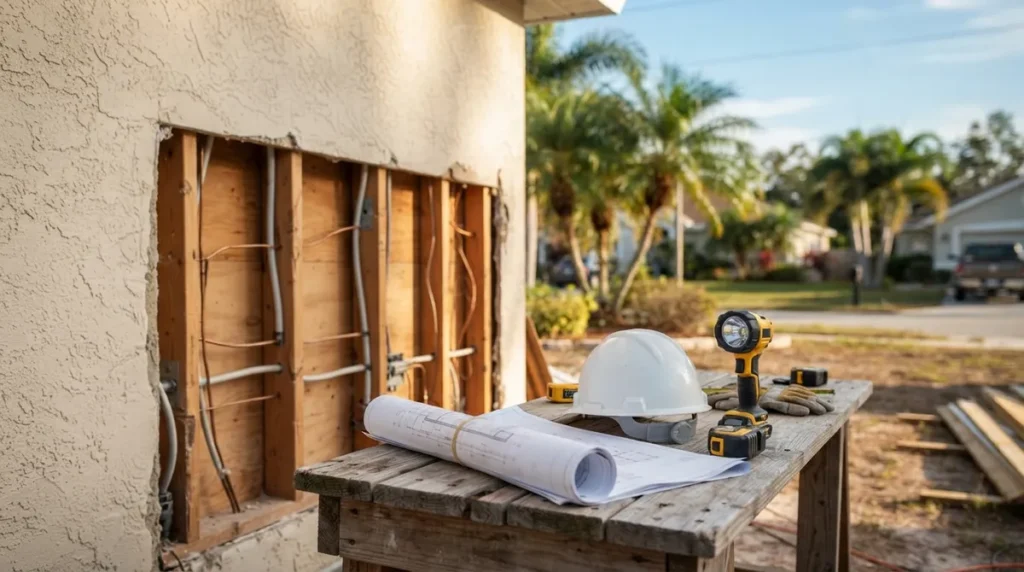
Key Takeaways
-
Florida has no statewide retroactive permit process; each local building department sets its own forms, inspections, and fees, so confirm which jurisdiction controls the property before filing.
-
Check open permits, expired permits, and code enforcement cases first, since an expired permit may be reopened or closed out instead of requiring a brand-new after-the-fact application.
-
Stop all unpermitted work immediately, because continuing to build can trigger stop-work orders, higher fees, and make existing work harder to document.
-
An after-the-fact application does not automatically approve work; it is evaluated against the Florida Building Code, zoning, and floodplain rules, and removal is the exception rather than the rule.
-
Prepare thorough documentation such as as-built drawings, product approvals, and sealed engineer documents, and disclose concealed work so the inspector can plan for selective openings.
Let's be honest: nobody wakes up hoping to deal with an after-the-fact permit. But if you landed here, chances are a crew finished work without a permit, an inspector flagged something, or a buyer's lender just asked for paperwork that doesn't exist. Take a breath. This is fixable, and you're far from the first person to be in this spot.
Contractor after the fact permitting in Florida is the process of going back to the local building department to get the permit that should have been pulled before work began. It's not a magic eraser, and it's not a punishment either. It's a path back to compliance. The trouble is that a few common missteps can turn a manageable cleanup into months of delays, extra fees, and even removal of finished work.
In this guide, we'll walk through eight mistakes contractors, homeowners, and real estate pros make most often in 2026, plus what to do instead. Whether you're a general contractor protecting your license, a solar company cleaning up an install, or a homeowner who inherited someone else's shortcuts, you'll find practical, friendly guidance below.
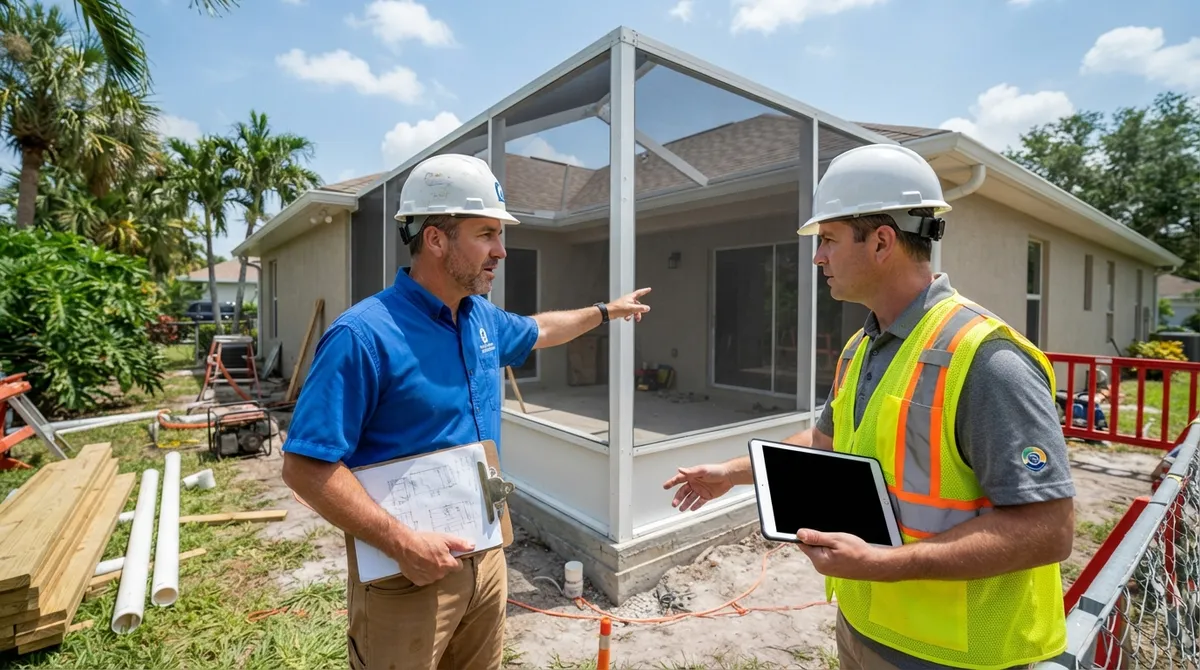
What Contractor After-the-Fact Permitting in Florida Actually Means
An after-the-fact permit is the local process for addressing construction that required a permit but started or finished without one. Florida Statutes §553.79 sets the general rule that covered construction, alteration, repair, or demolition needs a permit from the appropriate enforcing agency first. But here's the part many people miss: Florida law does not create one statewide retroactive-permit process. Each building department sets its own forms, documents, inspections, and fees.
That means the same unpermitted patio enclosure could be handled very differently in Tampa than in Miami or Jacksonville. If you want a deeper primer, our guide on what after-the-fact permitting in Florida involves is a great companion read.
Who Is Affected?
- General contractors whose subs skipped permits or whose permits expired
- Solar and roofing companies with installs that were never closed out
- Realtors and investors who discover unpermitted work during due diligence
- Homeowners who hired someone who vanished
- Designers and specialty trades who need sealed documents to finish the file
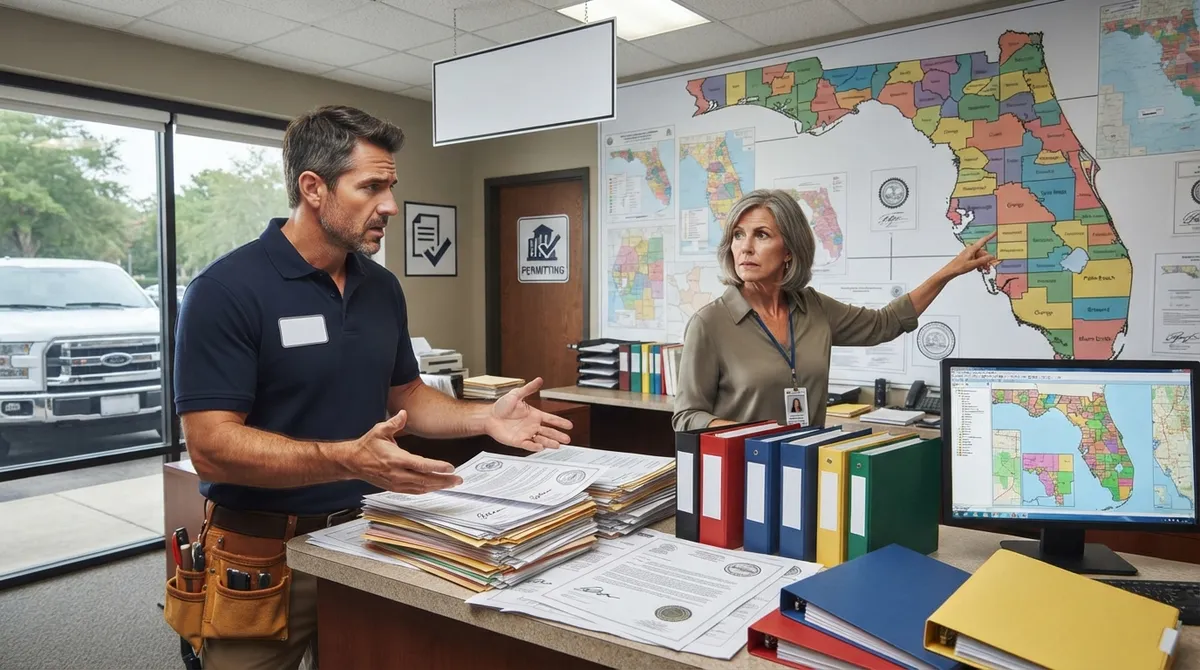
Mistake 1: Assuming Florida Has One Statewide Process
This is the big one. Because the permit requirement comes from state law, people assume the retroactive fix is uniform too. It isn't. The statute supplies the rule, but the local building department decides how you apply, what you submit, which inspections happen, and what extra fees apply.
The fix is simple: start by confirming which jurisdiction actually controls the property. Near city lines, that's not always obvious. A home with a city mailing address can sit in unincorporated county territory, and the reverse happens too. Our building department lookup tool helps you confirm the right office before you file anything.
Mistake 2: Skipping the Records Check
Before you submit a single page, find out what's already on file. Open permits, expired permits, and code enforcement cases all change your strategy. An expired permit may be reopened or closed out, which is a different path than starting a brand-new after-the-fact application.
Try our open permit search to see what exists. If you find an old permit with no final inspection, read how to close an expired permit in Florida before assuming you need a fresh application.
Mistake 3: Continuing Work While the Violation Is Open
If work is still going on, stop. Seriously. Continuing to build while an unpermitted-work issue is unresolved can trigger a stop-work order, higher fees, and a tougher conversation with the building official. It also makes it harder to document what's already there.
A practical first-week checklist looks like this:
- Pause all unpermitted work on the property.
- Confirm whether the property is in a city or unincorporated county.
- Check permit and code-enforcement records.
- Gather contracts, invoices, photos, and product information.
- Contact the correct building department, or have a permitting professional do it for you.
Already received a notice? Our guide on responding to a Florida unpermitted work notice walks through the next moves.
Mistake 4: Assuming the Permit Will Automatically Legalize the Work
Here's the honest truth: an after-the-fact application does not automatically approve anything. The building department evaluates the work against the Florida Building Code, zoning, floodplain rules, and other local requirements. If it complies, you move forward. If it doesn't, you may have to correct it, alter it, or in some cases remove it.
Most homeowners are relieved to learn that removal is the exception, not the rule. Still, it's smart to set expectations early. We cover this in detail in will you really have to demolish unpermitted work.
| Scenario | Typical Outcome | What It Usually Requires |
|---|---|---|
| Work meets code and is fully visible | Approval after inspection | As-built drawings, photos, fees |
| Work is concealed behind finishes | May need to be opened for inspection | Selective demolition, re-inspection |
| Work has deficiencies | Approval after corrections | Repairs, revised plans, new inspections |
| Work cannot meet code or zoning | Alteration or removal | Redesign, variance, or demolition permit |
Mistake 5: Underestimating the Documentation
Many people show up with a few phone photos and a hopeful attitude. Building departments want more. Depending on the work and jurisdiction, you may need:
- As-built drawings showing what was actually constructed
- Plans or site plans with dimensions and setbacks
- Product approvals, such as Florida product approval or Miami-Dade NOA documents
- Contractor license and insurance records
- Sealed documents from a Florida-licensed engineer or architect
Requirements are project-specific, which is exactly why a one-size-fits-all packet fails. Our team prepares as-built drawings and engineer letters in house, so when a reviewer asks for a revision, we're not chasing an outside consultant. For more on this topic, see whether a sealed drawing is required for after-the-fact permits.
Mistake 6: Hiding Concealed Work From the Inspector
It's tempting to hope the inspector won't ask about what's behind the drywall. But inspections are central to resolving unpermitted work. If framing, wiring, plumbing, or other systems are concealed, the building official may require finishes to be opened so the work can be verified.
Being upfront saves time. Let the inspector know what was done, and plan for selective openings. In many cases, an engineer's field verification plus targeted openings is enough. Learn more in what happens during a Florida ATF site inspection and what inspections after-the-fact permits require.
Common Inspection Triggers
- Electrical panels, circuits, and grounding that were altered without a permit
- Plumbing rough-ins covered by cabinets or tile
- Structural framing hidden by finished ceilings
- Roof decking and truss connections after a re-roof
Mistake 7: Guessing at Fees and Timelines
Florida Building Code §109.4 allows an additional fee for work that starts before a permit is issued, on top of the regular permit fees. But the amount is set by the enforcing agency or local ordinance. There is no single statewide multiplier, and anyone quoting you one without checking your jurisdiction is guessing.
Here's a quick look at what drives cost and time:
| Factor | How It Affects Cost | How It Affects Timeline |
|---|---|---|
| Jurisdiction | Sets penalty fee and review fees | Review queues vary widely |
| Scope of work | Larger scope means more drawings and inspections | More disciplines to review |
| Concealed conditions | Opening walls adds repair cost | Extra inspection rounds |
| Sealed documents | Engineer fees apply | Depends on field verification |
| Code deficiencies | Correction costs vary | Re-inspection required |
For a realistic walkthrough, check out after-the-fact permit cost in Florida and how to estimate those costs.
Mistake 8: Expecting a Contractor or Expediter to Guarantee Approval
A good contractor or permitting professional can do a lot. They can identify the correct authority, document the existing work, prepare or coordinate plans, submit the application, schedule inspections, and handle corrections. What they cannot do is guarantee approval or replace the certifications that a licensed design professional must provide.
Be a little wary of anyone promising a sure thing. Look for a team that explains the process honestly, tells you when an engineer is needed, and doesn't disappear when a reviewer comment arrives. Our permit facilitation and filing and plan review coordination services are built around exactly that follow-through.
And if you're wondering who carries responsibility when a contractor skipped the permit, it can get complicated for owners and licensed contractors alike. Our article on penalties for building without a permit in Florida explains the exposure.
How the Process Usually Works: A Friendly Roadmap
While every jurisdiction differs, most after-the-fact files follow a similar rhythm:
- Research the property. Confirm jurisdiction, records, and any open cases.
- Document existing conditions. Measure, photograph, and prepare as-builts.
- Engage an engineer if needed. Field verification and sealed letters or drawings, as the jurisdiction requires.
- File the application. Submit with required documents and pay fees, including any penalty fee.
- Respond to review comments. Revise and resubmit until reviewers sign off.
- Pass inspections. Open concealed work if asked and correct deficiencies.
- Close out. Obtain final approval so the record is clean.
If you'd like to see this process in action, our how to get an after-the-fact permit in Florida guide and the after-the-fact and expired permits service page break it down further.
Why Local Knowledge Matters
Florida has 67 counties and hundreds of municipalities, and each has its own personality. Some are fast and flexible. Others are meticulous. Knowing the quirks of Broward County, Hillsborough County, or Orange County can save you weeks. We work in all 67 Florida counties and have filed in more than 400 municipalities, so we know which office actually controls your project.
Curious what other clients experience? You can visit us on Google — 1 Contractor Solutions to read reviews, or follow us on LinkedIn and follow us on Facebook for Florida permitting updates.
For the official legal text behind the permit requirement, you can review Florida Statutes §553.79 directly. It's a helpful reference when someone tells you a project is exempt.
Tips for Each Audience
General Contractors
Keep a clean paper trail on every sub. If a permit was never pulled, address it early and consider our general contractor support. Your license is worth protecting.
Solar Companies
Unclosed installs create headaches with utilities and customers. Properly documented structural and electrical packages speed things up. See our solar contractor services.
Realtors and Investors
Find out about unpermitted work before the closing table, not at it. Our realtor and closing support is built for tight timelines.
Homeowners
If a contractor left you holding the bag, you can still get to a clean record. Start with our homeowner resources and take it one step at a time.
Final Thoughts and Your Next Step
After-the-fact permitting feels heavy, but it's really just a sequence of manageable steps: find the right jurisdiction, document what exists, bring in sealed support when needed, and work the reviewer comments until the file closes. Avoid the eight mistakes above and you'll save yourself time, money, and a few gray hairs.
If you'd like a friendly team to handle the research, drawings, filing, and follow-through, we're here for it. We respond within 30 minutes, day or night. Ready to clean up your file? Get a free quote and let's talk about your project.
FAQs
How do I get an after-the-fact building permit in Florida?
You apply to the local building department that has jurisdiction over your property, usually with as-built drawings, photos, and sometimes sealed documents from a Florida-licensed engineer. Procedures and fees vary by city and county, so confirming the right office first is the best starting point.
Can a contractor apply for an after-the-fact permit on my behalf in Florida?
Yes, a licensed contractor or permitting professional can usually prepare and submit the application, coordinate plans, and schedule inspections for you. They can't guarantee approval, and some documents must still come from a licensed engineer or architect.
Will inspectors make me open walls or ceilings to inspect unpermitted work?
Possibly. If framing, wiring, or plumbing is concealed, the building official may ask for finishes to be opened so the work can be verified. An engineer's field verification can sometimes reduce how much needs to be opened.
How much does an after-the-fact permit cost in Florida?
There's no single statewide fee. Florida Building Code §109.4 allows an additional fee for work started before permitting, but each jurisdiction sets the amount, so ask the local building department or a permitting pro for a project-specific estimate.
What happens if unpermitted work doesn't meet the Florida Building Code?
You'll generally be asked to correct the deficiencies and pass re-inspection before approval. In rare cases where work can't be brought into compliance, the authority may require alteration or removal.
We do this work every day across all 67 Florida counties. Call (866) 314-6931 and we will tell you what your situation actually requires — including when you do not need us.
Related services
Permit Facilitation & Filing
You have a crew scheduled, a client asking for dates, and a permit sitting somewhere in a queue you cannot see. We file it, w…
See the servicePlan Review Coordination
A permit in plan review is not one queue. On a commercial project it can be six queues, each with its own reviewer, its own c…
See the serviceReady to get your permit moving?
One call tells you which jurisdiction controls your project, what it will take, and what it will cost. Most of the time we can scope it on the phone.