
Blog
13 Mistakes When Picking an After-the-Fact Engineer in FL
Avoid 13 common mistakes when choosing an after-the-fact engineering firm in Florida, and learn how to verify credentials and legalize work.
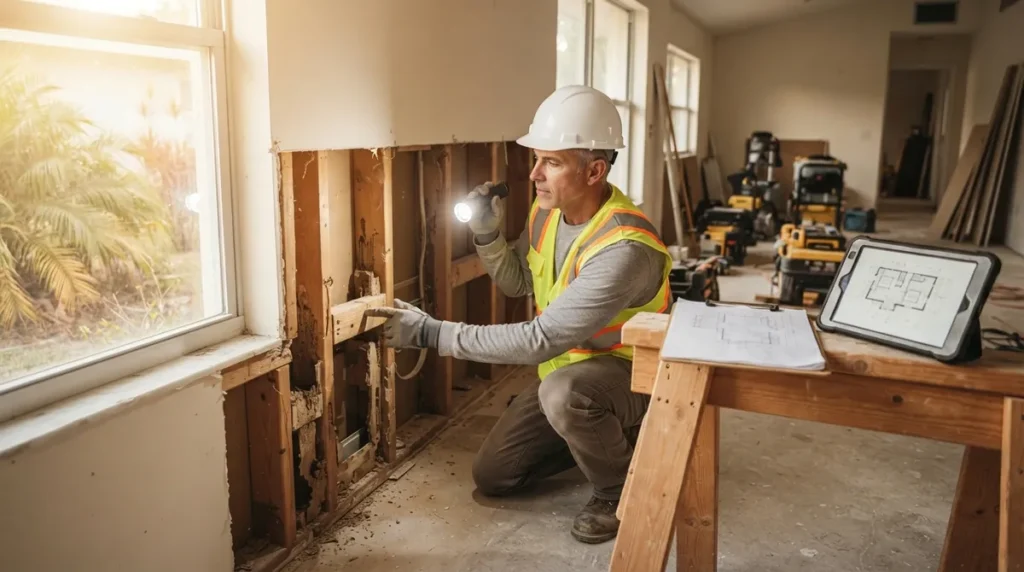
Key Takeaways
-
No official statewide ranking of after-the-fact engineering firms exists in Florida, so be wary of any site claiming to name a single 'best' firm.
-
Confirm your exact jurisdiction and download its current after-the-fact checklist before hiring anyone, since requirements vary by city and county.
-
Verify the engineer's license through the Florida Board of Professional Engineers search and ask exactly who will personally sign and seal your documents.
-
Insist on a real site investigation, and treat any firm offering to 'write a letter' without inspecting the work as a red flag.
-
Ask how the firm handles concealed work like framing behind drywall or footings below grade, since these may require opening finishes or testing.
-
Compare written scopes, not just prices, checking whether investigation, as-built drawings, calculations, revisions, and agency coordination are included.
Let's be honest: finding out that a deck, addition, roof, or garage conversion was built without a permit is a stomach-dropping moment. Maybe you bought the house that way. Maybe a contractor swore they'd "take care of it." Either way, now you need a licensed professional to help make it right, and Googling the best after the fact engineering firm in Florida turns up a pile of options that all sound the same.
Here's the friendly truth up front: there is no official statewide ranking of after-the-fact engineering firms. Nobody can honestly hand you a trophy winner. What you can do is avoid the common mistakes that cost owners time, money, and sleep. That's what this guide is for.
Whether you're a homeowner, a contractor cleaning up a past job, a solar company, or a real estate professional racing a closing date, these 13 mistakes will help you choose wisely in 2026. If you want a quick sounding board along the way, you're always welcome to get a free quote from our team.

First, What Does After-the-Fact Engineering Actually Mean?
After-the-fact (ATF) permitting is the process of seeking approval for work that was already built without a required permit. It is not the same as an expired permit or a missed inspection on permitted work. Those situations are often handled differently, which is why it helps to read about expired permits versus after-the-fact permits before you pick a path.
In many jurisdictions, legalization requires a Florida-licensed engineer or architect to investigate the work, prepare as-built plans, run calculations, and sign and seal a certification. Because the rules are set locally, the requirements in one city may look nothing like the next county over.
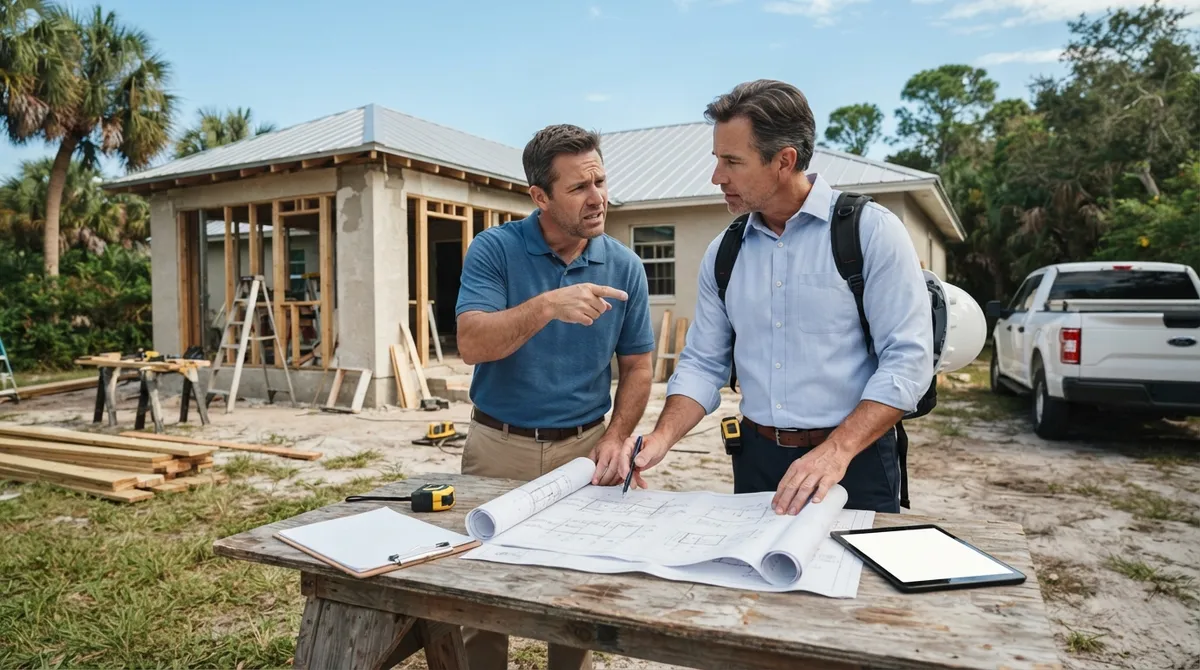
The 13 Mistakes That Trip People Up
1. Assuming There's a Statewide "Best" Firm
Any website claiming to be the definitive number-one firm for the whole state is selling, not informing. No authoritative ranking exists. Instead of chasing a title, compare firms against what your building department actually requires.
2. Skipping the Jurisdiction Check
Requirements come from the authority having jurisdiction, usually a city or county building department. Near city lines, it isn't always obvious which one that is. Before you hire anyone, confirm the exact jurisdiction using the building department lookup tool, then request the current ATF checklist. Our guide on which Florida jurisdiction reviews your project explains why this step matters so much.
3. Not Verifying the Engineer's License
This one takes two minutes and saves enormous headaches. Use the Florida Board of Professional Engineers licensee search to confirm the license is active. Also ask who will personally sign and seal your deliverables, because the person you talk to isn't always the person whose seal goes on the page.
4. Hiring a Firm With No Local Experience
A firm that has filed in your specific building department knows the reviewers' habits, the preferred sheet layouts, and the common comments. That familiarity shortens review cycles. Ask how many ATF packages they've submitted in your jurisdiction, not just in Florida generally.
5. Accepting a Letter Without an Investigation
An engineer should only certify work they've adequately investigated. If a firm offers to "write a letter" without visiting the site, treat that as a red flag. A local legalization guideline from Tamarac, for example, calls for direct inspection of the work being certified and a certificate signed and sealed by a Florida-licensed professional engineer or registered architect. That's one local example rather than a statewide rule, but it shows the standard many reviewers expect.
6. Ignoring Concealed Work
Framing behind drywall, footings below grade, and wiring inside walls can't be certified by eyeballing the finish. Depending on the project, an engineer may need to open finishes, test materials, or verify connections in some other way. Ask any firm upfront how they handle hidden elements. If the answer is vague, keep looking. Our article on field verification for after-the-fact permits covers what that process looks like.
7. Believing an Engineer's Letter Guarantees Approval
A sealed letter is a powerful tool, but it's not a magic wand. The permitting authority makes the final call and may require additional architectural, civil, mechanical, electrical, plumbing, zoning, or outside-agency approvals. A trustworthy firm will explain that honestly instead of promising results. If you're curious how letters fit into the bigger picture, see engineer letter versus missed inspection.
8. Comparing Quotes Without Comparing Scope
Two quotes can differ by hundreds of dollars simply because one includes revisions and agency coordination and the other doesn't. Before you pick the cheapest option, lay the scopes side by side using the table below.
| Scope Question | Why It Matters |
|---|---|
| Is a site visit and investigation included? | Certification requires real verification of the work |
| Are as-built drawings included? | Many jurisdictions require them in the submittal |
| Are calculations and testing included? | Structural or electrical items may need supporting data |
| Are permit revisions included? | Reviewer comments are common and can add cost |
| Who files and tracks the permit? | Filing and follow-up take real time |
| Who coordinates with other agencies? | Zoning or flood requirements may apply |
For a deeper look at pricing realities, check out after-the-fact permit costs in Florida.
9. Overlooking Discipline Fit
Some jobs are mostly structural, like a patio enclosure or truss question. Others are electrical, plumbing, or mechanical. A firm may be excellent in one discipline and thin in another. Confirm that the proposed scope falls within their genuine expertise. In-house structural engineering and MEP engineering under one roof can make coordination far smoother.
10. Forgetting About Turnaround and Communication
Ask how fast they respond, who your point of contact is, and what a realistic timeline looks like. Real estate professionals especially feel this one, since an open permit found at closing can derail a deal in days. A firm that answers quickly and updates you proactively is worth its weight in gold.
11. Mixing Up Drafting and Engineering
Drafting turns measurements into clean plans. Engineering adds the professional analysis and the seal. Some jobs need both; some owners already have an engineer and only need drawings. Knowing the difference keeps you from overpaying or under-scoping. Learn more about drafting-only support and as-built drawings.
12. Treating Advertised Services as Endorsements
When you search, you'll see firms advertising after-the-fact permitting and engineering. An advertisement isn't a verified track record. Confirm current availability, licensing, service area, and references directly, and don't assume a flashy website equals real ATF experience.
13. Waiting Until a Violation Becomes a Crisis
The sooner you act, the more options you tend to have. Once a code enforcement case, stop work order, or lender demand lands on your desk, everything feels more urgent and more stressful. If you're already there, our urgent permit rescue service exists for exactly that moment, and our article on what to do after a code enforcement notice can steady your next steps.
A Quick Look at Typical ATF Documents
Every jurisdiction is different, so treat this as a general picture rather than a checklist. Always confirm against your building department's current requirements.
| Document | Typically Used For | |
|---|---|---|
| As-built drawings | Showing what was actually constructed | |
| Structural calculations | Supporting framing, connections, or loads | |
| Inspection or testing results | Verifying hidden or inaccessible work | |
| Survey or elevation certificate | Location and flood-related requirements | |
| Sealed certification letter | Professional attestation of the investigated work | |
| Corrective work documentation | Recording any fixes made to meet code |
How to Evaluate Any Firm: A Simple Process
- Confirm your jurisdiction and download its current ATF checklist.
- Look up the engineer's license through the state board and note who will seal the work.
- Ask about relevant experience with your project type and your building department.
- Request a written scope that spells out investigation, drawings, revisions, and filing.
- Ask for references or examples of similar legalized projects.
- Compare timelines and communication, not just price.
What Different Readers Should Watch For
- Homeowners: Make sure the firm explains each step in plain language and tells you honestly what's likely to be required.
- General contractors: Look for a partner who can handle high volumes and multiple counties without dropping files. See our page for general contractors.
- Solar companies: Prioritize structural and electrical documentation that matches local expectations. Explore our solar contractor support.
- Real estate professionals: Speed and clear closing-friendly communication matter most. Our realtor closing support was built for this.
- Design and trade professionals: Ask whether the firm can slot in as outsourced drafting, engineering, and permit administration behind your brand.
Where 1 Contractor Solutions Fits In
We should be upfront: we won't tell you we're ranked number one, because no honest ranking exists. What we can tell you is how we work. 1 Contractor Solutions is Florida's outsourced permitting department. We work across all 67 counties, our drafting and engineering are in house, and our own engineer signs and seals the work, so when a reviewer flags something, we fix it without chasing an outside consultant. We also take on after-the-fact and expired permits that other firms decline. You can follow us on LinkedIn or follow us on Facebook to see how we work, and you can visit us on Google — 1 Contractor Solutions to read what customers say.
Curious about the process itself? Our walkthrough on how to get an after-the-fact permit in Florida is a great next read, and our sealed drawing explainer clears up one of the most common questions we hear.
Quick Gut-Check Before You Hire
- Is the license active and verified through the state board?
- Does the firm plan a real site investigation?
- Do they understand your specific building department?
- Is the scope written down, including revisions?
- Do they promise honest outcomes rather than guaranteed approval?
If you can answer yes to those, you're already ahead of most people who go through this process.
Take the Stress Out of Legalizing Your Project
Unpermitted work feels heavy, but it's fixable far more often than people fear. The right engineering partner investigates honestly, documents clearly, and walks the permit through review so you aren't left guessing. Avoid these 13 mistakes, verify before you trust, and compare scope instead of just price. If you'd like friendly, straightforward help from a team that answers fast, get a free quote and tell us about your project. We'll help you figure out your jurisdiction, your options, and your next step.
FAQs
What does an after-the-fact building permit mean in Florida?
It's a local approval process for work that was completed without a required permit. The documentation and review steps depend on your jurisdiction and the type of work involved, so always start with your building department's current checklist.
Do I need a Florida-licensed engineer or architect for an after-the-fact permit?
Often, yes. Some local legalization procedures require site investigation, as-built plans, and a certificate signed and sealed by a Florida-licensed engineer or architect. Your building department will tell you exactly what it requires for your project.
Can an engineer certify work that's already covered by drywall?
Possibly, but not by guessing. Concealed or inaccessible work may require opening finishes, testing, or other verification so the engineer can support the certification with sound professional judgment.
How do I verify a Florida engineer's license?
Use the Florida Board of Professional Engineers licensee search to confirm the license is active. It's also smart to ask who will personally sign and seal your deliverables and whether the scope is within their expertise.
How do I choose an after-the-fact engineering firm in Florida?
Since there's no official statewide ranking, compare firms on local-jurisdiction experience, discipline fit, investigation methods, clear scope and fees, communication, and whether revisions and agency coordination are included. Verify credentials and ask for references before you commit.
We do this work every day across all 67 Florida counties. Call (866) 314-6931 and we will tell you what your situation actually requires — including when you do not need us.
Related services
Permit Facilitation & Filing
You have a crew scheduled, a client asking for dates, and a permit sitting somewhere in a queue you cannot see. We file it, w…
See the servicePlan Review Coordination
A permit in plan review is not one queue. On a commercial project it can be six queues, each with its own reviewer, its own c…
See the serviceReady to get your permit moving?
One call tells you which jurisdiction controls your project, what it will take, and what it will cost. Most of the time we can scope it on the phone.