
Blog
Engineer Letter vs. Missed Inspection: Which Wins?
Confused about engineer letters for Florida building departments? Compare them to physical inspections and learn when each actually works.
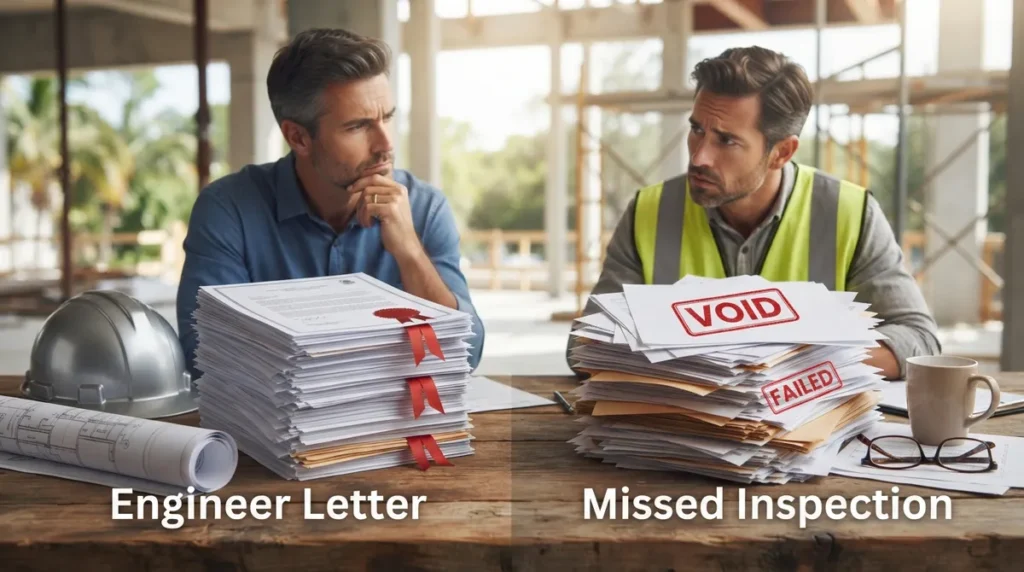
Picture this: your drywall is up, your paint is drying, and then someone realizes the framing inspection never happened. Cue the panic. Before you start tearing open walls or losing sleep over a stalled certificate of occupancy, let's talk about one of the most misunderstood tools in Florida construction: the engineer letter. Whether you're a general contractor juggling five jobsites, a solar installer racing to interconnect a system, or a homeowner who just found out grandma's old sunroom was never permitted, understanding how an engineer letter stacks up against a traditional inspection can save you weeks of frustration.
At 1 Contractor Solutions, we spend our days sorting out exactly these kinds of puzzles across all 67 Florida counties. So grab a coffee, and let's walk through what an engineer letter actually is, when it can help, and when it simply can't do the job a physical inspection was built to do.

What Exactly Is an Engineer Letter for a Florida Building Department?
In the context of Florida permitting, an engineer letter is a project-specific, signed-and-sealed document prepared by a Florida-licensed professional engineer. Think of it as a written, technical opinion that helps a building department evaluate something they can't see with their own eyes anymore, or something that needs extra clarification beyond the standard plan set.
These letters commonly show up when:
- Work was covered up before the required inspection took place
- A plan reviewer has a specific structural or MEP question that needs engineering justification
- An existing condition needs to be documented or evaluated for a renovation or addition
- A building official wants third-party verification on a technical detail
Here's the part people often miss: an engineer letter is not a magic wand. It is not automatically accepted everywhere, and it does not replace a permit, a plan set, or a required inspection just because it exists. Whether your local building department will accept one, and what it needs to say, depends entirely on that jurisdiction's rules and the discretion of the building official.
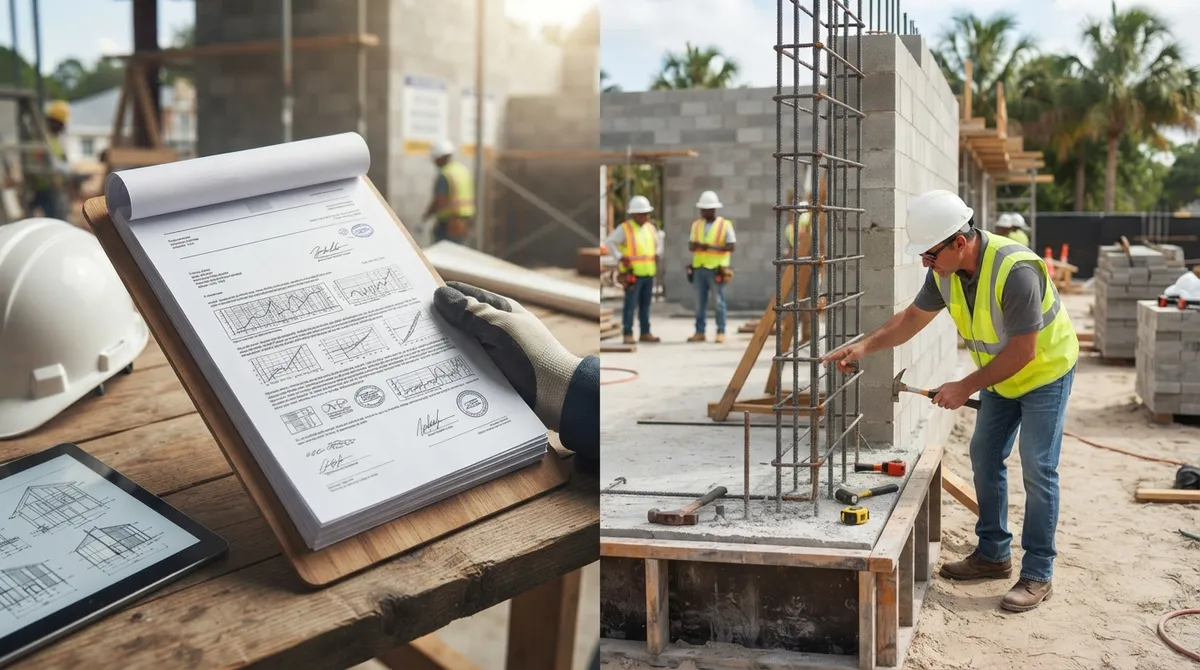
Engineer Letter vs. Physical Inspection: Head-to-Head
So which one actually "wins" when work gets covered before an inspection? The honest answer is: it depends on the building official, and the letter is almost always the harder, less certain path. Let's break down the comparison.
| Factor | Engineer Letter | Physical Inspection |
|---|---|---|
| Who performs it | Florida-licensed Professional Engineer (PE) | Building department inspector or approved private provider |
| Acceptance guarantee | At the discretion of the local building official | Standard, expected part of the permit process |
| Evidence required | Site visit, investigation, possibly exploratory openings or testing | Direct visual confirmation of the work |
| Typical use case | Concealed or covered work, technical plan review issues | Routine scheduled milestones (footing, framing, final, etc.) |
| Risk if rejected | Official may still require exposure or removal of finishes | Low risk once passed; inspection is the standard of proof |
| Cost and timeline | Varies by scope; no statewide standard fee | Typically included in permit fee, scheduled quickly |
Notice that last row on risk. Even a beautifully written, fully sealed engineer letter can be turned down if the building official decides they'd rather see the work exposed. That's not the engineer's failure; that's just how Florida permitting discretion works at the local level.
Why Building Departments Have the Final Say
Florida Statutes §471.025 lays out the legal backbone here. It requires that final engineering documents prepared by a licensed engineer and filed for public record, along with anything handed to the owner, be signed, dated, and sealed. It also allows electronic sealing, which is a nice modern convenience, and it flatly prohibits an engineer from sealing work outside their area of competence.
But the statute doesn't tell your local building department that they must accept a letter instead of laying eyes on the work. That decision lives with the building official. A great real-world example is Cape Coral's published Engineer Letter Guideline, revised January 21, 2026, which spells out that a letter may be considered for concealed work, but acceptance is entirely at the discretion of the building official. That single sentence is the crux of the whole topic.
What a Strong Engineer Letter Should Include
If you're going to go this route, the letter needs some real substance behind it. Based on guidance patterns seen across Florida jurisdictions, a solid submission typically identifies:
- The permit number and property address tied to the work
- Which inspection was missed and why
- The date the engineer physically visited the site
- The specific scope of work being evaluated
- The verification methods used, such as measurements, exploratory openings, or testing
- Any applicable product approvals
- The code and design criteria referenced, plus the engineer's conclusions
Notice the emphasis on an actual site visit and real investigation. A letter built only from a contractor's description or a few phone photos usually won't cut it. If the concealed condition can't be verified another way, the engineer may need to recommend exploratory openings or other forensic steps before putting their seal on anything.
Where Engineer Letters Genuinely Shine
Despite all these caveats, engineer letters absolutely have their place, and for the right situation, they can be a lifesaver.
- Solar installations where structural attachment details need documentation for interconnection deadlines
- Real estate transactions where a missed inspection surfaces during due diligence and needs resolution before closing
- Older properties where existing conditions need evaluation before a renovation permit can move forward
- Plan review roadblocks where a reviewer flags a structural or MEP detail that a sealed opinion can clarify
For general contractors managing multiple jobsites, the value of a fast, accurate engineer letter is huge, because it can sometimes prevent a full teardown of finished work. For solar companies, it can mean the difference between hitting an interconnection window or missing it entirely. And for realtors and investors, resolving a permit issue with the right documentation can be what actually gets a deal to the closing table. If you're navigating a closing that's stuck on a permit problem, our piece on how a permit hold can delay a Florida real estate closing walks through exactly that scenario.
Common Scenarios Where People Reach for an Engineer Letter
| Audience | Typical Trigger | Why the Letter Matters |
|---|---|---|
| General Contractors | Missed a framing or rough inspection before drywall | May avoid full demolition if the official accepts documentation |
| Solar Companies | Roof attachment or structural detail flagged in plan review | Speeds interconnection timelines and avoids rework |
| Real Estate Professionals | Open or missing inspection discovered at closing | Provides a path to resolve the issue before or shortly after sale |
| Homeowners | Concealed renovation work needs verification | Avoids opening up finished walls or ceilings unnecessarily |
What an Engineer Letter Cannot Do
Let's be crystal clear, because this trips people up constantly. An engineer letter does not, by itself:
- Issue a permit
- Approve unpermitted work
- Close out an open permit
- Guarantee that a building department will accept it in place of an inspection
It's a tool that supports the permitting process, not a substitute for it. If you're dealing with unpermitted construction more broadly, our guide on how to legalize unpermitted work in Florida covers the bigger picture beyond just the letter itself.
Confirm Before You Commission
Because every jurisdiction handles this differently, the smartest first move is confirming exactly what your specific building department wants before you pay an engineer to start investigating. Our Building Department Lookup tool is a great starting point for figuring out which office actually controls your project, since jurisdiction lines aren't always where you'd expect them near city and county borders.
How 1 Contractor Solutions Fits Into the Picture
This is exactly the kind of situation where having an in-house engineering team pays off. Rather than waiting days for an outside consultant to return a call, our team can coordinate the site visit, prepare the sealed engineer letter, and communicate directly with the building department about what they need to see. We also handle the broader plans and engineering work, structural engineering, and plan review coordination that often surround these situations, whether you're working in Hillsborough County, Pinellas County, or anywhere else across the state.
If you'd rather have someone else lose sleep over jurisdiction quirks and reviewer comments, that's genuinely what we're here for. Curious what local clients have said about working with us? You can visit us on Google — 1 Contractor Solutions to read real feedback, and you're always welcome to follow us on LinkedIn or follow us on Facebook for permitting updates across Florida.
The Bottom Line: Which One Wins?
An engineer letter isn't competing against a physical inspection so much as it's trying to stand in for one after the fact, and that's an uphill climb by design. Building departments generally trust their own eyes more than a paper trail, which is exactly why the Cape Coral guideline and similar local policies leave acceptance up to the building official's discretion rather than making it automatic.
That said, when a letter is prepared properly, based on a genuine site investigation, backed by the right code references, and signed and sealed by a qualified Florida PE, it becomes a genuinely persuasive piece of evidence. It won't win every time, but it gives your project a real shot at avoiding costly demolition or delay.
Ready to find out whether your situation calls for an engineer letter, a fresh inspection, or something else entirely? Our team is happy to walk through your specific permit, property, and jurisdiction with you, so get a free quote and let's get your project back on track.
FAQs
What is an engineer letter for a Florida building department?
It's a signed-and-sealed report from a Florida-licensed PE that helps a building department evaluate something like concealed work or a tricky plan review question. Think of it as expert backup documentation, not a replacement for your permit or plans.
Can an engineer letter replace a missed building inspection in Florida?
Sometimes it can help, but it's never guaranteed. The building official gets to decide whether to accept it, and they may still ask you to expose the work for a visual check, so don't count on the letter alone to save the day.
Does an engineer letter need to be signed and sealed in Florida?
Yes, absolutely. Florida Statutes §471.025 requires final engineering documents like these to be signed, dated, and sealed by the engineer, though electronic sealing is allowed too, which makes things a little easier these days.
What information should a good engineer letter include?
A strong letter names the permit and property, explains the missed inspection, notes the engineer's site-visit date, describes the verification methods used, and references the applicable code and design criteria. Skimpy letters based only on photos rarely hold up.
How do I find out if my local building department requires one?
Every Florida jurisdiction handles this a little differently, so it's worth checking directly with your local office or using a building department lookup tool before you commission anything. That way you're not paying for engineering work the department won't even accept.
We do this work every day across all 67 Florida counties. Call (866) 314-6931 and we will tell you what your situation actually requires — including when you do not need us.
Related services
Permit Facilitation & Filing
You have a crew scheduled, a client asking for dates, and a permit sitting somewhere in a queue you cannot see. We file it, w…
See the servicePlan Review Coordination
A permit in plan review is not one queue. On a commercial project it can be six queues, each with its own reviewer, its own c…
See the serviceReady to get your permit moving?
One call tells you which jurisdiction controls your project, what it will take, and what it will cost. Most of the time we can scope it on the phone.