
Blog
10 Unpermitted Work Florida Mistakes to Avoid in 2026
Found unpermitted work in Florida? Learn 10 common mistakes to avoid and a calm, step-by-step plan to bring your property into compliance in 2026.
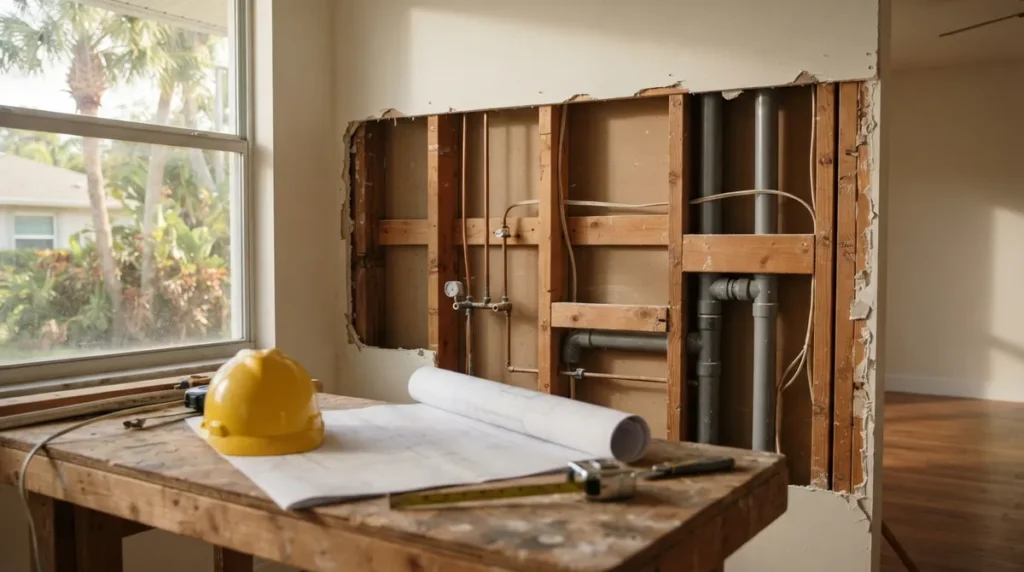
Key Takeaways
-
Unpermitted work in Florida is generally fixable, but delays and guesswork make it worse; start by confirming which city or county building department has jurisdiction over the property.
-
Applying for an after-the-fact permit does not legalize work; you must show code compliance, complete inspections, correct deficiencies, and get final approval on record.
-
Document existing conditions with photos and as-built drawings early, since reviewers cannot approve work they cannot verify, and sealed engineering may be required for additions, roofs, or pool cages.
-
Ask the building department early whether walls must be opened, because engineering letters do not automatically replace an inspection of concealed framing, wiring, or plumbing.
-
Fees for work done without a permit are set by local ordinance under Florida Building Code §109.4, on top of regular permit fees, so there is no single statewide cost.
-
Never ignore a code enforcement notice or stop work order: deadlines start on the issue date, and unanswered violations can lead to fines or liens.
Let's be honest: nobody wakes up excited to deal with permits. Maybe your last contractor said, "Don't worry, we don't need one for that." Maybe you bought a house with a gorgeous screened-in patio and never asked who approved it. Maybe an inspector or appraiser just pointed at something and asked, "Is that permitted?" Take a breath. You are far from alone, and unpermitted work in Florida is fixable more often than people fear.
The trouble is that the fixes go sideways when owners, agents, and contractors make avoidable mistakes. Some wait too long. Some tear into walls before talking to the building department. Some hire the wrong person to "make it go away." In this friendly guide, we'll walk through the 10 most common unpermitted work Florida mistakes in 2026, plus what to do instead. Whether you're a homeowner, a general contractor, a realtor, or a solar company, you'll find practical steps you can use today.
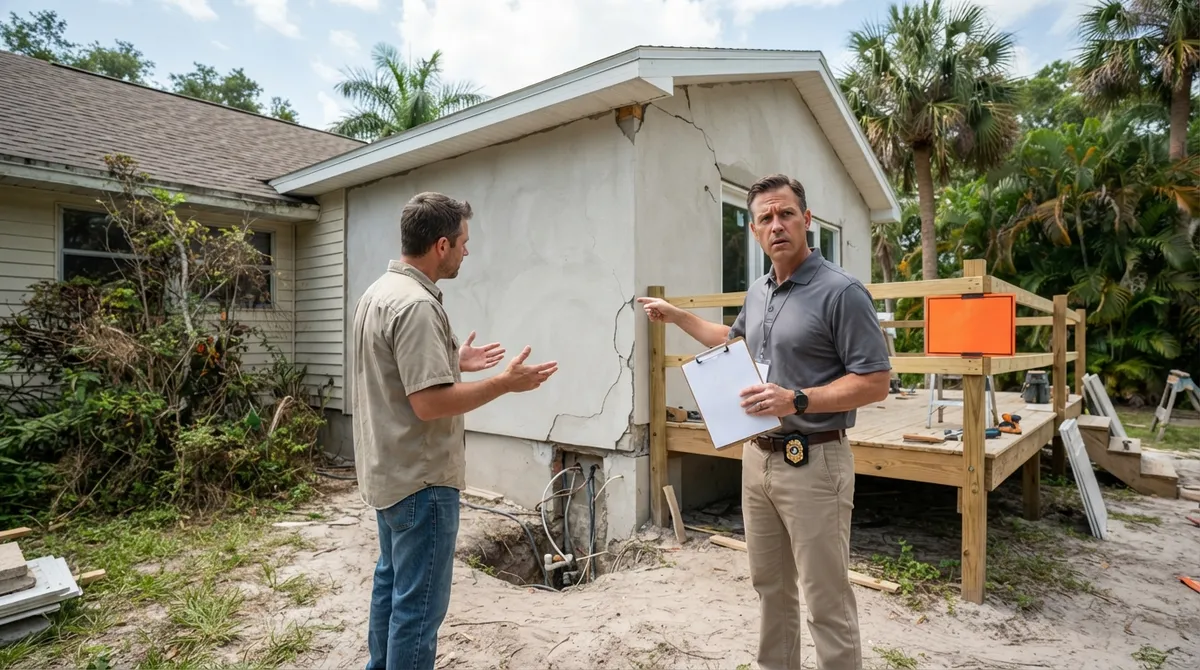
Why Unpermitted Work in Florida Matters
Under Florida Statutes §553.79, it is generally unlawful to construct, alter, repair, or demolish a building without first obtaining a permit from the appropriate enforcing agency, unless an exception applies. In plain English: if your project is covered, you need the permit before the work starts, not after.
Permits exist to confirm that work meets the Florida Building Code, which matters a lot in a state with hurricanes, flood zones, and high wind loads. When work happens without one, nobody has verified the framing, wiring, plumbing, or tie-downs. That's why lenders, insurers, buyers, and code officers all care.
Here's the good news. Florida has 67 counties, and each local jurisdiction handles applications to permit and inspect work that was started or completed without approval. There's no single statewide "after-the-fact permit" form, which means the process varies, but there is almost always a path forward.
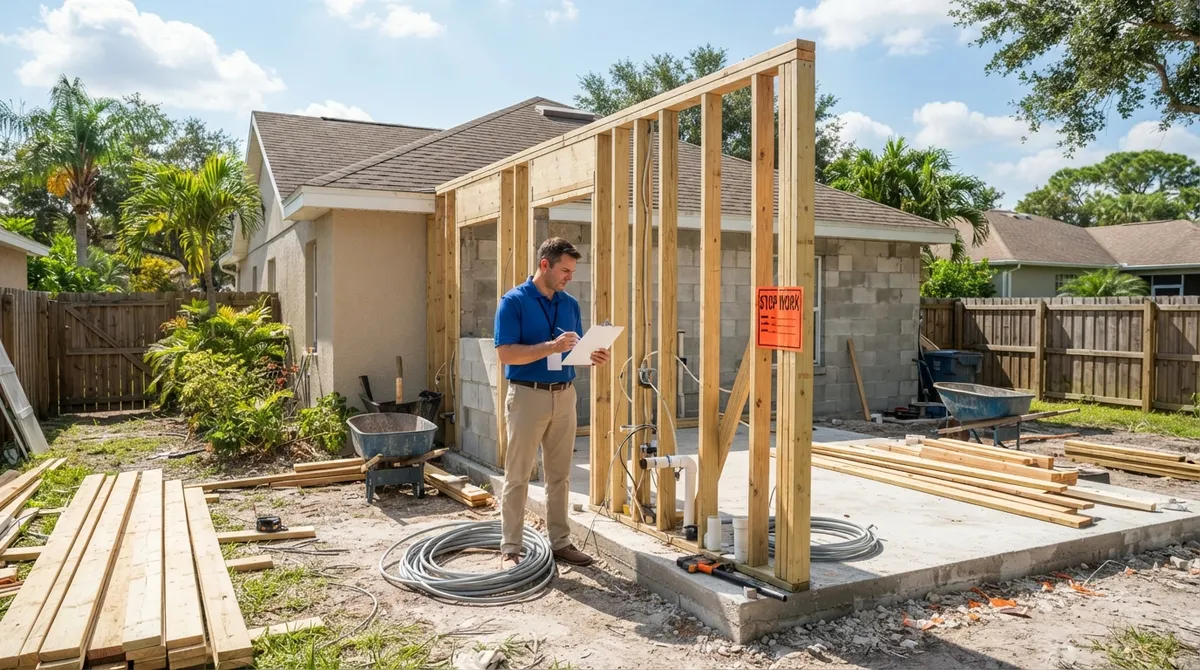
10 Unpermitted Work Florida Mistakes to Avoid
1. Assuming It Will Never Come Up
This one is the most tempting mistake of all. The work is done, it looks great, and nobody has complained. Why stir things up?
Because unpermitted work has a funny way of surfacing at the worst possible moment. Common triggers include:
- A buyer's home inspection or an appraisal
- An insurance claim after a storm or fire
- A neighbor's complaint to code enforcement
- A refinance, HELOC, or title search
- A future permit application that reveals existing conditions
If you suspect something was never permitted, finding out early gives you control over the timeline. Finding out in the middle of a closing does not.
2. Not Checking the Permit Record First
Before you panic, do some detective work. Plenty of owners assume work was unpermitted when the paperwork is simply sitting in a county database, and plenty assume it was permitted when it wasn't.
- Confirm which city or county building department has jurisdiction over the property (near city lines, this is not always obvious).
- Search the department's online records for permits tied to the address.
- Look for permits that were opened but never finaled or closed.
- Compare what the records show to what is physically on the property.
You can use our building department lookup tool to find the right office and our open permit search to spot permits that never closed. Our guide on which Florida jurisdiction reviews your project can also save you a wrong turn.
4. Confusing "Expired" With "Unpermitted"
Wait, this should be mistake three! Let's fix the numbering mentally and treat this as part of the same research step: an expired or open permit is not the same thing as work with no permit at all.
If a permit was pulled but never closed, you may be dealing with an expired permit rather than unpermitted work. The paths differ. Our article on expired permit vs. after-the-fact: which fix do you need breaks down the difference, and our after-the-fact and expired permits service handles both.
3. Believing an After-the-Fact Application Equals Approval
Here's a common misunderstanding. Applying for a retroactive permit does not legalize the work. It simply starts the process. To finish, the owner generally has to provide the documents the local authority requires, demonstrate code compliance, complete inspections, correct deficiencies, and obtain final approval.
Think of it like submitting a college application: filing it is step one, not graduation day. Our full guide on how to get an after-the-fact permit in Florida walks through the stages.
5. Skipping As-Built Drawings and Engineering
When work was built without plans, the building department often wants to see what actually exists. That usually means as-built drawings documenting the real conditions, and depending on the scope and local rules, those may need to be prepared or sealed by a Florida-licensed architect or engineer, along with supporting product or technical documentation.
Owners who skip this step often get stuck in a loop of rejections. Reviewers can't approve what they can't verify.
| Document | What It Does | Often Needed For |
|---|---|---|
| As-built drawings | Documents what was actually built | Additions, enclosures, remodels |
| Engineer letter | Professional opinion on structural or system compliance | Roofs, trusses, walls, solar mounts |
| Sealed structural plans | Verifies load paths and wind resistance | Additions, pool cages, retaining walls |
| Product approvals | Confirms materials meet Florida requirements | Windows, doors, roofing |
You can learn more about our as-built drawings, engineer letters, and structural engineering services. Our own engineer signs and seals the work in house, so when a reviewer has a comment, we can respond quickly.
6. Assuming Walls Will Never Need to Be Opened
Here's the question that keeps people up at night: "Will they make me rip out my drywall?" The honest answer is, it depends. Completed work can be hard to inspect when framing, wiring, plumbing, or other components are concealed. The building department may require portions to be exposed so inspectors can verify compliance.
An engineer's documentation may be requested, but it doesn't automatically replace an inspection. The smart move is to ask the department early what they'll accept, and to document conditions with photos before any closing-in. Our article on whether you'll really have to demolish unpermitted work covers this in detail, and our ATF site inspection guide shows what inspectors look for.
7. Underestimating Fees and Local Differences
Many owners ask, "How much will this cost?" and expect a single statewide number. There isn't one. Florida Building Code §109.4 allows a local enforcing agency to charge a fee, set by local ordinance, for work begun or completed before a permit is issued, in addition to the regular permit fee. The amount and any other penalties depend on the jurisdiction and circumstances.
Costs also include plan preparation, engineering, inspections, and any corrective work. Here's how the cost picture typically breaks down:
| Cost Component | Who Sets It | Varies By |
|---|---|---|
| Regular permit fee | Local building department | Project value and scope |
| Work-without-permit fee (§109.4) | Local ordinance | City or county |
| Plans and engineering | Design professionals | Complexity and documentation needed |
| Corrective work | Contractor pricing | Inspection findings |
For a deeper look, read our breakdown of after-the-fact permit costs in Florida and the penalties for building without a permit in Florida.
8. Hiring the Wrong Help (or Promising Yourself a Quick Fix)
Be wary of anyone who guarantees approval or promises to "make the violation disappear." No permitting professional can waive code requirements or guarantee an outcome. What a good one can do is assemble applications, plans, and inspection coordination so the process moves smoothly.
Look for a team that offers:
- Experience filing in your specific jurisdiction
- In-house drafting and sealed engineering, so corrections aren't outsourced
- Clear communication about what is and isn't possible
- Help with both the paperwork and the follow-through to final
At 1 Contractor Solutions, we act as Florida's outsourced permitting department. We take the files other people decline, respond within 30 minutes, and handle everything from plans to closeout. Contractors can learn more on our general contractors page.
9. Ignoring a Notice or Stop Work Order
Opening a notice from code enforcement can feel like getting a surprise bill. But ignoring it is the worst response. Deadlines usually start running the day the notice is issued, and unanswered violations can escalate into additional fines or liens.
- Read the notice carefully and note every deadline.
- Stop any work the notice tells you to stop.
- Contact the issuing department to confirm what they require.
- Gather documentation, photos, and any past permit records.
- Get professional help preparing plans and responses.
If you're in this spot right now, our urgent permit rescue team and our code compliance violations service exist for exactly this. Our guide on how to respond to a Florida unpermitted work notice is also a helpful read.
10. Waiting Until the Closing Table
For realtors, investors, and buyers, this is the costliest mistake of all. Unpermitted work discovered mid-transaction can delay or derail a sale, spook lenders, or force last-minute price negotiations. The earlier you know, the more options you have.
If you're buying, ask for permit history during due diligence. If you're selling, consider resolving issues before listing. Our realtor and closing support service helps agents and owners clear holds, and our article on whether a home sale can close with unpermitted work explains the realities. Realtors can also see our realtors page.
A Simple Game Plan If You Find Unpermitted Work
Feeling a little overwhelmed? Here's a calm, step-by-step approach you can follow:
- Identify the jurisdiction. Confirm which city or county building department controls the property.
- Check records. Look for existing, open, or expired permits.
- Document what exists. Take photos and note dimensions, materials, and dates if known.
- Ask the department about its process. Requirements, fees, and timelines vary by jurisdiction.
- Prepare plans or as-builts. Use licensed professionals where required.
- Apply, inspect, and correct. Complete inspections and fix any deficiencies.
- Close the permit. Make sure you get final approval on record.
For a more detailed walkthrough, see our 7 steps to legalize unpermitted work in Florida and how to legalize unpermitted work in Florida.
Who Needs to Pay Attention?
Different readers face different risks, so here's a quick guide:
- Homeowners: Protect your resale value and insurance coverage by resolving issues early. See our homeowners page.
- General contractors: A client's unpermitted past can become your project's roadblock. Verify existing conditions before you start.
- Solar companies: Roof and electrical conditions must be documented before new equipment is attached. Visit our solar contractors page.
- Real estate professionals: Run permit checks before listing or offering, not after.
- Designers and trades: Outsourced drafting and engineering can keep your projects moving without extra overhead.
Local Context Matters
Because every jurisdiction has its own forms, fees, and reviewers, local experience makes a real difference. We work across all 67 counties and have filed in more than 400 municipalities, with heavy activity in areas like Hillsborough County, Miami-Dade County, Broward County, and Orange County. You can browse every county we cover on our Florida service area page. And if you like to see what real customers say, you can read what our neighbors think when you visit us on Google — 1 Contractor Solutions.
You can also stay connected with Florida permitting updates when you follow us on LinkedIn or follow us on Facebook. For the statute itself, you can read the official text of Florida Statutes Section 553.79 on the Florida Senate website.
Final Thoughts: You've Got This
Unpermitted work in Florida can feel scary, but it is rarely the end of the road. The biggest mistakes come from delay, guesswork, and chasing shortcuts. With the right information and a clear plan, most owners, contractors, and agents find a workable way forward.
Start by learning what the local building department requires, document what exists, and get qualified help where needed. If you'd like a friendly team to take the permit off your plate, get a free quote and let us show you what the path to final approval could look like for your property. Permits approved. Projects moving.
FAQs
What should I do if I discover unpermitted work on my Florida property?
Don't panic! Start by confirming which city or county building department has jurisdiction, then check its permit records for the address. From there, ask the department about its current process, and consider bringing in a permitting professional to help with plans, applications, and inspections.
Can I get an after-the-fact building permit in Florida?
In most cases, yes, though Florida has no single statewide process. Each local jurisdiction handles applications for work started or completed without a permit, so documents, fees, and procedures vary by city and county. Applying doesn't automatically approve the work; you'll still need to show code compliance and pass inspections.
Will Florida require me to open walls to inspect unpermitted work?
Sometimes. When framing, wiring, or plumbing is concealed, the building department may ask that portions be exposed so inspectors can verify compliance. Engineering documentation can help, but it doesn't automatically replace an inspection, so it's best to ask the department early.
How much does an after-the-fact permit cost in Florida?
There's no single statewide figure. Florida Building Code §109.4 lets local agencies set an additional fee, by local ordinance, for work begun or completed before a permit is issued, on top of the regular permit fee. Your total will also depend on plans, engineering, inspections, and any corrective work.
Do I need an engineer to legalize unpermitted construction in Florida?
Often, yes. Depending on the scope and local rules, the jurisdiction may require as-built drawings or letters prepared or sealed by a Florida-licensed architect or engineer. Your building department can tell you exactly what it requires for your project.
We do this work every day across all 67 Florida counties. Call (866) 314-6931 and we will tell you what your situation actually requires — including when you do not need us.
Related services
Permit Facilitation & Filing
You have a crew scheduled, a client asking for dates, and a permit sitting somewhere in a queue you cannot see. We file it, w…
See the servicePlan Review Coordination
A permit in plan review is not one queue. On a commercial project it can be six queues, each with its own reviewer, its own c…
See the serviceReady to get your permit moving?
One call tells you which jurisdiction controls your project, what it will take, and what it will cost. Most of the time we can scope it on the phone.