
Blog
How to Navigate Florida's 25% Roof Rule in 2026
Learn what the 25% roof rule in Florida means, how the 2007 code exception works, and how to plan your roof permit step by step in 2026.
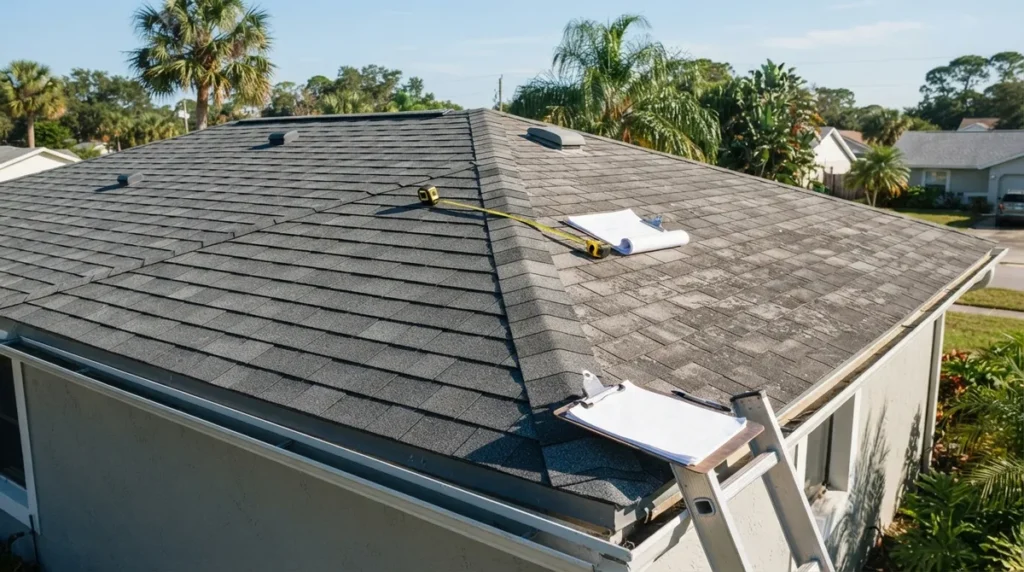
Key Takeaways
-
Florida's 25% roof rule means no more than 25% of a roof or roof section may be repaired, replaced, or recovered within any 12-month period without bringing the affected system up to current code.
-
If your roof was built, repaired, or replaced under the 2007 Florida Building Code or later, only the new work must meet current code, even when the repair exceeds 25%.
-
Compare the work against the total roof area: divide the affected square footage by the roof or section's total area, and include earlier repairs made within the past 12 months.
-
Gather documentation such as the original permit, final inspection record, product approvals, and contractor invoices to prove the 2007-or-later compliance exception.
-
Staying under 25% does not exempt you from permitting; most roof repairs and replacements still require a permit depending on local jurisdiction requirements.
-
Confirm roof section definitions and compliance status with your local building department early, since officials make the final determination during permit review.
If you have ever priced a roof repair in Florida, you may have heard a contractor say, "Careful, that triggers the 25 percent rule." It sounds scary, and honestly, it confuses a lot of people. So let's clear it up together.
So, what is the 25 percent roof rule in Florida? In plain terms, the Florida Building Code says you generally cannot repair, replace, or recover more than 25% of a roof (or a roof section) in any 12-month period unless the whole roof system or section is brought up to current code. There is also a big exception that protects many newer roofs.
Whether you are a homeowner, a general contractor, a roofer, a solar installer, or a realtor helping a buyer, this guide walks you through the rule step by step. You will learn how to measure your work, check whether the exception applies, and plan your permit so the building department says yes the first time. No jargon overload, I promise.
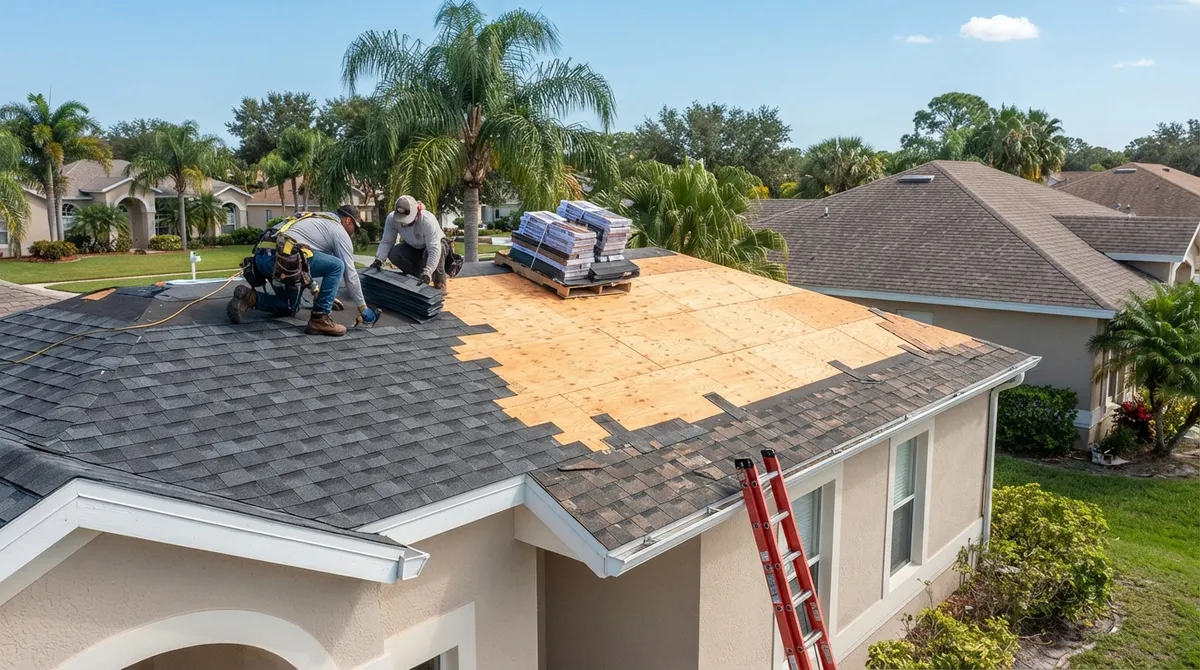
What Is the 25 Percent Roof Rule in Florida?
The 25 percent roof rule is a code-compliance threshold written into the Florida Building Code. Under the 2023 Florida Building Code (8th Edition), no more than 25% of the total roof area or a roof section may be repaired, replaced, or recovered within any 12-month period. If the work goes past that line, the entire existing roof system or roof section must meet the applicable code.
You will find this language in two places:
- Existing Building Code, Section 706.1.1, which covers alterations to existing buildings.
- Residential Code, Section R908.1.1, which covers reroofing on one- and two-family homes.
The 2023 code took effect on December 31, 2023, so it is the edition most Florida jurisdictions are working from in 2026. Always confirm the edition and any local procedures with your building department before work begins.
Why the Rule Exists
Think of it as a fairness check. Florida wants roofs to stand up to wind and rain. If someone could patch a roof 24% at a time every year forever, an outdated, weak roof might never get upgraded. The rule sets a tipping point where a repair becomes big enough that the roof should meet today's standards.
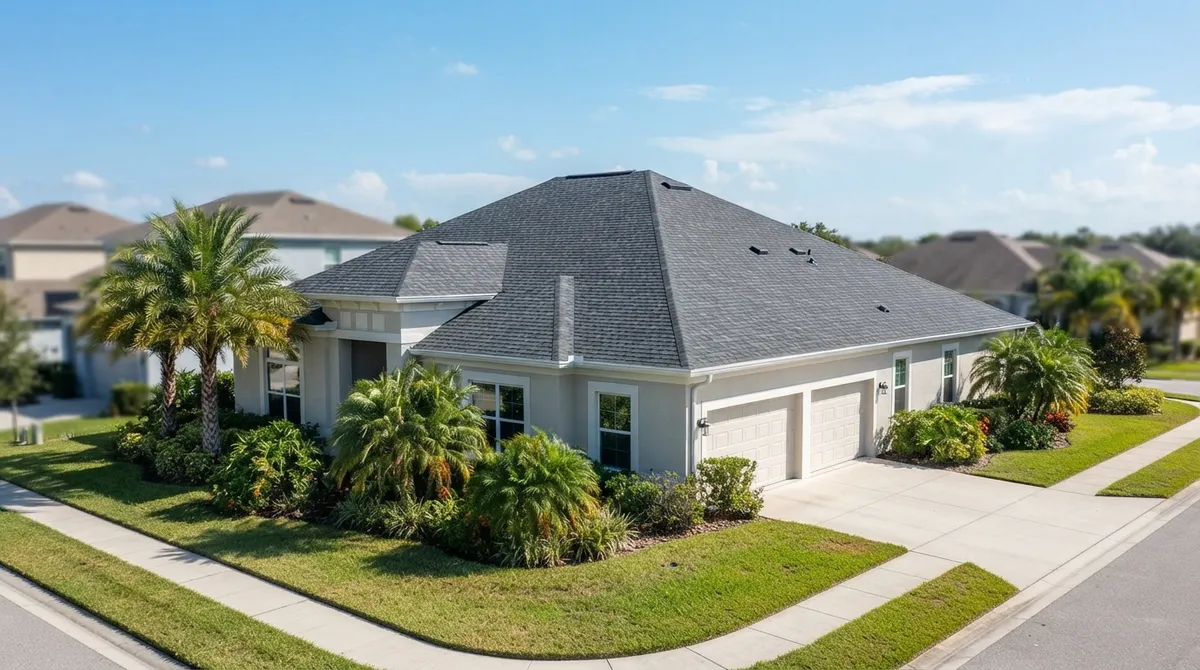
The Big Exception for Roofs Built After 2007
Here is the part that surprises people, in a good way. Florida Statutes §553.844(5) and the 2023 Florida Building Code provide a significant exception.
If the existing roofing system or roof section was built, repaired, or replaced in compliance with the 2007 Florida Building Code or a later edition, then even when 25% or more is affected, only the repaired, replaced, or recovered portion must meet the code currently in effect.
In other words, a well-documented newer roof does not have to be torn off entirely just because your repair crossed 25%. Only the new work needs to be current.
Two details are worth remembering:
- This exception was set through Florida legislation and incorporated into the code.
- Local governments may not adopt an ordinance that changes the exception through an administrative or technical amendment.
25% Rule vs. the Exception at a Glance
| Situation | Work Exceeds 25% in 12 Months? | What Must Meet Current Code |
|---|---|---|
| Roof built or replaced before the 2007 FBC (or compliance unknown) | No | Only the new work |
| Roof built or replaced before the 2007 FBC (or compliance unknown) | Yes | The entire roof system or roof section |
| Roof built, repaired, or replaced under the 2007 FBC or later | No | Only the new work |
| Roof built, repaired, or replaced under the 2007 FBC or later | Yes | Only the repaired, replaced, or recovered portion |
How to Apply the 25% Roof Rule to Your Project
Let's turn the rule into a simple routine you can follow. Whether you are planning a repair, a partial reroof, or a solar install that touches the roof surface, these steps keep you organized.
- Identify your roof or roof section. Decide whether your building has one roof system or several distinct sections, such as a main roof and a separate lanai or addition roof.
- Measure the total area. Get the square footage of the roof or section. Roof measurement reports, plans, or a site visit can help.
- Define the scope of work. Add up everything you plan to repair, replace, or recover.
- Check the past 12 months. Include any earlier repairs in that rolling window, because the rule counts total work over time, not just one job.
- Calculate the percentage. Divide the affected area by the total area of the roof or section.
- Check for the 2007 exception. Gather proof that the existing roof was built or replaced under the 2007 FBC or later.
- Confirm with the local building department. Officials decide how the roof section is defined and whether the exception is accepted.
A Quick Example
Say a home has a 3,000-square-foot roof. Storm damage means you need to replace 900 square feet. That is 30%, which is over the threshold. If the roof was installed in 2012 under a permit that passed final inspection, the exception likely applies and only the new 900 square feet must meet current code. If the roof dates to 1998 and there are no records, the whole roof or section may need to comply. Same repair, very different outcome, which is why documentation matters so much.
The 12-Month Window and Roof Sections
Two phrases in the rule deserve a closer look.
The Rolling 12-Month Period
The rule looks at work within any 12-month period. That means you cannot split a big job into two permits a few months apart to dodge the threshold. Building departments can review permit history, so honest planning beats clever scheduling every time.
Roof Area vs. Roof Section
The rule applies to the total roof area or a roof section. Defining that section is where reasonable people can differ. A separate addition with its own roof framing is often treated differently from the main house roof. Because definitions can vary, confirm with your local building department and document the section clearly in your permit submittal.
How to Prove Your Roof Meets the 2007 Code Exception
Here is a friendly truth: a roof that looks newer is not automatically a qualifying roof. The exception depends on documented compliance, and local building officials make the final call during permit review.
Helpful records can include:
- The original permit and final inspection record for the roof
- Product approval or Notice of Acceptance documentation for the roofing materials
- Contractor invoices or warranties showing the install date and scope
- Prior plan sets or sealed drawings tied to the permit
- Open-permit or permit-history search results from the building department
If you are unsure what a product approval number means, our guide on how to read a Florida product approval number for roofing breaks it down simply.
What If the Paperwork Is Missing?
It happens more than you would think, especially with older homes, investor purchases, and roofs done by a prior owner. If a roof was installed without a permit, you will want to understand your options before you build on top of it. Our walkthrough on how to legalize an existing roof in Florida explains the path forward, and unpermitted roof Florida: what owners need to know covers what owners should expect.
The 25% Rule Is Not a Permit Exemption
Let's bust a common myth. Staying under 25% does not mean you can skip the permit. The rule is a code-compliance threshold, not a blanket exemption from permitting.
Roof replacement and many repair or reroof projects require permits, and thresholds and submittal requirements vary by jurisdiction. A tiny shingle fix may be handled differently than a larger repair, so it helps to read about permit vs. no permit when fixing a few shingles in Florida and our broader answer to whether you need a permit to replace your roof in Florida.
If a roof was already replaced without a permit and you are worried, see what happens if your reroof was done without a permit in Florida for a calm, practical explanation.
Who Should Care Most About This Rule?
The 25% rule touches almost everyone who works on or buys a Florida building. Here is how it lands for each group.
| Reader | Why It Matters | Smart Move |
|---|---|---|
| Homeowners | A storm repair can unexpectedly trigger a full-roof upgrade | Locate your roof's permit history before you budget |
| General contractors | Scope creep can push a job past 25% mid-project | Define sections and percentages in the permit package up front |
| Roofers | Multiple small repairs in one year add up | Track 12-month work per address |
| Solar companies | Roof work tied to an array can count toward the threshold | Confirm roof compliance before filing the solar permit |
| Realtors and investors | Unknown roof history changes renovation costs | Research permits during due diligence |
For Solar Companies
If your install involves replacing or repairing roof sections first, document the roof's compliance history before you file. Mistakes on the front end cause avoidable delays, as we explain in 7 solar permit filing mistakes in Orange County, FL.
For Realtors and Investors
A roof with no permit trail can complicate a closing. Before you write an offer, run an open permit search, and review what to do when an open permit is found at closing so you are never caught off guard.
How Wind Zones and Local Rules Add Wrinkles
Florida is a big state with very different wind and flood conditions, and local building departments each have their own submittal checklists. Coastal and high-velocity areas may ask for extra documentation, product approvals, or sealed engineering. That is why the same 25% rule can feel straightforward in one county and detail-heavy in another.
If you work across multiple jurisdictions, a few habits help:
- Always confirm which city or county actually controls the address, especially near city lines
- Ask about local roofing submittal requirements before ordering materials
- Keep your product approvals and notice-of-acceptance paperwork organized by project
- Request an engineer letter when the roof structure or load path is in question
When the roof structure itself is a concern, a sealed engineer letter can resolve reviewer questions quickly. Learn more in what a roof uplift letter is and when you need one.
Common Mistakes to Avoid
After seeing plenty of roofing permits, a few patterns pop up again and again. Here is how to stay ahead of them.
- Guessing the percentage. Measure it, write it down, and put it in the permit scope.
- Ignoring prior repairs. The 12-month window counts earlier work.
- Assuming age equals compliance. A newer-looking roof still needs records to support the 2007 exception.
- Skipping the permit because the job feels small. Check your local requirements first.
- Forgetting to define the roof section. Vague sections invite reviewer comments and delays.
For more ways to keep a roofing file clean, see 5 roofing permit mistakes West Palm Beach pros avoid and 7 permit facilitation mistakes Florida roofers make.
How to Get Your Roof Permit Moving Smoothly
Once you know where you stand on the 25% rule, the permit itself is the next hurdle. A clean package usually includes the scope of work, the roof area calculations, product approvals, and any required drawings or engineer letters. When a reviewer flags something, a quick, accurate response keeps the schedule intact.
This is where help from a permitting team pays off. 1 Contractor Solutions works as an outsourced permitting department across all 67 Florida counties, handling filing, tracking, plan review coordination, and revisions. Their in-house drafting and engineering means sealed drawings and engineer letters come from the same team that files your permit, so there is no waiting on an outside consultant. You can explore their roof permit services or the Roof Permit Partnership Program built for roofers, and see what customers say when you visit us on Google — 1 Contractor Solutions.
If you want to follow along for more Florida permitting tips, you can follow us on LinkedIn or follow us on Facebook.
If Your Roof Permit Gets Stuck
Denials and correction notices are frustrating but fixable. If that is where you are, read who can rescue a denied building permit in Florida and why a building permit gets rejected. If the clock is ticking on a closing or a crew schedule, the urgent permit rescue page explains how fast help works.
Your 25% Roof Rule Checklist
Before you call a roofer or file anything, run through this quick list:
- Pull the roof's permit history and final inspection records.
- Gather product approvals and install dates.
- Measure the total roof area or section.
- List all work done in the past 12 months plus planned work.
- Calculate the percentage affected.
- Confirm the 2007 exception with documentation.
- Verify permit requirements with your city or county building department.
Final Thoughts and Next Steps
The 25 percent roof rule sounds intimidating, but it boils down to three ideas: measure the work, count it over a rolling 12 months, and check whether the 2007 exception protects your existing roof. Document everything, define your roof section clearly, and confirm details with your local building department, because officials make the final call.
Not sure whether your project crosses the line, or missing the paperwork to prove your roof qualifies? You do not have to figure it out alone. Get a free quote from the team at 1 Contractor Solutions and let them help you plan the permit, prepare the drawings, and keep your roofing project on schedule.
FAQs
What is Florida's 25% roof rule?
It is a Florida Building Code limit saying no more than 25% of a roof or roof section can be repaired, replaced, or recovered in any 12-month period unless the whole roof system or section meets current code. It lives in Existing Building Code Section 706.1.1 and Residential Code Section R908.1.1. Think of it as the point where a repair gets big enough to trigger an upgrade.
Does the 25% roof rule still apply in Florida in 2026?
Yes, the rule is still part of the 2023 Florida Building Code (8th Edition), which took effect December 31, 2023. The good news is the exception for roofs built or replaced under the 2007 code or later also remains in place. Always confirm the current edition and local procedures with your building department.
What is the exception to the 25% rule for roofs built after 2007?
If your existing roof was built, repaired, or replaced in compliance with the 2007 Florida Building Code or a later edition, only the repaired, replaced, or recovered portion must meet current code, even if the work exceeds 25%. This comes from Florida Statutes 553.844(5). It saves many owners from a full roof replacement.
How do I prove my roof complies with the 2007 Florida Building Code?
Gather the original roof permit, final inspection record, product approval documents, and contractor invoices showing the install date. A permit-history search from the building department can also help. Keep in mind that a roof's appearance or age alone is not proof, and local building officials make the final determination.
Do I need a permit for roof work if I stay under 25%?
Most likely, yes. The 25% rule is a code-compliance threshold, not a permit exemption, and roof replacement and many repairs still require permits. Requirements vary by city and county, so check with your local building department or a permitting professional before starting.
We do this work every day across all 67 Florida counties. Call (866) 314-6931 and we will tell you what your situation actually requires — including when you do not need us.
Related services
Permit Facilitation & Filing
You have a crew scheduled, a client asking for dates, and a permit sitting somewhere in a queue you cannot see. We file it, w…
See the servicePlan Review Coordination
A permit in plan review is not one queue. On a commercial project it can be six queues, each with its own reviewer, its own c…
See the serviceReady to get your permit moving?
One call tells you which jurisdiction controls your project, what it will take, and what it will cost. Most of the time we can scope it on the phone.