
Blog
Do I Need a Permit to Replace My Roof in Florida? (2026)
Yes, most Florida roof replacements need a permit. Learn the 25% rule, required documents, inspections, and what happens if you skip it.
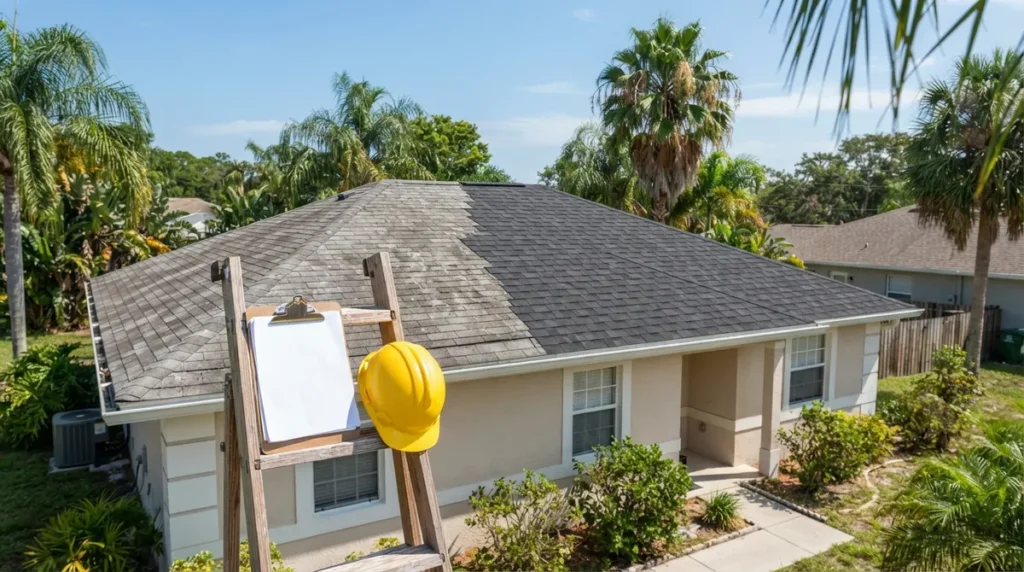
Key Takeaways
-
Florida roof replacements almost always require a local building permit under Florida Statutes §553.79, so confirm the current checklist with your city or county building department before work starts.
-
Florida's 25% rule triggers full code compliance when more than 25% of a roof area or section is repaired, replaced, or recovered within 12 months, but roofs built or replaced under the 2007 FBC or later may qualify for an exception.
-
Staging repairs across a year does not avoid the 25% rule, since it is measured over a rolling 12-month period, so keep records of past roof permits to prove your roof's history.
-
Reroof permit packages commonly require a contractor's license and insurance details, product approval documentation, and a Notice of Commencement when the job value exceeds local thresholds such as $5,000.
-
Starting roof work without a permit can bring stop-work orders, corrective work, and complications with insurance claims, refinancing, and home sales, so verify permit status before signing a contract.
-
Ask whether the contractor is pulling the permit and get the permit number once issued, since a contractor suggesting you skip the permit to save money is a red flag.
Picture this: the shingles are curling, the storm season is behind you, and a roofer has just handed you a very reasonable quote. Then the question hits you: do I need a permit to replace my roof in Florida? It's a smart thing to ask before anyone climbs a ladder, and we're glad you did.
The short answer is yes, in most cases. A roof replacement in Florida generally requires a building permit from your local building department. Florida Statutes §553.79 requires a permit before regulated building work begins, and the details are handled locally. That means checklists, fees, review times, and inspections can look different from one jurisdiction to the next.
In this guide, we'll walk through when a permit is required, how Florida's 25% roof rule works, what documents you'll need, what inspections to expect, and what can happen if work starts without a permit. Whether you're a homeowner, a general contractor, a realtor, or a solar company working around a roof, you'll leave with a clear plan.
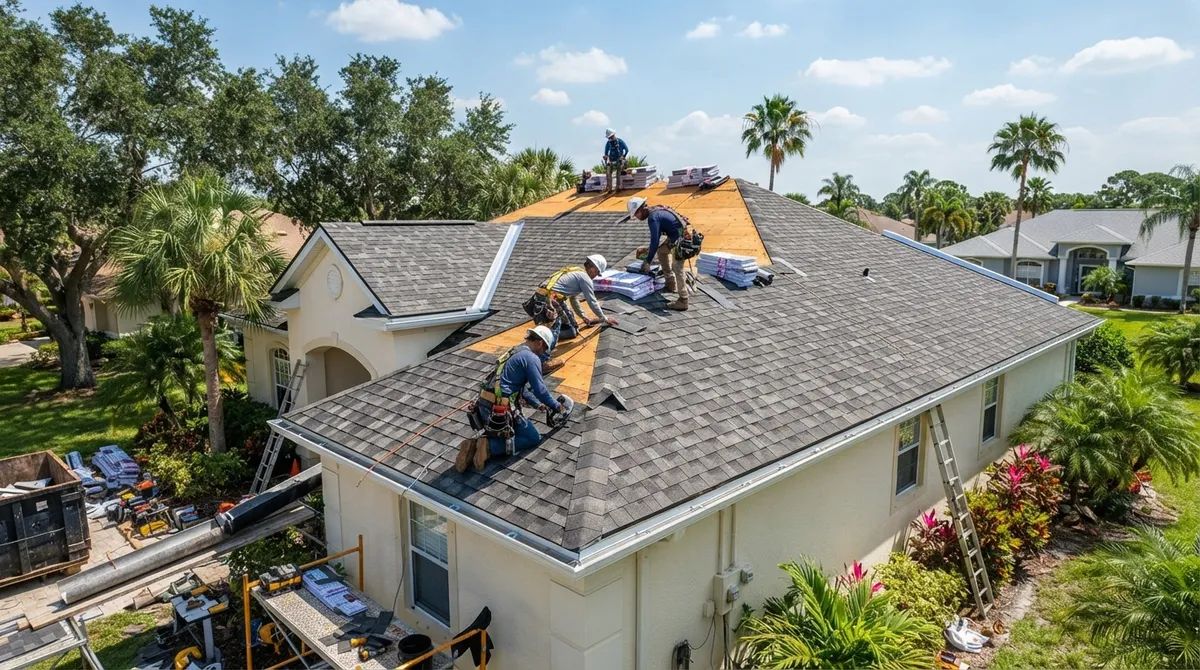
The Short Answer: Yes, Florida Roof Replacements Need a Permit
In most Florida jurisdictions, replacing a roof requires a permit issued by the local building department, also called the authority having jurisdiction (AHJ). The 2023 Florida Building Code, 8th Edition, took effect December 31, 2023, and it is the code your roof is measured against in 2026.
Here is what this means in plain English:
- Full roof replacements almost always need a permit.
- Roof recovers (a new covering installed over an existing one) are typically reviewed too, and some jurisdictions treat them differently from a tear-off.
- Larger repairs may also need a permit, depending on the scope and the local rules.
- Homeowners and contractors should confirm the current checklist with the local building department before work starts.
Because every county and city sets its own application process and fees, the safest move is to verify locally. You can use our building department lookup tool to find which office controls your property. That matters more than you'd think, especially near city lines.
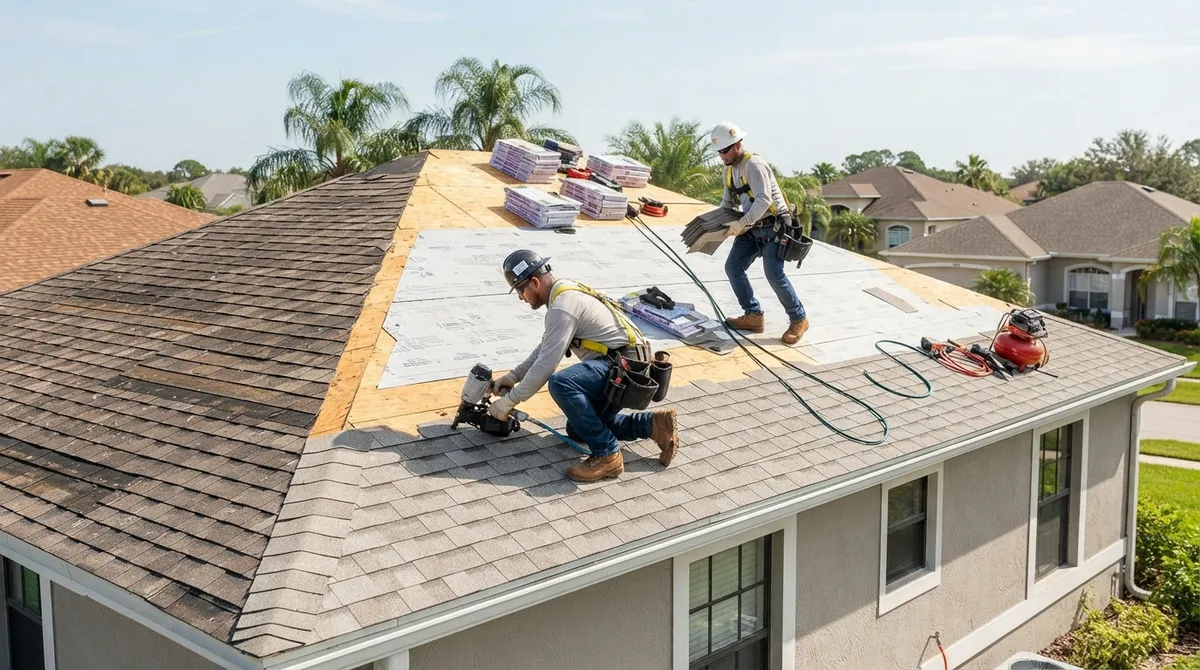
Replacement, Recover, and Repair: What's the Difference?
Building departments often look at your scope of work and sort it into one of a few buckets. Knowing which bucket you're in helps you answer the permit question correctly.
| Scope | What It Involves | Permit Likely Needed? |
|---|---|---|
| Full replacement (tear-off) | Removing the existing roof covering, addressing damaged substrate as allowed, and installing a new covering | Yes, in most jurisdictions |
| Roof recover | Installing a new covering over a prepared existing covering | Usually yes; some local rules differ from tear-off |
| Partial replacement or large repair | Replacing or repairing a section of the roof | Often yes; depends on size and local rules |
| Minor repair | Small, localized fixes | Varies by jurisdiction; confirm locally |
A full replacement generally involves removing the existing roof covering, fixing damaged decking where allowed, and installing the new covering. A recover installs a new layer over a properly prepared old one. Local authorities may review these scopes differently, so tell the building department exactly what you plan to do.
What About Roof Repairs?
This is where it gets a little less black and white. Some jurisdictions exempt very small repairs, while others require a permit once the work reaches a certain size. Since there isn't one statewide threshold you can safely rely on, check with your local building department, or ask us. We handle this question every day through our roof permit services.
Florida's 25% Roof Rule, Explained Simply
If you've talked to a roofer or an insurance adjuster, you may have heard about the "25% rule." It sounds scarier than it is once you break it down.
The Florida Building Code's 25% rule generally says that repairing, replacing, or recovering more than 25% of a roof area or roof section within a 12-month period triggers a requirement to bring the entire roof system or section into compliance with the current code. This language appears in the Existing Building volume of the 2023 code (§706.1.1).
Here is the good news. There is an exception. If the existing roof system was built, repaired, or replaced under the 2007 Florida Building Code or a later edition, only the portion being worked on has to meet the code in effect, as applicable. That's a big deal for many Florida homes, since a large number of roofs were installed after 2007.
A few friendly reminders about this rule:
- It's measured over 12 months, so staging repairs across a year won't help you dodge it.
- It applies to a roof area or roof section, so how your roof is divided matters.
- The exception depends on your roof's history, which is why records of past permits are so valuable.
- Your building official has the final say on how the rule applies to your specific roof and scope.
If you're unsure whether your older roof qualifies for the exception, our open permit search tool can help you dig up past permit history.
What Documents Do You Need for a Florida Reroof Permit?
There is no single statewide document list, so please don't treat any checklist, including this one, as a substitute for your local office's current requirements. That said, most reroof permit packages include some version of the following:
- A completed building permit application
- Contractor information (license and insurance details) or owner-builder information
- Roof-system and product approval documentation for the materials being installed
- Project-specific plans, details, or calculations, when required
- A Notice of Commencement, where required
Requirements can become more extensive in High-Velocity Hurricane Zones, flood zones, or for certain roof system types. For example, Lake County's checklist notes that online residential reroof permits may need additional review for properties in flood zones. Always use the local authority's current checklist rather than assuming.
Notice of Commencement
Many jurisdictions require a recorded Notice of Commencement once the job value passes a threshold. Lake County's checklist calls for one when the job value exceeds $5,000, and a Broward County-area checklist uses a similar $5,000 contract price threshold. Other jurisdictions may differ, so confirm yours. We break this down further in our guide to the Notice of Commencement in Florida.
Product Approvals Matter
Florida takes wind resistance seriously, and your roofing materials usually need valid product approval documentation. In Miami-Dade, that often means a Notice of Acceptance rather than a statewide approval. If you want to understand the difference, see our article on Miami-Dade NOA vs. Florida product approval.
Who Can Pull the Roof Permit?
Typically, a properly licensed roofing contractor pulls the permit. This keeps the license, insurance, and responsibility for the work in one place. Homeowners may be able to apply as owner-builders in some situations, but the rules are specific and come with responsibilities. Before you decide, read our breakdown of who can pull a permit in Florida and our overview of owner-builder permits.
Hiring a roofer? Do two quick checks before signing:
- Confirm the contractor's license is active and appropriate for roofing work.
- Ask who is pulling the permit, and get the permit number once it's issued.
If a contractor suggests skipping the permit to save you money, treat that as a red flag. We've seen how that story ends, and it's rarely cheaper in the long run.
Inspections: What to Expect After the Permit Is Issued
A permit isn't just paperwork. Permitted work may require inspections to verify code compliance. Inspection stages and scheduling are jurisdiction-specific, so your permit paperwork will list what's required for your project.
Common touchpoints in a reroof project can include:
- Inspection of the roof deck or underlayment stage, where required
- A final inspection once the roof covering is complete
Florida law allows local building departments to accept completed permit applications and inspection requests electronically, which can make scheduling easier. If you'd rather have someone else manage the scheduling and the back-and-forth, our inspections support can help, and our private provider inspections offer another path in many jurisdictions. For a side-by-side look, read about private provider vs. building department review.
How Much Does a Roof Permit Cost, and How Long Does It Take?
Honestly, it depends. Fees are set locally, often based on job value or roof size, and review times vary with the jurisdiction's workload and the completeness of your submittal. After a major storm, queues can stretch longer than usual.
| Factor | How It Affects Cost or Timeline |
|---|---|
| Local fee schedule | Each jurisdiction sets its own permit fees |
| Job value or roof size | Fees are often tied to one or both |
| Flood zone or HVHZ location | May trigger extra review and documents |
| Completeness of submittal | Missing items can lead to rejections and delays |
| Seasonal volume | Busy periods can slow reviews |
Rather than guessing at a number, ask the local building department for its current fee schedule, or have a permitting pro pull it for you. For a broader look at timing, see how long a building permit takes in Florida. If you're a roofer juggling many jobs, our Roof Permit Partnership Program was built for exactly that kind of volume.
What Happens If You Replace a Roof Without a Permit?
Starting required work without a permit can lead to enforcement action, such as a stop-work order, and may require corrective work or additional approvals. It can also complicate insurance claims, refinancing, and home sales. Buyers' inspectors and title searches have a way of surfacing open or missing permits at the worst possible moment.
If you already have a roof that was replaced without a permit, don't panic. There are real paths forward:
- After-the-fact permitting can bring the work into the system. Learn more about after-the-fact and expired permits.
- Engineer letters can document the installed condition when the roof is already covered. See our engineer letter services.
- Penalty and cost questions are common, so read about the penalty for building without a permit in Florida.
If you're dealing with an open or expired roofing permit, our guide on how to close an expired permit in Florida will help you get it wrapped up.
Special Situations Worth Knowing About
Roof Work Before a Home Sale
Realtors and sellers, take note. An unpermitted or open roofing permit can stall a closing. Catching it early is far easier than scrambling a week before the closing date. Our realtor closing support is designed for just these moments, and our guide on open permits found at closing explains what to do.
Solar and Roof Work Together
Planning solar panels? Many solar companies prefer a fresh, permitted roof first. Coordinating the reroof and the solar permit can save you from paying to remove and reinstall panels later. Solar teams can find more in our solar contractor resources.
Storm Damage and Insurance
After a hurricane, roofs get replaced fast, and permit offices get busy. Insurers often want proof of a permitted, inspected roof, so keep your documents organized. Our article on expired permits and insurance claims in Florida is a helpful read if a claim is in play.
A Simple Step-by-Step Plan for Your Roof Replacement
Here's a straightforward path you can follow from decision to done:
- Identify your jurisdiction. Confirm whether the county or a city building department controls your property.
- Get the current checklist. Pull the reroof permit requirements from that office, not from an old blog post (including ours).
- Confirm your scope. Decide on tear-off, recover, or partial work, and consider how the 25% rule applies.
- Gather documents. Collect contractor details, product approvals, and any required plans or calculations.
- File the application. Submit electronically where accepted, and record a Notice of Commencement if required.
- Track the review. Respond to any comments quickly to avoid delays.
- Schedule inspections. Book the required inspections and keep your approved plans on site.
- Close the permit. Make sure the final inspection passes and the permit is officially closed out.
Skipping step seven or eight is how open permits are born, so don't let the finish line slip away.
How 1 Contractor Solutions Can Help
Permitting shouldn't feel like a second job. At 1 Contractor Solutions, we act as Florida's outsourced permitting department. We handle permit facilitation and filing, track your application, work through reviewer comments, and manage revisions and resubmittals through approval and closeout. Because our drafting and engineering are in house, with our own engineer signing and sealing the work, comments get fixed fast instead of waiting on an outside consultant.
We serve homeowners, general contractors, roofers, solar companies, realtors, and property managers across all 67 Florida counties. You can learn more about our team, see what others say in our reviews, or visit us on Google — 1 Contractor Solutions. Prefer to stay connected? You can follow us on LinkedIn or follow us on Facebook for Florida permitting updates.
For code background, the Florida Legislature publishes the statutes that govern permitting, including Section 553.844 on building code requirements for wind and flood resistance, which is a useful reference if you want to read the source material yourself.
Ready to Replace Your Roof the Right Way?
So, do you need a permit to replace your roof in Florida? In most cases, yes, and getting it right protects your investment, your insurance coverage, and your future sale. Verify the current checklist with your local building department, understand how the 25% rule applies, keep your product approvals handy, and make sure every inspection gets signed off.
If you'd rather hand the paperwork to people who do this every day, we're here with a quick response, day or night. Get a free quote and let us take the permit off your plate so your crew can get on the roof.
FAQs
Do I need a permit to replace my roof in Florida?
In most cases, yes. Florida Statutes §553.79 generally requires a permit before regulated building work begins, and your local building department issues it. Since checklists and fees vary by jurisdiction, give your local office a quick call before work starts.
What is Florida's 25% roof rule?
The 25% rule generally limits repairing, replacing, or recovering more than 25% of a roof area or section in a 12-month period unless the whole roof system or section is brought up to current code. There's a helpful exception if your roof was built, repaired, or replaced under the 2007 Florida Building Code or later. Your building official can confirm how it applies to your roof.
Can a homeowner pull a roof permit in Florida?
Sometimes, yes, as an owner-builder, but it comes with responsibilities and local rules. Most homeowners let a licensed roofing contractor pull the permit so the license, insurance, and workmanship stay in one place. If you're curious about the owner-builder route, we're happy to walk you through it.
What happens if I replace my roof without a permit in Florida?
You could face a stop-work order, corrective work, or additional approvals, and it can cause headaches with insurance claims and home sales. The good news is that after-the-fact permitting and engineer letters can often bring the work back into compliance. The sooner you address it, the smoother it tends to go.
What inspections are required for a roof replacement in Florida?
It depends on your jurisdiction, but permitted reroofs commonly require at least a final inspection, and some require earlier stage inspections too. Your permit paperwork will list exactly what's needed. Many departments let you request inspections electronically, which makes scheduling a breeze.
We do this work every day across all 67 Florida counties. Call (866) 314-6931 and we will tell you what your situation actually requires — including when you do not need us.
Related services
Permit Facilitation & Filing
You have a crew scheduled, a client asking for dates, and a permit sitting somewhere in a queue you cannot see. We file it, w…
See the servicePlan Review Coordination
A permit in plan review is not one queue. On a commercial project it can be six queues, each with its own reviewer, its own c…
See the serviceReady to get your permit moving?
One call tells you which jurisdiction controls your project, what it will take, and what it will cost. Most of the time we can scope it on the phone.