
Blog
How to Legalize After-the-Fact Commercial Tenant Improvements in Florida
Unpermitted tenant work in Florida? Learn the step-by-step process to legalize after-the-fact commercial improvements, from as-builts to final sign-off.
Key Takeaways
-
Stop all work immediately when unpermitted tenant improvements are discovered, since continuing construction can lead to stop-work orders and additional penalties.
-
Florida has no statewide ATF application; each city or county (AHJ) sets its own forms, fees, and review steps, so confirm your specific jurisdiction first.
-
Search the property's permit history before filing, since an open or expired permit may already cover part of the work and change your strategy.
-
Document existing conditions thoroughly with photos, contracts, invoices, and a written scope list, noting concealed work, because vague packages are a top reason ATF applications stall.
-
Expect inspectors to possibly require wall or ceiling openings, system testing, or engineer reports to verify concealed work meets code, and budget time and cost accordingly.
-
Do not open for business before final sign-off without confirming with the building department, since early occupancy can trigger additional enforcement.
Picture this: your tenant finished a build-out, the crew packed up, and the doors are about to open. Then someone asks to see the permit, and everything goes quiet. If that sounds familiar, take a breath. You are far from alone, and there is a path forward.
An after-the-fact commercial tenant improvement in Florida is simply the process of documenting, reviewing, and legalizing interior commercial work that started or finished before the required permits were pulled. It happens more often than anyone likes to admit. A landlord assumes the tenant pulled permits. A tenant assumes the contractor did. A contractor assumes a small job does not need one. Then a code officer, a lender, an insurer, or a buyer notices.
The good news is that most jurisdictions have a route to bring the work into compliance. The less-good news is that the route takes planning, documentation, and sometimes a little demolition. This guide walks you through every step in plain English, so you know exactly what to expect and how to avoid the common missteps.
What an After-the-Fact Commercial Tenant Improvement Really Means
An after-the-fact (ATF) permit, sometimes called a retroactive or work-without-permit application, is a local process. It lets the property owner or tenant document existing work and have it reviewed and inspected as if it were being built today.
Florida law is clear about the starting point. Section 553.79 of the Florida Statutes generally requires a permit from the local enforcing agency before constructing, altering, modifying, repairing, or demolishing a building, unless a specific exemption applies. Tenant work does not get a free pass just because it is "only" interior.
Here is the part many people miss: Florida does not have one statewide ATF application. Each city or county, known as the authority having jurisdiction (AHJ), sets its own forms, documentation, fees, and review steps. What works in Tampa may look different in Miami or Orlando.
Common Tenant Improvement Work That Triggers a Permit
- Moving, adding, or removing interior walls and partitions
- Structural changes, such as new openings or altered framing
- New or modified electrical, plumbing, or mechanical (HVAC) systems
- Fire sprinkler or fire alarm modifications
- Changes to exits, egress paths, or restroom layouts
- Accessibility upgrades or alterations
- A change in use or occupancy classification
Because commercial work touches life safety, accessibility, and building systems, local officials take it seriously. The goal of the ATF process is not to punish you. It is to verify the space is safe for the people inside it.
Step 1: Stop Work and Identify the Right Authority
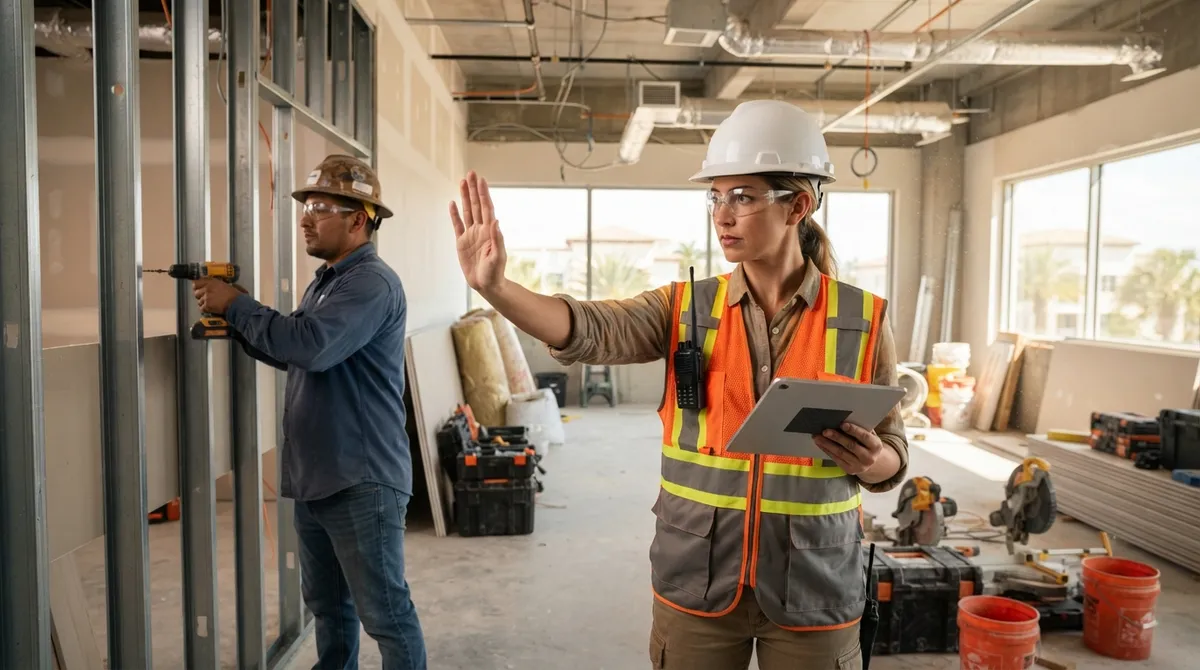
If any work is still underway, pause it right away. Continuing to build while you sort out permits can deepen the problem and invite stop-work orders or additional penalties.
Next, figure out which AHJ actually controls your property. This is trickier than it sounds, especially near city lines where a mailing address may say one city while the parcel sits in unincorporated county land. If you are unsure, the building department lookup tool can point you in the right direction, and our guide on which Florida jurisdiction reviews your project explains the common traps.
Check for Open Permits and Violations
Before you file anything, search the property's permit history. You may find an open or expired permit that already covers part of the work, which changes your strategy completely. The open permit search is a handy first stop. If the work was already cited, you may be dealing with a code compliance violation that has its own deadlines.
Step 2: Document the Existing Conditions
Because the work is already built, the building department needs to see exactly what exists. Think of this as telling the full, honest story of the space.
- Photograph everything. Capture walls, ceilings, electrical panels, plumbing fixtures, HVAC equipment, exit signs, and fire protection devices.
- Gather any paperwork. Contracts, invoices, product data sheets, lease exhibits, and any earlier permit records help establish the scope and timeline.
- Confirm the scope in writing. List precisely what was changed, added, or removed.
- Note any concealed work. Anything behind a finished wall or above a closed ceiling will draw extra attention.
Clear documentation speeds up review. Vague or incomplete packages are one of the top reasons ATF applications stall.
Step 3: Prepare As-Built Drawings and Engineering
For commercial work, the AHJ typically expects drawings that show what was actually built. Depending on the scope and local rules, those drawings may need to be prepared or certified by Florida-licensed design professionals.
This is where having drafting and engineering under one roof makes life easier. Our team prepares as-built drawings, commercial plans, and MEP engineering in house, with sealed documents from our own engineer. When a reviewer asks a question, we answer it directly instead of waiting on an outside consultant.
What the Plan Set May Include
| Document | What It Shows | When It Is Typically Needed |
|---|---|---|
| As-built floor plan | Walls, doors, rooms, exits, and fixture locations | Nearly every commercial ATF |
| Life safety and egress plan | Exit paths, occupant load, and exit signage | Layout or occupancy changes |
| Electrical plan or letter | Panels, circuits, lighting, and receptacles | Any electrical modification |
| Plumbing plan | Fixtures, supply, drain, and vent layout | New or relocated restrooms, sinks, or drains |
| Mechanical plan | HVAC equipment, ductwork, and ventilation | New or altered HVAC systems |
| Structural letter or drawings | Load paths, framing, and openings | Altered structural elements |
| Accessibility documentation | Clearances, restrooms, and routes | Altered public or tenant areas |
Your AHJ will confirm exactly which of these it requires. A small cosmetic update will need far less than a full restaurant build-out.
Step 4: Submit the ATF Application and Pay the Fees
With your documentation and drawings ready, you file the application with the AHJ. Some jurisdictions use a dedicated ATF or work-without-permit form. Others fold it into a standard commercial alteration permit with added fees.
Fees are where jurisdictions differ the most. For example, the City of Miami's published fee schedule states that work begun without a required permit at a non-homestead or commercial property carries a fee of four times the specified permit fee plus an additional base fee. Always verify the current schedule for your own jurisdiction, because penalties and multipliers vary widely. For a deeper look at typical numbers, see our breakdown of after-the-fact permit costs in Florida.
Our permit facilitation and filing team handles submission, tracking, and every reviewer comment, so you are not left guessing where the application sits.
Local Examples to Keep in Mind
Large markets each have their own quirks. If your property is in South Florida, you may want to review how Miami-Dade County and Broward County handle retroactive work. On the Gulf Coast, Tampa and surrounding areas have their own procedures, and Central Florida projects in Orlando follow yet another path.
Step 5: Expect Inspections, Possible Exposure, and Corrections
Here is where the "after the fact" part gets real. Since the work is already finished, inspectors cannot see what is behind the drywall or above the ceiling tiles. To verify concealed construction, the AHJ may require:
- Selective opening of walls or ceilings
- Testing of electrical, plumbing, or mechanical systems
- Engineer inspection reports or letters
- Photographic evidence from earlier phases of work
Think of it like a detective story. The inspector needs proof that the hidden parts meet code, and your job is to supply that proof as painlessly as possible.
An ATF permit does not guarantee approval, and it does not erase the original failure to permit. If the work cannot be verified or does not meet code, the AHJ may require corrective work, further exposure, or even removal and reconstruction before sign-off. A pre-submittal field review helps you spot likely problems early. Our guide on what happens during a Florida ATF site inspection walks through the visit in detail.
Fix Problems Before You Resubmit
If a reviewer issues comments, treat them as a to-do list rather than a rejection. Address each item, update the drawings, and resubmit. Our revisions and resubmittals service exists for exactly this stage.
Step 6: Close Out With Final Sign-Off
Once inspections pass and any corrections are complete, the AHJ signs off and closes the permit. For commercial tenants, closeout often connects to other documents your business needs to operate legally.
- Certificate of Use for the tenant's business activity
- Certificate of Occupancy when the work affects occupancy or use
- Final inspections from fire, health, or other departments where applicable
Not sure which one applies? Our comparison of certificate of occupancy vs. certificate of use clears up the confusion. If you are opening a new storefront or office, small business permitting support can keep the whole timeline on track.
Quick Comparison: ATF Permit vs. Starting Fresh vs. Doing Nothing
| Approach | What Happens | Risk Level |
|---|---|---|
| File an after-the-fact permit | Work is documented, inspected, and legalized if it meets code | Moderate: fees apply and corrections may be needed |
| Remove work and start fresh | Existing work is demolished and rebuilt under a new permit | High cost, but a clean record |
| Do nothing | Violation remains and can surface at sale, financing, or inspection | Highest: stop-work orders, fines, and insurance problems |
For most commercial tenants, the ATF route is the most practical. It keeps your investment in place while bringing the space into compliance.
Who Needs This and Why It Matters
Unpermitted tenant work is not just a tenant problem. It ripples out to everyone connected to the property.
- General contractors may face licensing and liability questions if they performed the work. Our team supports general contractors with clean, reviewer-ready packages.
- Landlords and property managers carry exposure because the building itself may be affected. See how we help property managers resolve open issues.
- Commercial brokers and real estate professionals often discover unpermitted work during due diligence, and a permit hold can delay a closing. Learn more for commercial brokers and realtors.
- Design professionals and specialty trades may need outsourced drafting or engineering to complete the documentation without adding headcount.
Insurance carriers and lenders also pay attention. Unpermitted work can complicate claims and financing, which is why cleaning it up early protects you from bigger headaches down the road.
Can a Tenant Open Before Final Approval?
This is one of the most common questions, and the honest answer is that it depends on the AHJ and the nature of the work. Some jurisdictions will not allow occupancy until the permit and required inspections are finalized, particularly when life safety systems are involved. Opening early without approval can trigger additional enforcement. Always confirm with the building department before welcoming customers.
Smart Habits to Avoid Repeating This Problem
- Confirm permit responsibility in the lease and the construction contract, in writing.
- Verify the permit is issued before any work begins, not just applied for.
- Ask your contractor to show the permit card and inspection records.
- Keep closeout documents, including final inspections and certificates, in a shared folder.
- Call a permitting professional early whenever scope or use changes.
You can also review how related cleanup works on other property types in our guides on fixing a commercial build-out without a permit and whether unpermitted commercial TI can be legalized.
Wrapping Up: You Can Get This Fixed
Dealing with an after-the-fact commercial tenant improvement in Florida can feel overwhelming at first, but it is very manageable when you take it one step at a time. Stop work, identify the right authority, document what exists, prepare as-built drawings and engineering, file the application, handle inspections, and close out cleanly.
Because requirements, fees, and processes vary by jurisdiction, the smartest move is to work with a team that handles this every day across all 67 Florida counties. If you want a calm, organized path from "uh-oh" to final sign-off, get a free quote and we will help you map out your next move. You can also read what other clients say by choosing to visit us on Google — 1 Contractor Solutions, and stay connected when you follow us on LinkedIn or follow us on Facebook.
If the clock is ticking on a stop-work order or a stalled closing, our urgent permit rescue team answers around the clock. You do not have to untangle this alone.
FAQs
Do I need a permit for a commercial tenant improvement in Florida?
In most cases, yes. Florida Statutes §553.79 generally requires a permit before constructing, altering, or modifying a building, and tenant work is not automatically exempt. Check with your local building department to confirm what your specific scope needs.
How much does an after-the-fact commercial permit cost in Florida?
It depends entirely on your jurisdiction and project scope. Some, like the City of Miami, charge a multiple of the normal permit fee plus a base fee for commercial work started without a permit, so always check the current fee schedule for your AHJ.
Will inspectors make me open up walls or ceilings?
Quite possibly. Since the work is already concealed, the building department may require selective openings, testing, or engineer verification to confirm the hidden construction meets code. Good as-built documentation can sometimes reduce how much exposure is needed.
Can a tenant open for business before the permit is finalized?
Often not. Many jurisdictions require the permit and key inspections to be finalized before occupancy, especially when life safety systems are involved. Confirm with your building department first so you do not trigger extra enforcement.
What happens if the unpermitted work fails inspection?
The AHJ will issue corrections you must complete before approval, and in some cases the work may need to be exposed or removed and rebuilt. Think of corrections as a checklist, and a permitting team can help you resolve each item and resubmit.
We do this work every day across all 67 Florida counties. Call (866) 314-6931 and we will tell you what your situation actually requires — including when you do not need us.
Related services
Permit Facilitation & Filing
You have a crew scheduled, a client asking for dates, and a permit sitting somewhere in a queue you cannot see. We file it, w…
See the servicePlan Review Coordination
A permit in plan review is not one queue. On a commercial project it can be six queues, each with its own reviewer, its own c…
See the serviceReady to get your permit moving?
One call tells you which jurisdiction controls your project, what it will take, and what it will cost. Most of the time we can scope it on the phone.