
Blog
8 Steps Investors Use to Fix Unpermitted Flips in Florida
Learn the 8 steps investors use to fix unpermitted flips in Florida, from jurisdiction checks to as-built plans, inspections, and final closeout records.
Key Takeaways
-
Florida Statutes §553.79 generally requires a permit before starting covered construction, so unpermitted flip work must be fixed through the local building department, not ignored.
-
Confirm which city or county building department has jurisdiction first, since filing with the wrong agency restarts the clock and wastes weeks.
-
Pull the permit history to classify the problem as never permitted, open, expired, failed, or a code case, because each requires a different fix path.
-
Inventory all unpermitted work trade by trade (structural, electrical, plumbing, mechanical, exterior) so the application scope doesn't leave anything out.
-
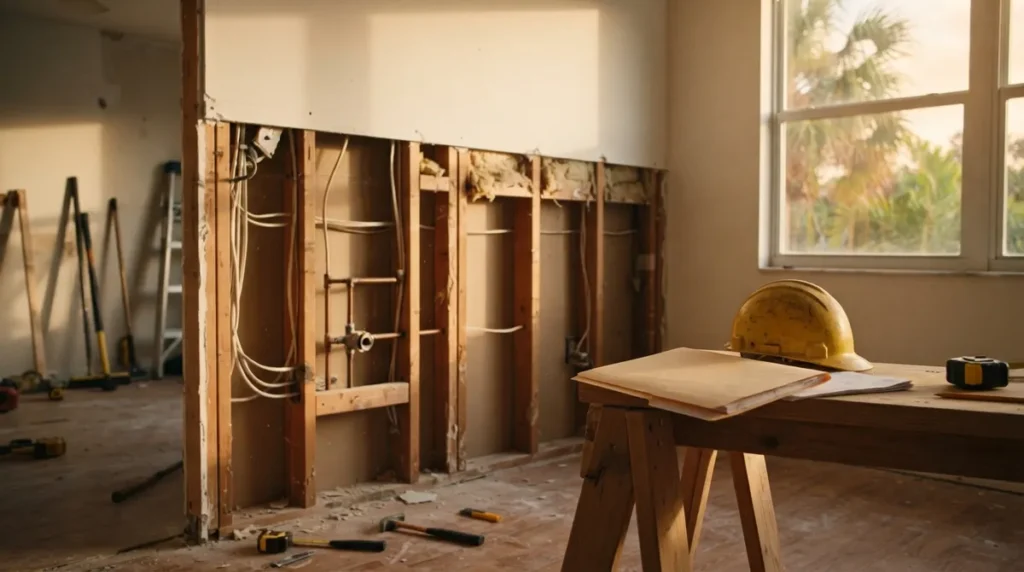
Budget for concealed work: inspectors may require walls or ceilings to be opened, and approval is not guaranteed, so build in schedule and cost contingency.
-
Call the building department early to learn required documents and fees, since there is no uniform statewide fee or penalty schedule for after-the-fact permits.
You bought the flip, the numbers looked great, and then the surprise landed: a permit search, an appraiser, or a title company turned up renovation work that was never permitted. Take a breath. It happens to experienced investors more often than anyone likes to admit, and it is usually fixable. The real question is how investors fix unpermitted flips in Florida without blowing the budget or the timeline.
Here is the short version. Florida Statutes §553.79 generally makes it unlawful to start covered construction, alteration, repair, or demolition without a permit from the enforcing agency. Fixing a problem after the fact means working with the local building department, documenting what was built, and passing inspections. Approval is not automatic, so smart investors plan for time, engineering, and contingency money.
In this friendly guide, we walk through eight practical steps, share a few tables you can screenshot, and point out the mistakes that quietly eat profit. Whether you are a first-time flipper, a seasoned investor, a general contractor cleaning up someone else's work, or an agent helping a client, you will find a clear path forward. If you want a hand at any point, you can get a free quote from our team.
Why Unpermitted Work Hurts Flips So Much
A flip lives and dies by its exit. Unpermitted work puts that exit at risk in several ways, and most of them show up at the worst possible moment.
- Buyer financing: Lenders and appraisers may flag additions, conversions, or major system changes that do not match county records.
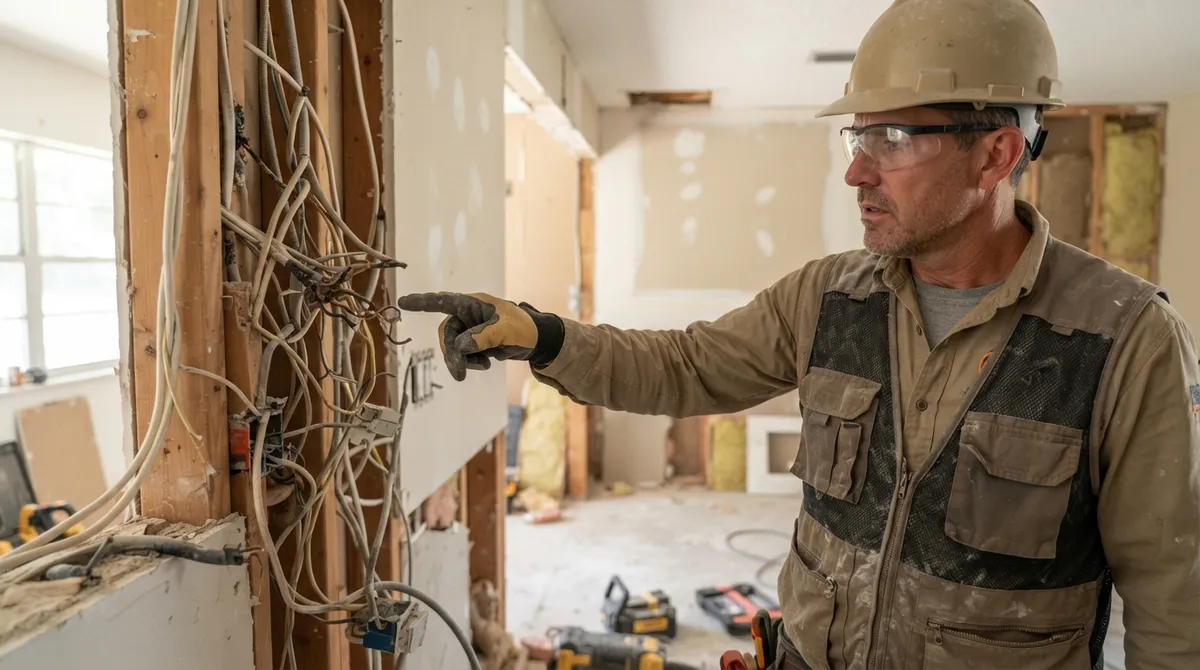
- Inspection surprises: A buyer's home inspector can spot mismatched square footage, fresh wiring, or new plumbing with no paper trail.
- Closing delays: Title and permit searches can reveal open or expired permits, which can hold up a closing.
- Insurance questions: Claims can get complicated when work was never inspected or approved.
- Disclosure duties: Florida sellers have obligations to disclose known facts that materially affect value and are not readily observable.
For a deeper look at the selling side, our guide on seller disclosure of unpermitted work in Florida explains what to talk through with a real estate attorney.
The 8 Steps at a Glance
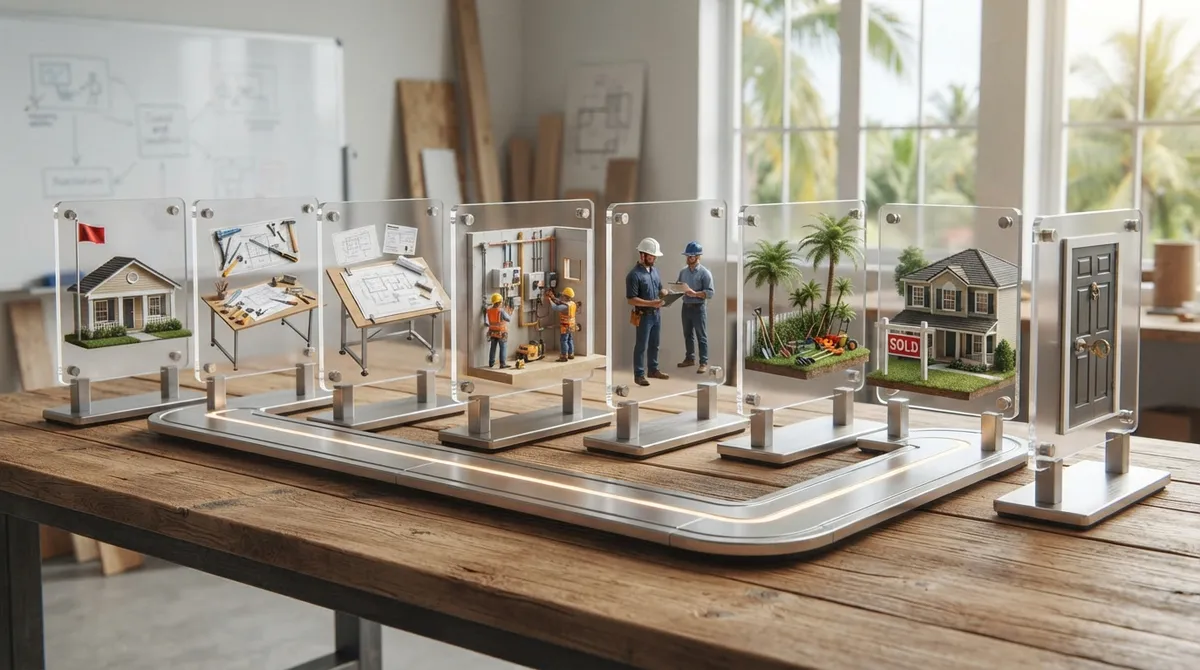
Before we dig in, here is the roadmap most investors follow when they fix an unpermitted flip.
| Step | What Happens | Why It Matters |
|---|---|---|
| 1 | Confirm which building department has jurisdiction | Rules, fees, and forms differ by city and county |
| 2 | Pull permit history and code-enforcement records | Shows what is open, expired, closed, or missing |
| 3 | Inventory the work trade by trade | Defines the scope you actually need to legalize |
| 4 | Talk to the building department early | Reveals required documents and process |
| 5 | Prepare as-built plans and engineering | Gives reviewers something they can approve |
| 6 | File the after-the-fact or corrective permit | Starts the formal review |
| 7 | Pass inspections and complete corrections | May include exposing concealed work |
| 8 | Secure final closeout records | Protects your resale and due diligence |
Step 1: Confirm Which Agency Actually Has Jurisdiction
This sounds obvious, yet it trips up investors constantly. The city or county building department with jurisdiction over the property sets the local process for after-the-fact permits, required documents, inspections, and fees. Do not assume the county handles it, especially near city lines or in unincorporated pockets.
A quick way to start is our building department lookup tool. If the answer is not obvious, read which Florida jurisdiction reviews my project before you spend a dime on plans. Filing with the wrong agency wastes weeks.
Step 2: Check Permit History and Code Enforcement Records
Next, find out exactly what the paper trail says. Not every problem is the same, and the fix depends on the category.
- Never permitted: No record exists for the work at all.
- Open permit: A permit was issued but never finished or finaled.
- Expired permit: A permit lapsed before inspections were completed.
- Failed inspection: A permit exists, but the work did not pass.
- Code case: An enforcement record is attached to the property.
Our open permit search can help you begin the hunt. If you find an expired or open permit, you may have a different path than a brand-new application. We explain the options in how to close an expired permit in Florida.
Step 3: Inventory the Work Trade by Trade
Now walk the property with a notepad, ideally with a contractor or engineer who knows what to look for. List every change you can identify, then sort it by trade. This inventory becomes the backbone of your application.
| Trade | Common Flip Items | What Reviewers Often Want |
|---|---|---|
| Structural | Removed walls, enlarged openings, additions, roof framing changes | Sealed drawings or engineer letters |
| Electrical | Panel upgrades, new circuits, added outlets | Load details, as-built layouts, inspection access |
| Plumbing | Relocated fixtures, added bathrooms, new water heaters | Riser or layout documentation, inspection |
| Mechanical | New HVAC, ductwork changes | Equipment specs, sizing information |
| Exterior | Windows, doors, roofing, decks, enclosures | Product approvals, anchoring, site plan |
Be honest during this step. A flip often includes more hidden changes than the investor realizes, especially when a prior owner or earlier contractor did part of the work. If that sounds familiar, see 4 steps if a prior owner skipped permits in Florida.
Step 4: Talk to the Building Department Early
Many investors avoid this call because they fear penalties. In practice, an early conversation tends to save time because it tells you what documents the office wants before you build a package. Ask about the after-the-fact or corrective permit process, plan requirements, whether concealed work may need to be exposed, and how fees are handled.
Keep in mind that there is no uniform statewide fee or penalty schedule for after-the-fact permits. What one jurisdiction charges, another may handle very differently. For rough expectations, read after-the-fact permit Florida cost.
If you would rather not make the call yourself, our permit facilitation and filing team handles those conversations every day across all 67 Florida counties.
Step 5: Prepare As-Built Plans and Engineering
This is where most investors either save the project or stall it. The local agency may require accurate as-built plans, a site plan, photos, contractor records, and engineering documents or sealed plans where applicable. Requirements vary by project and jurisdiction, but a solid package usually includes some combination of the following.
- As-built floor plans showing what actually exists, not what was intended.
- A site plan with setbacks, lot coverage, and structure locations.
- Structural or MEP information where the scope calls for it.
- Photos and records documenting materials, framing, and installed equipment.
- An engineer letter when a licensed professional must verify conditions.
Because our drafting and engineering are in house, we can handle as-built drawings, site plans, and engineer letters under one roof, with our own engineer signing and sealing the work. That means reviewer comments get fixed fast instead of bouncing between outside consultants. If you already have your own engineer, our drafting-only service draws the permit set and stops there.
Step 6: File the After-the-Fact or Corrective Permit
With documents in hand, you submit the application to the correct agency. The exact permit type depends on whether you are legalizing new work, reopening an old permit, or correcting a failed one. Our overview on after-the-fact and expired permits covers how these paths differ.
Two practical tips help here. First, make sure the application scope matches your inventory, because leaving a trade out can trigger a rejection later. Second, expect review comments. They are normal, not a sign of failure. A coordinated response keeps the file moving, which is why plan review coordination and revisions and resubmittals matter so much on legalization jobs.
For a full walkthrough of the filing mechanics, see how to get an after-the-fact permit in Florida.
Step 7: Pass Inspections and Complete Corrections
Here is the part many investors underestimate. Inspections are not guaranteed to approve completed work. Inspectors may require concealed work to be exposed, deficiencies to be corrected, or noncompliant work to be altered or removed before approval.
That is why budget and schedule contingency are not optional on these jobs. Here is how common inspection outcomes tend to play out.
| Inspection Outcome | What It Usually Means | Typical Next Move |
|---|---|---|
| Approved | Work meets code as inspected | Schedule remaining inspections |
| Partial approval | Some trades pass, others need work | Correct items, request reinspection |
| Exposure required | Inspector cannot verify concealed work | Open walls or ceilings, then reinspect |
| Failed | Deficiencies found | Correct, document, and resubmit as needed |
If you want to know what to expect on site, our inspections page and the article on what to do when a Florida final inspection fails are good companions. Investors who want faster reviews on eligible projects may also explore private provider plan review and inspections.
Step 8: Secure Final Closeout Records
Passing the last inspection is not the finish line. The finish line is having every document in a folder you can hand to a buyer, lender, or attorney. Preserve permit applications, approved plans, inspection results, receipts, and final approvals.
- Final inspection sign-offs for every trade
- Approved plan sets and engineer letters
- Fee receipts and permit numbers
- Certificate of Occupancy or Certificate of Use paperwork where applicable
- Correspondence confirming the permit was closed
If the project involves occupancy documents, our pages on Certificate of Occupancy and Certificate of Use explain what may be needed. Good records turn a scary listing into a clean one.
Common Mistakes That Cost Investors Weeks
After seeing plenty of flips, a few patterns repeat. Avoid these and you are already ahead of the pack.
- Guessing the jurisdiction: Filing with the wrong office restarts the clock.
- Skipping the permit history: You might be dealing with an open permit, not a new one.
- Underestimating concealed work: Walls, ceilings, and subfloors may need to be exposed.
- Submitting rough sketches: Reviewers expect accurate, professional documents.
- Ignoring disclosure duties: Selling without a plan creates legal exposure. Talk to a Florida real estate attorney.
- Waiting for a notice: Acting before a complaint often gives you more control.
If you have already received a notice, our guide to what to do after a code enforcement notice is a calm place to start, and our code compliance and violations team can step in.
How Long Will This Take, and What Will It Cost?
Everyone asks, and here is the honest answer: it varies. We could not find a reliable statewide statistic for after-the-fact permit fees or timelines, because local requirements differ by jurisdiction and project. A small interior item may move quickly, while an addition with concealed framing can take much longer.
| Factor | Tends to Speed Things Up | Tends to Slow Things Down |
|---|---|---|
| Scope | Single trade, minor work | Multiple trades, structural changes |
| Documentation | Clear as-builts and engineering | Missing or inaccurate drawings |
| Concealed work | Already accessible | Walls and ceilings must be opened |
| Agency workload | Lighter review queues | Heavy backlogs |
| Communication | Prompt responses to comments | Delayed resubmittals |
For general timing context, see how long a building permit takes in Florida. The best budget approach is to set aside a contingency for engineering, corrections, and reinspection fees rather than hoping for a perfect first pass.
When to Bring in a Permitting Partner
You can handle some of this yourself, especially if the scope is small. But investors who flip multiple properties usually decide that outsourcing the permit work is cheaper than losing carrying-cost months. A partner helps you identify the correct agency, build a complete package, respond to reviewers, and carry the file through closeout.
1 Contractor Solutions acts as Florida's outsourced permitting department. We respond within 30 minutes day or night, and we serve investors, general contractors, realtors, and homeowners statewide. If a closing is on the line, our urgent permit rescue and realtor closing support services were built for exactly that pressure. You can also see what customers say by visiting us on Google — 1 Contractor Solutions.
Want to keep learning? You can follow us on LinkedIn or follow us on Facebook for practical Florida permitting tips. For the statute behind it all, the Florida Statutes §553.79 page is worth bookmarking.
Final Thoughts: Fix It on Your Terms
An unpermitted flip feels like a crisis, but it is really a process. Confirm jurisdiction, pull the records, inventory the work, talk to the building department, document what exists, file the right permit, pass inspections, and keep your closeout records safe. Follow those eight steps and you turn a risky listing into a clean, sellable asset.
You do not have to do it alone. If you have an address and a problem, we will tell you which jurisdiction controls it and what it will take, then go do the work. Ready to move your project forward? Get a free quote today and let us help you get permits approved and projects moving.
FAQs
How do I find out whether a Florida flip has unpermitted work?
Start by checking the property's permit history and code-enforcement records with the local building department, then walk the property and compare what you see to what is on file. Distinguish work with no permit from an open, expired, or failed permit, because each has a different path forward.
Can I get an after-the-fact building permit in Florida?
Often, yes, but it depends on the work and the local agency. Approval is not automatic, since the building department may require as-built plans, engineering, inspections, and corrections before it signs off.
Can inspectors require walls or ceilings to be opened?
They can. If concealed work cannot be verified, the inspector may require it to be exposed, corrected, or even removed before approval, so build some contingency into your budget and schedule.
Do Florida sellers have to disclose known unpermitted work?
Florida sellers have disclosure obligations for known facts that materially affect value and are not readily observable. Because every transaction is different, check with a Florida real estate attorney about your specific facts.
What documents do I need to legalize unpermitted renovations?
Requirements vary by jurisdiction and project, but they commonly include as-built plans, a site plan, photos, contractor records, and engineer letters or sealed plans where applicable. Calling the building department early tells you exactly what your package needs.
We do this work every day across all 67 Florida counties. Call (866) 314-6931 and we will tell you what your situation actually requires — including when you do not need us.
Related services
Permit Facilitation & Filing
You have a crew scheduled, a client asking for dates, and a permit sitting somewhere in a queue you cannot see. We file it, w…
See the servicePlan Review Coordination
A permit in plan review is not one queue. On a commercial project it can be six queues, each with its own reviewer, its own c…
See the serviceReady to get your permit moving?
One call tells you which jurisdiction controls your project, what it will take, and what it will cost. Most of the time we can scope it on the phone.