
Blog
How to Fix a Commercial Build-Out Without a Permit FL
Learn how to legalize a commercial build-out without a permit in Florida, from documentation to after-the-fact approval, step by step.
Key Takeaways
-
Commercial build-outs in Florida require permits under Florida Statutes § 553.79 for any work altering the building, changing occupancy, or affecting electrical, plumbing, mechanical, or gas systems—there is no blanket exemption for tenant improvements.
-
After-the-fact permit applications are possible but not guaranteed; they require as-built drawings, engineering documentation, inspections (sometimes requiring walls/ceilings to be opened), and correction of any code deficiencies before final approval.
-
A single commercial build-out typically requires multiple trade permits (electrical, plumbing, mechanical) alongside the main building permit, which is why many projects end up unpermitted—contractors often assume one permit covers everything.
-
After-the-fact permit fees are usually higher than standard fees and may include penalties; the process varies significantly by county and city, so confirming your local jurisdiction's specific requirements and procedures is critical.
-
Red flags indicating unpermitted work include missing permit records, contractor claims to handle permits without evidence, title searches flagging violations, inspector findings of mismatched systems, or code enforcement notices of violation.
-
Stop any ongoing unpermitted construction immediately, contact your local building department honestly about their retroactive permit process, and gather comprehensive documentation including as-built drawings and sealed engineering letters before submitting an application.
So, here's a scenario we see more often than you'd think: a business owner leases a commercial space, hires a contractor (or does it themselves), gets the tenant improvements done, opens the doors, and everything seems great. Then, months or years later, a lender, an inspector, or a buyer's due diligence team discovers that the build-out never had a permit. Suddenly, that beautiful new retail space or restaurant kitchen has a big question mark hanging over it. If this sounds familiar, take a breath. You're not the first, and you won't be the last. The good news is that Florida has a process for this, and we're going to walk you through exactly how it works, friendly and judgment-free, from start to finish.
Whether you're a general contractor who inherited someone else's mess, a realtor trying to close a deal, or a small business owner who just found out your "finished" build-out isn't actually finished in the eyes of the law, this guide is for you. Let's get into it.
Why Permits Matter for Commercial Build-Outs in Florida
Let's start with the legal foundation, because understanding the "why" makes the "how" much easier to accept. Under Florida Statutes § 553.79, it's generally unlawful to construct, alter, modify, repair, or demolish a building without first getting a permit from the local enforcing agency, unless a specific exemption applies. There's no blanket exception carved out for commercial tenant build-outs, no matter how minor the work might feel.
The Florida Building Code backs this up. Work that alters a building, changes its occupancy or occupant load, or touches regulated electrical, plumbing, mechanical, or gas systems generally requires a permit. Polk County's own permitting guidance, for example, points to Florida Building Code §105.1 as the section governing this, and notes that separate trade permits are often required on top of the main building permit.
Here's the part that surprises people: whether your specific scope of work needed a permit depends on what was actually done, the code provisions that apply, and how your local jurisdiction interprets them. Purely cosmetic work, like fresh paint or new flooring, might be treated differently than work affecting structure, fire protection, accessibility, or occupancy. That's why it's always worth checking with your city or county building department before swinging a hammer, and if you didn't check beforehand, it's worth checking now.
What Counts as a Commercial Build-Out Requiring a Permit
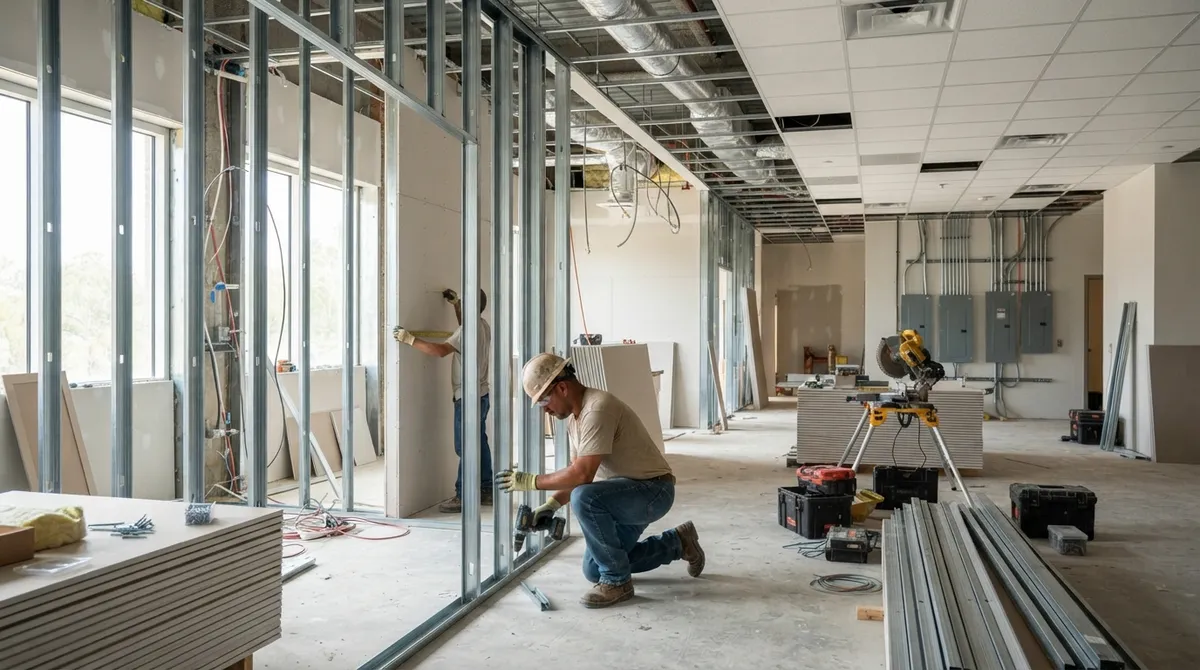
Commercial build-outs are rarely a single, simple task. They tend to involve a stack of interconnected systems and approvals. Here's a quick rundown of what typically triggers permit requirements:
- Interior wall changes, including new partitions or demolition of existing walls
- Electrical work, including new circuits, panel upgrades, or lighting changes
- Plumbing modifications, such as new restrooms, sinks, or grease traps
- Mechanical work, including HVAC changes or new ductwork
- Changes to occupancy classification or occupant load
- Fire protection system alterations, including sprinklers or alarms
- Accessibility upgrades tied to ADA compliance
Because so many of these elements overlap, a single build-out project can require multiple trade permits alongside the main building permit. This is one of the biggest reasons commercial projects end up unpermitted in the first place. The contractor or tenant assumes one permit covers everything, when in reality the electrical, plumbing, and mechanical work each need their own approval.
Signs Your Commercial Build-Out Might Be Unpermitted
Not sure if your space has an issue? Here are some common red flags we hear about from clients across the state, from Tampa to Miami:
- You bought or leased a space with work already completed by a previous owner or tenant, and no one can produce permit records.
- Your contractor said they'd "handle the permit" but you never saw an approved permit card posted or an inspection sign-off.
- A title search, appraisal, or insurance inspection flagged open or missing permits.
- You're trying to sell, refinance, or renew a lease and the buyer's inspector noticed mismatched floor plans or unpermitted electrical panels.
- Code enforcement showed up after a complaint, a fire, or a routine inspection and issued a notice of violation.
If any of these sound familiar, don't panic, but don't ignore it either. Unpermitted work doesn't just disappear because you stop thinking about it.
How to Fix a Commercial Build-Out Without a Permit in Florida
Here's the step-by-step process most Florida jurisdictions expect you to follow. Keep in mind that exact procedures, forms, and fees vary by county and city, so this is a general roadmap rather than a one-size-fits-all script.
- Stop any ongoing unpermitted work immediately. If construction is still in progress, halt it before doing anything else. Continuing work without a permit only compounds the issue.
- Identify the correct jurisdiction. Permitting authority is based on the property's actual location, not its mailing address, which can be confusing near county or city lines. Our building department lookup tool can help you confirm exactly who has authority over your property.
- Contact the local building department. Explain the situation honestly. Most departments have an established after-the-fact or retroactive permit process, though the name and requirements differ from place to place.
- Gather or create documentation. This usually means as-built drawings showing exactly what was constructed, plus any structural or MEP calculations needed to prove code compliance.
- Submit the after-the-fact application. This typically includes the retroactive permit fee (often higher than a standard permit fee), the supporting plans, and any required affidavits.
- Schedule inspections. Because the work is already built, inspectors may need to verify concealed elements, sometimes requiring drywall, ceiling tiles, or flooring to be opened up so wiring, framing, or plumbing can be visually confirmed.
- Correct any code deficiencies. If the inspection reveals problems, whether that's improper wiring, missing fire separation, or inadequate egress, you'll need to fix them before final approval.
- Receive final sign-off. Once everything checks out, the department issues final approval, which may tie into a Certificate of Occupancy or Certificate of Use, depending on your situation.
One thing worth repeating clearly: an after-the-fact application does not erase the original failure to get approval before construction. It's a corrective path, not a magic reset button, and the local authority isn't obligated to approve every after-the-fact request automatically.
What Documentation You'll Likely Need
Because the work already exists, building departments generally want more evidence than they would for a standard, pre-construction permit. Here's what's commonly requested:
| Document Type | Purpose |
|---|---|
| As-built drawings | Show exactly what was constructed, including dimensions and system layouts |
| Structural engineering letter or calculations | Confirm framing, load paths, and structural elements meet code |
| MEP plans | Document electrical, plumbing, and mechanical systems as installed |
| Life safety and egress plan | Verify occupant load, exits, and fire protection compliance |
| Affidavit or sworn statement | Attest to the scope of work performed and who performed it |
Our in-house drafting and engineering team handles exactly this kind of documentation daily, including as-built drawings and sealed engineer letters, so you're not scrambling to find separate consultants for each piece.
Comparing Standard Permits vs. After-the-Fact Permits
| Factor | Standard Permit | After-the-Fact Permit |
|---|---|---|
| Timing | Applied for before construction begins | Applied for after work is already completed |
| Fees | Standard jurisdiction fee schedule | Often includes a penalty or surcharge, amount varies by jurisdiction |
| Inspections | Scheduled at each construction phase | May require opening concealed areas to verify existing work |
| Approval likelihood | Generally straightforward if plans meet code | Not guaranteed; deficiencies may require rework |
| Documentation needed | Design plans | As-built plans, engineering verification, affidavits |
Why Working With a Permitting Specialist Helps
We won't sugarcoat it: navigating an after-the-fact commercial permit alone can be a slow, frustrating process, especially if you're juggling reviewer comments, missing documentation, or a jurisdiction that's unfamiliar with your specific situation. This is exactly the kind of project where 1 Contractor Solutions steps in. We handle after-the-fact and expired permits across all 67 Florida counties, and because our drafting and engineering are in-house, we can prepare the as-built drawings, structural documentation, and MEP plans a reviewer will actually ask for, without bouncing you between outside consultants.
We also offer private provider plan review and inspections, which can speed things up considerably compared to waiting in a county queue. And if you're facing a stop work order or a closing that's stuck because of this exact issue, our urgent permit rescue service is built for exactly that kind of pressure.
If you're a general contractor coordinating this on behalf of a client, our general contractor resources and plan review coordination service can keep the whole process moving without you having to become a permitting expert overnight. Realtors and brokers dealing with unpermitted work discovered mid-transaction can also lean on our realtor and closing support team.
Regional Considerations Across Florida
One thing we always tell clients: permitting isn't uniform across the state. A build-out in Fort Lauderdale might follow a different after-the-fact process than one in Orlando or St. Petersburg. Fees, required documentation, and even how strict inspectors are about opening up walls can vary from one building department to the next.
We've built our business around knowing these local differences, having filed in more than 400 municipalities. If you're unsure which office actually has jurisdiction over your commercial property, our open permit search tool is a great starting point before you make that first phone call.
Common Mistakes to Avoid
- Assuming a verbal agreement with a previous contractor counts as a permit; it doesn't.
- Waiting until a sale or lease renewal to address the issue, which often creates time pressure and limits your options.
- Trying to hide unpermitted work rather than disclosing it, which can create bigger legal and insurance problems down the road.
- Assuming every jurisdiction charges the same fees or follows the same timeline; they don't.
- Skipping structural or MEP documentation because "the walls look fine," when concealed issues are often exactly what inspectors are looking for.
We've seen how much smoother this process goes when someone experienced is guiding it from day one. If you want to hear directly from people who've been through it, read what our clients have to say, or see what our community says on 1 Contractor Solutions on Google.
Wrapping It Up: You've Got This
Discovering that a commercial build-out doesn't have the proper permits can feel overwhelming, but it's a fixable problem, and thousands of Florida property owners, tenants, and contractors have worked through this exact situation successfully. The key is acting promptly, being transparent with your local building department, and gathering the right documentation, ideally with sealed drawings and engineering that a reviewer will accept the first time.
You don't have to figure this out alone. Our team at 1 Contractor Solutions answers calls 24/7, responds within 30 minutes, and has spent more than 15 years helping people just like you untangle exactly this kind of situation across every corner of the state. If you're ready to get your commercial space legalized and moving forward again, get a free quote today, and let's turn this into a solved problem rather than a lingering worry. You can also connect with us and see updates by choosing to follow us on LinkedIn or follow us on Facebook for more helpful tips like this one.
FAQs
Do I need a permit for a commercial tenant build-out in Florida?
In most cases, yes! Under Florida Statutes § 553.79, altering a commercial space, especially anything touching electrical, plumbing, mechanical systems, or occupancy, generally requires a permit before work begins. It's always worth a quick call to your local building department to confirm what your specific project needs.
What commercial renovation work can be done without a permit in Florida?
Purely cosmetic updates, like fresh paint, new carpet, or minor decorative touches, are sometimes exempt, but this really depends on your local jurisdiction's interpretation of the Florida Building Code. When in doubt, we always recommend checking first rather than assuming, since assumptions are usually what gets folks into trouble here.
What should I do if my Florida commercial build-out was completed without permits?
Take a deep breath, you're in good company, and this is fixable! Stop any ongoing work, contact your local building department to ask about their after-the-fact permit process, and start gathering as-built drawings and engineering documentation so you're ready to move forward smoothly.
Can I get an after-the-fact permit for unpermitted commercial work in Florida?
Often, yes, but it's not automatic or guaranteed. Local departments typically require documentation, inspections, and correction of any code deficiencies before granting approval, and fees are usually higher than standard permit fees, so plan for a bit of extra time and paperwork.
Will the building department require walls or ceilings to be opened for inspection?
It's possible, especially if electrical, plumbing, or structural work is concealed behind drywall or ceiling tiles. Inspectors need to visually verify that the work meets code, so don't be surprised if a bit of exploratory opening up is part of the process.
We do this work every day across all 67 Florida counties. Call (866) 314-6931 and we will tell you what your situation actually requires — including when you do not need us.
Related services
Permit Facilitation & Filing
You have a crew scheduled, a client asking for dates, and a permit sitting somewhere in a queue you cannot see. We file it, w…
See the servicePlan Review Coordination
A permit in plan review is not one queue. On a commercial project it can be six queues, each with its own reviewer, its own c…
See the serviceReady to get your permit moving?
One call tells you which jurisdiction controls your project, what it will take, and what it will cost. Most of the time we can scope it on the phone.