
Blog
Can Unpermitted Commercial TI Be Legalized in Florida?
Unpermitted commercial TI in Florida can often be legalized with an after-the-fact permit. Learn the steps, documents, and pitfalls to expect in 2026.
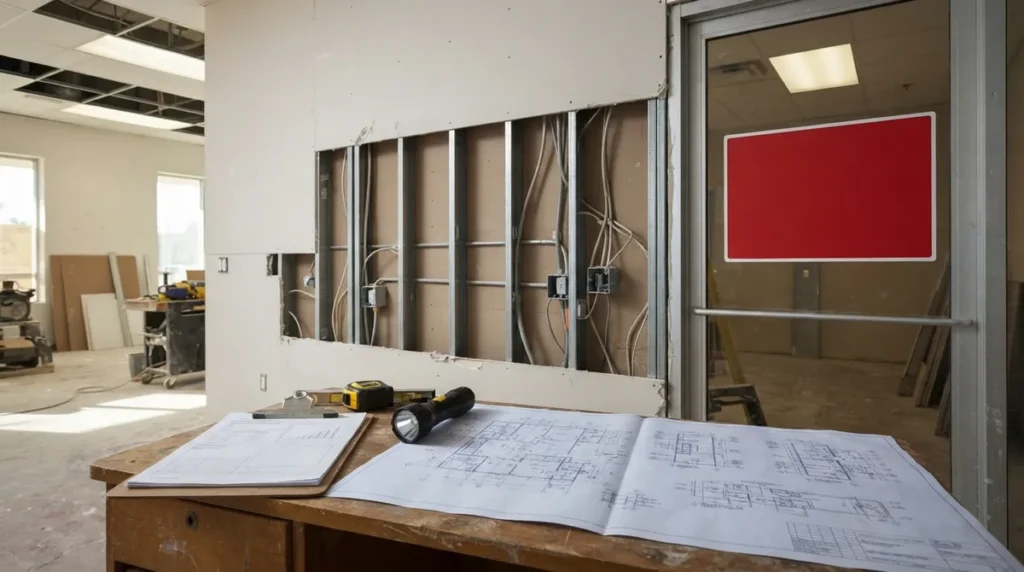
Key Takeaways
-
Most Florida building departments allow after-the-fact permits for unpermitted commercial TI work, but approval is never automatic—the local AHJ determines what plans, inspections, and corrections are required before sign-off.
-
Work affecting structure, life safety, or regulated systems (walls, electrical panels, plumbing, HVAC, fire alarms, egress) always requires permits; cosmetic work like paint or flooring typically does not.
-
After-the-fact legalization requires as-built drawings and documentation; inspectors may require selective wall/ceiling openings, testing, or signed-sealed certifications from licensed architects or engineers to verify concealed work.
-
If unpermitted work fails code compliance, owners must expose, repair, or reconstruct it before approval—common issues include missing fire-rated assemblies, inadequate egress, improper electrical grounding, and accessibility shortfalls.
-
Permit approval does not automatically resolve separate zoning, fire department, ADA, certificate of occupancy, or certificate of use requirements that may still apply to the space.
-
Acting early and voluntarily disclosing unpermitted work before a code officer finds it typically results in smoother processing and fewer penalties than waiting for enforcement action.
Picture this: your tenant opened for business, the build-out looks fantastic, and then a code officer walks in asking for the permit. Or maybe you just bought a building and discovered the previous tenant's walls, ceiling grid, and electrical panel were never permitted. That sinking feeling is real, and we hear about it every week. The good news? You are far from out of options.
So, can commercial TI done without a permit be legalized in Florida? In many cases, yes. Most Florida building departments offer some form of after-the-fact permit process. But approval is never automatic. The local building department decides what plans, inspections, testing, and corrections it needs before it will sign off. In this guide, we walk through how the process generally works, what it may cost you in time and effort, and the smartest first moves to make in 2026.

The Short Answer: Often Yes, But It Depends on the Building Department
Florida law is clear about the starting point. Under Florida Statutes § 553.79, it is generally unlawful to construct, alter, modify, repair, or demolish a building without first obtaining a permit from the appropriate enforcing agency, unless an exemption applies. There is no blanket exemption just because the work is a commercial tenant build-out.
That said, the law does not leave you stranded once the work is done. Local jurisdictions commonly allow owners and tenants to apply for a permit after the fact. The catch is that your work gets judged against the code as if it were being inspected for the first time. If it passes, you are on your way. If it does not, you fix it first.
Here is the key takeaway to remember:
- Legalization is possible, but never guaranteed.
- The authority having jurisdiction (AHJ) sets the rules. That is usually the city or county building department.
- Procedures, forms, fees, and penalties vary from one Florida jurisdiction to the next.
If you want a deeper look at the broader process, our guide on unpermitted work in Florida and how to legalize it covers the fundamentals.
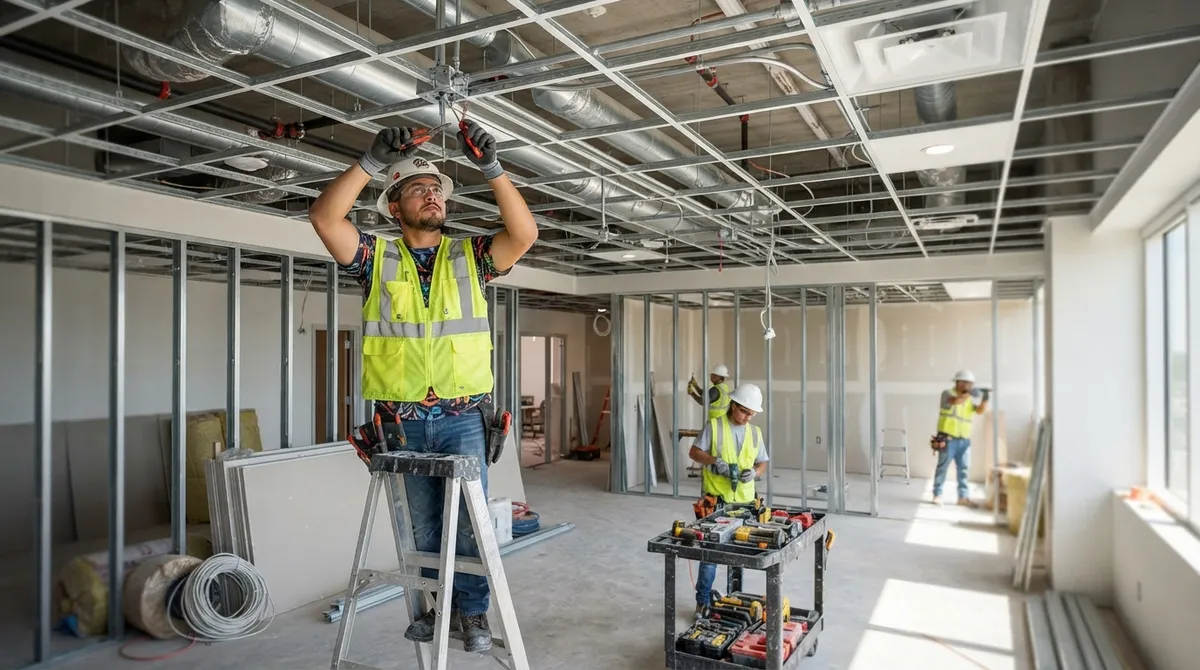
What Counts as Commercial TI Work That Needs a Permit?
Tenant improvements, often called TI or build-outs, cover everything a tenant does to turn a shell or old space into a working business. Not every small task needs a permit, but a lot of common TI work does. Always confirm your exact scope with the AHJ.
Work that commonly triggers permit review includes:
- Adding, moving, or removing walls (especially structural or fire-rated walls)
- Changes to occupancy, exits, or egress paths
- Fire alarm, sprinkler, or other life-safety modifications
- New or modified electrical panels, circuits, and lighting
- Plumbing changes such as new restrooms, sinks, or grease interceptors
- HVAC and mechanical changes, including new rooftop units or ductwork
- Accessibility upgrades or restroom reconfigurations
Cosmetic work, like paint or simple flooring swaps, often does not need a permit. But the moment you touch structure, life safety, or regulated systems, plan on review. When in doubt, ask before you build, or ask now if the work is already done.
How After-the-Fact Permits Work for Commercial Spaces
An after-the-fact permit (sometimes called a legalization permit or retroactive permit) is the process of documenting existing work and asking the building department to review and inspect it. Think of it as hitting the rewind button and doing the permit steps in a different order.
While every jurisdiction runs its own version, the general path looks like this:
- Stop any ongoing unpermitted work. Continuing to build makes things harder and can lead to a stop work order.
- Identify the correct AHJ. Properties near city lines can surprise you. Our building department lookup tool can help.
- Ask about the local after-the-fact process. Request the current forms, fees, and submittal requirements.
- Document the work as built. This usually means drawings that show what actually exists in the space.
- Submit the application and plans. The department reviews the package like a standard permit.
- Complete inspections and corrections. Anything that fails may need to be repaired or rebuilt.
- Close out the permit. Final approval puts the work on the record.
If you are working through an expired or retroactive file, our page on after-the-fact and expired permits explains how we handle these cases.
What Documents Will the Building Department Usually Want?
Requirements are project-specific, but most commercial legalization packages share a common core. Having these items ready speeds things up considerably.
| Document | Why It Matters |
|---|---|
| As-built floor plans | Shows walls, doors, exits, fixtures, and equipment exactly as they exist today |
| Signed and sealed drawings (when required) | Some jurisdictions require a Florida-licensed architect or engineer to certify complex or concealed work |
| MEP documentation | Electrical, plumbing, and mechanical details, often with load calculations or test results |
| Contracts, invoices, and photos | Helps establish what was installed, when, and by whom |
| Product information | Confirms materials and equipment meet applicable requirements |
| Prior approved plans or permits | Gives the reviewer context on the original approved scope |
Keep every record you can find. Photos taken during construction are especially valuable because they can show what is hiding behind finished walls and ceilings.
This is where drawings come in. Our team prepares as-built drawings and commercial plans in house, and our own engineer signs and seals the work when the jurisdiction requires it.
Will Inspectors Make You Open Up Walls and Ceilings?
This is the question that keeps owners up at night, and it is a fair one. The honest answer: it can happen. When work is concealed, the AHJ may require inspections, testing, calculations, or selective opening of walls, ceilings, or other finishes to verify what is behind them.
Does that mean every project turns into a demolition party? Not at all. Many jurisdictions accept alternatives, such as:
- A licensed design professional inspecting and certifying concealed work
- Photographic evidence taken during original construction
- Targeted openings in a few locations rather than wholesale demolition
- Testing results for electrical, fire, or mechanical systems
Some jurisdictions require a Florida-licensed architect or engineer to inspect complex or concealed work and provide signed-and-sealed as-built plans, calculations, test results, and a description of any corrective work. One local government guideline we reviewed states that its after-the-fact process applies to both residential and commercial work and may require an architect- or engineer-prepared legalization package. That is a local example, not a statewide rule, which is exactly why checking your own AHJ matters.
What Happens If the Work Does Not Meet Code?
Here is where expectations need a gentle reality check. Passing the after-the-fact process means the work actually has to comply. If it does not, the owner or applicant may have to expose, repair, or reconstruct it before approval.
Common trouble spots in unpermitted commercial TI include:
- Missing fire-rated assemblies or improper penetrations
- Inadequate egress width or exit signage and lighting
- Electrical work without proper grounding, labeling, or panel clearances
- Plumbing without required backflow or grease protection
- Accessibility shortfalls in restrooms or entrances
- HVAC equipment that was never properly supported or documented
Here is the encouraging part: most issues are fixable. A clear, honest evaluation up front lets you budget for corrections instead of getting surprised halfway through. If an engineer's review is needed to bridge gaps, an engineer letter can often provide the technical backing a reviewer is looking for.
Approval Is Not the Finish Line: Other Requirements to Watch
A final permit sign-off does not automatically resolve every other requirement. Even after the building permit closes, your business may still need to satisfy separate approvals tied to the space.
| Related Requirement | Why It May Still Matter |
|---|---|
| Zoning and planning | The use or layout may need separate zoning clearance |
| Fire department review | Life-safety systems often have their own inspection track |
| Accessibility | ADA-related and Florida accessibility rules may apply to the work |
| Certificate of Occupancy | Changes can affect your certificate of occupancy |
| Certificate of Use | Many cities require a certificate of use before you can legally operate |
Understanding the difference between these documents saves headaches. Our breakdown of certificate of occupancy vs. certificate of use is a great place to start.
Will You Pay Penalties or Higher Fees?
Many owners ask this one first. Fee structures and penalties vary by jurisdiction. Some departments charge extra for work started without a permit, such as a multiplier on standard permit fees, while others use standard fees plus administrative charges. We did not find reliable statewide figures on typical penalties or average processing times, and anyone quoting a single number for all of Florida is guessing.
What we can say is this: acting early generally works in your favor. Voluntarily coming forward before a violation is issued often leads to a smoother experience than waiting for a code officer to find the work. For a closer look at cost drivers, see our article on after-the-fact permit costs in Florida and our guide to the penalty for building without a permit in Florida.
Smart First Steps When You Discover Unpermitted TI
Take a deep breath. You have more control than it feels like right now. Here is a simple game plan:
- Pause the work. Stop any ongoing construction until you understand the path forward.
- Gather your records. Contracts, invoices, photos, product data, prior plans, and anything showing when and how the work happened.
- Confirm the AHJ. Make sure you are talking to the right city or county department.
- Check for open or expired permits. Our open permit search tool can reveal old files that complicate things.
- Ask about the after-the-fact process. Get the current forms, fees, and submittal requirements in writing.
- Get an honest scope assessment. Know before you file whether corrections or openings are likely.
- Prepare the as-built package. Accurate drawings are the backbone of a smooth review.
Already received a notice? Our page on code compliance violations explains how we help owners respond, and if the clock is ticking on a closing or an opening date, urgent permit rescue is built for exactly that.
Why Local Rules Matter So Much in Florida
Florida has 67 counties and hundreds of municipalities, and a process that works in one city may not apply in the next. A downtown storefront might fall under a city building department, while a unit just across the street is handled by the county. Submittal portals, review timelines, fee schedules, and inspection practices all differ.
That is why one-size-fits-all advice rarely holds up. If your property is in a busy market, jurisdiction-specific knowledge makes a real difference. We work in all 67 counties and regularly file in places like Hillsborough County, Miami-Dade County, and Orange County, so we know how local departments tend to handle legalization packages.
For commercial real estate teams, commercial brokers and property managers often discover these issues during due diligence, lease negotiations, or tenant turnover. Catching them early gives everyone more room to solve the problem calmly.
Who Can Help You Legalize Commercial TI?
You can certainly handle a legalization yourself, but most owners and tenants find that the paperwork, drawings, and reviewer back-and-forth eat up more time than expected. A good permitting partner typically helps with:
- Researching the correct AHJ and its current after-the-fact process
- Preparing as-built drawings and engineering documentation
- Filing the application and tracking it through review
- Answering reviewer comments and handling resubmittals
- Coordinating inspections through final approval
At 1 Contractor Solutions, we act as Florida's outsourced permitting department. Our drafting and engineering are in house, so when a reviewer flags something, we fix it without waiting on an outside consultant. We are also a licensed private provider, which can help in situations where plan review needs to move faster. You can learn more through our permit facilitation and filing and revisions and resubmittals services, and see what customers say when you visit us on Google — 1 Contractor Solutions.
For more background on how Florida building departments treat these cases, the Florida Building Commission and the Florida Department of Business and Professional Regulation are helpful official resources, and you can follow us on LinkedIn for ongoing Florida permitting updates.
Final Thoughts: Yes, There Is a Path Forward
Unpermitted commercial TI feels stressful, but it is a problem Florida owners and tenants solve all the time. The path usually runs through an after-the-fact permit, accurate as-built documentation, and whatever inspections or corrections the AHJ requires. The sooner you start, the more options you tend to have, especially if a lease, loan, sale, or grand opening date is on the line.
Remember: legalization is possible but not guaranteed, local rules drive everything, and permit approval is only one piece of operating legally. Gather your records, confirm your jurisdiction, and get a clear picture of what the work really needs.
Ready to turn this headache into a closed permit? Reach out today and get a free quote. Send us the address and tell us what happened, and we will tell you which jurisdiction controls it and what it will take to get it legalized.
FAQs
Can commercial tenant improvements done without a permit be legalized in Florida?
Often, yes. Many Florida building departments allow an after-the-fact permit, but approval is not automatic. The local department decides what plans, inspections, and corrections are required, so the first step is confirming your jurisdiction's process.
Do I need an architect or engineer to legalize a commercial build-out?
It depends on the jurisdiction and the work involved. Some departments require signed-and-sealed as-built plans from a Florida-licensed architect or engineer, especially for concealed or complex work. Others may accept simpler documentation for minor scopes.
Will inspectors make me open walls or ceilings for an after-the-fact permit?
Possibly. For concealed work, the building department may require selective openings, testing, or a professional certification to verify what is behind the finishes. Photos taken during construction and engineer inspections can sometimes reduce how much needs to be opened.
Can unpermitted commercial work affect my certificate of occupancy or business opening?
Yes, it can. Final permit sign-off does not automatically resolve certificate of occupancy, certificate of use, fire, zoning, or accessibility requirements. It is smart to check all of these early so nothing delays your opening date.
Are there extra fees or penalties for unpermitted commercial construction in Florida?
Fees and penalties vary by local jurisdiction, and some departments charge more for work started without a permit. Reliable statewide figures are not available, so ask your local building department about its current fee schedule before you file.
We do this work every day across all 67 Florida counties. Call (866) 314-6931 and we will tell you what your situation actually requires — including when you do not need us.
Related services
Permit Facilitation & Filing
You have a crew scheduled, a client asking for dates, and a permit sitting somewhere in a queue you cannot see. We file it, w…
See the servicePlan Review Coordination
A permit in plan review is not one queue. On a commercial project it can be six queues, each with its own reviewer, its own c…
See the serviceReady to get your permit moving?
One call tells you which jurisdiction controls your project, what it will take, and what it will cost. Most of the time we can scope it on the phone.