
Blog
How to Get an After-the-Fact Roof Permit in Florida (2026)
Roof already installed without a permit? Learn how after-the-fact roof permits work in Florida, what documents you need, and how to avoid costly delays.
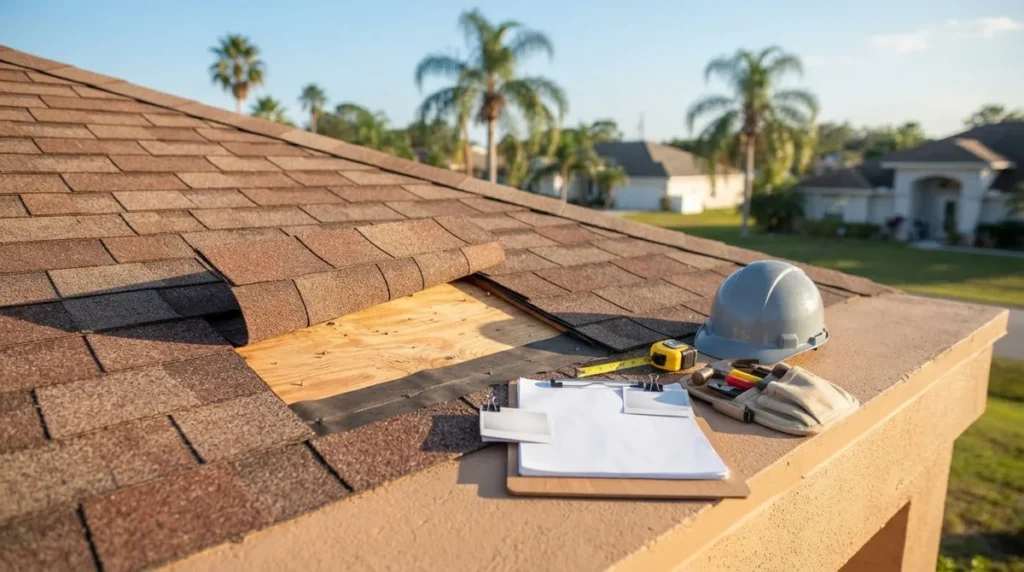
Key Takeaways
-
Florida has no statewide after-the-fact roof permit process; each jurisdiction sets its own forms, fees, documents, and inspection steps, so confirm local requirements with the building department first.
-
A retroactive permit does not automatically legalize unpermitted roof work; the building official may require photos, affidavits, engineer letters, testing, or inspections before signing off.
-
Gather the roofing contract, material receipts, product labels, and especially timestamped job photos of the deck and dry-in stage, since these are often the most valuable evidence.
-
Full tear-off is not always required: officials may accept original installation photos, a sworn decking affidavit, an engineer's letter, or selective removal to verify concealed layers.
-
Check for existing open or expired permits before applying, since an old unclosed permit may need to be resolved first.
-
Expect costs to vary by jurisdiction and roof size, with possible penalties, multipliers for unpermitted work, engineering fees, and re-inspection charges, so get a local fee schedule early.
So the roof is already on. Maybe a previous owner skipped the paperwork, maybe a roofer promised to "handle the permit" and never did, or maybe a storm repair turned into a full re-roof before anyone checked the rules. First, take a breath. You are far from the first Florida property owner to find an unpermitted roof, and there is a real path forward.
An after the fact roof Florida permit is simply a permit application filed with the local building department after roofing work has started or finished without approval. There is no single statewide process, which is where most people get tripped up. Each jurisdiction sets its own forms, fees, documents, and inspection steps.
In this guide, we will walk you through what an after-the-fact roof permit really is, how to find the right building department, what to gather, what inspectors look for, and how to avoid the common mistakes that slow people down. Whether you are a homeowner, a general contractor, a realtor facing a closing, or a roofer cleaning up a file, you will leave with a clear plan.
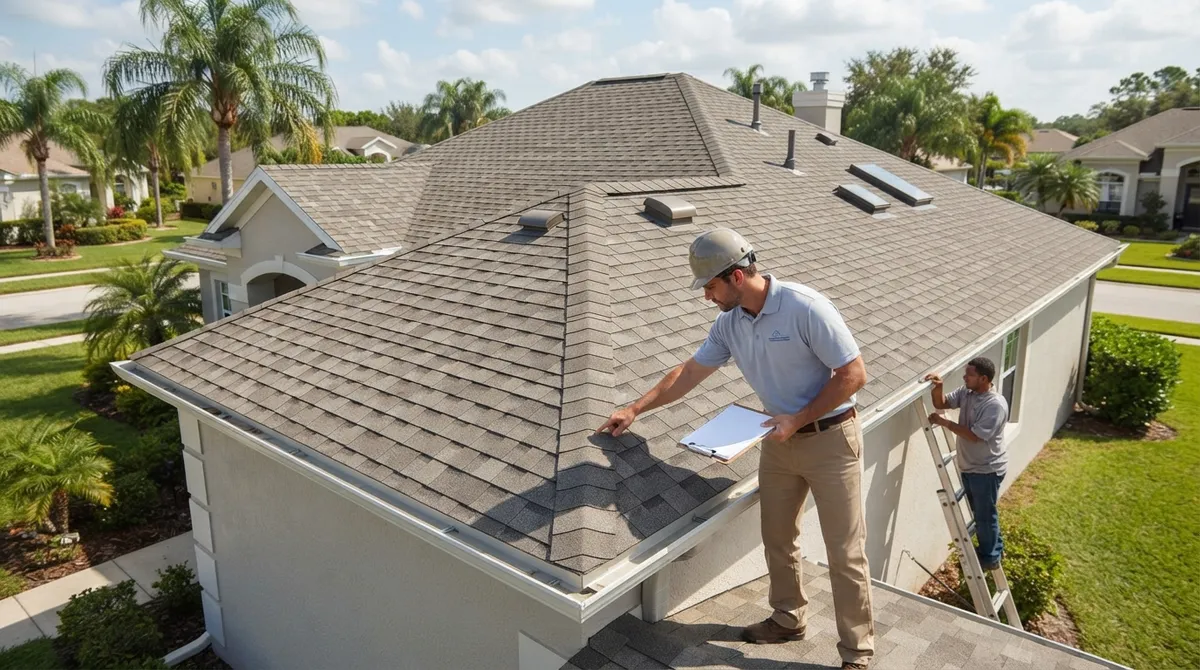
What Is an After-the-Fact Roof Permit in Florida?
An after-the-fact (ATF) roof permit, sometimes called a retroactive permit, is a request to legalize roofing work that was done without the required permit. Florida Statutes Section 553.79 generally requires a building permit before covered construction, alteration, or repair begins. Local building departments enforce that requirement through the Florida Building Code.
Here is the important part: a retroactive permit does not automatically legalize the work. Think of it as opening a file so the building official can verify the roof meets code. The department may require documents, photos, testing, and inspections before it signs off.
If you want a deeper look at the broader process, our guide on how to get an after-the-fact permit in Florida covers the fundamentals that apply to every trade.
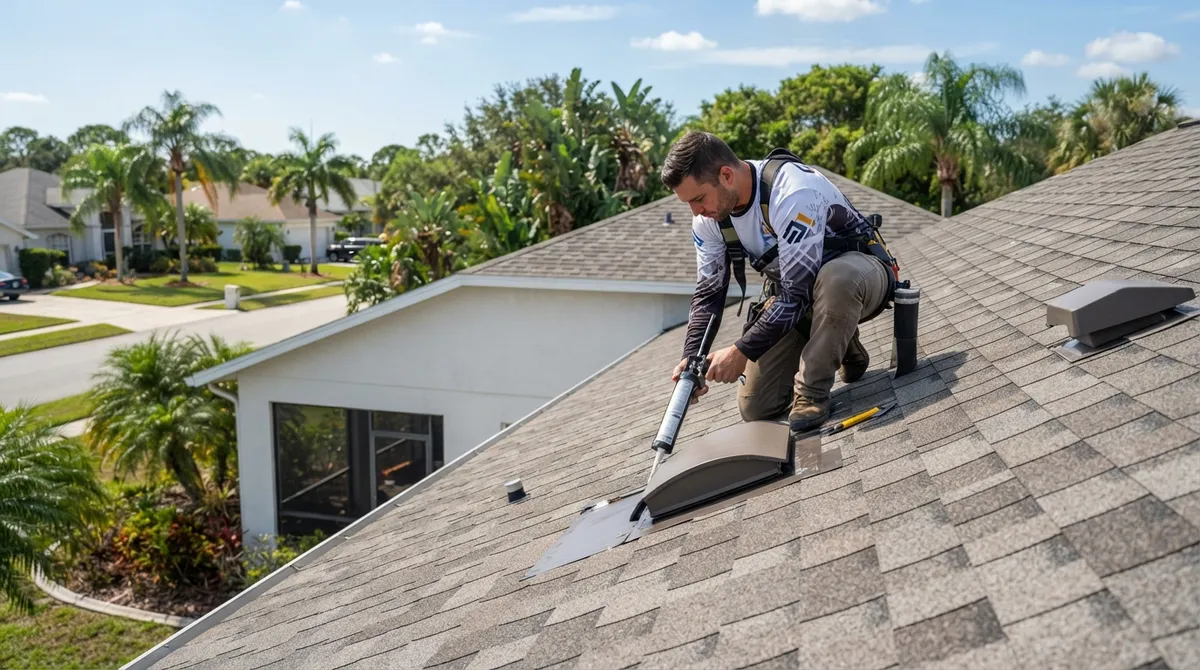
Does Every Roof Job Need a Permit?
Not always, but you should never assume. Requirements vary by county and city, and the scope of work matters. Here are a few real examples of how different the rules can be:
| Jurisdiction | Published Roof Permit Approach | What It Means for You |
|---|---|---|
| Polk County | Lists all re-roofing as permit-required; minor repairs under 25% may be exempt, subject to official determination | A full re-roof always needs a permit; small repairs need a confirmation |
| St. Lucie County | Describes a permit threshold for reroof work exceeding 25% of the existing roof area within a 12-month period | Cumulative work over a year can trigger the requirement |
| Collier County | Requests product-approval information and may require a re-roof affidavit or hurricane-mitigation affidavit | Expect to document materials and mitigation details |
These details come from each county's published guidance, and rules change. Always confirm the current requirement with the authority having jurisdiction rather than relying on a general rule of thumb.
Step-by-Step: How to Get an After-the-Fact Roof Permit
Every jurisdiction does things a little differently, but most follow a similar sequence. Here is the roadmap we use with clients.
- Stop and confirm what actually happened. Was the entire roof replaced, or just a section? Is the roof dry-in only, or fully finished? Collect any contracts, invoices, material receipts, and photos from the job.
- Identify the correct jurisdiction. City limits and county lines are not always obvious. Our building department lookup tool can help you confirm who controls your address.
- Check for open or expired permits. Sometimes a permit was pulled years ago and never closed. Try the open permit search before assuming nothing exists.
- Call or visit the building department. Ask for their after-the-fact or unpermitted-work procedure, current fee schedule, and required documents.
- Assemble the application package. This usually includes the application, scope and cost of work, roofing product approvals, and contractor information.
- Submit and respond to review comments. Reviewers may request more detail. Answer quickly and completely.
- Schedule and pass inspections. Expect the department to determine which inspections apply based on what can still be verified.
- Close the permit. Once final approval is issued, get written confirmation that the permit is closed.
What Documents Will the Building Department Want?
The exact list depends on the jurisdiction, but you can usually expect some version of the following:
- A completed permit application for the roofing scope
- Property owner and licensed contractor information
- Scope of work and contract value
- Product approval details for shingles, tile, metal panels, underlayment, and other components
- Photos showing the roof deck, underlayment, flashing, and installation details (if available from the original job)
- Affidavits, such as a re-roof or hurricane-mitigation affidavit where applicable
- Engineer documentation if structure, trusses, or load paths are in question
If the original installer is cooperative, ask for their job photos. Timestamped images of the deck and dry-in stage are often the most valuable evidence you can have.
The Big Question: Will They Make Me Tear the Roof Off?
This is the fear we hear most, so let us address it honestly. Roof inspections typically focus on the deck, underlayment or dry-in, installation details, and final completion. When the work is already finished and covered, the inspector cannot see the concealed layers.
Depending on the jurisdiction and project, the building official may accept alternatives to full removal, such as:
- Photographs taken during the original installation
- A sworn affidavit from the roofer or owner about deck fastening and dry-in
- An engineer's letter or field verification
- Testing or selective removal of a small area to expose the layers underneath
For context, St. Lucie County's published guidance describes decking, dry-in, and final inspections, and allows a decking affidavit and photos in specified circumstances. That kind of flexibility is not guaranteed everywhere, so ask early. Our resource on whether you will really have to demolish unpermitted work explains the typical decision points.
Comparing Your Verification Options
| Verification Method | Best When | Considerations |
|---|---|---|
| Original job photos | Roofer or owner documented the deck and dry-in | Fast and low cost; quality of photos matters |
| Owner or contractor affidavit | Local department allows affidavits in lieu of inspection | Must be accurate; false statements create bigger problems |
| Engineer letter or field verification | Structural questions or missing documentation | Adds credibility; requires a site visit and sealed documentation |
| Selective removal or testing | No other proof of concealed work exists | Most invasive; used when the official needs direct verification |
When structural questions come up, an engineer letter can often settle the matter without a major teardown. Our team also provides structural engineering support for jobs that need deeper analysis.
Costs, Fees, and Penalties: What to Expect
Florida law allows enforcing agencies to adopt reasonable permit fees, and local departments may assess additional charges for unpermitted work or extra review. There is no single statewide after-the-fact roof permit fee, and the consequences are not uniform.
That means the price tag depends on your jurisdiction, roof size, and how much documentation you can supply. Common cost drivers include:
- The base permit fee, often tied to the project value
- Any penalty or multiplier the local department applies to unpermitted work
- Engineering or inspection costs if verification is needed
- Re-inspection fees if corrections are required
For a closer look at pricing factors, see our breakdown of after-the-fact permit costs in Florida, and our guide to the penalty for building without a permit in Florida.
Who Can Apply: Homeowner or Licensed Roofer?
Rules differ by jurisdiction, but in general, roofing work is performed by licensed contractors, and the permit is typically pulled by the licensed contractor responsible for the work. Some owners may qualify as owner-builders for certain projects, though that carries restrictions and responsibilities. If you are curious about that route, read about owner-builder permits and our overview of who can pull a permit in Florida.
If the original contractor has vanished, do not panic. A different licensed roofer can often take over the permit, or the department may outline another path. Our guide on what to do if a Florida contractor vanishes walks through the options.
Tips for Different Readers
For Homeowners and Residential Property Owners
Start with the paperwork you already have. Your roofing contract, payment records, and any photos your roofer texted you are gold. Then contact the building department before hiring anyone to fix the problem, so you know exactly what they want. Our page for homeowners outlines how we help.
For Real Estate Professionals and Buyers
An unpermitted roof can surface during an inspection, appraisal, or insurance review and derail a closing. Move early. Identify the open items, order the needed documents, and set realistic timelines with all parties. We cover this in how a permit hold can delay a Florida real estate closing, and our realtor closing support is built for exactly these situations.
For Roofers, General Contractors, and Solar Companies
If your crew re-roofed a job without a permit, or a solar install is waiting on a roof that was never permitted, getting ahead of it protects your license and your client relationships. Our roofing contractor services and the Roof Permit Partnership Program are designed for high-volume work.
Common Mistakes That Slow Down Roof After-the-Fact Permits
After handling thousands of permits, we see the same stumbling blocks over and over. Avoid these and you will save weeks.
- Assuming a statewide rule. Requirements vary, so always confirm locally.
- Skipping product approval details. Reviewers want to see that the materials meet Florida Building Code requirements.
- Submitting thin documentation. Vague scopes and missing photos invite correction notices.
- Ignoring an old open permit. An expired permit may need to be addressed first. See how to close an expired permit in Florida.
- Waiting until closing week. Review and inspection timelines are not guaranteed.
- Hiring an unlicensed fixer. This can create an even bigger problem down the road.
For more detail on roof-specific pitfalls, read our article on the unpermitted roof situation in Florida.
How Long Does It Take?
Honestly, it depends. Timelines vary by jurisdiction, the quality of your submission, how many correction rounds the reviewer requests, and inspector availability. A clean, well-documented file moves faster than a thin one. For a general sense of review timing, see how long a building permit takes in Florida. When timing is tight, an urgent permit rescue approach can help prioritize the critical steps.
How a Florida Permitting Service Can Help
You can absolutely tackle this yourself, but many people prefer to hand it off, especially when a closing date or insurance deadline is looming. A good permitting service identifies the correct jurisdiction, assembles the application and supporting records, coordinates with the owner and licensed contractor, and tracks review and inspections.
At 1 Contractor Solutions, we act as Florida's outsourced permitting department. Our drafting and engineering are in house, and our own engineer signs and seals the work, so when a reviewer flags something we can fix it without waiting on an outside consultant. We cover all 67 Florida counties, from Hillsborough County and Miami-Dade County to Sarasota County and beyond. See our after-the-fact and expired permit services and roof permit services for details.
To be clear and fair: we cannot guarantee approval. The building official makes the final decision, and licensed contracting work and code compliance cannot be replaced by paperwork. What we can do is make your file complete, organized, and easy to review. You can also read what 1 Contractor Solutions customers say on Google, and follow us on LinkedIn for more Florida permitting tips.
Your Quick-Start Checklist
- Gather the contract, receipts, product labels, and any job photos.
- Confirm the jurisdiction and check for open permits.
- Ask the building department for its after-the-fact roof procedure and fees.
- Prepare product approvals and any required affidavits.
- Decide how concealed work will be verified (photos, affidavit, engineer letter, or testing).
- Submit, respond to comments promptly, and schedule inspections.
- Get written confirmation that the permit is finaled and closed.
Final Thoughts
An unpermitted roof feels stressful, but it is a solvable problem. The key is to move early, document everything, and work with your local building department instead of around it. With the right preparation, many owners resolve these files and get back to enjoying a roof they can finally stand behind.
If you would rather not navigate it alone, get a free quote from our team. We respond within 30 minutes, day or night, and we will tell you exactly which jurisdiction controls your roof and what it will take to get it permitted.
FAQs
Can I get a permit for a roof that has already been replaced in Florida?
Yes, in most cases you can apply for an after-the-fact roof permit with your local building department. Just keep in mind that approval is not automatic. The department may require documents, photos, and inspections to verify the roof meets the Florida Building Code.
Will the building department make me remove my new roof to inspect it?
Not necessarily. Depending on your jurisdiction, officials may accept original installation photos, an affidavit, an engineer's letter, or limited testing in place of full removal. The exact remedy depends on the project and the local building official, so ask early.
Does Florida require a permit for roof repairs or partial roof replacement?
It depends on where you live and how much of the roof is involved. Some counties require permits for all re-roofing, while others use a threshold, such as work exceeding 25% of the roof area within 12 months. Check with your local authority before assuming a repair is exempt.
Can a homeowner apply for an after-the-fact roof permit, or must a licensed roofer do it?
Roofing permits are generally pulled by the licensed contractor responsible for the work, though some owners may qualify as owner-builders where local rules allow. Your building department can confirm who is eligible to apply for your specific situation.
How long does an after-the-fact roof permit take in Florida?
There is no single timeline because it varies by jurisdiction, documentation quality, review comments, and inspector scheduling. A complete, well-organized submission usually moves more smoothly than a thin one, so gather your records before you apply.
We do this work every day across all 67 Florida counties. Call (866) 314-6931 and we will tell you what your situation actually requires — including when you do not need us.
Related services
Permit Facilitation & Filing
You have a crew scheduled, a client asking for dates, and a permit sitting somewhere in a queue you cannot see. We file it, w…
See the servicePlan Review Coordination
A permit in plan review is not one queue. On a commercial project it can be six queues, each with its own reviewer, its own c…
See the serviceReady to get your permit moving?
One call tells you which jurisdiction controls your project, what it will take, and what it will cost. Most of the time we can scope it on the phone.