
Blog
How to Handle a Lender Requiring an After-the-Fact Permit in FL
Lender demanding an after-the-fact permit in Florida? Learn the steps, documents, and timing to resolve it and get your closing back on track.
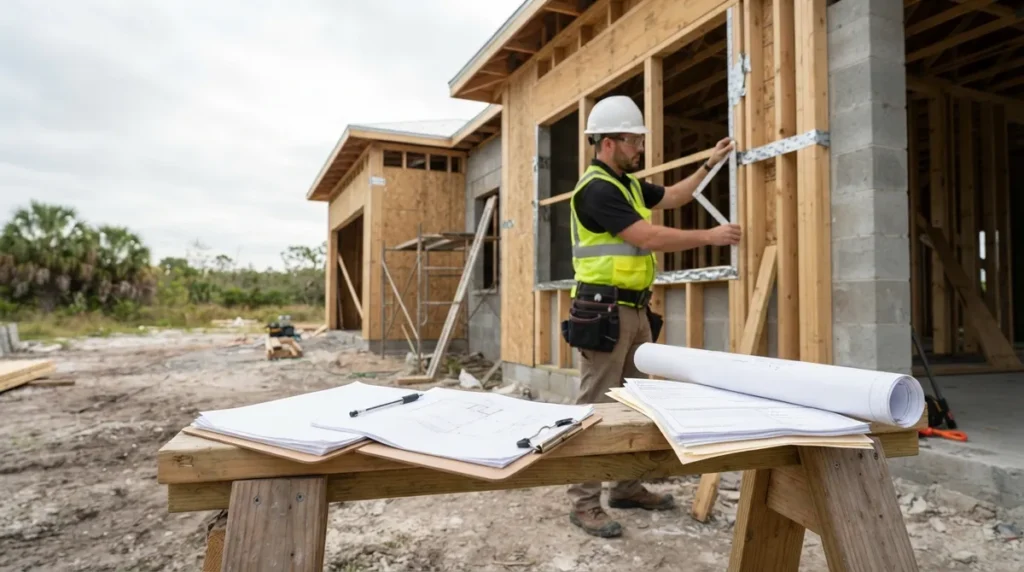
Key Takeaways
-
Get the lender's written requirements upfront specifying whether it needs a final permit, certificate of completion, or certificate of occupancy, along with the deadline to avoid delays.
-
An after-the-fact permit is not automatic approval; it requires the building department to review existing work, conduct inspections, and confirm code compliance before final sign-off.
-
Identify your correct jurisdiction early using a building department lookup tool, as responsibility may fall to either county or municipality, especially near city boundaries.
-
Assemble a complete application package including as-built drawings, engineer letters, contractor information, and site plans to avoid multiple revision rounds that delay approval.
-
Start the permit process immediately upon notification rather than waiting until closing week, as processing times vary by jurisdiction and incomplete submissions trigger reviewer comments.
-
Consider hiring a permitting team if your closing deadline is tight, as professionals can navigate reviewer comments, coordinate inspections, and handle closeout documents faster than individual effort.
You were so close to the finish line. The appraisal is done, the underwriter is reviewing your file, and then the email lands: your lender requiring after the fact permit Florida paperwork before closing can move forward. Take a breath. This happens more often than you might think, and it is very fixable.
In plain terms, your lender has spotted work on the property that was completed without a required permit. Maybe it was a screened porch, a garage conversion, a re-roof, or a kitchen remodel by a prior owner. Before the lender funds a purchase or refinance, it wants proof that the work has been reviewed and brought into compliance.
The good news? Once you understand what the lender wants and how the local building department handles these files, the path is clear. This guide walks you through it step by step, in a friendly, no-panic way. Whether you are a homeowner, a realtor protecting a deal, or a contractor helping a client, you will know exactly what to do next.
Why a Lender Wants an After-the-Fact Permit
Lenders care about one thing above all: the property securing the loan. Unpermitted work creates uncertainty about safety, insurability, and value. If a structure was never inspected, the lender has no way to know whether it meets code.
Here is the key point many people miss. Florida law does not hand lenders one universal checklist. Requirements are set loan by loan and property by property. Florida Statutes § 553.79(1)(a) generally requires a permit before covered construction, alteration, repair, or demolition, and the local enforcing agency runs the permit and inspection process. The lender then decides what evidence it will accept.
Common triggers for a lender's request include:
- An appraiser noting an addition, enclosure, or conversion that does not appear in county records
- A title or permit search revealing an open or expired permit
- A home inspection report flagging unpermitted electrical, plumbing, or structural work
- Insurance underwriting questions about roofs, windows, or wiring
- Square footage on the appraisal that does not match the permitted footprint
If you want a deeper look at the reasons behind these requests, our article on 8 reasons a lender may demand a Florida ATF permit breaks them down in detail.

What an After-the-Fact Permit Actually Is (and Is Not)
Let's clear up a big misconception. An after-the-fact permit is not a rubber stamp. It does not automatically approve what is already built. It is the process of asking the local building department to review existing work and confirm it meets code.
Depending on the project and jurisdiction, the building department may:
- Review as-built plans and supporting engineering
- Require inspections of completed work
- Ask for code corrections
- Request that concealed work be exposed if compliance cannot otherwise be verified
And here is an important caution: simply applying for the permit does not prove the work is legal or compliant. Approval comes only after review, inspection, and final sign-off. If work fails review or cannot be verified, the department may require corrective work or even removal and reconstruction before final approval.
If you are wondering how these files work in practice, see our overview of after-the-fact and expired permits.
Step-by-Step: How to Resolve a Lender's After-the-Fact Permit Requirement
Here is a friendly roadmap you can follow from the moment the lender's request lands in your inbox.
- Get the request in writing. Ask your lender exactly what it needs: a final permit, a certificate of completion, a certificate of occupancy, or something else. Also ask for the deadline.
- Identify the true jurisdiction. Near city lines, it is not always obvious whether the county or a municipality controls your address. Our building department lookup tool can help.
- Pull the permit and inspection history. Find out what has actually been issued, closed, expired, or never filed. You can start with our open permit search tool.
- Classify the problem. Is it unpermitted work, an open or expired permit, or an item that may be exempt? Each has a different fix.
- Assemble the application package. This may include as-built drawings, engineering letters, contractor or owner-builder information, and fees.
- File and track the application. Respond quickly to reviewer comments, since delays here are the number one cause of missed closing dates.
- Schedule and pass inspections. Complete any required corrections and get the final approval.
- Deliver closeout documents to the lender. Send the issued permit, inspection results, final approval, and a certificate of completion or occupancy where applicable.
Feeling overwhelmed by that list? You do not have to do it alone. That is exactly the work a permitting team handles every day through permit facilitation and filing.
Figure Out What Type of Problem You Have
Not every lender request means the same thing. Sorting out the category first saves time and money.
| Situation | What It Means | Typical Path Forward |
|---|---|---|
| Work never permitted | No permit record exists for completed work | After-the-fact application with as-built plans and inspections |
| Open permit | Permit issued but never finaled | Schedule remaining inspections and close it out |
| Expired permit | Permit lapsed before final approval | Reopen, renew, or refile depending on local rules |
| Possibly exempt work | Small scope that may not need a permit | Confirm with the local building department in writing |
A word on exemptions. Florida Statutes § 553.79 includes a permit exemption for certain work valued under $7,500 on a single-family dwelling, subject to the statute's terms. Do not assume your project qualifies. Check the current statute and confirm with your local building department, because other laws, permits, or approvals may still apply.
If your issue is an open or lapsed permit rather than unpermitted work, read our guide on how to close an expired permit in Florida.
Documents You May Need for the Application
Every jurisdiction has its own checklist, and requirements vary by project type. Still, most after-the-fact files draw from a familiar set of documents.
- As-built drawings: Accurate plans showing what was actually built. See our page on as-built drawings.
- Engineer letters or sealed drawings: Often required for structural, roof, truss, or wind-load questions. Learn more about engineer letters.
- Site plan or survey: Especially for additions, enclosures, and accessory structures.
- Contractor or owner-builder information: Licensing details, or an owner-builder permit application where appropriate.
- MEP documentation: Electrical, plumbing, and mechanical details for systems work.
- Fees: Which vary widely by jurisdiction and project.
Structural, electrical, plumbing, mechanical, additions, and other substantial work often need extra review. That is why having drafting and engineering under one roof speeds things up dramatically.
Will Inspectors Make You Open Walls?
This is one of the most common worries, and it is a fair one. The honest answer: it depends. If an inspector can verify compliance through visible work, photos, and engineering documentation, walls may stay closed. If key elements are concealed and cannot be verified, the building department may ask that a section be opened for inspection.
A few ways to reduce the chance of surprises:
- Gather any photos taken during construction
- Ask the prior owner or original contractor for records
- Have an engineer evaluate the work before you file
- Walk through the scope with your permitting team so you know the likely inspection points
For a peek at what to expect on inspection day, check out what happens during a Florida ATF site inspection.
Cost and Timing: What to Expect
Everyone asks about the price tag and the timeline, so here is the straight talk. No statewide standard fee multiplier, processing time, or lender acceptance rule for after-the-fact permits was established in the sources we reviewed. Fees, penalties, documentation, and timelines all vary by jurisdiction and project.
| Cost or Time Factor | What Drives It |
|---|---|
| Permit fees | Local fee schedule, project valuation, and any added penalties |
| Drafting and engineering | Scope of work, number of disciplines, and structural complexity |
| Corrections | Whether existing work needs repair or replacement to meet code |
| Review time | Department workload, completeness of the submittal, and revisions |
| Inspection scheduling | Local availability and number of required inspections |
Because so much varies, be wary of anyone promising a fixed price or guaranteed date before reviewing your file. For a closer look at pricing, read our breakdown of after-the-fact permit costs in Florida.
Can an Escrow Holdback Replace the Final Permit?
Sometimes borrowers hope the lender will accept an escrow or holdback so closing can proceed while the permit gets finished. It is a reasonable question, and the answer is: maybe, but never count on it.
An escrow or holdback is not guaranteed. It must be approved by the lender and the other parties to the transaction, and each lender's policy is different. Some will not fund at all until permits are closed. Others may consider a holdback with specific conditions.
If you want to explore this route, ask in writing, and read our guide on how to handle escrow for a Florida after-the-fact permit so you go into the conversation prepared.
Tips for Realtors, Contractors, and Homeowners
Different readers face this issue from different angles. Here is how to stay ahead of it.
For Real Estate Professionals
Pull the permit history early, before the contract deadlines get tight. If open permits or unpermitted work turn up, bring in help right away. Our realtor and closing support team works with agents and title companies to keep deals moving, and our article on whether a permit hold can delay a Florida closing explains the timing risks.
For Contractors and Trades
If a client's lender is demanding an after-the-fact permit for work you completed or are being asked to evaluate, documentation is your friend. Accurate as-builts and engineering letters make the reviewer's job easier, and that means faster approvals. See how we support general contractors and solar contractors with sealed, code-compliant documentation.
For Homeowners
You are not in trouble just because a lender found something. Many of these issues come from prior owners or previous contractors. Focus on the fix, get answers in writing, and lean on professionals who know your local department. Our homeowner resources are a great starting point.
Common Mistakes That Stall Closings
After seeing hundreds of these files, a few missteps come up again and again. Sidestep these and you will be well ahead.
- Waiting until the week of closing to start the permit process
- Assuming a submitted application equals an approved permit
- Skipping the lender's written confirmation of what it will accept
- Guessing at the jurisdiction near a city boundary
- Submitting incomplete or inaccurate as-builts, which triggers rounds of comments
- Assuming a small project is automatically exempt without checking
For more on pitfalls to avoid, our article on 6 financing mistakes for Florida after-the-fact permits is a helpful read.
When to Bring in a Permitting Partner
You can absolutely start the research yourself. But when a closing date is on the line, having a team that handles the whole process can be the difference between a smooth close and a stressful scramble.
At 1 Contractor Solutions, we act as Florida's outsourced permitting department. We tell you which jurisdiction controls your address, prepare or review the plans, file the application, work every reviewer comment, and carry the file through approval and closeout. Our drafting and engineering are in house, and our own engineer signs and seals the work, so when a reviewer flags something, we fix it without waiting on an outside consultant. If your situation is urgent, our urgent permit rescue service is built for exactly that kind of deadline pressure.
We work across all 67 Florida counties, from Hillsborough County to Miami-Dade County and everywhere in between. Curious about our track record? See what customers say and visit us on Google — 1 Contractor Solutions, or follow us on LinkedIn and follow us on Facebook for more Florida permitting tips.
For state-level background on the permit requirement itself, you can review the text of Florida Statutes § 553.79 on the official Florida Legislature website.
Your Next Move
A lender requiring an after-the-fact permit in Florida feels like a roadblock, but it is really just a checklist waiting to be completed. Get the lender's requirements in writing, identify your true jurisdiction, pull the permit history, and build a complete, accurate application package. Stay proactive with reviewer comments, pass your inspections, and deliver the closeout documents your lender needs.
Remember, every situation is a little different, and no one can promise a universal cost or timeline. But with the right plan and the right support, most of these files get resolved and closings get back on track.
Ready to stop stressing and start moving? Reach out today and get a free quote from a team that answers within 30 minutes, day or night. We would love to help you get your permit approved and your project moving.
FAQs
Why is my Florida lender requiring an after-the-fact permit?
Most often, the lender or appraiser found completed work that has no matching permit on record, such as an addition, enclosure, or remodel. The lender wants proof that a building department has reviewed the work before it funds your loan. Requirements vary by lender and property, so always ask what yours will accept in writing.
Can I still refinance or sell a Florida home with unpermitted work?
Sometimes, but it depends on the lender, the buyer, and the type of work involved. Many lenders will pause until the permit issue is resolved, while others may consider alternatives if all parties agree. Your best bet is to start the after-the-fact process early so it does not derail your timeline.
Will Florida inspectors make me open walls to inspect unpermitted work?
Not always. If the work can be verified through visible elements, photos, and engineering documentation, walls may stay closed. If key components are concealed and cannot be verified, the building department may ask you to expose them, so good records and engineering support really help.
How much does an after-the-fact permit cost in Florida?
There is no single statewide price. Costs depend on your local fee schedule, the project's value, any penalties, and the drafting or engineering needed. A quick review of your file is the best way to get a realistic estimate.
Can a lender accept an escrow holdback instead of a final permit?
It is possible in some transactions, but it is never guaranteed. An escrow or holdback has to be approved by the lender and the other parties involved. Ask your lender directly and get their answer in writing before you plan around it.
We do this work every day across all 67 Florida counties. Call (866) 314-6931 and we will tell you what your situation actually requires — including when you do not need us.
Related services
Permit Facilitation & Filing
You have a crew scheduled, a client asking for dates, and a permit sitting somewhere in a queue you cannot see. We file it, w…
See the servicePlan Review Coordination
A permit in plan review is not one queue. On a commercial project it can be six queues, each with its own reviewer, its own c…
See the serviceReady to get your permit moving?
One call tells you which jurisdiction controls your project, what it will take, and what it will cost. Most of the time we can scope it on the phone.