
Blog
Stop Work Order After the Fact Help in Florida (2026)
Got a stop-work order in Florida? Learn how after-the-fact permits work, what documents you need, and how to get your project moving again in 2026.
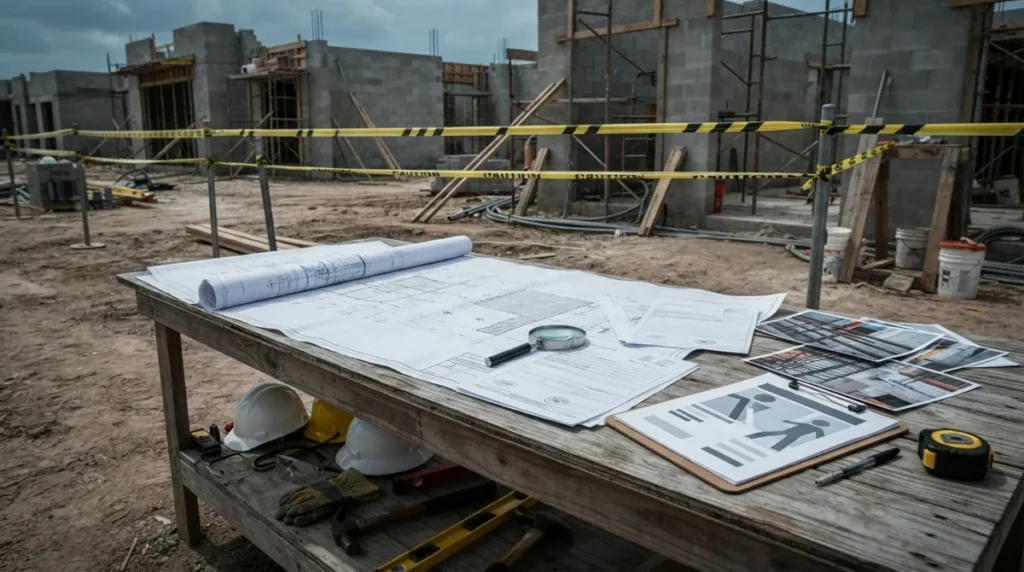
Key Takeaways
-
A stop-work order is not the end of your project but a checkpoint requiring you to pause, document the work properly, and obtain written clearance before resuming; filing an after-the-fact permit application does not automatically lift the order.
-
Florida Building Code Section 114 requires permits before covered construction begins, and violations can trigger daily fines up to $250 for first offense and $500 for repeat violations under Florida Statutes Chapter 162, with penalties of 100% of usual permit fees.
-
Within your first 72 hours, stop the cited work immediately, read the notice carefully, photograph everything, identify the correct jurisdiction, contact the case officer, and gather existing records to prevent fines and make officials more flexible.
-
Most building departments require completed permit applications, existing-condition drawings, site plans or surveys, engineer letters for concealed work, product approvals, and contractor license information; specific requirements vary by local jurisdiction.
-
Working with a permitting team that offers in-house drafting, engineering, full-cycle handling, and fast plan review coordination can save weeks of back-and-forth and ensure complete, accurate first submissions.
-
Get written confirmation from the issuing authority that the stop-work order is lifted before resuming work; verbal promises are not sufficient and continuing without written clearance risks repeat violations and escalated enforcement action.
Few things stop a project cold like a red or yellow notice taped to your door. One minute the crew is framing, the next minute everyone is standing around waiting for answers. If you're reading this, you may be holding a stop-work order right now, and we want you to know something first: this is fixable. Take a breath.
Florida has a clear path for work that started without a permit. It just takes the right order of operations. Finding the best stop work order after the fact help in Florida means finding people who understand both the paperwork and the local building departments behind it. In this guide, we'll walk through what a stop-work order actually means, how after-the-fact permits fit in, what documents you'll need, what it may cost, and how to avoid the mistakes that turn a small problem into a big one. Whether you're a contractor, a solar installer, a realtor, or a homeowner, you'll leave with a practical plan.
What a Stop-Work Order Really Means in Florida
A stop-work order (SWO) is a written notice from a building official or code-enforcement officer telling you to stop the cited work immediately. Under Florida Building Code section 114, the order should state the reason for the stop and the conditions under which work may resume. Only work needed to correct the violation or an unsafe condition is allowed to continue.
Florida Statutes §553.79(1)(a) generally requires a permit before covered construction, alteration, repair, or demolition begins. That rule is statewide, but enforcement is local. The building department or code-enforcement office in your city or county issues the order and decides how to clear it.
Here's the part that trips people up: an SWO is not the end of your project. It's a checkpoint. Think of it as the building department saying, "Pause, show us what's happening, and let's get it documented properly."
Common Reasons Orders Get Issued
- Work started before a permit was issued or applied for
- A permit expired or was never closed out
- Work went beyond the approved scope of the permit
- An unlicensed contractor was performing regulated work
- A neighbor complaint triggered an inspection
- An inspector spotted unpermitted work during a routine visit
How After-the-Fact Permits Fit In
An after-the-fact permit is the local route for documenting and reviewing work that's already been done without a required permit. It's also called a retroactive permit or legalization permit. If you want to go deeper on the process, our guide on how to get an after-the-fact permit in Florida covers the fundamentals.
But here's the important nuance. Submitting an after-the-fact permit application does not automatically cancel your stop-work order. You generally must satisfy the order, obtain the required approvals, and pass the applicable inspections before the authority closes the violation or authorizes work to resume.
Do not restart the cited work just because you filed an application or paid a fee. Get written confirmation from the issuing authority that the order has been lifted or that specific work is authorized. That single habit protects you from repeat violations and higher fines.
Your First 72 Hours: A Calm, Practical Checklist
The first few days set the tone for everything that follows. Here's what we recommend, in order:
- Stop the cited work. Send the crew home for that scope. Continuing can trigger fines and make officials less flexible.
- Read the notice carefully. Note the case number, the issuing authority, the cited code sections, and any deadlines.
- Photograph everything. Document the current state of the work before anything changes.
- Identify the correct jurisdiction. This is trickier than it sounds near city lines. Our building department lookup tool can help you confirm who actually controls your address.
- Contact the case officer. Ask what corrective work, application materials, inspections, fees, and written clearance are required.
- Gather existing records. Contracts, invoices, product data, prior permits, and any plans you already have.
- Get professional help early. A permitting team can save you weeks of back-and-forth.
What Documents the Building Department Will Want
Requirements vary by jurisdiction and project, so always confirm locally. That said, most departments ask for a similar core package for after-the-fact review.
| Document | Why It Matters | Common For |
|---|---|---|
| Completed permit application | Opens the official file and links to the violation case | All projects |
| Existing-condition drawings | Shows what was actually built, not what was planned | Additions, remodels, enclosures |
| Site plan or survey | Confirms setbacks and lot coverage | Additions, sheds, walls, pools |
| Engineer letter or sealed drawings | Verifies structural or system compliance for concealed work | Structural, roofing, framing |
| Product approvals | Confirms materials meet Florida requirements | Windows, doors, roofing |
| Contractor license and insurance | Verifies who performed the work | Contractor-performed work |
| Owner-builder documentation | Applies if the owner did the work personally | Owner-completed projects |
Depending on what's hidden behind drywall or under a roof deck, officials may require inspections or ask you to expose portions of the work. That's not a punishment. It's simply how they verify code compliance on things they couldn't see during construction.
Understanding Costs, Fees, and Penalties
Nobody loves talking about money, but let's be honest about it. There is no single statewide fee schedule for after-the-fact permits, and no uniform processing time. Costs depend on the jurisdiction, the scope of work, and how much documentation is needed.
Florida Building Code administrative provisions describe a penalty for work begun before permit issuance: 100% of the usual permit fee, in addition to the required fees, or as provided by local ordinance. Always verify the currently adopted code and the local fee schedule with your authority having jurisdiction.
Beyond permit fees, local code-enforcement rules can add more consequences. Florida Statutes Chapter 162 authorizes local administrative enforcement, and unresolved violations can lead to hearings, fines, or liens. Florida Statutes §162.09 provides a general framework, citing limits of up to $250 per day for a first violation and $500 per day for a repeat violation, with different limits possible in larger jurisdictions. Confirm current amounts with your local ordinance before relying on any number.
| Cost Category | What Drives It | How to Manage It |
|---|---|---|
| Permit fee plus penalty | Local fee schedule and project value | Apply promptly; ask for a written fee estimate |
| Drafting and engineering | Scope, complexity, concealed conditions | Use one team for drafting and sealing |
| Inspection and exposure work | What is hidden and how accessible it is | Document as you go with photos |
| Code-enforcement fines | Days of noncompliance, repeat status | Respond fast; do not ignore deadlines |
For a closer look at budgeting, see our breakdown of after-the-fact permit costs in Florida.
What Great Stop-Work Order Help Actually Looks Like
When people search for the best stop work order after the fact help in Florida, they're usually not looking for a lecture. They want someone who can take the stress off their shoulders. Here's what genuinely good help includes:
- Fast response. Deadlines don't wait, so your team shouldn't either.
- Jurisdiction knowledge. Rules differ between counties and cities, and the right contact matters.
- In-house drafting and engineering. When a reviewer flags something, the fix happens quickly instead of waiting on outside consultants.
- Full-cycle handling. Application, tracking, reviewer comments, revisions, inspections, and closeout.
- Honest expectations. No one can guarantee approval, and anyone who does is overpromising.
That last point deserves a mention. A permitting consultant can coordinate records, plans, applications, and agency communication, but cannot replace licensed design professionals or contractors where those are required. The best partners are upfront about that.
Services That Typically Come Into Play
Most stop-work situations touch several services at once. Our after-the-fact and expired permits service handles the core legalization work, while code compliance violation support addresses the enforcement side. You may also need as-built drawings to show existing conditions or engineer letters to verify concealed work. If time is tight, our urgent permit rescue option is built for exactly this situation.
Tips by Audience: What Matters Most to You
General Contractors
Your license and reputation are on the line, so speed and clean documentation matter. Keep your subcontractor records organized, confirm every permit was actually pulled (not just promised), and make sure your municipality registrations are current. Our page for general contractors explains how we support active job sites.
Solar Companies
Solar installs often draw scrutiny when electrical or structural documentation is missing. Roof-attachment details, load information, and product approvals are the usual sticking points. Cleaning these up early keeps interconnection timelines from slipping.
Realtors and Investors
An SWO or open violation can stall a closing quickly. Lenders and title companies notice. If you're dealing with a sale, our realtor and closing support is designed to clear holds before the closing date slips.
Homeowners and Owner-Builders
If you did the work yourself or hired someone who skipped the permit, don't panic and don't hide it. Officials generally respond better to owners who come forward and cooperate. Learn more about your options on our homeowners page.
Mistakes That Make Things Worse
We see the same avoidable errors again and again. Steer clear of these:
- Ignoring the order. Fines can accumulate and cases can escalate to hearings or liens.
- Resuming work after filing. An application is not permission.
- Covering up the work. Closing walls or ceilings can force expensive demolition later.
- Guessing at requirements. Local rules differ, so confirm with the authority having jurisdiction.
- Relying on verbal promises. Always get clearance in writing.
- Waiting until closing week. Permit holds can delay a sale, so start early.
If you've received a notice and aren't sure what to do next, our article on what to do after a Florida code enforcement notice is a helpful companion read. Broward property owners may also want our 8 steps after a stop work order in Broward.
How Long Does Clearing an SWO Take?
Honestly, it varies. No statewide standard processing time was identified in the available sources. A simple documentation case with cooperative officials may move quickly, while a project needing engineering, exposure inspections, and multiple review rounds takes longer. Timelines depend on the jurisdiction's review queue, the completeness of your submittal, and how fast you respond to comments.
The best way to shorten the path is a complete, accurate first submission. Incomplete packages create resubmittals, and resubmittals add weeks. That's why working with a team that handles plan review coordination and revisions and resubmittals can make such a difference.
Working With 1 Contractor Solutions
We are Florida's outsourced permitting department. We're not a construction contractor. We're the team contractors and owners call when the permit is what stands between them and a scheduled crew. We work across all 67 Florida counties, respond within 30 minutes day or night, and se habla español. Our drafting and engineering are in house, and our own engineer signs and seals the work, so reviewer comments get fixed fast.
Want to hear how other clients felt about the process? You can Visit us on Google — 1 Contractor Solutions to read reviews, and you can follow us on LinkedIn or follow us on Facebook for practical permitting updates. For official statute language, the Florida Legislature publishes the full text at Online Sunshine Florida Statutes.
Your Next Step
A stop-work order feels heavy, but it's really just a request to document and verify. With the right plan, the right paperwork, and the right partner, most situations move toward resolution. Stop the cited work, read the notice, gather your records, and reach out for help before deadlines pile up.
Ready to move forward? Get a free quote and tell us your address and your situation. We'll help you figure out which jurisdiction controls it, what it will take, and how to get your project moving again.
FAQs
How do I get a stop-work order lifted in Florida?
Start by stopping the cited work and contacting the issuing building or code-enforcement office. Ask exactly what corrective work, documentation, inspections, and fees are required, then get written confirmation once everything is satisfied. The exact steps vary by jurisdiction, so always follow the written order.
Can I keep building while my after-the-fact permit is under review?
Generally, no. Filing an application or paying a fee does not lift a stop-work order. Only work specifically allowed to correct a violation or unsafe condition may continue, and you should get written clearance from the authority before resuming anything else.
What documents are usually needed for an after-the-fact permit?
Most departments ask for an application, drawings showing existing conditions, a site plan or survey, and sometimes an engineer letter or sealed drawings. Product approvals and contractor license information are also common. Requirements differ locally, so confirm with your building department.
Will inspectors make me open walls or ceilings?
Sometimes, yes. If key parts of the work are concealed, officials may require exposure or additional documentation so they can verify code compliance. Taking photos during construction and having an engineer letter ready can sometimes reduce how much needs to be opened.
What happens if I ignore a stop-work order in Florida?
Ignoring an order can lead to code-enforcement hearings, daily fines, and even liens under applicable law and local ordinances. It can also make officials less flexible when you finally do respond. Acting quickly and cooperatively is almost always the better path.
We do this work every day across all 67 Florida counties. Call (866) 314-6931 and we will tell you what your situation actually requires — including when you do not need us.
Related services
Permit Facilitation & Filing
You have a crew scheduled, a client asking for dates, and a permit sitting somewhere in a queue you cannot see. We file it, w…
See the servicePlan Review Coordination
A permit in plan review is not one queue. On a commercial project it can be six queues, each with its own reviewer, its own c…
See the serviceReady to get your permit moving?
One call tells you which jurisdiction controls your project, what it will take, and what it will cost. Most of the time we can scope it on the phone.