
Blog
13 Things That Happen If You Build Without a Permit in FL
Built without a permit in Florida? Learn 13 real consequences, from stop-work orders to fines, and the practical steps to fix it.
Key Takeaways
-
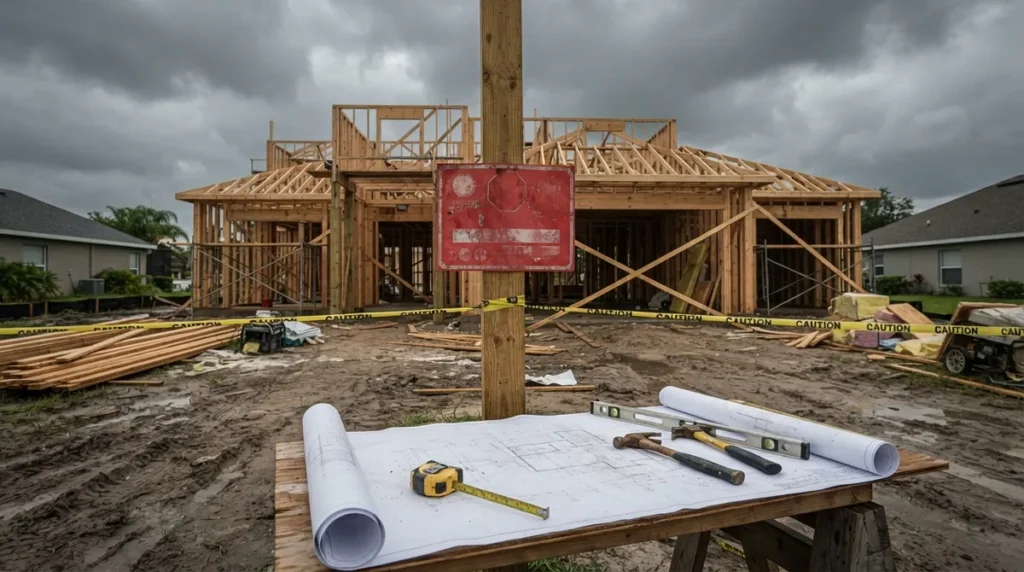
Florida Statutes § 553.79 makes unpermitted construction unlawful, and outcomes depend on the work type, jurisdiction, and how quickly you act—some cases resolve with modest fees and inspections, while delays can result in tear-outs and daily fines.
-
Stop-work orders freeze your project immediately when unpermitted work is discovered; ignoring them converts a fixable problem into an expensive one, so respond promptly to any notice from code enforcement.
-
After-the-fact permits are the most common solution but are review processes, not automatic approvals—officials may require corrections, expose concealed work by cutting walls or ceilings, or even demand removal if work cannot be proven code-compliant.
-
Code enforcement fines under Florida Statutes § 162.09 can reach $250 per day for first violations and $500 per day for repeat violations; acting early to resolve violations keeps costs down since fines are tied to inaction.
-
Unpermitted work can block home sales, refinancing, HELOC approvals, and future renovations because buyers, lenders, appraisers, and building departments routinely check permit records and may halt transactions or flag compliance issues.
-
Most unpermitted work situations are resolvable by identifying what was built, confirming jurisdiction, gathering documentation and engineering letters, and scheduling inspections—a permitting professional can help organize the process, though approval is never guaranteed.
So you built something in Florida, and now a little voice in your head is asking, "Wait, did I need a permit for that?" First, take a breath. You are far from the first person to land here, and there is almost always a path forward. If you have ever wondered what happens if I built without a permit in Florida, this guide walks you through the real consequences, from stop-work orders and after-the-fact permit fees to trouble at closing and insurance claims.
Here is the honest truth up front. Florida Statutes § 553.79 generally makes it unlawful to construct, alter, repair, or demolish a building without first getting the required permit. But the outcome for you depends on the work, your city or county, and how quickly you act. Some owners fix things with a few inspections and a modest fee. Others face tear-outs and daily fines because they waited too long.
Whether you are a homeowner, general contractor, solar installer, or real estate pro, here are 13 things that can happen, plus what to do about each one.
1. The Building Department May Issue a Stop-Work Order
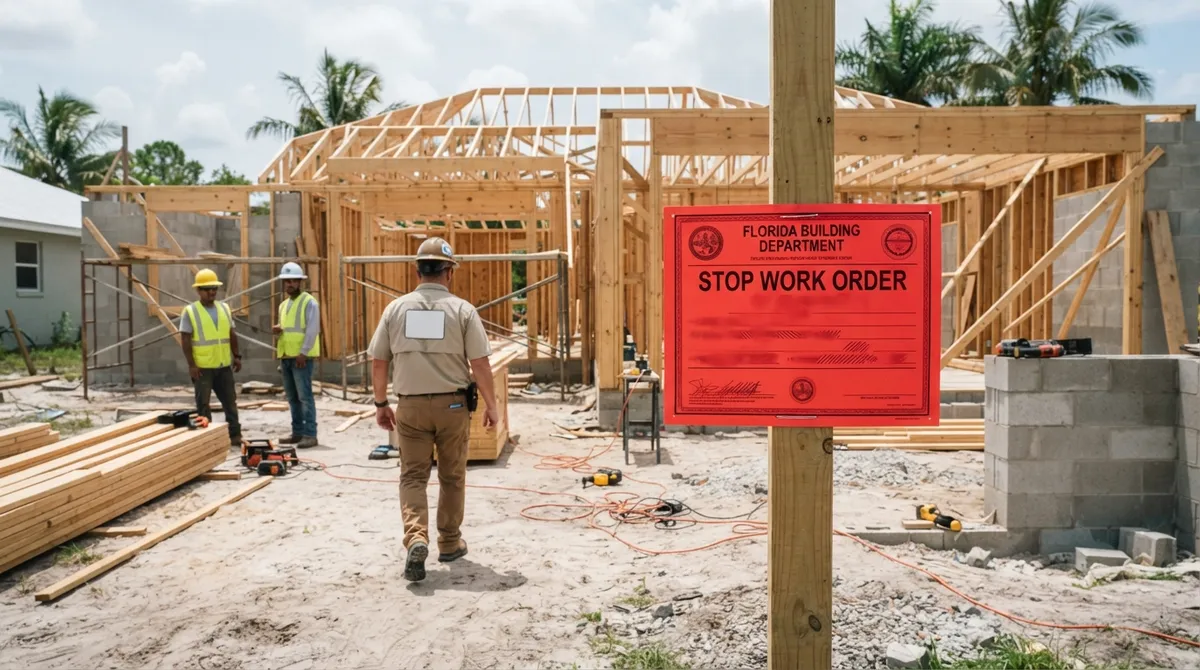
If an inspector or code officer spots unpermitted work, the first move is often a stop-work order. That means every crew on your project has to put down their tools until the situation is resolved. If you are mid-project, that can freeze your schedule, your subs, and your cash flow all at once.
Ignoring a stop-work order is the fastest way to turn a fixable problem into an expensive one. If you have already received one, our guide on 8 steps after a stop work order in Broward shows what to do first, and the process is similar across most Florida jurisdictions.
2. You Will Likely Need an After-the-Fact Permit
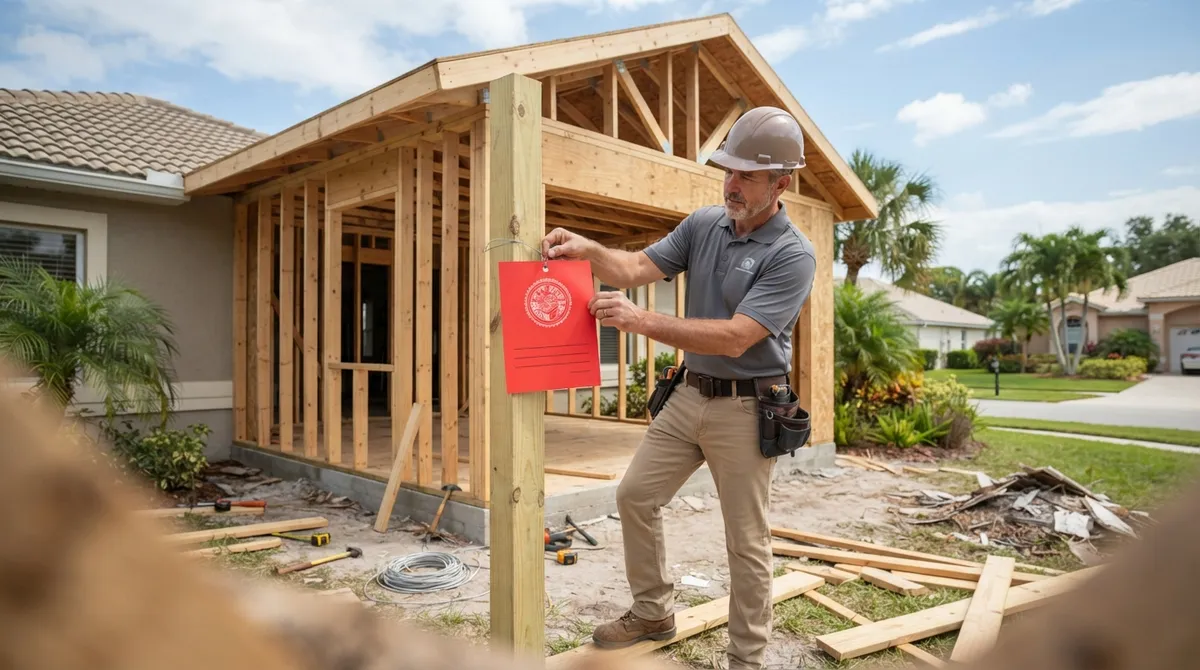
The most common outcome is being told to apply for an after-the-fact permit. This is a permit application filed once the work is already done or partly done. You typically submit plans, supporting documents, and proof of what was built, then schedule inspections.
Procedures and fees vary widely by jurisdiction, so always start with the building department that controls your property. For a deeper walk-through, see how to get an after-the-fact permit in Florida or our overview of after-the-fact and expired permit services.
3. You May Pay Extra Fees or Penalties
There is no single statewide dollar fine for all unpermitted construction. Local governments set their own permit and enforcement fees, and many add a penalty on top of the standard permit fee. Some jurisdictions describe it as a multiple of the regular fee. For example, Orange City's Building Division notes that its process may require the permit fee plus a penalty of twice the permit fee for work done without a permit.
That is one city's policy, not a statewide rate. Always check your local fee schedule before assuming what you will owe. We break down typical numbers in our post on after-the-fact permit costs in Florida.
4. Inspectors May Require You to Open Up Finished Work
Here is the part that surprises people. Inspectors normally check framing, wiring, plumbing, and structural connections before they get covered by drywall, insulation, or slabs. When the work is already closed up, the building official may ask you to expose it.
That can mean cutting drywall, pulling back ceilings, or digging to reveal footings. It sounds dramatic, but it is often just a targeted opening that gets patched afterward. Engineering letters, photos, and as-built documentation can sometimes reduce how much has to be opened, depending on the jurisdiction.
5. An After-the-Fact Permit Does Not Automatically Legalize the Work
Many owners assume that paying the fee makes everything official. Not quite. An after-the-fact permit is a review process, not a rubber stamp. Officials may require corrections to bring the work into code compliance, and if compliance cannot be shown, removal and reconstruction may be required.
Here is a quick look at the possible outcomes:
| Outcome | What It Means | How Common It Is |
|---|---|---|
| Approved as built | Work meets code; final inspection passes | Common for well-built, simple work |
| Approved with corrections | You fix specific items, then pass inspection | Very common |
| Partial exposure required | Some concealed work must be opened for review | Common for walls, ceilings, and electrical |
| Removal required | Unsafe or noncompliant work must come out | Less common, but possible |
Curious how often removal is truly on the table? Our article Will You Really Have to Demolish Unpermitted Work? gives a realistic answer.
6. You May Need Sealed Engineering Documents
For structural work like additions, roof framing, walls, or load-bearing changes, the reviewer often wants proof that it is safe. That usually means an engineer's evaluation and sealed drawings or letters.
This is where having drafting and engineering under one roof helps. When a reviewer flags something, the fix does not wait on an outside consultant to call back. Learn more about engineer letters and as-built drawings to see what may apply to your project.
7. Code Enforcement Fines Can Pile Up
If you receive a notice and do not resolve it, separate code-enforcement penalties can begin. Under Florida Statutes § 162.09, code enforcement boards may fine violators up to $250 per day for a first violation and up to $500 per day for a repeat violation. Higher limits can apply to certain categories, including irreparable or irreversible violations.
Please confirm the current statute and your specific facts with the local enforcement agency, since details matter. The takeaway is simple: fines are usually tied to not fixing the problem, so acting early keeps costs down. For a clearer picture, read how to avoid Florida fines for unpermitted work.
8. Ignoring a Notice Makes Everything Harder
Let's talk about the pile of mail you are avoiding. A notice of violation is not going away on its own. Ignoring it can lead to a hearing before a code enforcement board, daily fines, and in some cases liens against the property.
Responding quickly, and showing you are working toward compliance, usually earns more goodwill from the local office. If you have a notice in hand, our guide on 14 steps to clear a notice of violation in Florida is a great starting point, and you can also explore our code compliance violation services.
9. Selling Your Home Can Get Complicated
Buyers, agents, and title companies often pull permit records. If they find open permits or work with no permit at all, closings can stall. A buyer's lender or inspector may request final inspections or proof of code compliance before moving ahead.
Sellers usually have three paths: fix it before listing, negotiate a credit or escrow, or disclose and sell as-is. Each has trade-offs, and the right one depends on your timeline. If a deal is on the clock, see how to fix a Florida closing held up by unpermitted work or explore our realtor and closing support.
10. Refinancing and HELOCs May Hit a Snag
Lenders care about permits because unpermitted space can affect a home's appraised value and risk profile. An appraiser who notices an unpermitted addition may flag it, and underwriting can slow down or pause.
Getting the work permitted and closed out cleanly often removes that hurdle. Not every lender treats it the same way, so ask yours what documentation they need.
11. Insurance Claims Can Become More Difficult
Insurance is one of the biggest worries for owners. If damage involves unpermitted construction, an insurer may ask for permit records or question whether the work met code. Outcomes depend on your policy and the facts, so read your policy language and talk with your carrier or agent.
Having the work permitted and inspected gives you a stronger paper trail if you ever file a claim. Our article on expired permits and insurance claims in Florida covers closely related concerns.
12. Future Renovations Can Be Blocked
Want to add a pool, renovate the kitchen, or install solar next year? Building departments may look at what is already on record for the property. Unpermitted work can trigger extra review, require you to legalize the old work first, or complicate new applications.
Here is how different project types tend to be affected:
| Type of Unpermitted Work | Common Local Concerns | Typical Path to Resolve |
|---|---|---|
| Room additions and enclosures | Structure, setbacks, egress | Plans, engineer letter, inspections |
| Electrical and plumbing | Life-safety, concealed work | Licensed contractor, exposure, inspections |
| Roofing | Wind resistance, product approvals | After-the-fact roof permit, inspection |
| Windows and doors | Impact rating, installation | Product approvals, inspection |
| Solar installations | Structural and electrical review | Engineering documentation, permit filing |
13. There Is Almost Always a Way Forward
Now for the good news. Most unpermitted-work situations can be resolved when handled the right way. The practical path usually looks like this:
- Identify what was built. Write down the work, the dates, and who did it.
- Confirm the jurisdiction. Near city lines, this is not always obvious. Use a building department lookup to be sure.
- Check permit history. Try an open permit search to see what is already on file.
- Ask about the after-the-fact process. Call the department and ask what they require.
- Gather plans and documentation. Drawings, photos, and engineering letters help.
- Schedule inspections and correct any issues. Then close out the permit.
A Florida permitting professional, licensed contractor, architect, or engineer can help prepare documentation and coordinate inspections, but no one can guarantee approval. What a good partner can do is keep the process organized and moving. See our guide to legalizing unpermitted work in Florida for more detail.
Who This Matters Most To
Different readers feel this problem in different ways. Here is a quick snapshot:
- Homeowners: Worry about fines, selling, and insurance. Start with the local building department and consider homeowner permitting help.
- General contractors: Face liability and licensing exposure when a sub skips a permit. See our page for general contractors.
- Solar companies: Need code-compliant structural and electrical documentation to legalize or file correctly. Explore solar contractor support.
- Real estate pros and investors: Need fast answers before a deal closes. Check realtor resources.
- Architects, designers, and trades: Often need outsourced drafting and engineering to finish the file. See drafting-only services.
How 1 Contractor Solutions Can Help
We are not a construction contractor. We are Florida's outsourced permitting department, and unpermitted work is exactly the kind of file many people hesitate to touch. Our drafting and engineering are in house, our own engineer signs and seals the work, and we handle filing, tracking, reviewer comments, and closeout across all 67 Florida counties.
If you want to hear how other owners felt about the process, you can visit us on Google — 1 Contractor Solutions and read reviews. You can also follow us on LinkedIn or follow us on Facebook for Florida permitting updates. For the statute itself, read Florida Statutes § 553.79 on Online Sunshine.
Final Thoughts
Building without a permit in Florida can lead to stop-work orders, after-the-fact fees, opened walls, code-enforcement fines, and headaches at closing or with insurance. But it is rarely the end of the road. The sooner you act, the more options you keep.
If you are staring at unpermitted work right now, do not wait for a notice to arrive. Reach out today and get a free quote from a team that answers 24/7 and responds within 30 minutes. We will tell you which jurisdiction controls your property, what it will take to fix, and then we will go do it. Permits approved. Projects moving.
FAQs
Do I need a permit for work I already completed in Florida?
If the work required a permit when it was done, yes, and the fix is usually an after-the-fact permit. Contact your local building department, describe what was built, and ask about their process. Requirements vary by city and county, so it helps to check before you assume.
What fines can I face for building without a permit in Florida?
There is no single statewide fine. Local governments set their own permit and penalty fees, and some charge a multiple of the regular permit fee. Separate code-enforcement fines under Florida Statutes § 162.09 can apply if a violation goes unresolved, so check your local fee schedule and act early.
Can the county make me tear down unpermitted work?
It is possible, but not the typical result. Officials may require exposure, corrections, or engineering documentation first, and removal is generally reserved for work that is unsafe or cannot be shown to meet code. Every case depends on the facts and the jurisdiction.
Can I sell a Florida house with unpermitted work?
Yes, but it can complicate the deal. Buyers, lenders, and insurers may ask for permit records or proof of code compliance, so many sellers legalize the work first or negotiate a credit or escrow. Talk with your agent and a permitting professional early to keep your closing on track.
How do I find out if a Florida property has open permits or violations?
Start with the building department that has jurisdiction over the address and ask for permit history and any open code cases. You can also use an online open permit search to get a head start. If the results look messy, a permitting team can help sort out what needs to be closed.
We do this work every day across all 67 Florida counties. Call (866) 314-6931 and we will tell you what your situation actually requires — including when you do not need us.
Related services
Permit Facilitation & Filing
You have a crew scheduled, a client asking for dates, and a permit sitting somewhere in a queue you cannot see. We file it, w…
See the servicePlan Review Coordination
A permit in plan review is not one queue. On a commercial project it can be six queues, each with its own reviewer, its own c…
See the serviceReady to get your permit moving?
One call tells you which jurisdiction controls your project, what it will take, and what it will cost. Most of the time we can scope it on the phone.