
Blog
How to Get Permit Expediting After the Fact in Florida
Learn how permit expediting after the fact works in Florida, from finding your jurisdiction to as-builts, inspections, penalties, and closing the permit.

Key Takeaways
-
After-the-fact permits do not automatically legalize unpermitted work; the building department may still require documentation, plan review, exposure of concealed work, corrections to meet code, and passage of all required inspections.
-
Identifying the correct permitting authority is critical—Florida has 67 counties and hundreds of municipalities, and filing with the wrong jurisdiction can cost weeks; use a building department lookup tool to confirm jurisdiction before submitting anything.
-
If a code-enforcement case is already open, the deadline continues during the permit process, so contact the code officer immediately, document good-faith progress, and prioritize keeping the permit moving to avoid additional violations.
-
Permit expediting is an administrative coordination service that cannot waive code requirements, guarantee approval, or override the building official—it helps identify jurisdiction, assemble documents, track reviews, and coordinate inspections.
-
Ask the local building department which specific drawings and documents are required before ordering anything, as requirements vary by jurisdiction and scope; common needs include as-built drawings, site plans, structural evaluations, and MEP documentation.
-
Do not assume after-the-fact permits qualify for walk-through service; plan for a full review cycle, and be prepared that inspectors may require opening walls or exposing concealed work to verify code compliance.
So the work is done, and the permit never happened. Maybe a previous owner skipped it. Maybe a contractor swore they would handle it and then vanished. Maybe you only found out when a buyer's inspector or a code officer knocked on the door. Take a breath. You are far from the first Florida property owner to land here, and there is a well-worn path out.
That path is called an after-the-fact (ATF) permit, and getting permit expediting after the fact in Florida means having someone organize, submit, and shepherd that application so it moves as smoothly as the local rules allow. An expediter cannot waive code requirements or promise approval. What a good one can do is keep you out of the common traps, like missing documents, wrong departments, and ignored review comments.
In this friendly, step-by-step guide, we will walk through what an ATF permit really is, how the process works, what drawings and inspections to expect, and how to pick the right help. Whether you are a general contractor, solar installer, realtor, or homeowner, you will leave knowing exactly what to do next.
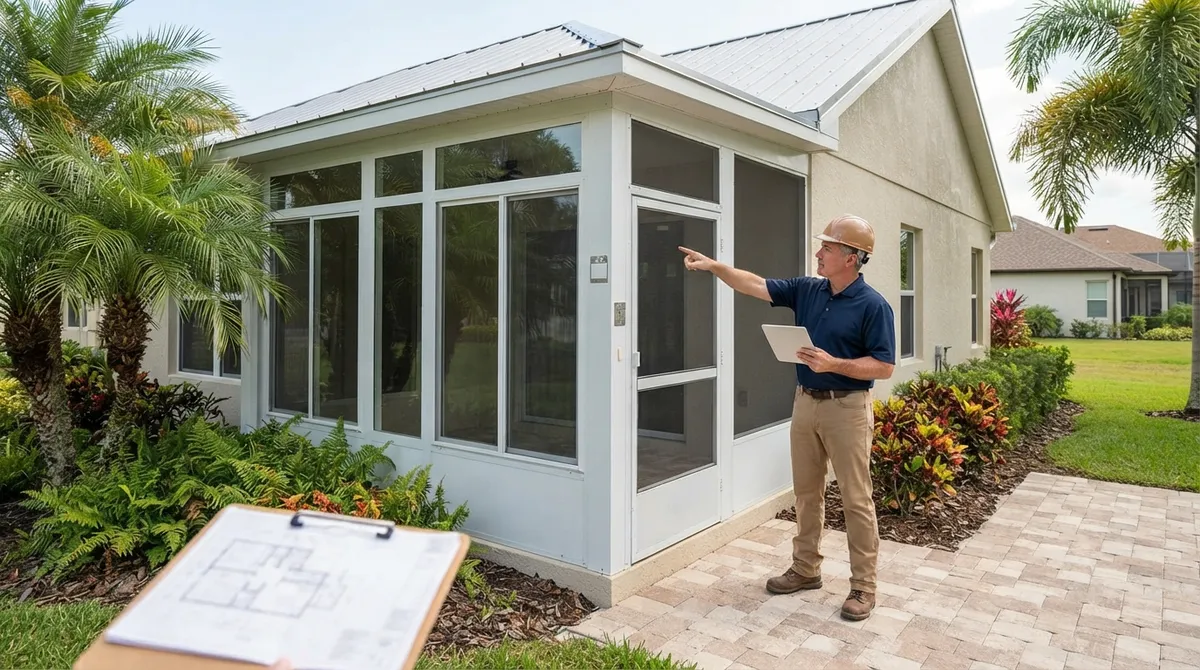
What an After-the-Fact Permit Actually Is
Florida law generally requires a permit before covered construction, alteration, repair, or demolition begins. Florida Statutes section 553.79 assigns permitting and enforcement to the appropriate state or local agency, and the local building department decides the application, review, inspection, and fee requirements.
An ATF permit is simply a local permit application for work that was already performed without the required approval. Here is the part that surprises people: it does not automatically legalize the work. The building department may still require you to:
- Document existing conditions with drawings or photos
- Go through plan review like any other project
- Expose concealed work so it can be inspected
- Make corrections where the work falls short of code
- Pass every required inspection
If you want a deeper look at the basics, our guide on what after-the-fact permitting in Florida involves is a great companion read.
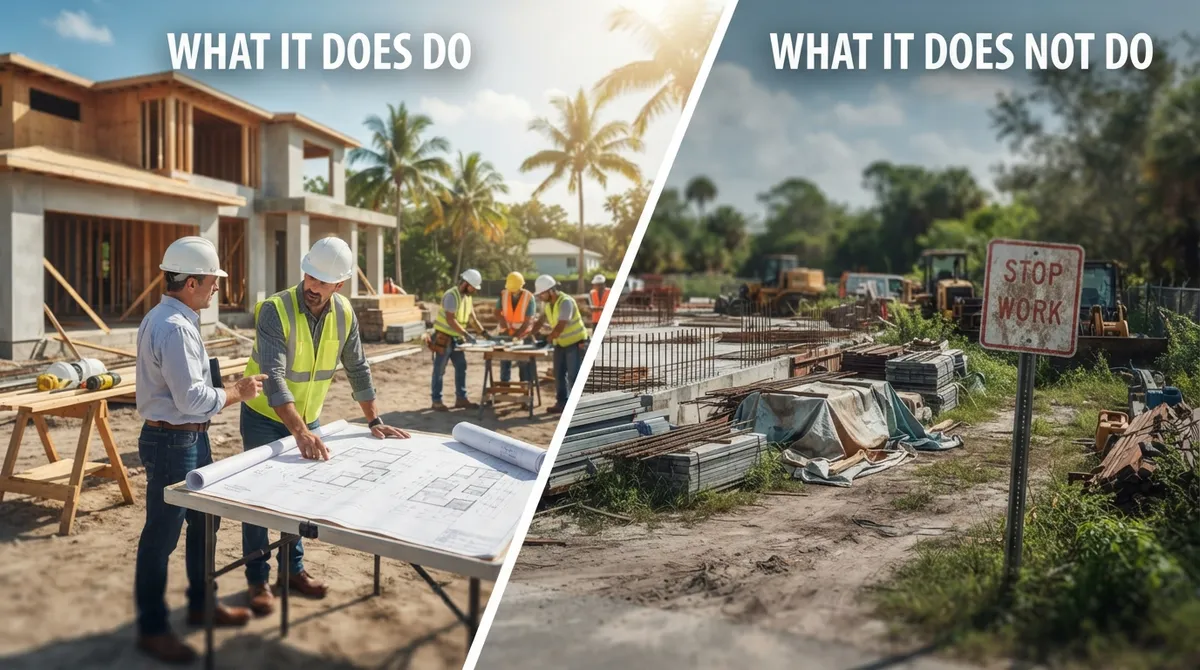
What Permit Expediting Does (and Does Not) Do
Let's clear up a common misunderstanding. Permit expediting is an administrative and coordination service. It is not a shortcut around the building official, and it is not a guarantee of approval.
A Florida permitting service can help you:
- Identify the correct permitting authority, which is not always obvious near city lines
- Assemble and submit applications and supporting documents
- Track reviews and respond to comments quickly
- Coordinate inspections
- Keep communication moving between you, the department, and any design professionals
You or your contractor remain responsible for code compliance and any required corrections. Think of an expediter as an experienced guide: they know the trail, but you still have to walk it.
| What an Expediter Can Do | What an Expediter Cannot Do |
|---|---|
| Identify the right jurisdiction and department | Waive code requirements |
| Prepare and submit the application package | Guarantee approval or a specific timeline |
| Track the review and answer comments | Override the building official's decision |
| Coordinate drawings, engineering, and inspections | Remove penalties set by local ordinance |
How to Get an After-the-Fact Permit in Florida: Step by Step
There is no single statewide ATF application, so the exact steps shift by city and county. Still, a practical sequence works nearly everywhere.
- Identify the permitting authority and any code case. Find out which city or county has jurisdiction and whether a code-enforcement case is already open. Our building department lookup tool can help you confirm who controls your property.
- Gather what you already have. Collect prior permits, old plans, photos, receipts, and any scope details. An open permit search can reveal existing permit records.
- Ask the department what is required. Confirm which drawings, evaluations, and inspections they want for ATF work before you spend money on documents.
- Prepare the documentation. This often includes as-built drawings and, depending on scope, signed documents from licensed design professionals.
- Submit the application and fees. Include the ordinary permit fees plus any penalties the local ordinance imposes.
- Respond to review comments. Quick, complete answers keep the file moving.
- Complete exposure or corrective work. If inspectors need to see inside walls or under finishes, plan for it.
- Pass inspections and get final approval. The permit is closed only once the building department signs off.
If you want the full application walkthrough, see After-the-Fact Permit Application Florida: A Full Guide.
Which Building Department Handles Your Property?
This is step one for a reason. Florida has 67 counties and hundreds of municipalities, and the department that reviews your project depends on where the property actually sits. Properties near city limits are especially tricky, because a mailing address in one city can sit inside another city's jurisdiction or in unincorporated county territory.
Get this wrong and you can lose weeks filing with the wrong office. If you are not sure, read which Florida jurisdiction reviews my project before you file anything.
Documents and Drawings You May Need
Requirements vary, but ATF projects commonly call for the items below. Always confirm with your local department before ordering anything.
| Document | Why It May Be Needed |
|---|---|
| As-built drawings | Show what was actually built, not what was planned |
| Site plan or survey | Confirm setbacks and placement on the lot |
| Structural evaluation or engineer letter | Verify framing, connections, or load paths of existing work |
| MEP documentation | Show electrical, plumbing, or mechanical work that was installed |
| Photos and prior records | Support the timeline and scope of the work |
Our team prepares as-built drawings and engineer letters in house, with our own engineer signing and sealing the work. That matters, because when a reviewer asks for a change, we can fix it directly instead of waiting on an outside consultant to call someone back.
What Will It Cost? Penalties and Fees
Here is the honest answer: it depends. There is no single statewide ATF fee schedule or penalty multiplier, and the research simply does not support a reliable average cost or timeline. Fees, professional costs, and review steps change with the project and the jurisdiction.
Local agencies can add penalties on top of ordinary permit fees. For example, Miami Beach's ordinance provides a penalty of 100% of the required permit fee for work begun without approval, plus applicable offense penalties. That is one city's rule, not a statewide standard, and other places differ.
- Permit fees: set by the local department
- Penalties: vary by ordinance, and some jurisdictions add none
- Professional costs: drawings, engineering, and testing, depending on scope
- Corrective work: any repairs needed to meet code
For a closer look at budgeting, check out after-the-fact permit costs in Florida.
Will Inspectors Make You Open Walls?
Sometimes, yes. If work is concealed, the building official may require it to be opened or otherwise made available for inspection. Do not assume existing work can stay covered.
This is why asking the department early pays off. Knowing whether you will need to open a wall, lift a floor section, or remove a finish lets you plan, and budget, before surprises show up. Our guide to what happens during a Florida ATF site inspection explains what to expect on inspection day.
Do Not Count on a Walk-Through Shortcut
Many owners hope an ATF permit can be handled as a quick walk-through. In general, do not assume that. Fort Lauderdale's permitting guidance, for example, says permits requiring after-the-fact building-code review are not eligible for walk-through service.
Expediting helps with preparation, organization, and follow-up, not with skipping review. Plan for a real review cycle and you will be pleasantly surprised if it goes faster.
Code Enforcement Cases: Handle the Clock First
If a code-enforcement case is already open, the deadline does not pause just because you started a permit. Palm Beach County's code-violation guidance, for instance, says owners must obtain the required permits and inspections to abate unpermitted-work violations, and that plans and other documentation may be required. A code-enforcement deadline or case may continue while the permit process is underway.
That means speed and communication matter. Contact the code officer, show good-faith progress, and keep your permit moving. Our code compliance violations service and our guide to code compliance violation help in Florida can help you stay ahead of it.
A Note on the $7,500 Exemption
You may have heard that small jobs do not need permits. Florida Statutes section 553.79 does describe a permit exemption for certain work valued below $7,500 at a single-family dwelling, but it comes with statutory conditions and exclusions. It is not a general exemption for electrical, plumbing, structural, mechanical, or gas work, or for work in a flood hazard area.
Before relying on it, verify the current statutory text and how your local department applies it. When in doubt, ask the building department directly.
Tips for Every Type of Reader
General Contractors and Design Trades
If you inherited a job or a client skipped permits, document everything early and keep clean communication with the department. Our general contractor support covers filing, tracking, and engineering under one roof.
Solar Companies
Unpermitted installs usually need structural and electrical documentation to prove code compliance. Our solar contractor services are built around that kind of coordination.
Realtors and Investors
Unpermitted work can surface at the worst time, right before closing. Our realtor and closing support helps clear problems so deals keep moving. Related reading: open permit found at closing.
Homeowners
You do not have to figure this out alone. Our homeowner services walk you through each stage in plain English.
How to Choose the Right Permit Expediting Help
Not every service is built for ATF work. Some firms decline these files because they are messier than a routine permit. Look for a partner who offers:
- Experience across many Florida jurisdictions, not just one
- In-house drafting and sealed engineering, so corrections happen fast
- Clear communication about what is and is not guaranteed
- Tracking and follow-through on review comments
- Familiarity with code-enforcement timelines
At 1 Contractor Solutions, we work as Florida's outsourced permitting department across all 67 counties. We take the after-the-fact and expired files other people decline, and our after-the-fact and expired permits service pairs filing with in-house drafting and engineering. Want to hear what others say? Visit us on Google — 1 Contractor Solutions to read reviews.
Common Mistakes to Avoid
- Filing with the wrong department. Verify jurisdiction first.
- Ignoring a code-enforcement deadline. The case can keep running during review.
- Ordering drawings before asking what is required. You may pay for the wrong documents.
- Assuming concealed work can stay covered. Be ready to expose it.
- Assuming a walk-through is available. Plan for full review.
- Expecting a guaranteed timeline. No honest provider can promise one.
Can You Keep Working While the Permit Is Under Review?
Generally, you should not continue regulated work that needs approval until the department says you can. Continuing may invite additional violations or stop-work orders. Ask the building department what, if anything, may proceed during review, and get the answer in writing when possible.
If a stop-work order is already in place, our urgent permit rescue team can help you work through it quickly.
Ready to Get Moving?
Unpermitted work feels stressful, but it is one of the most fixable problems in Florida construction and real estate. Identify the right jurisdiction, gather your records, ask what the department needs, document the work, and keep the file moving with fast, complete answers. With the right help, a stuck project can become a closed permit.
Staying connected helps, too. You can follow us on LinkedIn or follow us on Facebook for Florida permitting tips and updates.
Ready for a partner who answers within 30 minutes, day or night? Get a free quote from 1 Contractor Solutions and let's turn your after-the-fact permit into a finished one.
FAQs
How do I get an after-the-fact building permit in Florida?
Start by confirming which building department has jurisdiction and whether a code case is open. Then gather your records, ask the department what drawings and inspections it requires, submit the application with fees, respond to review comments, and pass inspections. An expediter can handle much of the coordination for you.
Can I keep unpermitted work if it passes inspection?
Often, yes, but only once you have obtained the after-the-fact permit and passed the required inspections. Passing inspection is part of closing the permit, and the work may still need corrections first. Your local building department makes the final call.
Can a permit expediter help resolve a Florida code-enforcement violation?
A good expediter can help by preparing the permit package, tracking the review, and keeping communication moving, which supports your effort to abate the violation. Keep in mind that a code-enforcement deadline may continue while the permit is under review, so move quickly. The expediter cannot waive requirements or guarantee the outcome.
How long does an after-the-fact permit take in Florida?
There is no reliable statewide timeline, because review times, required documents, and inspection scheduling vary by jurisdiction and project. Complete submittals and fast responses to comments help keep things moving. Ask your local department for its current review expectations.
Will inspectors require me to open walls for concealed work?
They can. If work is concealed, the building official may require it to be opened or otherwise made available for inspection. Confirm the specific requirement with the department early so you can plan for it.
We do this work every day across all 67 Florida counties. Call (866) 314-6931 and we will tell you what your situation actually requires — including when you do not need us.
Related services
Permit Facilitation & Filing
You have a crew scheduled, a client asking for dates, and a permit sitting somewhere in a queue you cannot see. We file it, w…
See the servicePlan Review Coordination
A permit in plan review is not one queue. On a commercial project it can be six queues, each with its own reviewer, its own c…
See the serviceReady to get your permit moving?
One call tells you which jurisdiction controls your project, what it will take, and what it will cost. Most of the time we can scope it on the phone.