
Blog
How to Get After the Fact Permitting in Jacksonville, FL
Unpermitted work in Jacksonville? Learn how after the fact permitting works, what documents you need, typical costs, and how to get compliant in 2026.
Key Takeaways
-
After-the-fact permitting in Jacksonville requires the Building Inspection Division to verify that unpermitted work meets Florida Building Code standards; approval is not automatic and you may need to correct or remove non-compliant work.
-
Common projects requiring ATF permits include room additions, roof replacements, electrical upgrades, plumbing work, HVAC changes, decks, fences, and solar installations; unpermitted work often surfaces during real estate closings, insurance claims, or code enforcement actions.
-
Prepare accurate as-built drawings, site plans, engineer letters, and product specifications before submitting; for concealed work like framing or wiring, expect the City may require selective wall/ceiling openings for inspector access to verify compliance.
-
Pull your property's permit and violation history through Jacksonville's Building Inspection Division online search before filing; confirm current permit fees directly with BID instead of assuming charges, as a $112.50 minimum applies but varies by work type.
-
Document exactly what was built with photos, contractor records, and descriptions; respond quickly to reviewer comments and schedule inspections promptly to avoid delays, and address any code-enforcement notices immediately rather than assuming an ATF application resolves them.
-
Owner-builder exemptions are limited and do not remove permit requirements; consult a professional before deciding whether you can legally pull a permit yourself, as regulated trade work and contractor-licensing rules still apply under Florida Statute §489.103(7).
Let's be honest: finding out that a deck, a garage conversion, a new roof, or a bathroom remodel was done without a permit is a gut-punch. Maybe a previous owner skipped the paperwork. Maybe a contractor promised to "take care of it" and never did. Maybe a lender or home inspector just flagged it before closing. Whatever brought you here, take a deep breath. You have options, and thousands of Florida property owners have been exactly where you are.
After the fact permitting in Jacksonville is the process of asking the City to review and approve work that was started or finished without a required permit. It is not a magic eraser, and it is not automatic approval. But with the right plans, documentation, and patience, it is a clear path back to a compliant, insurable, sellable property.
In this guide, we will walk through exactly how the process works in Duval County's largest city in 2026. You will learn what Jacksonville expects, what documents to gather, what inspections to anticipate, and the common mistakes that stall applications. Let's get you moving.
What After the Fact Permitting Means in Jacksonville
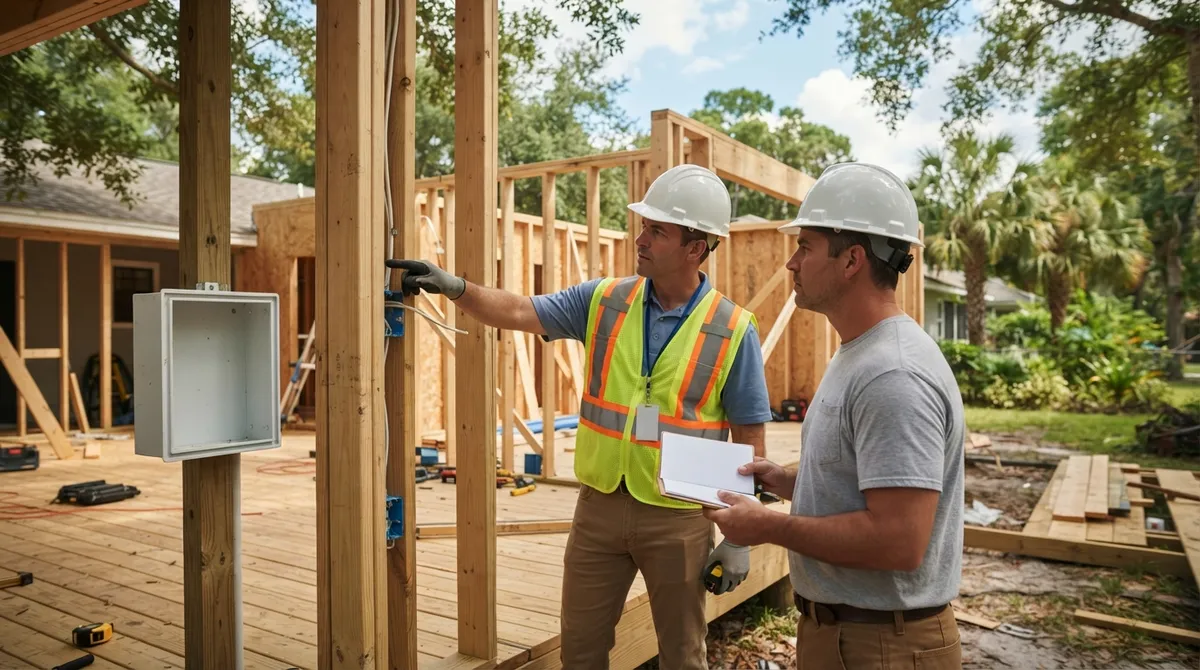
An after-the-fact (ATF) permit is a building permit application filed for work that already began or was already completed without the required approval. In Jacksonville, the Building Inspection Division (BID) reviews these applications, checks plans, and performs inspections to confirm the work meets applicable building and safety requirements.
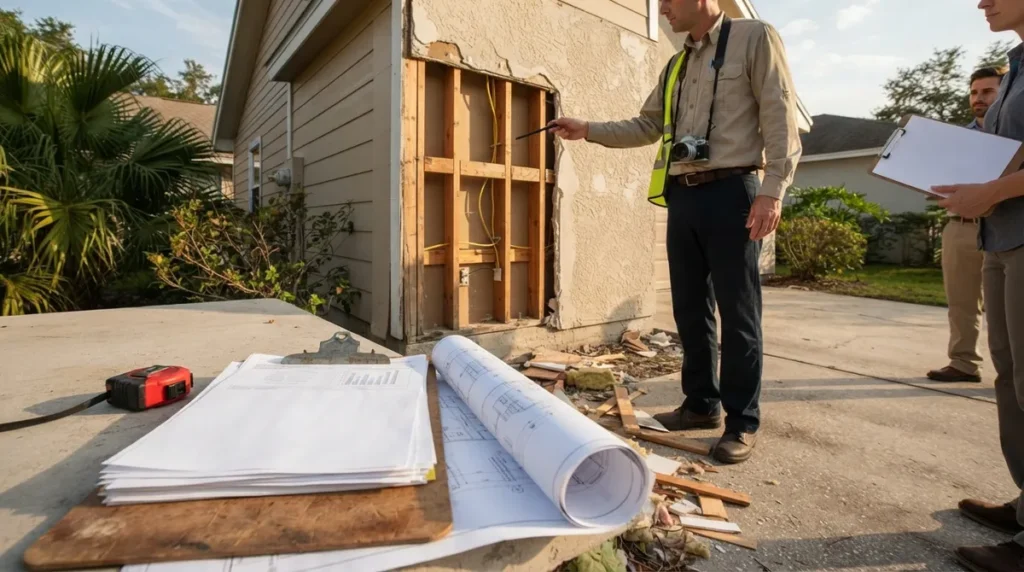
Here is the key point many owners miss: applying for an ATF permit does not automatically legalize the work. The City must verify that what was built complies with the Florida Building Code. If it does, the permit can be approved and closed out. If it does not, you may need to correct, expose, or even remove portions of the work.
Florida law backs this up. Florida Statute §553.79 generally requires a permit before covered construction, alteration, repair, or demolition begins, and it requires code-compliant plan review before a permit is issued. Starting work that requires a permit without an effective permit is unlawful, which is why unpermitted work can trigger code-enforcement action.
Work That Commonly Needs ATF Permits
- Room additions, enclosed porches, and garage conversions
- Roof replacements and structural repairs
- Electrical panel upgrades, rewiring, and new circuits
- Plumbing relocations and water heater replacements
- HVAC changes and duct modifications
- Fences, sheds, decks, and pool cages
- Window and door replacements, including impact products
- Solar panel installations and related electrical work
If your project is on this list and no permit was pulled, an ATF application is likely your best route. For a deeper look at how this works statewide, see our guide on what is after-the-fact permitting in Florida.
Why Fixing Unpermitted Work Matters
It can be tempting to leave sleeping dogs lie. But unpermitted work rarely stays quiet. It tends to surface at the worst possible moment, and the consequences can be real.
- Real estate closings: Buyers, lenders, and title companies increasingly flag unpermitted improvements. A discovery late in a transaction can delay or derail a sale.
- Insurance claims: Insurers may question coverage for damage tied to unpermitted work.
- Code enforcement: A neighbor complaint or inspection can lead to a notice of violation, and you will need to respond through the proper City office.
- Safety: Permits exist so a qualified reviewer confirms framing, wiring, and structural connections are sound. Hidden defects are the biggest risk.
If you are dealing with a closing, our resource on whether a home sale can close with unpermitted work in Florida is a helpful read.
How to Get an After the Fact Permit in Jacksonville: Step by Step
Every property is different, so treat this as a roadmap rather than a rigid script. Your specific scope and the reviewer's findings will shape the details.
- Check the property's permit and violation history. Jacksonville's Building Inspection Division offers an online property search where you can review permit records and building-code violations by address. For older records, the City directs people to BID Archives.
- Identify exactly what was done. List every change: rooms added, walls moved, circuits run, roof materials installed, or equipment replaced. The more precisely you can describe the work, the smoother the review.
- Confirm who is responsible. If a licensed contractor did the work, they may need to be involved. If not, determine whether an owner-builder approach is even available (more on that below).
- Prepare plans and supporting documents. The City may require drawings that show the existing, as-built condition, plus engineering or professional documentation where needed.
- Submit the application and pay fees. File with BID and pay the applicable permit fees.
- Respond to reviewer comments. Expect questions. Quick, complete answers keep your file moving.
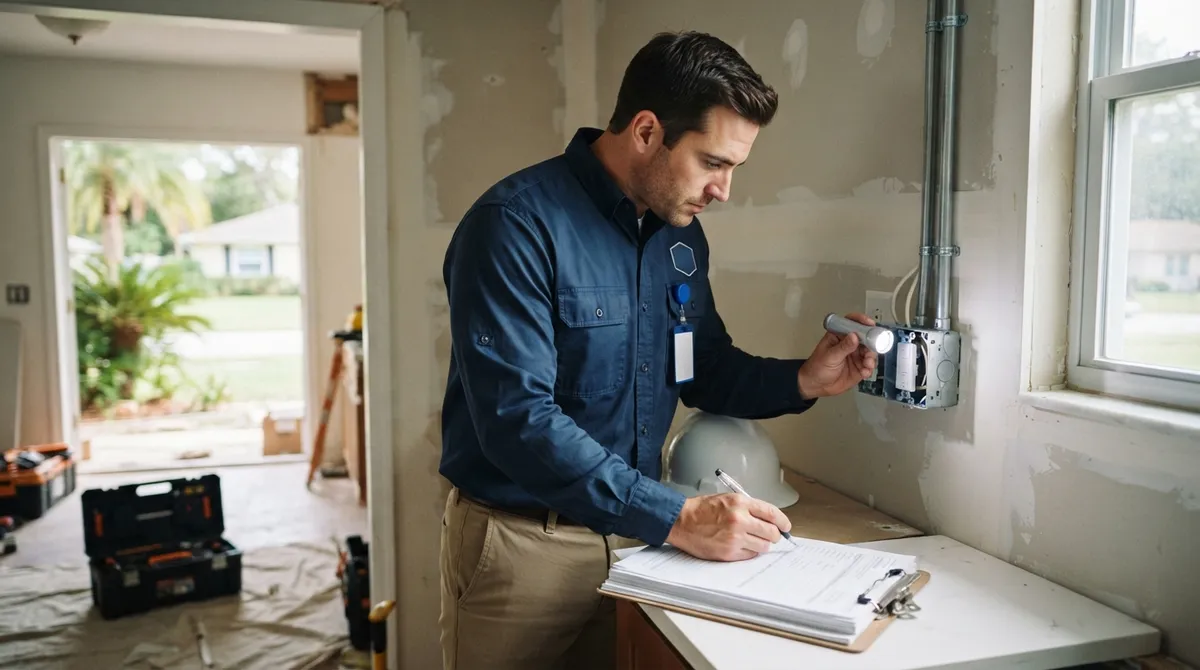
- Schedule and pass inspections. Inspectors will verify the work, and in some cases ask for access to concealed areas.
- Close out the permit. Once approved and finaled, you have a documented, compliant record.
What Documents and Plans Will You Need?
The paperwork depends on the project, but most ATF applications are stronger when they include clear, professional documentation of what exists today. Jacksonville's reviewers evaluate whether the completed work satisfies the Florida Building Code, so the application should make that easy to see.
| Document | Why It Matters | Typically Needed For |
|---|---|---|
| As-built drawings | Shows the current, completed condition of the work | Additions, conversions, structural changes |
| Site plan | Shows setbacks, lot coverage, and placement | Additions, sheds, pools, fences, accessory structures |
| Engineer letter or sealed drawings | Verifies structural or system compliance | Structural work, roofs, trusses, concealed framing |
| MEP documentation | Verifies electrical, plumbing, and mechanical work | Remodels, panel upgrades, HVAC changes |
| Product approvals and specifications | Confirms materials meet Florida requirements | Windows, doors, roofing, shutters |
| Photos and contractor records | Supports what was installed and when | Nearly all ATF projects |
Our teams prepare as-built drawings, engineer letters, and site plans in house, which helps keep these documents consistent with one another when a reviewer takes a close look.
What If the Work Is Hidden Behind Walls or Ceilings?
This is one of the most common worries, and it is a fair one. If framing, wiring, or plumbing is concealed, an inspector cannot simply glance at it and approve it.
Depending on the project and the reviewer's findings, the City may require:
- Access to the work area
- Selective opening of drywall or ceilings so inspectors can see what is behind them
- Inspections at various stages or conditions
- Professional documentation, such as an engineer's evaluation, to establish compliance
Opening a small section of a wall is usually far less painful than owners imagine, and it is often the fastest way to get a clear answer. A well-planned inspection access point can also limit repair costs. If a roof structure is the concern, our article on truss verification after the fact in Florida explains how this kind of verification typically unfolds.
What Does After the Fact Permitting Cost in Jacksonville?
Cost is the question everyone asks, and the honest answer is: it depends on the work type, the scope, and what the reviewer requires. Here is what we can say with confidence.
Jacksonville publishes permit fees through its City Fees page. One listed fee category shows a minimum BID permit fee of $112.50, or $33.75 per required inspection, whichever is greater. Fees vary by work type, so you should confirm the current schedule for your specific project directly with BID.
It is also important to note that we have not established a universal Jacksonville ATF surcharge or fee multiplier from available public information. Do not assume a specific penalty number, and verify any added charges with the City for your property and scope.
Cost Factors Beyond Permit Fees
| Cost Category | What Drives It |
|---|---|
| City permit and inspection fees | Work type and number of required inspections |
| Plans and drafting | Complexity of the as-built drawings needed |
| Engineering | Whether structural or system verification is required |
| Corrections | Whether any work must be exposed, fixed, or replaced |
| Contractor involvement | Whether a licensed contractor is needed for corrective work |
For a statewide perspective on pricing, take a look at our breakdown of after-the-fact permit costs in Florida.
Can You Be Required to Remove or Redo the Work?
Yes, it is possible, and we want you to hear that from a friendly voice rather than a surprise inspector. If existing work does not meet code or cannot be verified, the owner may need to expose, correct, or remove it before approval. A permit application or inspection is not a guarantee that the work will be accepted as built.
The good news is that this outcome is often avoidable with solid preparation. Many projects pass after a few targeted corrections, such as adding proper connectors, replacing non-compliant materials, or providing engineering verification. Before you decide to tear anything out, it is worth getting a professional evaluation. We cover this concern in detail in will you really have to demolish unpermitted work.
Can a Homeowner Apply as an Owner-Builder?
Sometimes, but it is more limited than many people think. Florida's owner-builder exemption, found in Florida Statute §489.103(7), sets specific conditions for owners acting as their own contractor. It does not remove the permit requirement, and regulated trade work and contractor-licensing rules still matter.
If you are considering this route, review our page on owner-builder permits and talk to a professional before you sign anything. Understanding who can legally pull a permit saves headaches later, and our guide on who can pull a permit in Florida is a great starting point.
Tips for Different Types of Property Owners
Your priorities depend on your role, so here is how to approach ATF permitting based on where you are standing.
Homeowners
- Start by pulling the permit history for your address so there are no surprises.
- Gather any receipts, photos, or contractor information tied to the work.
- Do not ignore a code-enforcement notice. Address it with the responsible City office rather than assuming an application resolves it.
Real Estate Professionals and Investors
- Run a permit search before listing or buying, not after you are under contract.
- Build ATF timelines into your closing schedule.
- Use resources like our realtor and closing support services when a transaction is on the clock.
General Contractors and Design Trade Professionals
- Document existing conditions carefully before any new scope begins.
- Coordinate sealed drawings and MEP documentation early so reviewers see a consistent package.
- Learn how others handle this in our guide for general contractors.
Solar Companies
- Verify that roof structure and electrical work are properly documented before connecting to the grid.
- Keep product specifications and engineering letters on hand for reviewers.
- See our resource for solar contractors for coordination support.
Common Mistakes That Slow Jacksonville ATF Applications
- Assuming applying equals approval. The City still has to verify compliance.
- Submitting vague plans. Reviewers want clear, accurate drawings of what exists.
- Ignoring concealed work. Failing to plan for inspection access invites delays.
- Guessing at fees. Confirm current charges with BID instead of relying on rumors.
- Skipping professional help on structural items. Roof framing and load paths often need engineering verification.
- Leaving a violation unaddressed. Responding to notices promptly keeps small problems small.
Many of these mistakes are easy to dodge once you know about them. Our guide to legalizing unpermitted work in Florida goes deeper on avoiding them.
Where to Look Up Permit Records and Get Answers
Jacksonville's Building Inspection Division is your primary source. You can use its online property search to view permit records and building-code violations by address, and the City lists 904-255-8500 for inspection scheduling. Because requirements can change, always confirm current forms, fees, and procedures directly with BID before filing.
If you would like a second set of eyes first, you can also try our free open permit search tool. For jurisdiction-specific help, visit our Jacksonville permitting page.
When It Pays to Bring in a Permitting Partner
You can absolutely navigate this process yourself, and some simple projects go smoothly that way. But ATF files get complicated quickly when drawings, engineering, reviewer comments, and inspections all need to line up.
That is where 1 Contractor Solutions comes in. We are Florida's outsourced permitting department, and our drafting and engineering are in house, with our own engineer signing and sealing the work. If a reviewer flags something, we fix it directly rather than waiting on an outside consultant. We handle after-the-fact and expired permits that other firms decline, and we can also support code compliance violations when a notice is already on the table.
We respond within 30 minutes, day or night, and we work across all 67 Florida counties. Curious how our customers feel? You can see what they say on Google: Visit us on Google — 1 Contractor Solutions. You can also follow us on LinkedIn or follow us on Facebook for Florida permitting updates.
Conclusion: Turn Unpermitted Work Into a Clean Record
After the fact permitting in Jacksonville is very doable when you approach it with the right information. Pull your permit history, document exactly what was built, prepare accurate plans, plan for inspections, and verify fees with the Building Inspection Division. Remember that approval is never automatic, so thorough preparation is your best friend.
You do not have to carry this stress alone. If you are ready to get your Jacksonville property compliant, insurable, and ready to sell, reach out today and get a free quote. We will tell you what jurisdiction controls your property, what it will take, and then we will go do it.
FAQs
Do I need an after the fact permit for work done without a permit in Jacksonville?
In most cases, yes. If the work required a permit under Florida law and none was pulled, the City of Jacksonville's Building Inspection Division expects it to be reviewed and approved. Keep in mind that applying does not guarantee approval, so it helps to confirm your specific situation with BID or a permitting professional.
How much does an after the fact permit cost in Jacksonville?
Fees depend on the type of work and the number of required inspections. One City fee category lists a minimum BID permit fee of $112.50 or $33.75 per required inspection, whichever is greater, but you should always confirm the current schedule with BID. Plans, engineering, and any corrective work add to your total budget.
What happens if unpermitted work is hidden behind walls or ceilings?
The City may ask for access, selective opening of finishes, inspections, or professional documentation to confirm the work is compliant. It is usually less dramatic than people fear, and a smart plan can limit repair costs. Requirements depend on your project and what the reviewer finds.
Can Jacksonville make me remove or redo work that does not meet code?
Yes, it is possible if the work does not meet code or cannot be verified. You may need to expose, correct, or remove it before approval. Many projects pass after targeted corrections, so getting a professional evaluation before making big decisions is a wise first step.
Can a homeowner apply for an after the fact permit as an owner-builder?
Sometimes, but Florida's owner-builder exemption is limited and does not remove the permit requirement. Contractor licensing rules and regulated trades still apply, so it is smart to check your eligibility before filing.
We do this work every day across all 67 Florida counties. Call (866) 314-6931 and we will tell you what your situation actually requires — including when you do not need us.
Related services
Permit Facilitation & Filing
You have a crew scheduled, a client asking for dates, and a permit sitting somewhere in a queue you cannot see. We file it, w…
See the servicePlan Review Coordination
A permit in plan review is not one queue. On a commercial project it can be six queues, each with its own reviewer, its own c…
See the serviceReady to get your permit moving?
One call tells you which jurisdiction controls your project, what it will take, and what it will cost. Most of the time we can scope it on the phone.