
Blog
How to Get a Florida After-the-Fact Building Permit
Built without a permit? Learn how a Florida after-the-fact building permit works, what documents you need, and how to get approved with less stress.
Key Takeaways
-
An after-the-fact permit is the local building department's review of work already completed, but it does not guarantee approval; noncompliant work may need correction, removal, or rebuilding.
-
Confirm which building department has jurisdiction over your property first, since properties near city lines can fall under a different authority than expected.
-
Before applying, check open permits and prior records, then define the exact scope of work and gather as-built drawings showing what actually exists.
-
Structural, roof framing, enclosure, and concealed electrical or plumbing work often requires a licensed engineer or architect letter, and missing letters are a common reason files get sent back.
-
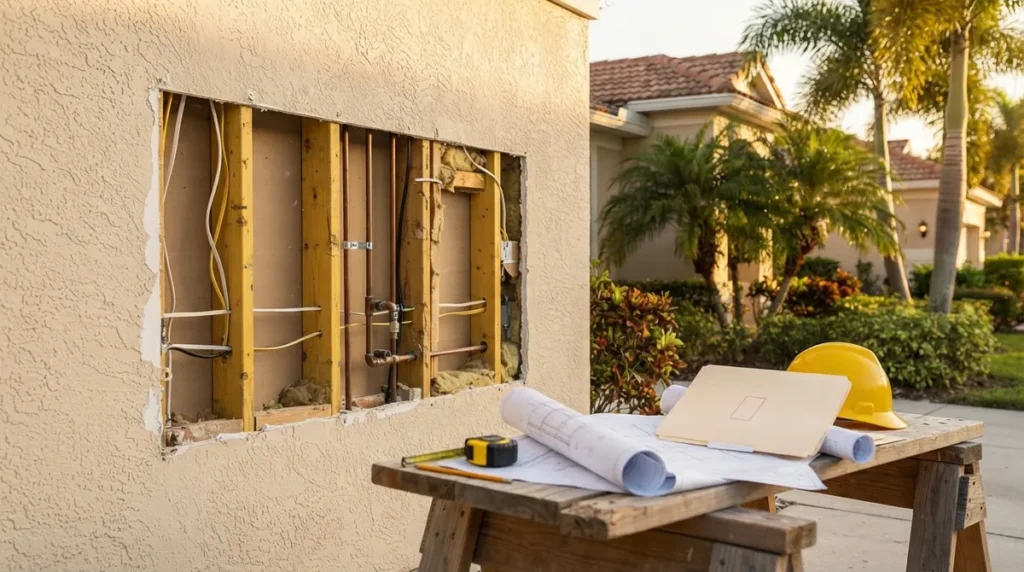
Inspectors may require selective demolition to verify concealed work, so ask your department which items must be exposed and budget for drywall and finish repairs.
-
Florida has no statewide fee or timeline for after-the-fact permits; costs and processing times vary locally, so verify with your jurisdiction and address problems before closings or notices become urgent.
Here's the thing about finding out your project was built without a permit: you are far from alone, and it is very fixable. Maybe you bought a home with a sunroom nobody pulled paperwork for. Maybe a contractor swore the permit was handled, then vanished. Maybe a lender, an appraiser, or a code officer just pointed at something and said, "Where's the permit for that?" Take a breath. A Florida after-the-fact building permit is the local process built for exactly this situation.
In plain terms, it is your building department's review of work that was already done before the required permit was issued. It is not a free pass, and it does not automatically make the work legal. But for most owners, it is the cleanest path from "uh-oh" to "all set." In this guide, we'll walk through what the process looks like, what paperwork to gather, what inspectors look for, and how to avoid the mistakes that slow people down. Whether you are a homeowner, a general contractor, a solar installer, or a real estate pro, you'll leave with a clear plan.
What Is a Florida After-the-Fact Building Permit?
Florida Statutes §553.79(1)(a) generally makes it unlawful to construct, alter, repair, or demolish a building without first obtaining a permit from the enforcing agency, unless an exception applies. When work happens first and paperwork comes second, the fix is an after-the-fact (sometimes called retroactive) permit.
Here is what that process generally involves:
- Documenting the work that already exists
- Providing plans or as-built drawings that show what was actually built
- Getting professional evaluations when structural, electrical, or concealed work is involved
- Paying local fees, which often include extra charges for work started without a permit
- Passing inspections so the building official can verify the work meets code
The key phrase is "verify the work meets code." Applying and paying a fee does not establish compliance or guarantee approval. If something does not meet the Florida Building Code, it may need to be corrected, removed, or rebuilt. If you want a deeper look at the concept, our guide on what after-the-fact permitting in Florida actually means is a great companion read.
Why Unpermitted Work Becomes a Problem
Many people don't realize there's an issue until something forces it into the open. Common triggers include:
- A home sale, where a buyer's inspection or title search flags the work
- A mortgage, refinance, or HELOC that stalls over unpermitted improvements
- An insurance claim or a flood insurance question
- A neighbor complaint or code-enforcement visit
- A new permit application that exposes older unpermitted work
Unpermitted work can lead to code-enforcement action, stop-work or correction orders, and penalties under state and local law. Fee schedules vary, so the exact cost depends on where your property sits. For a closer look at the consequences, see our breakdown of the penalty for building without a permit in Florida.
How to Get an After-the-Fact Building Permit in Florida: Step by Step
Procedures differ from city to city and county to county, but the overall path looks remarkably similar. Here's the roadmap most owners follow.
- Confirm which building department has jurisdiction. Property near city lines can be trickier than you'd think. Our building department lookup tool can help you pinpoint the authority that actually controls your address.
- Check for open permits and prior records. Before you apply, see what is already on file. Our open permit search is a handy first stop.
- Define the scope of work. Write down exactly what was built or changed: square footage, materials, electrical circuits, plumbing fixtures, structural elements, and approximate dates.
- Gather or create as-built drawings. The department needs to see what really exists, not what someone intended to build.
- Get professional evaluations if required. Structural, electrical, or mechanical questions often call for a licensed engineer or architect.
- Submit the application and pay fees. Expect local after-the-fact or investigative charges on top of standard permit fees.
- Respond to plan review comments. Reviewers may ask for clarifications, revised drawings, or product approvals.
- Schedule and pass inspections. This may include exposing concealed work so inspectors can verify it.
- Close out the permit. Once final inspections pass, you receive the closeout documentation you'll need for sales, insurance, and lenders.
For a county-flavored walkthrough, you may also like our article on how to get an after-the-fact permit in Florida.
What Documents You'll Typically Need
Every department has its own checklist, so always confirm with the one serving your property. That said, most applications include a version of the following:
| Document | What It Shows | When It's Usually Needed |
|---|---|---|
| Permit application | Owner, contractor, and property details | Always |
| Scope of work | What was built, altered, or repaired | Always |
| As-built drawings or plans | The condition and dimensions of the existing work | Most structural, additions, and remodels |
| Site plan or survey | Setbacks, lot coverage, location on the property | Additions, accessory structures, pools, walls |
| Engineer or architect letter | Professional evaluation of structural or concealed work | When inspectors can't verify elements directly |
| Product approvals | Windows, doors, roofing, and similar products meeting Florida requirements | Envelope and wind-resistant products |
| Contractor information | License and registration details | When a licensed contractor is involved |
If drawings are the piece you're missing, our as-built drawings service exists for exactly this, and our guide to preparing as-builts for an after-the-fact permit shows what a strong package looks like.
Do You Need an Engineer or Architect?
Often, yes, but not always. The building department may require a licensed design professional when work is structural, when it affects load paths, or when key elements are hidden behind finished surfaces. Think trusses, framing, foundations, tie-downs, and electrical panels buried in a wall.
Here's a quick guide to when a professional letter commonly comes into play:
| Type of Work | Is a Professional Evaluation Likely? | Why |
|---|---|---|
| Room addition or enclosed patio | Very likely | Structural and wind-load questions |
| Reroof or truss changes | Likely | Roof framing and attachment need verification |
| Interior cosmetic updates | Less likely | Typically lower structural risk, but check local rules |
| Pool cage or screen enclosure | Likely | Wind loading and anchoring |
| Electrical or plumbing changes | Depends | Inspector may want testing or exposure |
Our in-house team prepares sealed drawings, so this step does not turn into a game of phone tag with outside consultants. You can read more about engineer letters and structural engineering to see how that evaluation fits into your permit.
What Inspectors Look For (and the Wall-Opening Question)
This is the question everyone asks: "Will they make me tear into my walls?" The honest answer is that it depends. Inspectors need to verify what they can't see. If framing, wiring, plumbing, or fasteners are concealed, the building official may require selective demolition or exposure so components can be examined.
Ways owners reduce the surprise factor:
- Take photos during any future work, and share any photos from the original construction if you have them
- Ask the building department which items need to be exposed before you schedule inspections
- Use a professional's field observations to limit how much opening is needed, where the department allows it
- Plan the repair budget for drywall and finishes just in case
If the work does not comply with the Florida Building Code, you may need to correct, remove, or reconstruct it. That's not meant to be scary; it simply means a permit alone does not rewrite the code. For more on this, our article on whether you will really have to demolish unpermitted work puts the worry in perspective.
How Much Does It Cost and How Long Does It Take?
This is where honesty matters. No statewide standard after-the-fact permit fee or uniform processing time exists. Fees, penalties, and timelines are set or administered locally, so a project in one jurisdiction can look very different from the same project in another.
What typically drives your total cost:
- Local permit fees, plus any after-the-fact or investigative surcharges
- Drafting and as-built drawing costs
- Engineering or architectural evaluation fees
- Inspection costs, including any exposure and repair of finished surfaces
- Corrections if the work does not meet code
For a closer look at what moves the needle, see our guides on after-the-fact permit costs in Florida and how to estimate those costs for your own project.
The Exemption Many Owners Ask About
You may have heard that small projects don't need a permit. The statute does include an exemption for certain work valued under $7,500 on an owner's single-family dwelling, but it comes with conditions. Applicability depends on the current statute, your local building department, and the nature of the work. Electrical, structural, and similar items often fall outside simple exemptions, so please verify before relying on it. When in doubt, a quick call to the department, or to a permitting pro, saves a lot of headaches.
Who Should Do What: DIY vs. Getting Help
Some owners tackle the application themselves, and that can work for simple situations. But after-the-fact permitting has a way of getting complicated quickly, especially when drawings, engineering, and multiple reviewers are involved.
| Task | Doing It Yourself | With a Permitting Service |
|---|---|---|
| Finding the right jurisdiction | Possible, but easy to get wrong near city lines | Confirmed up front |
| Preparing as-built plans | Requires drafting skills and local standards knowledge | Handled by drafting staff |
| Engineering evaluation | Must hire and coordinate separately | Coordinated or provided in house |
| Responding to reviewer comments | Can be time-consuming and technical | Managed and resubmitted for you |
| Tracking inspections | Easy to miss steps | Tracked through closeout |
A Florida permitting service can identify the authority having jurisdiction, assemble the application and as-built materials, coordinate licensed contractors or design professionals, and track reviews and inspections. What it can't do is guarantee approval or replace the building official's decisions. Anyone who promises otherwise isn't being straight with you. Our after-the-fact and expired permit service follows the file all the way to closeout, and our permit facilitation and filing team handles the paperwork in between.
Tips for Specific Audiences
For Homeowners and Residential Property Owners
Start by finding out what's on record, then collect any receipts, contracts, or photos from the original work. If a previous owner skipped permits, you inherit the situation, but you also have the power to fix it. Our homeowner resources are a good starting point.
For General Contractors and Design Trades
If you're asked to legalize work done by someone else, document existing conditions carefully before touching anything. Outsourced drafting and sealed drawings keep your crews on schedule while the paperwork gets sorted. Learn more about support for general contractors.
For Solar Companies
If an install went in without the proper approvals, you'll want code-compliant structural and electrical documentation ready before inspection. Our solar contractor services are built around fast, clean filings.
For Real Estate Professionals
Permit issues can stall closings fast. Early research and a clear legalization plan keep deals alive. See how we help with realtor and closing support, and read our guide on whether a home sale can close with unpermitted work.
Mistakes That Slow Down Your Permit
- Guessing the jurisdiction. The wrong department means wasted time and fees.
- Submitting plans of what should exist. As-builts must show what actually exists.
- Ignoring concealed work. Surprises at inspection cost more than planning for them.
- Skipping professional input. A missing engineer letter is one of the most common reasons reviewers send files back.
- Waiting. Open violations, stop-work orders, and closing deadlines get harder the longer they sit.
If you have already received a notice, our walkthrough on what to do after a code enforcement notice can help you respond calmly and quickly. And if time is tight, our urgent permit rescue team works with denials, stop-work orders, and held-up closings.
Your Next Step
Unpermitted work feels heavy, but it is one of the most solvable problems in Florida construction. Confirm your jurisdiction, document what exists, bring in the right professionals, and move through inspections one step at a time. Keep in mind that outcomes always depend on the building official, so build in flexibility.
Ready for a partner who answers within 30 minutes and works in all 67 Florida counties? Get a free quote and let 1 Contractor Solutions handle the filing, drawings, and tracking while you get back to your project. You can also see what our customers say when you visit us on Google — 1 Contractor Solutions, and for permitting tips between projects, follow us on LinkedIn or follow us on Facebook.
FAQs
How do I get an after-the-fact building permit in Florida?
First, confirm which building department has jurisdiction over your property. Then document the existing work with a scope of work and as-built drawings, get any required engineering letters, submit the application with fees, and pass inspections. Every jurisdiction runs the details a little differently, so check with yours or a permitting service.
Will I have to open walls or remove finished work for an inspection?
Possibly, and that's totally normal. If inspectors can't verify concealed framing, wiring, or plumbing, the building official may require selective exposure. Asking your department up front, and having a professional evaluate the work, can sometimes reduce how much needs to be opened.
What happens if unpermitted work doesn't meet the Florida Building Code?
The owner may need to correct, replace, or even remove the noncompliant work before the permit can be approved. Paying a fee or submitting an application doesn't guarantee approval. The good news is that many issues can be fixed with the right drawings and corrections.
Do I need an engineer or architect to legalize unpermitted construction?
Often, especially for additions, roof framing, enclosures, and other structural or concealed work. Requirements depend on your project and local rules, so the building department will tell you what they need. Having a sealed letter ready can prevent a lot of back-and-forth.
Can I sell a Florida home with unpermitted work?
It can be done, but it often complicates negotiations, financing, and closing timelines. Many sellers choose to legalize the work first so buyers and lenders feel confident. A permitting professional can help you weigh the options for your specific situation.
We do this work every day across all 67 Florida counties. Call (866) 314-6931 and we will tell you what your situation actually requires — including when you do not need us.
Related services
Permit Facilitation & Filing
You have a crew scheduled, a client asking for dates, and a permit sitting somewhere in a queue you cannot see. We file it, w…
See the servicePlan Review Coordination
A permit in plan review is not one queue. On a commercial project it can be six queues, each with its own reviewer, its own c…
See the serviceReady to get your permit moving?
One call tells you which jurisdiction controls your project, what it will take, and what it will cost. Most of the time we can scope it on the phone.