
Blog
How Do You Resolve a Florida Code Violation After the Fact?
Got a Florida code violation for unpermitted work? Learn the step-by-step after-the-fact resolution process, costs, fines, and when to get help.
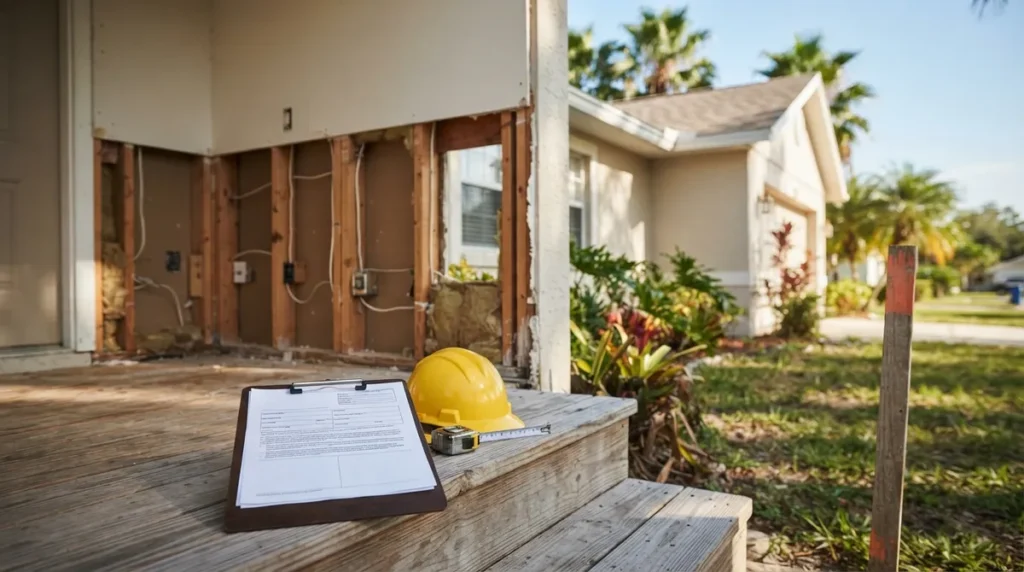
Key Takeaways
-
Act quickly on any code violation notice: fines can accrue for continuing violations after the compliance date, so waiting makes the problem more expensive.
-
Treat the permit track and the code enforcement track as separate: closing an after-the-fact permit does not automatically erase enforcement fines, liens, or penalties.
-
Confirm which city or county actually issued the violation before applying, since near city limits it is not always obvious who has jurisdiction.
-
Expect possible access requirements: if work was covered before inspection, you may need selective demolition or an engineer's verification, though many projects avoid a full tear-out.
-
If a permit is denied, Florida law under §553.79 requires the agency to identify the specific noncompliant features and code sections, giving you a roadmap for revisions and resubmittal.
-
Get written confirmation that the permit is finaled, the violation case is closed, fines are resolved, and no lien remains, since lenders, insurers, and buyers will ask for these documents.
You open the mailbox, and there it is: a notice from the city or county saying work on your property was done without a permit. Your stomach drops. Maybe you bought the home that way. Maybe a prior contractor skipped the paperwork. Maybe you honestly did not know a permit was required. Take a breath. This happens to Florida property owners, contractors, and investors every single day, and it is very fixable.
Code violation after the fact resolution in Florida means working with your local building department to document the unpermitted work, apply for an after-the-fact permit where your jurisdiction allows it, prove the work meets the Florida Building Code, and pass inspections. It is not a magic stamp of approval, and it does not automatically erase separate fines. But with the right plan, you can get to a clean, closed file.
In this friendly guide, we will walk you through the full process, the costs and risks to watch for, and when it makes sense to bring in help. Whether you are a homeowner, general contractor, solar installer, or real estate pro, you will leave knowing your next step.
What Does After-the-Fact Resolution Actually Mean in Florida?
Florida generally requires a permit before covered construction, alteration, repair, or demolition begins. Under Florida Statutes §553.79, the appropriate state or local enforcing agency handles permitting and enforcement. In practice, that means your city or county building department decides what to apply for, which plans to submit, which inspections to pass, and what to charge.
When work happens without that permit, the jurisdiction can issue a notice of violation. Resolving it "after the fact" simply means legalizing the work retroactively, or correcting it, instead of starting from scratch. If you want the big-picture version, our guide on what after-the-fact permitting is in Florida is a great companion read.
Two Separate Tracks You Need to Understand
Here is the part that surprises most people. A code violation after the fact usually involves two tracks running side by side:
- The permit track: documenting the work, getting plans reviewed, and passing inspections through the building department.
- The enforcement track: any fines, penalties, or liens that code enforcement may impose separately.
Closing the permit does not automatically wipe out an enforcement fine. Always confirm both tracks with the office named on your notice.
Can You Really Get an After-the-Fact Permit in Florida?
In many Florida jurisdictions, yes. But it is not automatic approval. An after-the-fact permit is not a substitute for code compliance. You still have to show that the work meets the applicable Florida Building Code and local requirements. Procedures, required documents, surcharges, and deadlines vary from one city and county to the next.
The good news is that many jurisdictions have a well-worn path for this. If you want a deeper dive, see can I legalize unpermitted work in Florida for a friendly explanation of how it typically plays out.
The Practical Resolution Sequence, Step by Step
Every case is a little different, but most successful resolutions follow the same general path. Here is the sequence we see work again and again:
- Get the violation in writing. Collect the notice, the case number, the deadlines, and the name of the issuing office.
- Confirm who controls the property. Near city lines, it is not always obvious whether the city or the county is in charge. Our building department lookup tool can help you find the right office.
- Research permit history. Check for open or expired permits with the open permit search tool so you know what is already on file.
- Define the scope of work. List exactly what was built, altered, or replaced, and when it was done.
- Engage licensed professionals when required. Florida-licensed engineers, architects, or contractors may be needed to document and certify the work.
- Submit the after-the-fact application and supporting plans. This usually includes drawings that show what actually exists on site.
- Complete corrections and inspections. Address reviewer comments and pass required inspections.
- Get written finalization. Obtain confirmation that the permit is finaled and the violation is closed.
That last step matters more than people realize. A verbal "you're good" will not help you at closing, with an insurance claim, or during a refinance. Get it in writing.
What Documents Do You Typically Need?
Required paperwork varies by jurisdiction, but most after-the-fact packages include some version of the items below.
| Document | Why It Is Needed | Who Usually Prepares It |
|---|---|---|
| Copy of violation notice | Ties your application to the open case | Owner or representative |
| Site plan or survey | Shows setbacks, lot coverage, and placement | Drafter or surveyor |
| As-built drawings | Documents what was actually built | Drafter or design professional |
| Engineer letter or sealed drawings | Verifies structural or life-safety compliance | Florida-licensed engineer |
| Contractor or owner-builder information | Establishes who is responsible for the work | Owner or licensed contractor |
| Product approvals and specs | Confirms windows, roofing, or equipment meet code | Contractor or manufacturer |
If you need drawings that reflect existing conditions, as-built drawings are usually the foundation of the application. And when a reviewer wants proof of structural adequacy, an engineer letter can be the document that gets your file moving.
Will You Have to Open Walls or Tear Anything Out?
This is the question everyone asks, and the honest answer is: it depends. Inspectors need to verify structural, electrical, plumbing, mechanical, and life-safety components. If work has been covered up before any inspection, the jurisdiction may require selective demolition or another way to see what is behind the finish.
If existing work cannot be shown to comply, the building department may require corrections, redesign, or in some cases removal. The remedy depends on the type of work and the local review. The encouraging part is that many projects get through with modest access openings and an engineer's verification rather than a full tear-out. For more on this, read will you really have to demolish unpermitted work.
What Can Code Enforcement Fines Look Like?
Let us talk about the scary part, calmly. Code-enforcement penalties can apply separately from permit fees. Under Florida Statutes §162.09, enforcement-board fines can accrue for continuing violations after an order's compliance date. The statute sets general limits that include the following:
| Violation Type | General Statutory Fine Limit |
|---|---|
| First violation | Up to $250 per day |
| Repeat violation | Up to $500 per day |
| Irreparable or irreversible violation | Up to $5,000 |
| Specified unsafe structures or conditions | Higher limits may apply |
Section 162.09 also provides that a recorded certified fine order can become a lien. An unpaid lien may be subject to foreclosure or a money-judgment action after the statutory period, and under §162.10 a lien generally does not continue longer than 20 years after recording unless a qualifying court action is commenced. Building-code enforcement under §§553.79 and 553.80 has a statutory distinction from the general Local Government Code Enforcement Boards Act, so confirm the applicable route and penalties with your local authority.
The takeaway is simple: do not let a notice sit. Fines can accrue while you wait, so acting quickly protects your wallet. Our overview of the penalty for building without a permit in Florida goes deeper on this.
How Much Does Resolution Cost?
There is no single statewide price. Permit fees, after-the-fact surcharges, review timelines, inspection requirements, and correction deadlines are set or administered locally. Your total typically depends on a handful of variables:
- The type and size of the unpermitted work
- Whether the jurisdiction adds an after-the-fact surcharge or penalty fee
- The cost of drawings, engineer letters, and any testing
- Whether corrections or selective demolition are required
- Any separate code-enforcement fines or administrative costs
For a realistic breakdown, see after-the-fact permit cost in Florida. Getting a clear scope early is the best way to avoid surprise expenses.
What If Your Permit Application Is Denied?
Here is a reassuring piece of Florida law. Under §553.79, when a permit is denied or revoked for code noncompliance, the enforcing agency must identify the specific noncompliant project features and the applicable code chapters and sections. That written explanation is your roadmap. Use it to prepare revisions, correct the plans, and resubmit.
A denial is not the end of the road. It is feedback. If you have been rejected, our guide on why a building permit gets rejected will help you understand the most common reasons, and our revisions and resubmittals service exists for exactly this moment.
Who Needs Help With This, and What Does It Look Like?
Different people land in this situation for different reasons. Here is how it commonly plays out for each group:
- Homeowners: You bought a house with an unpermitted addition, or a past contractor never finaled the job. You need a clear, calm path to legalize it.
- General contractors: A sub skipped a permit or a client demanded work before approval. You need to protect your license and your reputation.
- Solar companies: An install went in before the permit closed out. You need code-compliant electrical and structural documentation fast.
- Real estate professionals: A home inspection or title search uncovered unpermitted work days before closing. You need speed and certainty.
- Design and trade professionals: Your client needs sealed drawings or MEP documentation but you do not have the bandwidth in-house.
If you are a buyer or agent facing a deadline, our guide on fixing a Florida closing held up by unpermitted work is worth a read.
Why Many Owners Hire a Permitting Partner
You can absolutely handle parts of this yourself. But after-the-fact files are rarely simple. They involve code research, as-built documentation, engineering, reviewer comments, and sometimes negotiation with code enforcement. It is a lot to juggle while also living your life or running a business.
That is where 1 Contractor Solutions comes in. We act as Florida's outsourced permitting department. We figure out which jurisdiction actually controls your project, prepare the plans, file the application, work every reviewer comment, and carry it through approval and closeout. Our drafting and engineering are in house, and our own engineer signs and seals the work, so when a reviewer flags something, we fix it without waiting on an outside consultant. We serve all 67 Florida counties and have filed in more than 400 municipalities. You can learn more about our after-the-fact and expired permit services and our code compliance violation support.
We also know that violations feel urgent. If you are staring at a stop-work order, a looming closing, or a code-enforcement hearing, our urgent permit rescue team responds within 30 minutes, day or night. Curious how others feel about working with us? See what customers say by visiting our 1 Contractor Solutions page on Google, and stay connected when you follow us on LinkedIn or follow us on Facebook.
How Do You Confirm the Violation Is Really Closed?
Finishing the inspections feels like the finish line, but there is one more thing to verify. Make sure you have:
- Written confirmation that the building permit is finaled or closed
- Written confirmation from code enforcement that the violation case is closed
- Documentation that any fines have been paid, reduced, or resolved
- Confirmation that no lien remains recorded against the property, or a recorded release if one existed
Keep these documents somewhere safe. They are exactly what a lender, insurer, buyer, or title company will ask to see later. For a helpful primer on why this matters, read about what happens when an open permit is found at closing.
Common Mistakes to Avoid
After helping so many owners and pros through this, a few patterns stand out. Steer clear of these:
- Ignoring the notice. Deadlines are real, and fines can accrue.
- Assuming a permit erases fines. Permit resolution and code-enforcement penalties are separate.
- Calling the wrong office. Make sure you are dealing with the jurisdiction that actually issued the violation.
- Skipping professional documentation. Weak or incomplete drawings lead to rejected submittals.
- Covering up more work. Do not close walls or finish surfaces until inspections are cleared.
- Getting nothing in writing. Always secure written finalization.
Final Thoughts: You Have More Options Than You Think
A code violation after the fact feels heavy, but it is one of the most solvable problems in Florida construction. The path is clear: get the notice in writing, document the work, apply through the right jurisdiction, correct what needs correcting, pass inspections, and lock in written closure. Because procedures and fees vary by city and county, always confirm current requirements with the office named on your violation notice.
If you would rather have an experienced team carry the load, we would love to help. Get a free quote from 1 Contractor Solutions today, and let us turn that stressful notice into a closed file so your project, sale, or business can keep moving.
FAQs
How do I resolve a building code violation for unpermitted work in Florida?
Start by getting the violation notice in writing and confirming which city or county issued it. Then document the work, apply for an after-the-fact permit where your jurisdiction allows it, submit the required plans, complete any corrections, and pass inspections. Finish by getting written confirmation that both the permit and the violation case are closed.
Can Florida code enforcement fine me while I am applying for a permit?
Possibly, yes. Under Florida Statutes §162.09, fines can accrue for continuing violations after an order's compliance date, and they are separate from permit fees. The smartest move is to contact the code-enforcement office early, show that you are actively working toward compliance, and keep every deadline in view.
Will I have to open walls or remove finished work for an inspection?
Sometimes. If work was covered before inspection, the jurisdiction may require selective demolition or another way for inspectors to verify structural, electrical, plumbing, or mechanical components. Many projects get through with limited access openings and an engineer's verification rather than a full tear-out.
Do I need an engineer or licensed contractor to legalize unpermitted work in Florida?
It depends on the scope of work and the local building department. Structural, electrical, and life-safety items often call for sealed drawings or an engineer letter, and licensed professionals may be required to prepare or perform corrections. Your jurisdiction can tell you exactly what it will accept.
How do I know if a code violation has been closed or a lien released?
Ask both the building department and the code-enforcement office for written confirmation that the permit is finaled and the case is closed. If a fine order was recorded as a lien, request a recorded release and keep copies for future lenders, buyers, and title companies.
We do this work every day across all 67 Florida counties. Call (866) 314-6931 and we will tell you what your situation actually requires — including when you do not need us.
Related services
Permit Facilitation & Filing
You have a crew scheduled, a client asking for dates, and a permit sitting somewhere in a queue you cannot see. We file it, w…
See the servicePlan Review Coordination
A permit in plan review is not one queue. On a commercial project it can be six queues, each with its own reviewer, its own c…
See the serviceReady to get your permit moving?
One call tells you which jurisdiction controls your project, what it will take, and what it will cost. Most of the time we can scope it on the phone.