
Blog
6 Solar Company Permitting Florida Steps for 2026
A friendly 2026 roadmap to solar company permitting in Florida: AHJs, permit packages, utility interconnection, reviews, and closeout.
Key Takeaways
-
Always confirm the Authority Having Jurisdiction (AHJ) before drafting plans, since filing with the wrong city or county office is one of the most common and avoidable causes of permit delays.
-
A local building or electrical permit and utility interconnection approval are separate processes; for grid-connected systems, utility approval is required before installation and operation.
-
Structural documentation for roof attachments and wind loads is a frequent trouble spot in Florida, so include it complete in the first submission to avoid rejection letters.
-
Schedule final inspections promptly and run an open permit search before closing a job, since lapsed or open permits can cause problems for homeowners at refinance or sale.
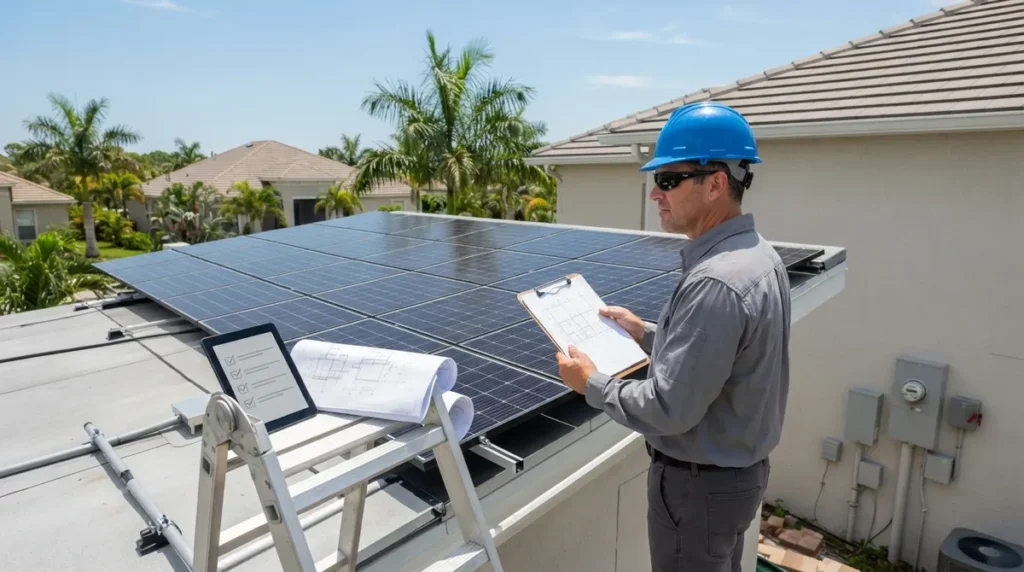
If you run a solar company in Florida, you already know the sunshine is the easy part. The paperwork? That's where projects get stuck. Between the building department, the electrical reviewer, the serving utility, and sometimes a zoning or fire review, a single rooftop job can feel like it needs a small army just to get a green light.
Here's the good news: solar company permitting in Florida follows a pattern. Once you understand who reviews what, what goes in the package, and where delays usually hide, you can plan around the friction instead of reacting to it. And you don't have to do it alone.
In this friendly 2026 guide, we'll walk through six practical steps, from finding the right authority to closing out your final inspection. Whether you're a growing installer, a general contractor adding solar to your offerings, or a homeowner trying to understand what your installer is doing, you'll leave with a clear roadmap. One note up front: rules, fees, and forms vary by city, county, and utility, so always confirm current requirements with the local office before you submit.

Step 1: Identify the Authority Having Jurisdiction (AHJ)
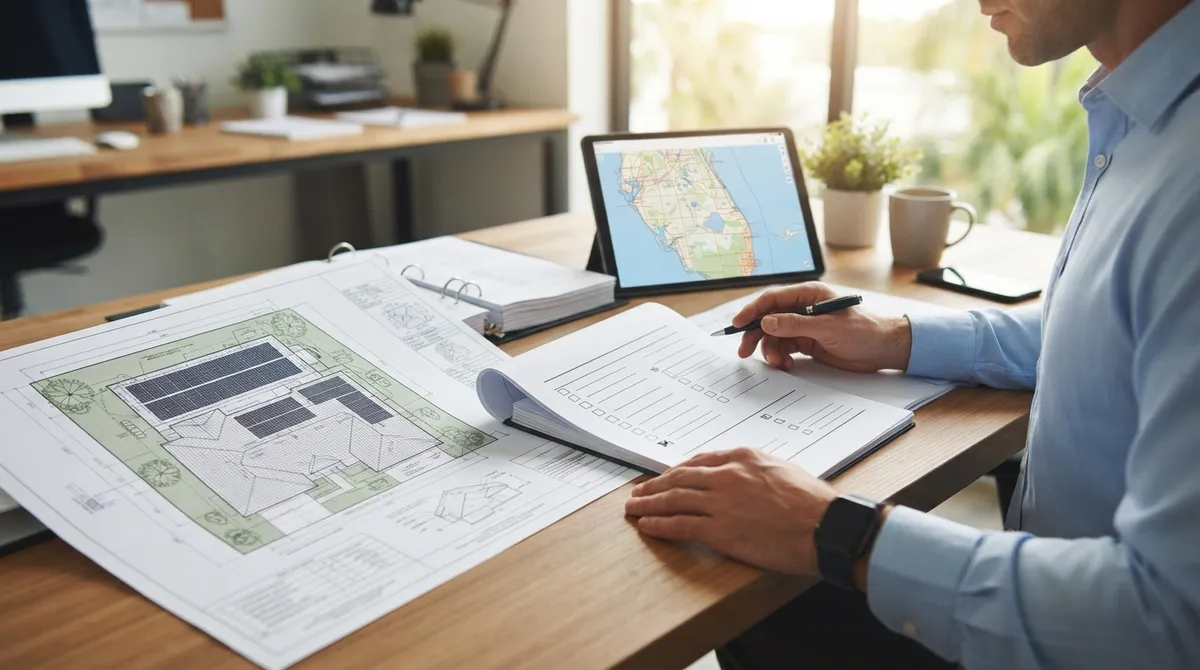
Every smooth permit starts with one question: who actually reviews this address? Florida has 67 counties and hundreds of municipalities, and the line between a city and unincorporated county can be surprisingly fuzzy near borders. Filing with the wrong office is one of the most common (and most avoidable) time-wasters.
Before you build a single sheet of drawings, confirm the AHJ for the property. Our building department lookup tool can help you point your application in the right direction. If you're working across several jurisdictions, this check becomes a habit worth building into every intake.
Why jurisdiction matters so much
Forms, engineering standards, fees, and review procedures all differ from one jurisdiction to the next. For example, Charlotte County's residential solar PV page has listed a $90 flat fee with additional calculations for certain valuations, while Miami-Dade County states that electrical permits are required for solar PV energy systems. Those are just two snapshots, and both can change, so verify against the current local fee schedule.
Step 2: Know Which Permits Your Solar Project Needs
Rooftop PV in Florida generally requires local building and electrical permits. But "generally" does a lot of heavy lifting. Depending on your project type, additional reviews can enter the picture.
| Project Type | Commonly Required Permits or Reviews | Watch Out For |
|---|---|---|
| Residential rooftop PV | Building and electrical permits | Roof attachment and wind-load documentation |
| Rooftop PV with battery storage | Building, electrical, and possibly fire-safety review | Battery location and clearance rules |
| Ground-mounted system | Building, electrical, and typically zoning review | Setbacks, easements, and site plan requirements |
| Commercial rooftop PV | Building, electrical, and possibly additional commercial reviews | Stricter plan requirements and engineering |
| Utility-scale facility | Land-use, stormwater, environmental, and other development approvals | Entirely separate process from rooftop permitting |
Utility-scale projects deserve a special mention. Florida Statutes section 163.3205 addresses solar facilities in agricultural land-use and zoning categories, and it includes stormwater provisions for certain applications filed after July 1, 2026, such as a 100-year, 24-hour design-storm standard in the Northwest Florida Water Management District. These large projects should be evaluated separately from everyday rooftop work. For environmental-side requirements, our FDEP and environmental permit support may come into play.
Step 3: Build a Complete, Code-Compliant Permit Package
A clean package is the single best defense against rejection letters. Reviewers aren't trying to be difficult; they just need to see that the system is safe, properly attached, and correctly wired. Give them everything up front and you'll avoid the dreaded back-and-forth.
Most Florida jurisdictions commonly expect the following:
- A signed permit application
- A site or roof layout showing panel placement and setbacks
- An electrical one-line or riser diagram
- Equipment specification sheets for modules, inverters, and any storage
- Structural documentation addressing roof attachments, wind loads, and Florida Building Code requirements
Some jurisdictions allow contractor-prepared plans for certain projects, while others require Florida-licensed professional engineering. Check the current checklist for each office rather than assuming last month's rules still apply. If your team lacks drafting capacity, permitting support built for solar contractors can take that load off your plate.
Don't skip the structural side
Florida's wind environment makes structural documentation a frequent trouble spot. Roof attachment details, rafter or truss information, and wind-load calculations are where many first submissions get flagged. Having in-house structural engineering and MEP engineering behind your plans means a reviewer's comment turns into a quick fix instead of a week-long wait on an outside consultant.
Step 4: Handle Utility Interconnection Separately
Here's a point that trips up even experienced installers: a local construction permit and utility interconnection approval are two different processes. Getting one does not give you the other. Grid-connected systems must follow the serving utility's application and technical requirements, and utilities differ across the state, so don't assume one utility's rules apply everywhere.
Using FPL's published net-metering guidance as an example, here are some figures installers commonly need to know (confirm everything with the actual utility before relying on it):
| FPL Net-Metering Item | Published Guidance |
|---|---|
| Annual production limit | Estimated to be less than 115% of the customer's annual kWh consumption |
| Tier 1 | 10 kW and below |
| Tier 2 | Above 10 kW through 100 kW |
| Tier 3 | Above 100 kW through 2,000 kW |
| Systems at or above 50 kW | Must interconnect at 120/208 V or 277/480 V wye three-phase |
FPL also states that interconnection approval is required before installation and operation under its net-metering process, and that a system must not operate, except for testing and inspection, before a new bidirectional meter is installed. It also asks for completed local permit and inspection evidence as part of its post-construction process. In short, sequence matters: permit, utility approval, install, inspection, meter, then permission to operate.
Step 5: Coordinate Reviews, Comments, and Resubmittals
Submission day isn't the finish line; it's the starting gun. Building, structural, and electrical reviewers may each leave comments, and zoning review is commonly added for ground-mounted systems. Responding quickly and precisely is what separates a two-week approval from a two-month slog.
Here's a simple workflow that works well:
- Submit the complete package to the correct AHJ portal or office.
- Track the application daily so you catch status changes the moment they happen.
- Read every reviewer comment carefully and group them by discipline (structural, electrical, zoning).
- Revise the drawings and respond to each comment in writing where required.
- Resubmit promptly and confirm the reviewer has received the corrections.
This is exactly where plan review coordination and revisions and resubmittals support earn their keep. If you'd like a deeper look at timing expectations, our guide on Florida solar permit timelines breaks it down. Some solar companies also choose a licensed private provider to speed things up; see how private provider plan review and inspections work.
Step 6: Close Out Inspections and Keep Permits Alive
You've built the system. Now finish strong. Final inspection, utility paperwork, and permit closeout all need to line up so the customer can legally switch on. Open or expired permits are a headache for homeowners down the road, especially at refinance or sale, so closing things out properly protects your reputation and your customer.
A few friendly reminders for the closeout stage:
- Schedule inspections as soon as the system is ready, since permits can expire if work stalls.
- Keep your approved plans and any engineer letters on site for the inspector.
- Gather inspection sign-offs to send to the utility for permission to operate.
- Run an open permit search before you call a job complete if you're unsure of the status.
If a permit does lapse, don't panic. Our resources on fixing an expired solar permit and legalizing unpermitted solar installs walk through the options. And for fast triage, urgent permit rescue is there when a denial or stop work order threatens your schedule.
A Quick Word on HOAs, Local Rules, and Solar Rights
Homeowners and installers often ask whether an HOA or local government can block solar. Florida Statutes section 163.04 generally protects the right to install solar energy devices on buildings, while allowing reasonable, uniformly applied restrictions that don't impair system performance or increase cost. That said, it doesn't eliminate building, electrical, zoning, or utility approvals. Think of it as protection against outright bans, not a free pass around permitting.
Where 1 Contractor Solutions Fits In
Permitting is our whole world. 1 Contractor Solutions is Florida's outsourced permitting department, covering all 67 counties with permit filing, tracking, plan review coordination, and in-house sealed drawings. We respond within 30 minutes, day or night, and se habla español. If you'd like to hear what others say, see what our 1 Contractor Solutions customers say on Google. You can also follow us on LinkedIn or follow us on Facebook for Florida permitting updates.
For solar companies working along the Gulf Coast, our local pages for Hillsborough County, Sarasota County, and Lee County are good starting points, and the same expertise extends statewide.
Wrapping Up: Make Permitting the Easy Part
Solar company permitting in Florida really comes down to six moves: find the right AHJ, know which permits apply, build a complete package, handle utility interconnection separately, coordinate reviews smartly, and close out cleanly. Do those well and your crews spend more time installing and less time waiting.
Ready to take permitting off your to-do list? Get a free quote and let our team handle the filing, tracking, and engineering while you focus on building.
FAQs
Do I need a permit to install solar panels in Florida?
Yes, in most cases. Rooftop solar PV in Florida generally needs local building and electrical permits, and Miami-Dade County, for example, states that permits are required for solar PV energy systems. Exact requirements vary by city and county, so check with your local permitting office first.
Do I need utility approval before installing solar in Florida?
For grid-connected systems, yes. Utility interconnection is a separate process from your local permit, and FPL, for instance, says approval is required before installation and operation under its net-metering process. Rules differ by utility, so confirm with yours.
What documents are needed for a Florida solar permit application?
Most jurisdictions want a signed application, a site or roof layout, an electrical one-line diagram, equipment specification sheets, and structural documentation for roof attachments and wind loads. Some places also require Florida-licensed engineering, so check the current local checklist.
Can an HOA stop me from installing solar panels in Florida?
Generally not outright. Florida Statutes section 163.04 protects the right to install solar energy devices, though reasonable, uniformly applied restrictions that don't impair performance or raise costs may still apply. You'll still need your normal building, electrical, and utility approvals.
What extra permits do ground-mounted or commercial solar projects need?
Ground-mounted systems commonly add zoning review, and commercial projects or systems with batteries may trigger additional fire, structural, or other reviews. Utility-scale facilities can involve land-use, stormwater, and environmental approvals, so they're best evaluated separately from rooftop jobs.
We do this work every day across all 67 Florida counties. Call (866) 314-6931 and we will tell you what your situation actually requires — including when you do not need us.
Related services
Permit Facilitation & Filing
You have a crew scheduled, a client asking for dates, and a permit sitting somewhere in a queue you cannot see. We file it, w…
See the servicePlan Review Coordination
A permit in plan review is not one queue. On a commercial project it can be six queues, each with its own reviewer, its own c…
See the serviceReady to get your permit moving?
One call tells you which jurisdiction controls your project, what it will take, and what it will cost. Most of the time we can scope it on the phone.