
Blog
How to Get a Certificate of Occupancy in Naples, FL (2026)
Learn how to get a certificate of occupancy in Naples, FL: confirm City or Collier County, close permits, pass finals, and avoid common holdups.

Key Takeaways
-
Confirm first whether your address is in the City of Naples or unincorporated Collier County, since each has its own building department, portal, and submission channel.
-
Close out every associated permit (pools, generators, shutters, fences, site work) and confirm each shows a passed final before requesting a CO, as one open permit can block the whole certificate.
-
Gather closeout documents early: passed final inspection records, final or spot surveys, flood-zone elevation documentation, special inspection letters, and proof that all fees are paid.
-
A temporary CO is a limited interim bridge, not a final CO; fees and criteria vary (e.g., a $500 fire-district TCO fee versus a proposed $150 City item), so verify the current adopted schedule.
-
Private providers can speed plan review and inspections, but the local building official still issues the CO, and review targets of two business days (residential) or ten (commercial) don't guarantee total timing.
-
Change of occupancy projects trigger additional reviews (zoning, fire, utilities, accessibility), so budget for multiple approvals and verify current fees with the fire district before committing.
You've swung the last hammer, the paint is dry, and the crew is already eyeing the next job. Then someone says the words that make every Naples builder and homeowner groan: "We still need the certificate of occupancy." Take a breath. A certificate of occupancy in Naples is very doable when you know where to start and what the building authority will want to see.
Here's the twist that trips up a lot of people. "Naples" is not one jurisdiction. Some addresses sit inside the City of Naples, and many more sit in unincorporated Collier County. Each has its own offices, portals, and habits.
This friendly, step-by-step guide shows you how to confirm your jurisdiction, line up inspections, avoid common holdups, and know when a temporary certificate makes sense. Whether you're a general contractor, solar installer, realtor, designer, or homeowner, you'll leave with a clear plan. Fees, forms, and timelines change, so always confirm current details with the authority handling your parcel.

What a Certificate of Occupancy Actually Is
A certificate of occupancy (CO) is the local building authority's confirmation that a permitted building or space has met the applicable requirements for occupancy. In plain terms, it's the official green light that says people can safely use the space.
A CO is not the same as every closeout document you'll see in Florida. Depending on the permit and the jurisdiction, work that doesn't establish occupancy may close with a certificate of completion instead.
| Document | Typically Used For | Key Point |
|---|---|---|
| Certificate of Occupancy (CO) | New buildings, new spaces, changes of occupancy | Confirms the space is approved for occupancy |
| Certificate of Completion (CC/COC) | Permitted work that does not establish occupancy | Closes the permit; exact use varies by jurisdiction |
| Temporary Certificate of Occupancy (TCO) | Limited, interim occupancy while items remain open | Not a final CO; conditions apply |
If you're curious how the state-level picture fits together, our guide on how to get a certificate of occupancy in Florida is a helpful companion read.
Step 1: Confirm Whether Your Address Is City or County
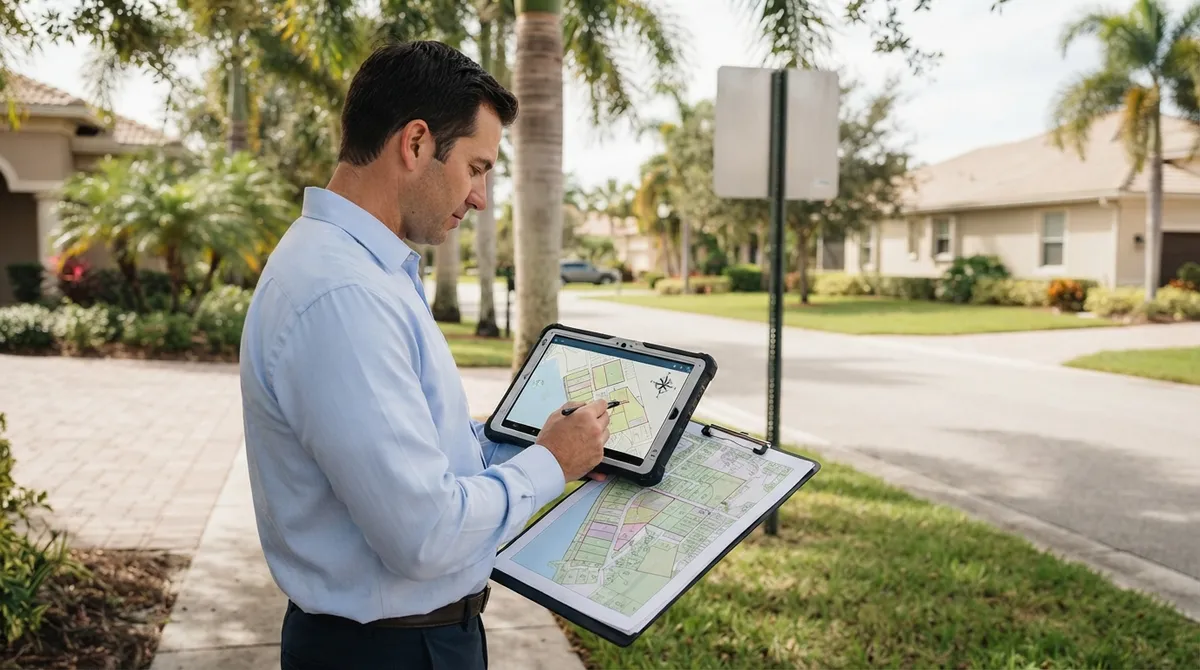
This is the step that saves the most time. Before you quote a timeline, book an inspection, or file anything, confirm which authority has jurisdiction over your parcel.
- City of Naples addresses are handled by the City's Building Department.
- Unincorporated Collier County addresses, which are many of the ones people casually call "Naples," are handled by Collier County.
- Parcels near city lines can be confusing, so verify the parcel and permit jurisdiction rather than trusting a mailing address.
A mailing address that says Naples does not guarantee City jurisdiction. Check your original building permit, since the issuing authority is usually the one that will issue your CO. If you're unsure, a quick call to the permitting office or a look at your parcel record clears it up. Our team also works with the Naples permitting area daily, so we can help you sort it out fast.
Step 2: Finish and Close Out Every Associated Permit
A CO rarely depends on one permit alone. The main building permit may be perfect, but an open pool, generator, or fence permit can still hold up your certificate.
The City of Naples guidance for private-provider-inspected projects calls for final inspections on associated permits and resolution of relevant department requirements before a CO request. Associated work can include:
- Pools and pool barriers
- Generators and fuel connections
- Hurricane shutters
- Fences and walls
- Site work and drainage
- Right-of-way permits for driveways or utility work, as applicable
Walk your project like an inspector would. Pull your permit list, confirm each one shows a passed final, and note anything still open. For help spotting stragglers, see our tips on open permit mistakes in Naples.
Step 3: Prepare Your Closeout Documents
Good paperwork is the difference between a smooth CO and a month of back-and-forth. Collier County's private provider manual describes a final package that can include inspection records, a final survey, and other project-specific certificates.
Here's a practical checklist to gather before you ask for the certificate:
- Passed final inspection records for the building permit and every associated permit.
- Any required surveys, such as a final or spot survey.
- Elevation documentation if the property is in a flood hazard area.
- Required special inspection or engineering letters, where your permit conditions call for them.
- Evidence that outstanding fees have been paid.
- Approvals from other departments that applied to your project, such as fire, utilities, or planning.
Collier County guidance notes that a spot survey may be required before a CO or certificate of completion when one wasn't previously required, and that elevation documentation may apply in flood hazard areas. Flood-zone paperwork is a classic late-stage surprise, so ask early. Our site plan services and as-built drawing support can fill documentation gaps when plans and field conditions drifted apart during construction.
Step 4: Schedule and Pass Your Final Inspections
With documents ready, it's inspection time. Collier County lists inspection scheduling and results through its CityView portal and provides inspection-desk numbers at 239-252-2406, plus 239-252-3726 after hours. The City of Naples has its own scheduling process, so use the channel for your jurisdiction.
A few tips from the field:
- Request finals only when the work is truly complete, including landscaping or site items your permit requires.
- Make sure addresses are visible, access is clear, and utilities are on.
- Have the approved plans and permit card on site.
- Fix small items, like missing covers or smoke alarms, before the inspector arrives.
If an inspection fails, don't panic. Read the correction notice, fix the items, and reschedule. Our article on what to do when a Florida final inspection fails walks through the recovery process.
Step 5: Submit Your CO Request
Once inspections pass, you request the certificate. In Collier County, the County says you request a CO or certificate of completion after all required inspections pass. Outstanding fees must be paid and applicable conditions resolved, and a mandatory solid-waste fee may also be assessed. Requests go to inspections@collier.gov.
For City of Naples projects, follow the City's current process and confirm the right submission channel with the Building Department.
| Item | City of Naples | Collier County (Unincorporated) |
|---|---|---|
| Who handles it | City Building Department | Collier County building authority |
| When to request | After final inspections and department requirements are resolved | After all required inspections pass |
| Fees | Verify the current adopted fee schedule | Outstanding fees paid; solid-waste fee may apply |
| Where to send it | Confirm with the City | inspections@collier.gov |
Quick reminder: always verify current forms, fees, and contact points before filing. Printed schedules and old web results can be out of date.
Understanding Private Provider Inspections
Florida law allows private providers to perform plan review and inspections on eligible projects. This can keep a schedule moving when the public queue is long. Importantly, the local building official still reviews the required compliance documentation and issues the jurisdiction's approval. A private provider does not issue the CO on their own.
Collier County's private provider manual lists final compliance-package review targets of two business days for residential permits and ten business days for commercial permits. Those are review targets, not a guarantee of total CO processing time. Missing documents or open permits can still extend the timeline.
If you want a deeper look at how this works elsewhere on the Gulf Coast, read our overview of using private provider plan review in Fort Myers. As a licensed private provider, our team can also support your plan review directly through our private provider services.
Temporary Certificate of Occupancy: When It Helps and When It Doesn't
A temporary certificate of occupancy (TCO) lets a space be used for a limited time while certain items remain unfinished. It is not the same as a final CO, and it comes with conditions.
City guidance for private-provider projects describes TCO requests as requiring fees paid and final inspections approved or partially approved. Any partial pass must document what remains and confirm the space is safe for occupancy without limitations. Always confirm the current TCO criteria directly with your jurisdiction.
A few cautions on fees, since they get mixed up often:
- A Greater Naples Fire Rescue District fee schedule effective January 1, 2025 lists a $500 temporary certificate of occupancy/deficiency review fee, with approval for 60 days. That's a fire-district fee item, not a universal City or County TCO fee.
- A City of Naples fee document lists a $150 TCO fee, but it appears in a proposed or amending schedule. Check the current adopted schedule before relying on it.
Think of a TCO as a bridge, not a destination. If you're racing a lease start date or a closing, learn more about it in our explainer on what a temporary certificate of occupancy is in Florida.
Change of Use or Change of Occupancy
Opening a retail shop in a former office or turning a warehouse bay into a restaurant often triggers a change of occupancy. That's different from a brand-new building CO, and it usually brings more reviewers into the conversation.
Don't assume the building inspection alone completes the process. Depending on the project, you may also need to coordinate:
- Zoning and planning approvals
- Fire and life-safety review
- Utility and water/sewer requirements
- Flood and site conditions
- Accessibility compliance
The Greater Naples Fire Rescue District fee schedule lists a $200 change-of-occupancy application review fee and a $150 change-of-occupancy permit plan-review/inspection fee. Verify current fees and applicability with the District before you budget. For businesses, a certificate of use may also be part of the picture, which we explain in certificate of occupancy vs. certificate of use.
Common Holdups and How to Avoid Them
After helping contractors, solar companies, and owners across Florida, we see the same snags again and again:
- Wrong jurisdiction. Filing with the City when the parcel is in Collier County, or the reverse, costs weeks.
- Open associated permits. A forgotten shutter or fence permit can block the CO.
- Missing survey or elevation paperwork. Flood-zone documentation arrives late.
- Unpaid fees. Outstanding balances stop issuance until they're cleared.
- Unpermitted work discovered at final. This leads to holds that require legalization steps.
If unpermitted work is the problem, you're not stuck. Our guide on 14 ways to clear a CO hold for unpermitted work in Florida and our overview of 7 steps to legalize unpermitted work lay out realistic paths forward. For broader pitfalls on local jobs, review 8 Naples permit mistakes that stall your project.
Tips for Each Type of Reader
General Contractors and Design Pros
Build a closeout checklist into every job. Track associated permits in one place and confirm surveys, special inspection letters, and sealed documents before you request finals. If as-builts differ from the approved set, update them early.
Solar Companies
Make sure your electrical and structural documentation matches what was installed, and confirm the final passes on the solar permit. Our guide on solar permits in Naples covers local specifics.
Realtors and Investors
A missing CO can derail a closing. Search for open permits before you list or offer, and loop in a permitting pro early. See whether you can sell a Florida house without a certificate of occupancy for the realistic options.
Homeowners
Keep every permit card, inspection sign-off, and receipt. After your last inspection passes, ask in writing about the CO or certificate of completion rather than assuming it's automatic.
When to Bring In Help
You can often handle a straightforward CO on your own. But some situations are worth a second set of hands: stalled finals, missing as-builts, flood-zone documentation, change-of-use projects, or a closing date that's closing in fast.
1 Contractor Solutions acts as an outsourced permitting department across Florida. We confirm jurisdiction, coordinate closeout, prepare plans and engineering with our own in-house sealed drawings, and carry the file through approval. Browse our certificate of occupancy services or our overview of what a permit expediter in Naples does to see if it's a fit. You can also visit us on Google — 1 Contractor Solutions to see what other customers have shared.
Want to stay connected? Follow us on LinkedIn or follow us on Facebook for Florida permitting updates. Our site is supported by Brain Buzz Marketing.
Quick-Start Roadmap
- Confirm your jurisdiction: City of Naples or Collier County.
- Close out every associated permit.
- Assemble surveys, elevation documentation, and required letters.
- Pass all final inspections and clear any fees.
- Submit your CO or certificate of completion request.
- Use a TCO only if your jurisdiction allows it and your situation fits.
Let's Get You Across the Finish Line
A certificate of occupancy in Naples is the last big milestone between you and a finished project. Confirm your jurisdiction first, close every permit, gather the right paperwork, and pass your finals. Do that, and the certificate usually follows without drama.
If you'd rather hand off the details, we're happy to help. Ready to get moving? Get a free quote and our team will respond fast, so your project can open its doors.
FAQs
How do I get a certificate of occupancy in Naples, Florida?
Start by confirming whether your address falls under the City of Naples or unincorporated Collier County. Then close out the building permit and all associated permits, gather any required surveys and documents, pass your final inspections, clear outstanding fees, and submit your request to the right authority. It's a friendly checklist, and each box you tick makes the next one easier.
What is the difference between a certificate of occupancy and a certificate of completion?
A certificate of occupancy confirms a permitted building or space has met the requirements for occupancy. A certificate of completion is generally used to close permitted work that doesn't establish occupancy, though exact usage varies by jurisdiction. Your permit type will usually tell you which one you need.
Can I occupy a building with a temporary certificate of occupancy in Naples?
Often yes, but only within the limits your jurisdiction sets. A temporary certificate is not a final CO, and any remaining items must be documented and safe for occupancy. Confirm the current TCO criteria and fees with the City of Naples, Collier County, or the fire district before you move in.
How long does it take to receive a certificate of occupancy after final inspection?
It depends on your jurisdiction and how complete your paperwork is. Collier County's private provider manual lists review targets of two business days for residential and ten business days for commercial compliance packages, but those are targets, not guarantees. Open permits, unpaid fees, or missing surveys can add time.
Can a private provider complete inspections for a Naples certificate of occupancy?
Yes, Florida law allows private providers to perform inspections on eligible projects. The local building official still reviews the required compliance documentation and issues the jurisdiction's approval, so the private provider doesn't issue the CO on their own. It can be a great way to keep your schedule moving.
We do this work every day across all 67 Florida counties. Call (866) 314-6931 and we will tell you what your situation actually requires — including when you do not need us.
Related services
Permit Facilitation & Filing
You have a crew scheduled, a client asking for dates, and a permit sitting somewhere in a queue you cannot see. We file it, w…
See the servicePlan Review Coordination
A permit in plan review is not one queue. On a commercial project it can be six queues, each with its own reviewer, its own c…
See the serviceReady to get your permit moving?
One call tells you which jurisdiction controls your project, what it will take, and what it will cost. Most of the time we can scope it on the phone.