
Blog
How Do You Permit a Screen Enclosure After the Fact in Florida?
Learn how after the fact screen enclosure permitting works in Florida, including documents, engineering, inspections, costs, and next steps.
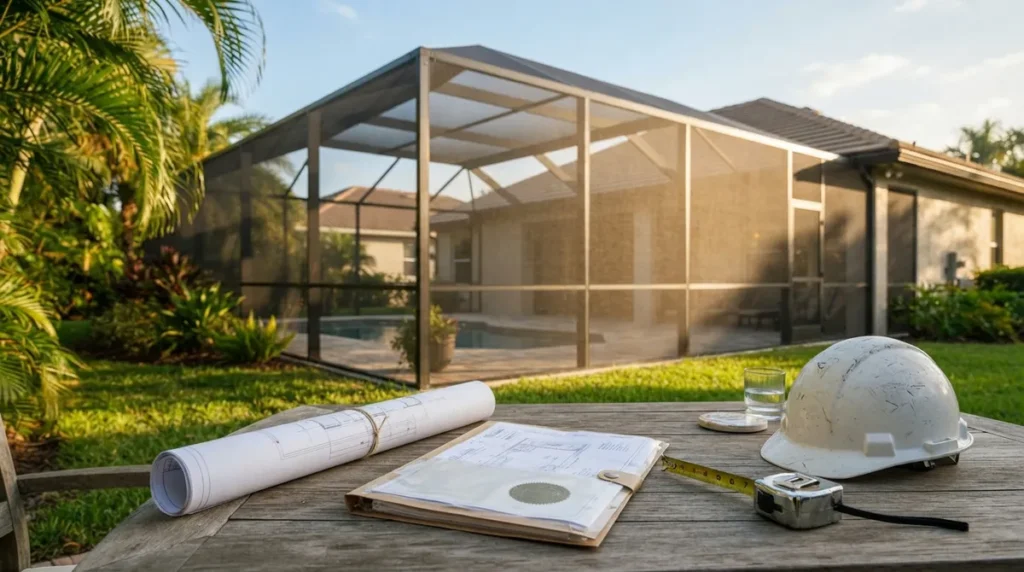
Key Takeaways
-
Filing an after-the-fact permit does not automatically legalize an enclosure; the building department reviews the existing structure as if it were new and may require engineering, inspections, or corrections.
-
Florida screen enclosures are reviewed mainly for wind-load and structural adequacy, so a Florida-licensed engineer's signed and sealed evaluation is often the centerpiece of the application.
-
Gather a property survey or site plan, as-built drawings, zoning approval, and any old permit records or photos before filing, and check whether a Notice of Commencement is required by your jurisdiction's job-value threshold.
-
Do not demolish or modify the enclosure before confirming the inspection sequence with the building department, since altering the structure before review can create new problems.
-
Removal is usually not the first outcome; most enclosures are legalized with proper documentation, engineering, and minor corrections, but acting early preserves more options if notices arrive.
-
Costs have no single statewide figure, so request a written fee estimate from your local building department and check HOA, zoning, pool-barrier, and flood-zone requirements early to avoid delays.
So you bought a home with a lovely screened lanai, or you built one a few years back, and now somebody has asked the dreaded question: "Was that permitted?" Take a deep breath. You are far from alone, and you have real options.
An after the fact screen enclosure in Florida is a permit application filed once the enclosure is already standing. It is not a magic eraser. Your local building department will review the structure for code compliance, and it may ask for engineering, inspections, or corrections before it signs off. The good news is that thousands of Florida owners legalize existing enclosures every year, and the path is very doable when you know the steps.
In this friendly guide, we walk through what the process looks like in 2026, what paperwork to gather, what inspectors look for, and how to avoid the common mistakes. Whether you are a homeowner, a contractor cleaning up a past job, or a real estate pro trying to save a closing, you will leave with a clear game plan.
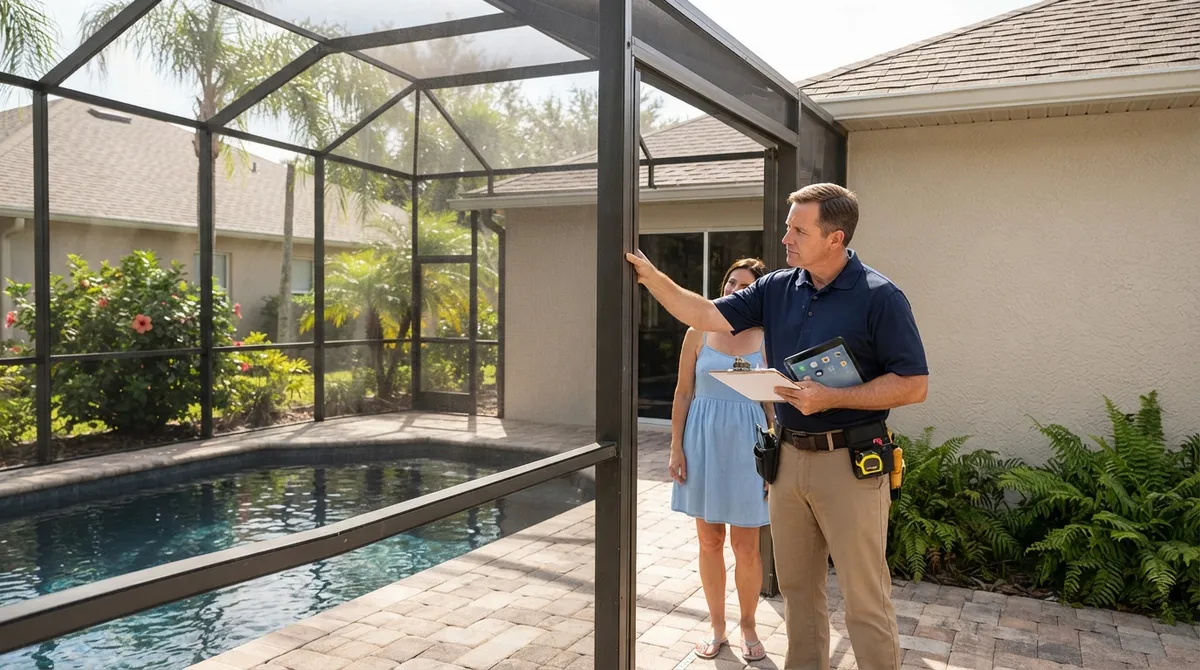
What Does After the Fact Screen Enclosure Florida Permitting Actually Mean?
An "after the fact" permit (sometimes called a retroactive or as-built permit) is filed when work was completed without the permit that was originally required. For screen enclosures, that usually means a pool cage, lanai enclosure, or patio screen room that went up without a building permit, or one whose permit expired before final inspection.
Here is the key point: the application does not automatically legalize the work. The building department reviews it the same way it would review a new one, except the structure already exists. That means the enclosure must meet the Florida Building Code, including structural and wind-load provisions, or be brought into compliance.
Because permit rules, fees, and enforcement procedures are administered locally, the city or county where your property sits is the controlling authority. The statewide code is the same, but the paperwork and process can look quite different from one jurisdiction to the next. If you are not sure which office actually has authority over your address, our building department lookup tool is a handy place to start.
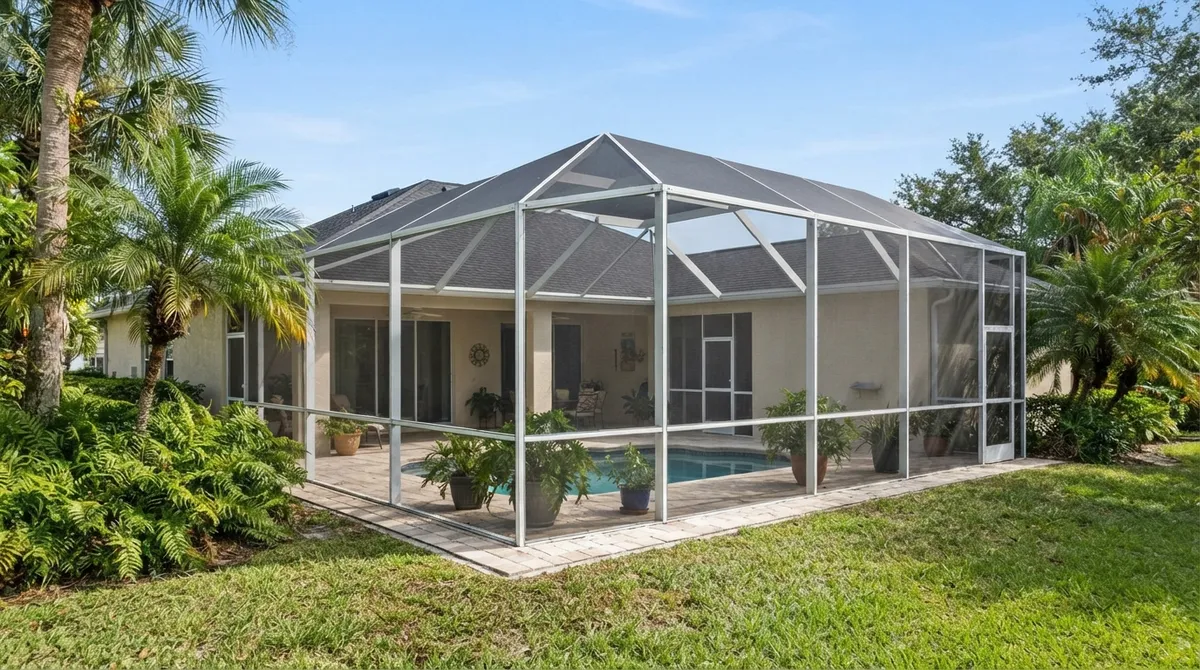
Why Do Screen Enclosures End Up Unpermitted?
Most owners never meant to skip anything. Here are the usual stories we hear:
- A previous owner built the enclosure and never mentioned it at closing.
- A pool or lanai contractor said they would pull the permit and then did not.
- The permit was issued but expired before the final inspection happened.
- The owner assumed "it's just screen" and did not realize a permit was required.
- An older enclosure was modified or extended without updating the permit record.
If that first scenario sounds familiar, you may find our guide on 4 steps if a prior owner skipped permits in Florida reassuring. And if the contractor part hits close to home, see what happens when someone said they would pull the permit.
Why Does Wind Load Matter So Much for Screen Enclosures?
Florida screen enclosures live in a tough neighborhood. They are tall, light, and exposed to hurricane-force winds, so structural adequacy is the heart of the review.
Florida's screen-enclosure alternate-design rule is worth knowing about. It requires site-specific, signed and sealed engineering for designs that rely on removable, retractable, or cut screen panels. Those designated panels must be identified on the plans, and the rule specifies action when wind speeds are forecast to exceed 75 mph. Whether your enclosure uses a standard design or this alternate approach, the engineer must confirm that the as-built structure can handle the required loads for your location.
This is why engineering so often becomes the centerpiece of an after the fact application. If you want to understand why, take a look at our deep dive on engineering items for after-the-fact screen enclosures.
What Documents Do You Need to Permit an Existing Screen Enclosure?
Think of this as your gather-and-go list. Exact requirements vary by jurisdiction, so always confirm with your local office, but most submittals look something like this:
- Permit application: Completed for the correct scope (screen enclosure, pool cage, or lanai enclosure).
- Property survey or site plan: Showing the enclosure location, setbacks, and property lines.
- Construction documents: Plans that describe the existing structure, including dimensions, framing members, anchors, and connections.
- Signed and sealed engineering: Often required to verify structural adequacy and wind-load compliance.
- Owner or contractor information: Including license details if a contractor is involved.
- Zoning approval: Confirming setbacks and site coverage are acceptable.
- Notice of Commencement: Where required for the project value.
As one real-world example, Lake County's screen-enclosure checklist calls for signed and sealed plans and zoning or site-plan approval, and it requires a recorded Notice of Commencement for job values over $5,000. That is a local example, not a universal rule, so verify the current threshold with your own permitting office. For more on that document, see our explainer on the Notice of Commencement in Florida.
Since an existing structure cannot be drawn from scratch the way a proposed one can, accurate as-built documentation matters a great deal. Our as-built drawings service exists for exactly this situation.
How Does the After the Fact Process Work, Step by Step?
Every jurisdiction has its own flavor, but the general flow looks like this:
- Confirm the jurisdiction. Figure out which city or county building department controls your address.
- Check the permit history. Search for open, expired, or closed permits on the property. Our open permit search tool helps with this.
- Document the existing enclosure. Measure, photograph, and create as-built plans showing the real conditions.
- Get engineering. A Florida-licensed engineer evaluates the structure and seals the plans or an engineer letter if it checks out.
- Submit the application. File the permit package with the building department and pay the applicable fees.
- Respond to review comments. Reviewers may ask for clarifications, corrections, or added details.
- Schedule inspections. The department inspects the existing work and may require corrective action.
- Close out the permit. Once final inspection passes, you have a documented, closed permit.
Want a broader statewide view? Our guide on how to get an after-the-fact permit in Florida covers the big picture.
What Will the Inspector Actually Look At?
The local authority may inspect the enclosure itself, its connections to the home, its foundation or footings, and other components that matter structurally. The tricky part is concealed work. If something cannot be inspected as built, such as buried footings or hidden anchors, the department may require documentation, exploratory openings, corrective work, or even removal of a portion so the work can be verified.
Before you start cutting or changing anything, confirm the inspection sequence with your jurisdiction. Altering the structure before it has been reviewed can create new problems. Our article on what happens during a Florida ATF site inspection sets expectations nicely.
| Inspection Item | What the Inspector Checks | Possible Outcome |
|---|---|---|
| Foundation or footing | Size, depth, and attachment to slab or footer | Documentation, exposure, or corrective work |
| Frame and anchors | Member sizes, spacing, and anchor type | Engineer verification or added fasteners |
| Connection to the home | Attachment method and flashing | Correction notice if inadequate |
| Screen panels | Designated panel locations if alternate design is used | Plan notes and labeling confirmed |
| Overall compliance | Match between plans and field conditions | Final approval or punch list |
How Much Does an After the Fact Screen Enclosure Permit Cost in Florida?
This is the question everyone asks, and we want to be honest: there is no single statewide number. The available sources do not establish a standard after-the-fact fee, penalty amount, processing time, or inspection count for Florida as a whole. Costs are jurisdiction- and case-specific.
Here is what typically makes up the total picture:
- Permit fees: Set by the local department, and some add an after-the-fact surcharge or penalty.
- Engineering: The cost of evaluating and sealing the existing structure.
- Drafting: As-built plans and site plan preparation.
- Corrections: Any work needed to meet code.
- Recording fees: For a Notice of Commencement, if required.
The smartest move is to request a written fee estimate from your local authority before you commit. For a broader look at cost drivers, read our guide to after-the-fact permit costs in Florida.
Will the County Make You Remove It?
This is the fear behind most of the phone calls we get, so let us take it head on. Removal is possible, but it is usually not the first outcome. Many enclosures are legalized with the right documentation, engineering, and minor corrections. Removal tends to come into play when the structure cannot be made compliant, violates setbacks or easements, or when the owner ignores notices for a long time.
Applying for a permit does not waive code enforcement consequences. Depending on local rules and your circumstances, you could face additional fees, notices to correct, penalties, or requirements to bring the enclosure into compliance. The earlier you act, the more options you tend to have. If a notice is already in your mailbox, our guide on what to do when you get a Florida code enforcement notice will help, and our code compliance violations team can step in too.
What Other Approvals Might Apply Besides the Building Permit?
Building review is only one piece of the puzzle. Depending on your property, you may also need:
- Zoning review: Setbacks, lot coverage, and easements.
- HOA approval: Many associations require sign-off on enclosures, regardless of county rules.
- Pool-barrier compliance: If the enclosure surrounds a pool, barrier requirements may come into play.
- Septic or environmental review: Lake County's checklist, for example, shows septic and special-area review can be part of the process.
- Flood zone considerations: Special rules may apply in mapped flood areas.
Skipping these can derail an otherwise clean application, so check them early.
Can You Sell a Florida Home With an Unpermitted Screen Enclosure?
Technically, yes, but it often gets bumpy. Buyers' inspectors, appraisers, lenders, and insurers may flag unpermitted structures, and a permit hold can delay or derail a closing. Sellers also have disclosure considerations. Many realtors choose to legalize the enclosure first, or at least start the process, so the deal can move forward.
If you are a listing agent or investor facing this right now, these resources can help: can a home sale close with unpermitted work in Florida and our realtor closing support service.
Who Should You Hire to Help?
A good partner shortens the timeline and takes the guesswork out. Here is a quick comparison of the main paths:
| Approach | Best For | Watch Out For |
|---|---|---|
| DIY with the building department | Simple cases with a patient owner | Missing engineering or incomplete drawings cause rejections |
| Original installer or contractor | When they are still in business and cooperative | They may lack as-built or engineering resources |
| Engineer only | When you already have drawings and a filer | You still need filing, tracking, and comment responses |
| Full-service permitting firm | Owners, GCs, and agents who want it handled start to finish | Confirm in-house drafting, sealing, and local experience |
At 1 Contractor Solutions, we act as Florida's outsourced permitting department. Our drafting and engineering are in house, and our own engineer signs and seals the work, so when a reviewer flags something we fix it quickly rather than waiting on an outside consultant. We file in all 67 Florida counties and respond within 30 minutes, day or night. You can learn more about our after-the-fact and expired permit services and our engineer letter offerings, and see what clients say on our Google listing for 1 Contractor Solutions.
Tips for a Smoother After the Fact Application
A few friendly pointers we share with nearly every client:
- Do not demolish or modify anything before talking to the building department.
- Gather every photo, receipt, and old permit record you can find.
- Get a survey that clearly shows setbacks and easements.
- Use an engineer familiar with Florida wind-load and screen-enclosure rules.
- Confirm the current Florida Building Code edition your jurisdiction applies, since local checklists currently reference the 8th Edition (2023).
- Respond to review comments quickly so the file does not stall or expire.
And if your project is also tied to pool work, our guide on why your Florida pool cage needs a permit adds useful context. If you want to stay connected for more Florida permitting tips, follow us on LinkedIn or follow us on Facebook.
Ready to Legalize Your Screen Enclosure?
An unpermitted screen enclosure feels stressful, but it is a solvable problem. With the right documents, a qualified engineer, and a patient, organized approach, most Florida owners get from "uh-oh" to a closed permit without drama. The sooner you start, the more control you keep over cost and timing.
Whether you are a homeowner, a general contractor, a realtor, or a design professional, we would love to help you get this done right. When you are ready, get a free quote and let our team take the permitting off your plate.
FAQs
Can I get an after the fact permit for a screen enclosure in Florida?
Yes, in most Florida jurisdictions you can apply for a permit on an enclosure that is already built. Just keep in mind it is a compliance review, not an automatic approval, so expect to provide plans, likely engineering, and to pass inspections or make corrections.
Do I need an engineer to permit a screen enclosure built without a permit?
Very often, yes. Many local departments require signed and sealed engineering to confirm structural adequacy and wind-load compliance, and Florida's alternate-design rule requires site-specific sealed engineering for designs with removable, retractable, or cut screen panels. Your local building department will confirm exactly what it needs.
How much does an after the fact screen enclosure permit cost in Florida?
There is no single statewide price, because fees, penalties, and engineering needs vary by jurisdiction and by your specific enclosure. The best approach is to ask your local permitting office for a written fee estimate and get an engineering quote alongside it.
Will the county make me remove an unpermitted screen enclosure?
Not usually, especially if the structure can be documented and verified as compliant. Removal or partial removal can come into play if the enclosure cannot meet code, violates setbacks or easements, or if notices are ignored, so acting early gives you the most options.
Can I sell my Florida home with an unpermitted screen enclosure?
You can, but it often complicates things with buyers, lenders, appraisers, and insurers, and a permit hold can delay closing. Many sellers legalize the enclosure first, or start the process early, so the sale can move forward smoothly.
We do this work every day across all 67 Florida counties. Call (866) 314-6931 and we will tell you what your situation actually requires — including when you do not need us.
Related services
Permit Facilitation & Filing
You have a crew scheduled, a client asking for dates, and a permit sitting somewhere in a queue you cannot see. We file it, w…
See the servicePlan Review Coordination
A permit in plan review is not one queue. On a commercial project it can be six queues, each with its own reviewer, its own c…
See the serviceReady to get your permit moving?
One call tells you which jurisdiction controls your project, what it will take, and what it will cost. Most of the time we can scope it on the phone.