
Blog
After-the-Fact Permit vs. Tear-Out in North Port: Which Wins?
After-the-fact permit or tear-out in North Port? Compare costs, inspections, and fees to choose the smartest path for your unpermitted work.
Key Takeaways
-
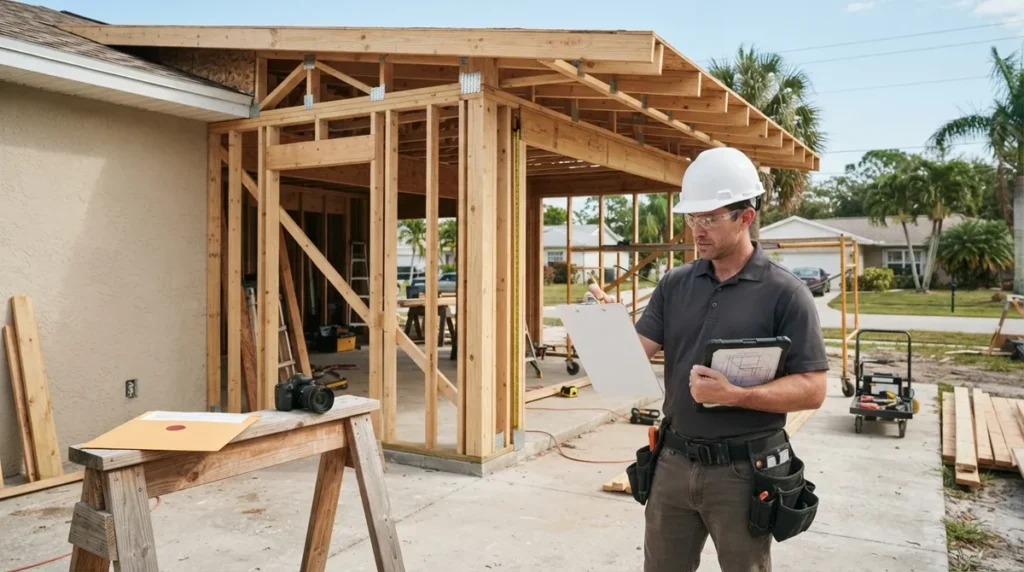
After-the-fact permitting is usually the better route in North Port when unpermitted work is structurally sound and reasonably code-compliant, since it preserves the work and ends with a closed permit.
-
Applying late does not legalize noncompliant work; the City reviews what was built against the Florida Building Code, 8th Edition (2023), and corrections may be required.
-
North Port's published fee schedule lists construction without a permit at 2x the total permit fee, plus possible plan review, reinspection, and processing charges.
-
Concealed work may need to be exposed for inspection, so documenting hidden conditions with engineer field verification, photos, and sealed letters can reduce demolition.
-
Tear-out makes sense only when work violates setbacks or flood rules in an uncorrectable way, or when fixing it costs more than rebuilding; get a feasibility review before demolishing.
-
Stop additional work, contact North Port Development Services at 941-429-7044, and track permits through the ACA portal, since permits generally expire if inspections don't start within 180 days.
So you just found out that the screen enclosure, garage conversion, or reroof at your North Port property never got a permit. Take a breath. You are far from the first person to land here, and there is a real, well-worn path forward. The big question is whether you should apply for approval after the fact or take the work out and start over.
Here is the short version. For most unpermitted work in North Port, after-the-fact permitting is the more practical route, because it lets you keep what is already built if it can be shown to meet code. But it is not automatic, and it is not always the cheapest. In this friendly guide, we compare the two options side by side so you can choose with confidence.
We wrote this for homeowners, general contractors, solar installers, realtors, and design pros who all run into the same wall: the City of North Port wants a permit, and the work is already in the ground. Let's walk through it together.
What After-the-Fact Permitting Means in North Port
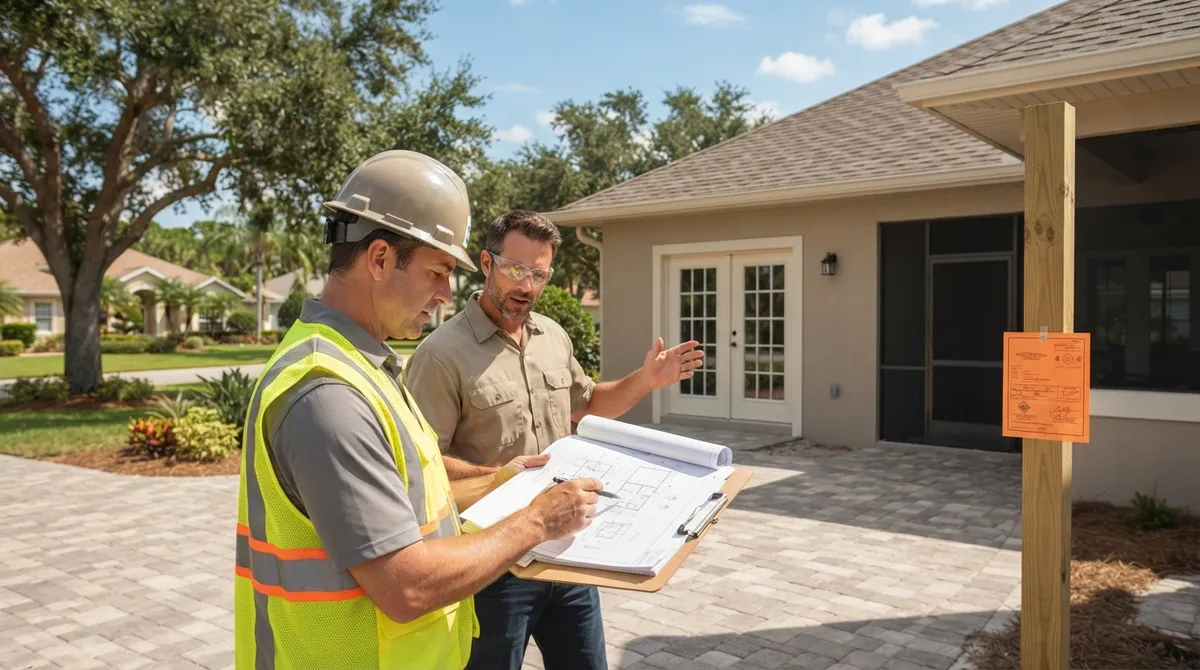
In North Port, after-the-fact permitting generally means applying for the required permit after regulated construction, alteration, repair, or demolition has already started or finished. Florida law generally requires the permit before covered work begins, so an after-the-fact application is really a way of catching up with the rules.
One important thing to understand: applying late does not automatically legalize noncompliant work. The City reviews what was built, and the work has to meet the Florida Building Code, 8th Edition (2023), which North Port's permit application identifies as the governing code. If it does not, corrections are required.
Florida Statutes section 553.79 is the statewide backbone here. It generally prohibits covered building work without a permit and authorizes local enforcement agencies to review plans and inspect work. North Port layers its own fee schedule and review process on top of that.
How North Port Handles Applications
Applications run through the City's Accela Citizen Application (ACA) portal, where you can apply and track status. Questions go to North Port Development Services at 941-429-7044 or bldginfo@northportfl.gov. The office is at 4970 City Hall Boulevard, North Port, FL 34286, with weekday hours of 8 a.m. to 4 p.m. If you want the local picture first, our North Port permitting page is a good starting point.
The Two Paths: A Side-by-Side Look
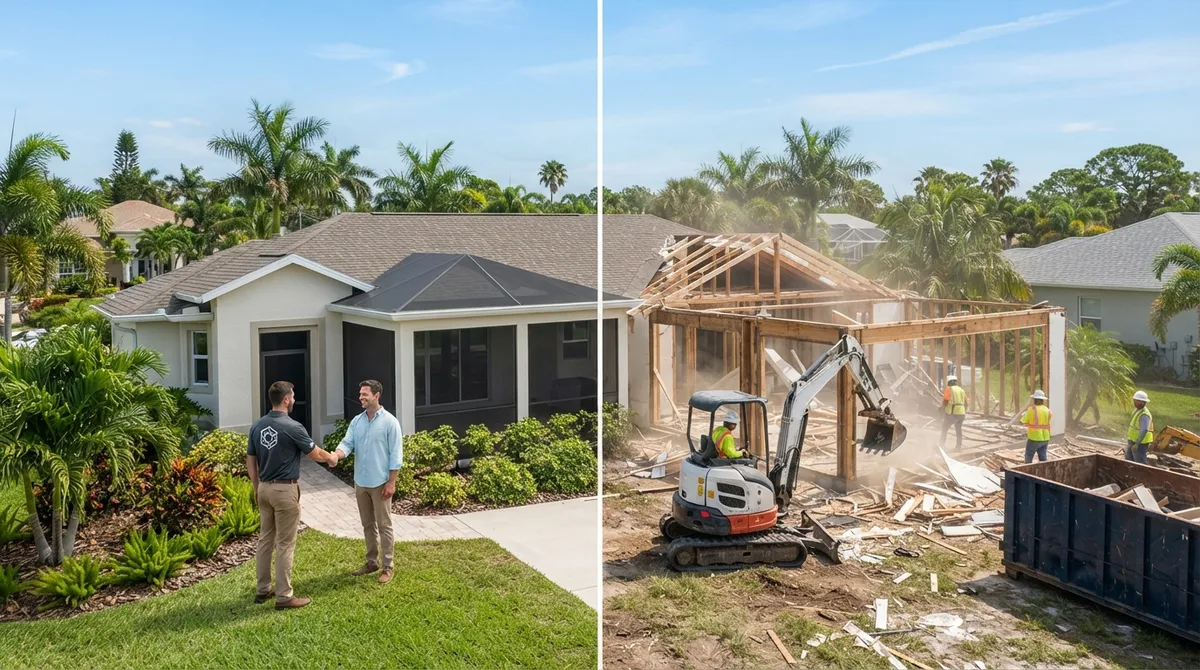
Before we dig deeper, here is how the two options stack up in plain terms.
| Factor | After-the-Fact Permit | Tear-Out and Start Over |
|---|---|---|
| Keeps existing work | Yes, if it can be shown to comply | No, work is removed first |
| Fee exposure | Published fee schedule lists construction without a permit at 2x the total permit fee | Standard permit fees, plus demolition and rebuild costs |
| Plans needed | Often as-built plans, specifications, and valuation | New plans for the rebuilt work |
| Inspections | Required; concealed work may need to be exposed | Normal inspection sequence as you rebuild |
| Disruption | Usually lower | Usually much higher |
| Best for | Work that is sound and close to code | Work that cannot be made compliant |
Notice that the fee line deserves a closer look. North Port's published fee schedule lists construction without a permit at 2x the total permit fee. Other charges can apply too, including plan review, additional inspections, reinspections, and payment-processing fees. Confirm the current numbers with the City, since fees and schedules can change.
When After-the-Fact Permitting Wins
If your work is structurally sound and reasonably close to code, after-the-fact permitting usually comes out ahead. You keep your investment, avoid demolition waste, and end with a closed permit on record. That closed permit matters a lot when it is time to sell, refinance, or insure.
This path tends to fit best when:
- The work was done competently, just without a permit being pulled.
- A prior owner or contractor skipped the permit, and you are cleaning it up.
- The work can be documented with as-built drawings and, if needed, an engineer letter.
- A buyer, lender, or appraiser is asking for permit closure before closing.
For many Florida properties, this is exactly the situation. Our team handles these files every week through our after-the-fact and expired permits service, and we have seen how much smoother things go when the packet is built right the first time.
What an After-the-Fact Review Usually Requires
The City decides the exact requirements for your project, but these are common pieces:
- Plans and specifications. Often as-built drawings showing what actually exists, prepared to permit standards.
- Valuation. A project value used to calculate permit fees.
- Engineering support. For structural, electrical, or mechanical items, a sealed letter or drawings may be needed.
- Inspections. The building official determines the sequence, and may require corrective work first.
- Exposure of concealed work. If framing, wiring, or plumbing is hidden behind finished surfaces, the City may require it be opened or otherwise documented so inspectors can verify compliance.
That last point is the one that makes people nervous, and honestly, it is a fair worry. We will come back to it in a moment.
When Tear-Out Wins
Sometimes the honest answer is that removal is the better call. If the work violates setbacks, sits in a flood hazard area in a way that cannot be corrected, or is so poorly built that bringing it to code would cost more than rebuilding, tearing it out may be the smarter financial move.
Tear-out also makes sense when:
- Critical structural elements cannot be verified or repaired.
- The work encroaches where it simply cannot be approved.
- The cost to expose, correct, and re-inspect exceeds the cost to rebuild properly.
Before you swing a sledgehammer, though, get a professional opinion. We have seen owners rip out perfectly approvable work because nobody explained the alternative. A quick feasibility review can save you real money, and it costs far less than demolition.
A Real-World Cost Snapshot
Every project is different, and we will not pretend otherwise. But here is a simple way to think about where the money goes under each path.
| Cost Item | After-the-Fact Path | Tear-Out Path |
|---|---|---|
| Permit fees | Elevated; published schedule lists 2x total permit fee for work without a permit | Standard fees on the rebuild |
| Drawings and engineering | As-builts and possible engineer letter | Full new plan set |
| Inspection and correction | Reinspections and fixes as required | Normal inspections |
| Demolition and disposal | None, unless concealed work is opened | Full removal costs |
| Materials and labor | Limited to corrections | Full rebuild |
For a broader view of what these fees look like across the state, see our breakdown of after-the-fact permit costs in Florida.
Will North Port Make Me Open My Walls?
This is the question we hear most. The honest answer: it depends on the work. If the building official cannot verify that concealed work complies, they may require it to be exposed or otherwise documented. The City determines the specific corrective work and inspection sequence.
The good news is that this is not always required, and there are often smarter ways to document hidden conditions. An engineer's field verification, photos, and sealed documentation can sometimes reduce how much needs to be opened up. Because our drafting and engineering are done in house, with our own engineer signing and sealing the work, we can coordinate that documentation without waiting on an outside consultant.
If you are curious how that fits together, our overview of engineer letters explains when a sealed letter helps and when full drawings are the better route.
The Small-Project Exemption: Read the Fine Print
Here is a 2026 detail worth knowing about. North Port's permitting page describes a limited Florida statutory exemption, shown as effective July 1, 2026, for certain owner-occupied single-family dwelling work valued below $7,500.
Before you get excited, note the big exclusions:
- Properties in flood hazard areas are excluded.
- Electrical, plumbing, structural, mechanical, and gas work are excluded.
- A written exemption request and supporting documentation are required.
In other words, this is a narrow door, not a loophole. Verify the effective date and your eligibility directly with the City before relying on it. When in doubt, ask first and build second.
Step-by-Step: How to Pursue an After-the-Fact Permit in North Port
If you have decided the after-the-fact route fits, here is a friendly roadmap you can follow.
- Stop additional work. Do not keep building until you know what the City requires. Continuing can make things worse.
- Contact Development Services. Call 941-429-7044 or email bldginfo@northportfl.gov to confirm what your project type requires.
- Document what exists. Gather photos, measurements, receipts, and any prior permit history for the property.
- Prepare as-built plans. Drawings must reflect what was actually built, to a standard the reviewer will accept.
- Add engineering where needed. Structural or MEP items often need a sealed letter or drawings.
- Apply through the ACA portal. Submit the packet and track the status online.
- Respond to review comments quickly. Fast, complete answers keep the file moving.
- Complete inspections and corrections. Finish any required fixes and pass the inspections.
- Close the permit. Get final approval so the record is clean for sale, refinance, or insurance.
Keep an eye on permit timing, too. North Port's permit application states that permits generally expire if inspections have not commenced within 180 days of issuance, or 180 days after the last approved inspection. Verify the deadlines for your permit type so you do not end up fixing an expired permit on top of everything else.
What About Selling or Refinancing?
Unpermitted work has a funny way of showing up at the worst moment: right before closing. Appraisers, lenders, insurers, and title companies increasingly ask about permit history. A closed after-the-fact permit tells everyone the work was reviewed and inspected, which is the cleanest possible outcome.
If you are a realtor or investor, early permit research can save a deal. Our realtor closing support is built for exactly this situation, and our guide on what to do when an open permit is found at closing walks through the common scenarios.
Who Benefits Most From Professional Help
You can absolutely start by calling the City yourself. But some situations really do go faster with an experienced partner:
- General contractors juggling multiple jobs who cannot afford to chase reviewer comments.
- Solar companies that need code-compliant electrical and structural documentation for installs.
- Realtors and investors facing a closing deadline.
- Homeowners who inherited unpermitted work from a prior owner or a contractor who disappeared.
- Designers and trades who need dependable outsourced drafting without adding in-house staff.
1 Contractor Solutions acts as Florida's outsourced permitting department. We prepare or review plans, file the application, track it, work every reviewer comment, and carry it through approval and closeout. Because our engineering is in house, a reviewer's question gets answered by our team rather than bouncing around between outside consultants. You can learn more about our permit facilitation and filing process, or see how we support homeowners and owner-builders directly.
How to Decide: A Quick Gut Check
Still on the fence? Ask yourself these questions.
- Is the work structurally sound and reasonably code-compliant? If yes, lean toward after-the-fact.
- Can it be documented without major demolition? If yes, lean toward after-the-fact.
- Does it violate setbacks or flood rules in a way that cannot be fixed? If yes, tear-out may be unavoidable.
- Would fixing it cost more than rebuilding? If yes, compare both numbers honestly.
A short feasibility conversation usually settles it. We can look at the property, the work, and the jurisdiction, then tell you which path makes sense. If your property sits near a city line, we will also confirm which jurisdiction actually controls it, which is not always obvious. You can even check things yourself with our building department lookup tool.
The Bottom Line
In most North Port cases, after-the-fact permitting beats tear-out. It keeps your work, avoids waste, and leaves you with a closed permit that protects your sale, your financing, and your insurance. Tear-out only wins when the work truly cannot be brought into compliance or the fix costs more than starting fresh.
Whichever way you lean, do not keep building, and do not let the problem sit. Unpermitted work gets harder to deal with the longer it waits. Ready to get a straight answer for your property? Get a free quote and we will tell you which jurisdiction controls your project, what it will take, and then go do it. You can also see what our customers say, visit us on Google as 1 Contractor Solutions, and follow us on LinkedIn or follow us on Facebook for more Florida permitting tips.
Permits approved. Projects moving. We are here whenever you need us, and we respond within 30 minutes, day or night.
FAQs
How do I apply for an after-the-fact building permit in North Port, Florida?
You apply through the City's Accela Citizen Application (ACA) portal, usually with as-built plans, specifications, and a project valuation. Start by contacting North Port Development Services at 941-429-7044 to confirm what your specific work requires. We are happy to help you build the packet so it gets approved the first time.
What is the penalty for construction without a permit in North Port?
North Port's published fee schedule lists construction without a permit at twice the total permit fee. Plan review, extra inspections, reinspections, and processing charges may also apply. Fees can change, so confirm current amounts with the City before you budget.
Will North Port make me open walls for inspection?
Possibly. If concealed work cannot be verified, the building official may require it to be exposed or otherwise documented. Engineer field verification and good photo documentation can sometimes reduce how much has to be opened up.
Can I sell a North Port home that has unpermitted work?
You can, but it often complicates appraisals, financing, and insurance. Closing out an after-the-fact permit before listing usually makes the sale much smoother and gives buyers peace of mind.
Are any small projects exempt from permits in North Port?
A limited Florida exemption, shown as effective July 1, 2026, may cover certain owner-occupied single-family work valued under $7,500. It excludes flood hazard areas and electrical, plumbing, structural, mechanical, and gas work, and requires a written request. Verify eligibility with the City before relying on it.
We do this work every day across all 67 Florida counties. Call (866) 314-6931 and we will tell you what your situation actually requires — including when you do not need us.
Related services
Permit Facilitation & Filing
You have a crew scheduled, a client asking for dates, and a permit sitting somewhere in a queue you cannot see. We file it, w…
See the servicePlan Review Coordination
A permit in plan review is not one queue. On a commercial project it can be six queues, each with its own reviewer, its own c…
See the serviceReady to get your permit moving?
One call tells you which jurisdiction controls your project, what it will take, and what it will cost. Most of the time we can scope it on the phone.