
Blog
8 Ways Coastal Counties Handle Florida ATF Permits
Learn how Florida's coastal counties handle after-the-fact permits, from floodplain rules to CCCL review, fees, and documentation.
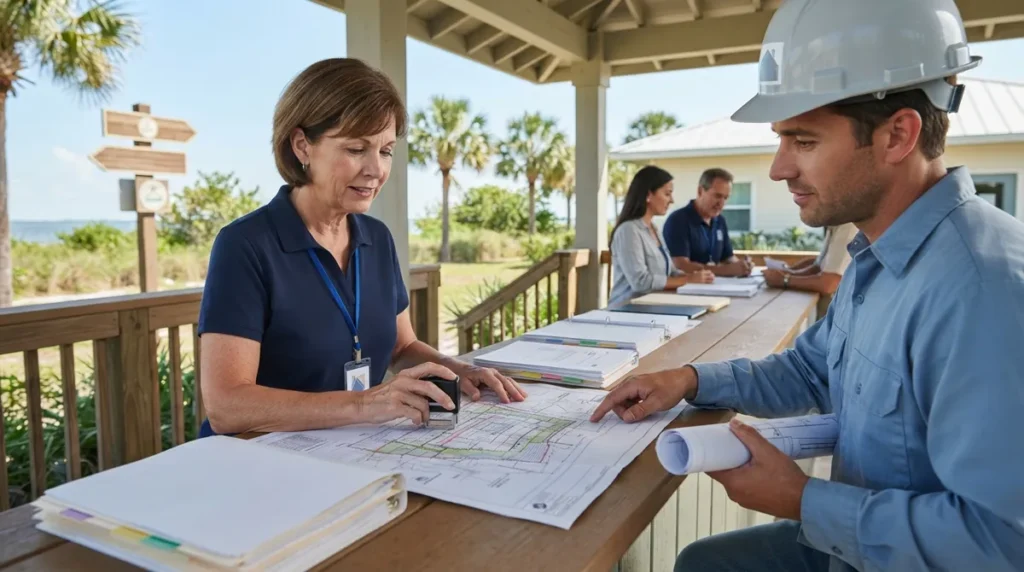
If you own property near the Gulf or the Atlantic, you already know coastal living comes with extra rules. So when a homeowner, contractor, or realtor discovers that a lanai, seawall, or window replacement was never permitted, the first question is always the same: how do coastal counties handle after the fact permits in Florida, and is this going to be a nightmare? The good news is that it's a well-trodden path, and once you understand how coastal jurisdictions think about unpermitted work, the process becomes a lot less intimidating.
Coastal counties like Pinellas County, Manatee County, Lee County, Collier County, and Monroe County layer flood zone review, wind-load standards, and sometimes Coastal Construction Control Line (CCCL) requirements on top of the standard building permit process. That means an after-the-fact permit near the water isn't always a simple form and a fee. Let's walk through exactly how it works, county by county considerations, and what you'll need to get it resolved without losing your mind.
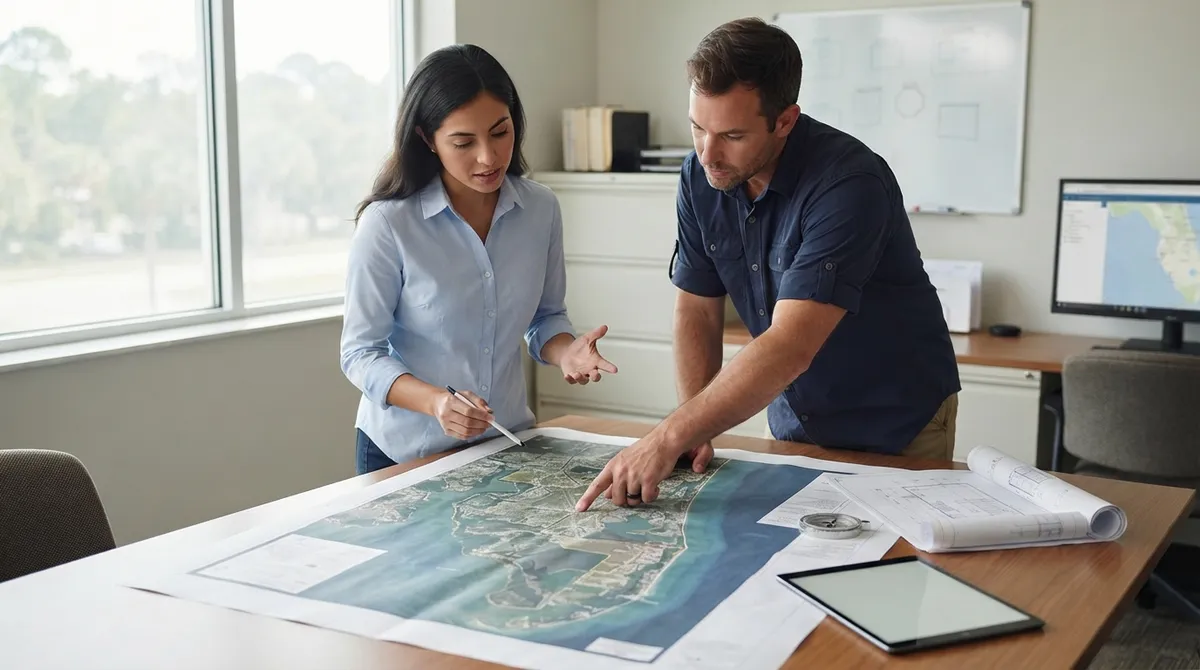
1. They Start By Confirming Who Actually Has Jurisdiction
Coastal Florida is a patchwork. A property might sit in unincorporated county land one block from a city with its own building department. Before anyone can process an after-the-fact permit, the local building official — county or municipal — has to be correctly identified.
This matters more near the coast because barrier islands, keys, and beach communities often have their own incorporated cities with separate rules from the mainland county. Our Building Department Lookup tool exists precisely because this trips up so many homeowners and even contractors who assume the county handles everything.
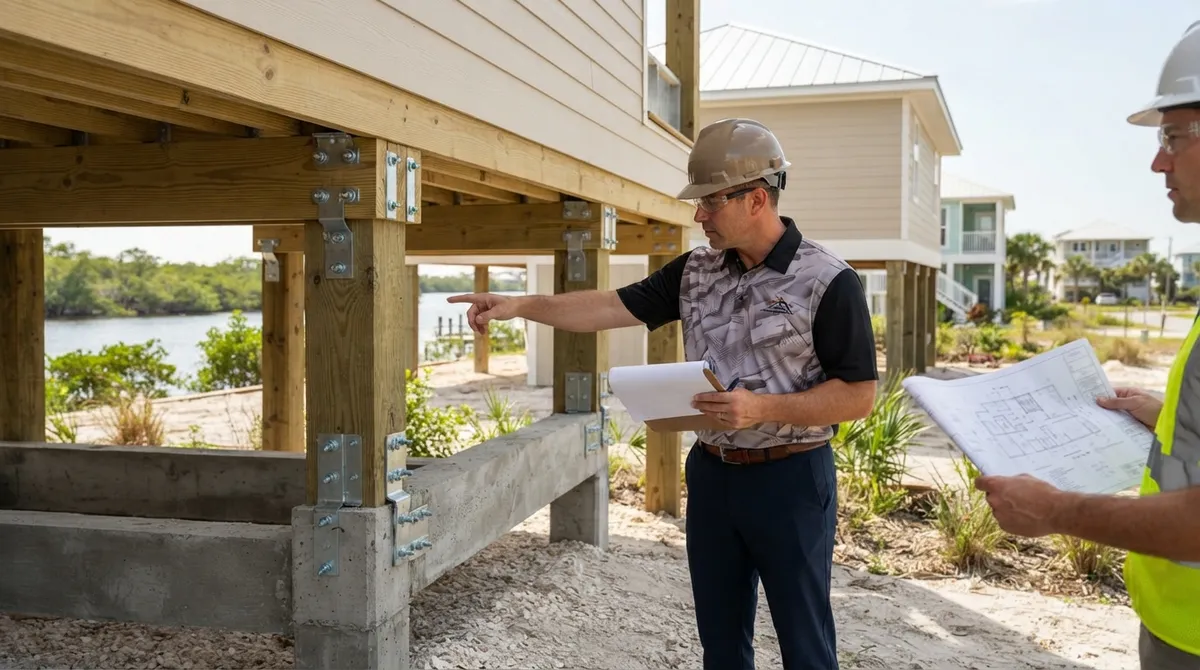
2. They Require A Detailed Description Of The Completed Work
Under Florida Statutes §553.79, a permit is generally required before constructing, altering, repairing, modifying, or demolishing a structure. When that step gets skipped, the coastal building department will ask you to document exactly what was built, when, and by whom.
Expect to provide:
- Photos of the completed work, inside and out
- A written description of materials, dimensions, and scope
- Contractor information, if a licensed contractor performed the work
- As-built drawings showing the structure as it currently exists
This is where as-built drawings become essential. Our in-house drafting team regularly produces these for homeowners who have no idea what their patio enclosure or electrical panel upgrade actually looks like on paper.
3. They Layer On Floodplain And Wind Review
This is the part that catches people off guard. A standard inland after-the-fact permit might just need a plan review and inspection. But coastal counties frequently sit in FEMA-designated flood zones, so the building department will check whether the unpermitted work triggers substantial improvement rules, elevation requirements, or the FEMA 50 percent rule.
Wind-load compliance is another layer. Coastal properties face higher wind speed design requirements than inland construction, so a roof, window, or door installed without a permit may need engineering documentation proving it meets the applicable wind zone standard for that specific coastal jurisdiction.
4. They May Require Coastal Construction Control Line (CCCL) Review
If the unpermitted work happened seaward of the Coastal Construction Control Line — think seawalls, dune walkovers, beach access structures, or anything close to the mean high-water line — the county isn't the only authority involved. Florida Statutes §161.041 requires a separate permit from the Florida Department of Environmental Protection before this type of coastal construction begins.
Under §161.041(14), the county or municipality actually has to notify FDEP within 5 days of receiving certain applications for work seaward of the control line. Some coastal counties have their own approved coastal construction program that operates instead of some state CCCL provisions, but that local approval never replaces other required state, floodplain, or environmental permits. Our FDEP environmental permits team helps clients untangle exactly which agency needs to sign off before local approval can move forward.
5. They Set Their Own Fees, Penalties, And Enforcement Schedules
There's no single statewide after-the-fact fee. Each coastal county building department sets its own penalty structure, and it can vary significantly.
| County/Area | General Approach | Notable Detail |
|---|---|---|
| Monroe County | Flat charge or percentage of construction value | Historically $250 or 10% of completed construction cost, whichever is greater, per public county records |
| Pinellas County | Standard permit fee, penalties sometimes waived | Storm-recovery program waived after-the-fact penalties through a stated deadline for qualifying storm damage |
| Many Florida jurisdictions | Doubled standard permit fee | Common but not universal; always confirm with the local building department |
On top of permit fees, separate code-enforcement fines can apply — generally up to $250 per day for a first violation and up to $500 per day for repeat violations, though larger jurisdictions may set higher limits for severe cases.
6. They Sometimes Offer Temporary Storm-Recovery Relief
Coastal counties get hit hardest by hurricanes, and that reality shapes their permitting policy. Pinellas County, for example, rolled out an after-the-fact permitting assistance program for certain storm-damage repairs in unincorporated areas and specified municipalities. Standard permit fees still applied, but penalties were waived through a stated deadline for qualifying work like drywall, flooring, cabinetry, doors, windows, electrical, plumbing, and mechanical repairs in floodplain properties.
These programs are narrow. They apply to specific storms, specific locations, and specific permit types, and they expire. If you're not sure whether your repair qualifies, it's worth checking directly with your county or asking a permitting professional to confirm before you assume you're covered.
7. They Can Require Opening Walls Or Removing Finished Work
This is the part nobody wants to hear, but it happens. If a building official can't verify structural connections, electrical work, or plumbing through a completed inspection, they can require you to expose concealed construction — meaning cutting into drywall, pulling up flooring, or removing insulation so the inspector can actually see what was built.
In coastal counties, this scrutiny tends to be stricter because of wind-uplift and flood-resistance standards. A roof-to-wall connection that looks fine from the attic might still need documentation proving it meets current code. This is exactly the kind of situation where a engineer letter from a Florida-licensed engineer can sometimes support the county's review instead of requiring full demolition — but it depends entirely on what the local building official will accept.
8. Approval Doesn't Automatically Mean The Work Is Legal Forever
Here's a fact that surprises a lot of homeowners and even some seasoned real estate agents: getting an after-the-fact permit approved doesn't retroactively erase every possible violation. If the completed work violates zoning setbacks, floodplain elevation requirements, or coastal construction standards, the county can still require alterations, partial removal, or additional permits before the file is truly closed.
This is why after-the-fact permits should never be treated as a single, simple form. They're closer to a full permitting project — plans, engineering, inspections, and sometimes multiple agencies — compressed into a catch-up process. Our after-the-fact and expired permits team handles exactly this kind of layered coastal case, coordinating structural engineering, FDEP coordination, and local building department requirements so nothing gets missed.
What Documents You'll Typically Need
Every coastal jurisdiction is a little different, but most after-the-fact applications ask for a similar packet of information. Here's a general checklist:
- Completed after-the-fact permit application form from the local building department
- Detailed description and photos of the unpermitted work
- As-built drawings or sealed plans showing the current condition
- Product approval documentation for windows, doors, or roofing materials
- Structural or MEP engineering certification, when required
- Contractor license information, if applicable
- Proof of ownership and, in some cases, a notarized affidavit
Real estate professionals dealing with a closing delayed by unpermitted work will want this list handy, since title companies and lenders often ask for the same documentation before they'll clear a sale.
Why Jurisdiction Confusion Slows Everything Down
One of the biggest delays we see in coastal counties isn't the paperwork itself — it's figuring out who reviews it. A property in Cape Coral, Naples, or Key West might fall under a city building department, a county department, or occasionally both, depending on annexation history and special districts.
Our Open Permit Search tool and jurisdiction lookup services exist specifically to eliminate this guesswork before you file anything. Getting this wrong means resubmitting to the correct authority and losing weeks you didn't need to lose.
How A Permitting Partner Makes This Easier
Honestly, after-the-fact permits in coastal counties are one of the more layered permitting challenges out there, and that's exactly why so many general contractors, solar installers, and homeowners bring in help rather than going it alone. At 1 Contractor Solutions, our team handles permit filing and tracking, in-house sealed engineering, and plan review coordination across all 67 Florida counties — including the trickiest coastal jurisdictions. We know which counties waive penalties during storm recovery, which ones require CCCL coordination, and which cities have their own building departments hiding a block from the county line.
If you're navigating this in the Tampa Bay area, you can also see what our 1 Contractor Solutions customers say on Google before reaching out. We also stay active on follow us on LinkedIn and follow us on Facebook for updates on county-specific permitting changes as they roll out throughout the year.
Final Thoughts
Coastal counties handle after-the-fact permits with more layers than inland jurisdictions, but that doesn't mean the process has to be overwhelming. Once you know the right building department, gather the right documentation, and understand whether floodplain, wind, or CCCL review applies, most cases move forward smoothly. The key is treating it like the multi-step project it actually is, rather than a single form you can fill out over coffee.
If you're dealing with unpermitted coastal construction, a stalled closing, or a code violation notice you didn't see coming, our team is ready to help you sort out the jurisdiction, prepare the documentation, and carry the file through to approval. Get a free quote today and let's get your coastal property back in good standing.
FAQs
Do I need an after-the-fact permit for unpermitted repairs in a Florida coastal county?
In most cases, yes — if the original work would have required a permit under Florida Statutes §553.79, you'll need to get it retroactively approved. Coastal properties often add floodplain or wind-load review on top of the standard process, so it's worth confirming the exact requirements with your local building department before you start.
Which Florida agency handles an after-the-fact permit for work near the beach or Coastal Construction Control Line?
Your local county or city building department handles the standard after-the-fact permit, but work seaward of the CCCL may also require a separate permit from the Florida Department of Environmental Protection. It's genuinely a two-agency situation sometimes, so double-checking early saves a lot of back-and-forth later.
How much does an after-the-fact permit cost in Florida coastal counties?
It varies quite a bit by county — some double the standard permit fee, while others use a flat charge or a percentage of construction value. Storm-recovery programs occasionally waive penalties temporarily, so it's always worth asking your building department if any relief currently applies.
Can a Florida county require me to open walls or remove finished work for an after-the-fact inspection?
Yes, if the inspector can't verify structural, electrical, or plumbing work behind finished surfaces, they can require you to expose it. This happens more often in coastal counties because of stricter wind and flood-resistance verification standards.
Does an after-the-fact permit protect a property sale, insurance policy, or certificate of occupancy?
An approved after-the-fact permit certainly helps clear title issues and closing delays, but it doesn't automatically guarantee insurance coverage or a certificate of occupancy on its own. Each of those depends on the specific work meeting all applicable zoning, floodplain, and building code requirements — so it's worth confirming each piece separately.
We do this work every day across all 67 Florida counties. Call (866) 314-6931 and we will tell you what your situation actually requires — including when you do not need us.
Related services
Permit Facilitation & Filing
You have a crew scheduled, a client asking for dates, and a permit sitting somewhere in a queue you cannot see. We file it, w…
See the servicePlan Review Coordination
A permit in plan review is not one queue. On a commercial project it can be six queues, each with its own reviewer, its own c…
See the serviceReady to get your permit moving?
One call tells you which jurisdiction controls your project, what it will take, and what it will cost. Most of the time we can scope it on the phone.