
Blog
Foundation Verification After the Fact in Florida: 2026 Guide
Need foundation verification after the fact in Florida? Learn the steps, evidence, costs, and what building officials really require in 2026.
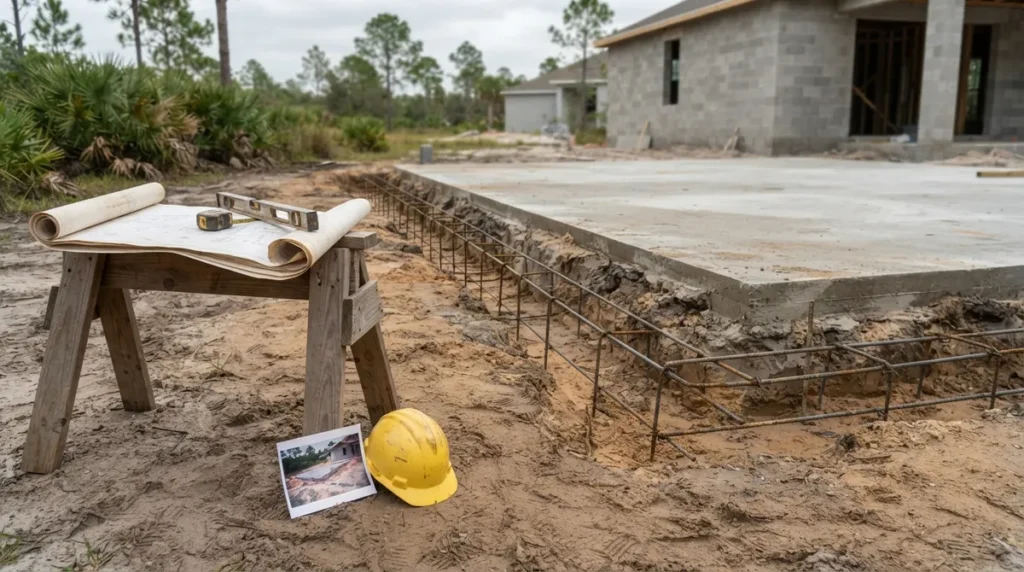
Key Takeaways
-
Foundations are often unverifiable after the pour, so the building official relies on records, a Florida PE evaluation, and sometimes selective exposure or testing to confirm concealed work.
-
Contact the local authority having jurisdiction before covering, altering, or excavating anything, since the requirements for existing foundations without inspection records vary by jurisdiction.
-
Gather dated photos, concrete delivery tickets, original plans, and permit history early, because the strongest combination of records is what makes exposure requirements less likely.
-
A Florida-licensed engineer's letter helps but does not guarantee approval or replace the missing inspection; the building official makes the final decision on acceptable evidence.
-
There is no statewide flat fee for after-the-fact foundation verification, so budget using your local fee schedule plus possible penalties, drafting, engineering, and re-inspection costs.
-
Submit a complete package with as-built drawings and documentation to avoid repeated comment rounds, which are the most common cause of delays in these projects.
Here's a scenario we hear more often than you'd think: a homeowner buys a property, a contractor wraps up a slab, or an inspector notices something odd, and suddenly everyone realizes the foundation was poured without a final inspection on record. Maybe the permit was never pulled. Maybe it expired. Maybe the paperwork simply vanished over the years. Now you're looking for foundation verification after the fact in Florida, and you're probably wondering where on earth to start.
Take a breath. This is fixable, and you are far from alone. Foundations are the one part of a building that gets buried, covered, and finished over quickly, which is exactly why missing verification is so common. The good news is that Florida building departments have pathways for documenting and approving existing work.
In this friendly guide, we'll walk through what "after the fact" verification actually means, what evidence building officials typically want, what to expect on cost and timing, and how to avoid the mistakes that slow people down. Whether you're a homeowner, a general contractor, a solar installer, or a real estate pro, you'll find practical next steps below.
What Does "Foundation Verification After the Fact" Mean in Florida?
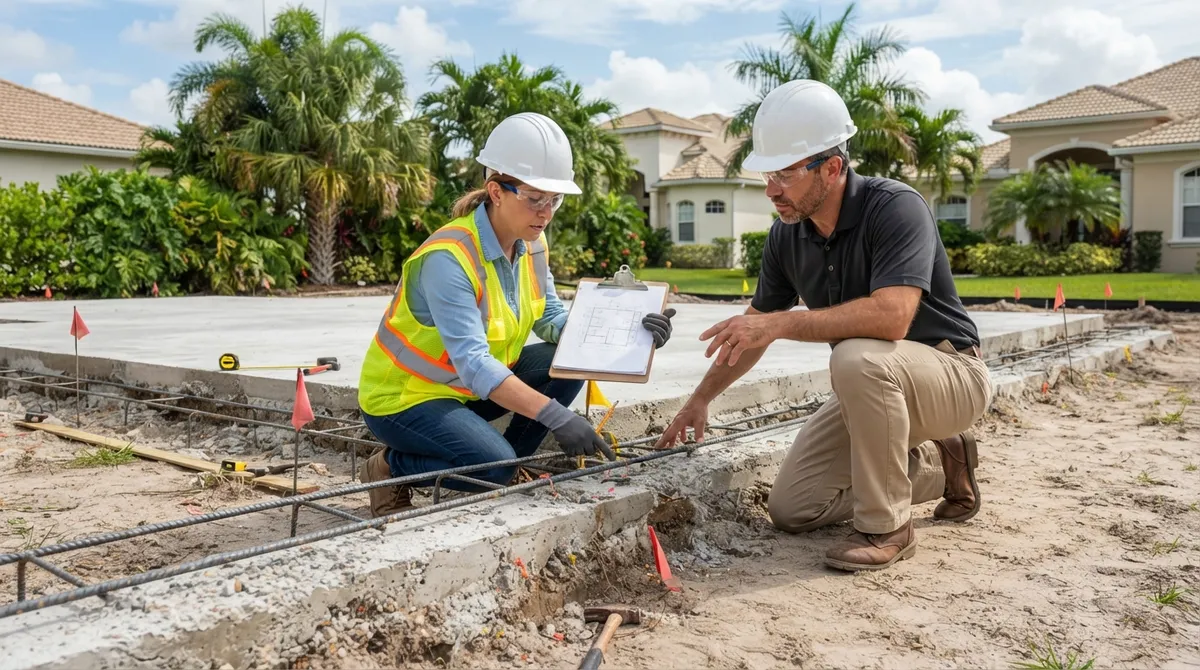
In plain English, it means seeking local approval for a foundation that was built without the required permit or inspection, or documenting an existing foundation when the permit records are missing or incomplete. Florida Statutes §553.79 makes construction without the required permit unlawful, and your local building department, known as the authority having jurisdiction (AHJ), decides what the application and inspection requirements look like.
Terminology varies. One county may call it an after-the-fact permit. Another may call it a retroactive permit, a permit to legalize, or a code compliance case closeout. The paperwork has different names, but the goal is the same: get a written record that the foundation exists, was evaluated, and is acceptable under the Florida Building Code.
If you want a deeper look at the broader process, our guide on how to get an after-the-fact permit in Florida covers the full pathway from start to finish.
Why Foundations Are the Trickiest Part of After-the-Fact Work
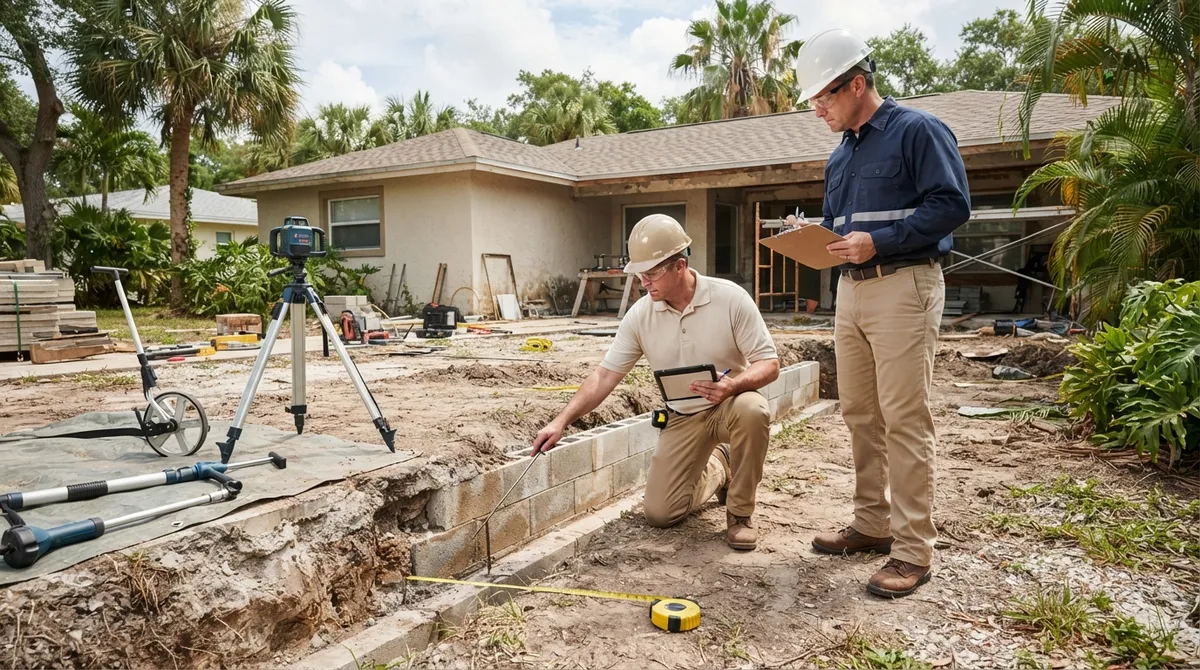
A foundation inspection normally happens before concrete goes in. That's when an inspector can see the footing dimensions, reinforcing steel, embedded items, and other required components. Once the concrete is poured and the walls go up, most of that information is hidden from view.
That's why foundation verification is a different animal than, say, legalizing a ceiling fan or a water heater swap. The building official can't simply walk the property and eyeball what's inside the concrete. Instead, the department has to rely on reliable records, engineering evaluation, and sometimes physical investigation.
Nassau County's foundation-only permit checklist, for example, describes a footing and foundation inspection before concrete placement and slab inspections that check items like reinforcement and vapor barriers before the pour. When that window was missed, the verification has to come from another source.
The Honest Truth About Engineer Letters
Here's something worth knowing upfront: a Florida-licensed professional engineer's report does not automatically replace an inspection, and it does not guarantee approval. The building official decides what evidence is acceptable. An engineer's evaluation is powerful and often essential, but it works best as part of a complete package, not a magic wand.
If you're curious how these letters fit into permitting, see our article on who writes engineer letters for Florida permits.
Common Situations That Trigger Foundation Verification
People end up in this situation for many reasons. Here are the scenarios we see most often:
- A previous owner built an addition, garage, or slab without permits and nobody disclosed it.
- A permit was pulled but expired before the final foundation inspection was completed.
- The contractor disappeared or never called for inspections.
- A home inspection or appraisal flagged a slab or addition with no permit history.
- A solar, pool, or roof project triggered a plan review that revealed an unpermitted structure.
- A closing is on hold because the title company or lender discovered open or missing permits.
If you recognize your situation here, you may find our articles on what to do when a prior owner skipped permits and how to handle covered work that missed inspection especially helpful.
How Foundation Verification Typically Works: Step by Step
Every jurisdiction does things a little differently, but the general flow looks like this:
- Contact the building department first. Before you cover, alter, or excavate anything, call or visit the local AHJ. Ask what they require for an existing foundation without inspection records.
- Gather what you know. Collect the property address, approximate date and scope of the work, any prior permits or plans, contractor information, photos, receipts, concrete delivery tickets, and any construction records.
- Determine the permit path. The department will tell you whether you need an after-the-fact permit, a permit revision, a new permit with special conditions, or another process.
- Prepare as-built documentation. This often includes measured as-built drawings showing footing sizes, slab extents, and structure layout.
- Obtain engineering evaluation if required. A Florida-licensed professional engineer may assess the foundation and prepare sealed drawings, calculations, or a written evaluation.
- Complete any exposure or testing. If records can't verify concealed work, the AHJ may require selective exposure, testing, or corrective work.
- Pass inspections and close the permit. Final approval is what puts the record on the books.
Our as-built drawings and engineer letters services are built for exactly these steps.
What Evidence Do Building Officials Typically Accept?
Because the foundation is concealed, evidence quality matters. Think of it like building a case. The more reliable sources you can stack, the easier the conversation with the building official becomes.
| Type of Evidence | What It Shows | How Helpful It Tends to Be |
|---|---|---|
| Original plans or permit records | Intended design and prior approvals | High, if the record is complete |
| Photos taken during construction | Rebar, forms, footing depth before the pour | High, especially dated photos |
| Concrete delivery tickets and invoices | Volume, mix, and date of pour | Moderate, supports the timeline |
| As-built measured drawings | Actual dimensions and layout | Essential for most submittals |
| PE evaluation or sealed letter | Professional opinion on adequacy | Often required, but not guaranteed to be sufficient |
| Selective exposure or testing | Direct view of footings or reinforcement | High, often used when records are thin |
The key takeaway: no single document is guaranteed to carry the day. The AHJ weighs the whole picture.
Will You Have to Dig Up or Uncover the Foundation?
This is the question everyone asks, and the honest answer is: it depends. If your records are strong, for example dated photos of rebar and forms plus a PE evaluation, the building official may accept them without exposure. If records are thin or nonexistent, the department may require selective exposure at key points, such as a corner of the footing, or non-destructive testing to confirm reinforcement.
Some owners are relieved to learn that exposure is often limited and targeted rather than a full demolition. Still, plan for the possibility. It's much easier to decide how to expose the footing before you pour a patio, install flooring, or finish landscaping around the slab.
What Does It Cost? Fees, Penalties, and Realistic Budgeting
Here's where we want to be careful and honest. Florida law authorizes local governments to administer permitting and fees, but there is no single statewide multiplier or flat fee for after-the-fact foundation verification. Every jurisdiction sets its own application fees, inspection fees, and any penalties for work started without a permit.
That means anyone quoting you a universal number is guessing. Instead, think in terms of cost categories:
| Cost Category | What Drives It |
|---|---|
| Permit application and plan review fees | Local fee schedule, project valuation, and scope |
| Penalties or investigation fees | Jurisdiction policy for work done without a permit |
| As-built drawings and drafting | Size and complexity of the structure |
| Engineering evaluation | Whether calculations, site visits, or testing are needed |
| Exposure, testing, or corrective work | Condition of concealed elements and AHJ requirements |
| Re-inspections | Number of failed or follow-up inspections |
For more on how costs tend to stack up, read our breakdown of after-the-fact permit costs in Florida, and always confirm against the current fee schedule from your local department.
How Long Does It Take?
Timeline depends on the jurisdiction's review queue, how complete your submittal is, and whether exposure or corrections are needed. A clean, well-documented package moves faster than one that triggers several rounds of comments. Rushing to submit an incomplete packet is the single most common reason these projects drag on.
Working with a team that knows how to prepare submittals for local reviewers can shave weeks off the process. Our plan review coordination and revisions and resubmittals services exist precisely to keep comments from piling up.
Why This Matters for Different Readers
Homeowners and Residential Property Owners
If you're a homeowner, unpermitted or unverified foundation work can complicate insurance claims, refinancing, and resale. Getting it documented gives you peace of mind and a clean record. Our homeowner services are designed to walk you through each step.
General Contractors and Design Trade Professionals
If you're a GC, architect, or specialty trade, an unverified slab can stall a project that's otherwise ready to roll. Having a dependable partner for drafting, structural engineering, and permit administration keeps your crews moving. See how we support general contractors.
Solar Companies
Rooftop solar usually doesn't touch the foundation, but ground-mount arrays and carport structures absolutely do. When a plan reviewer flags a missing footing record, it can hold up interconnection timelines. Learn more about our work with solar contractors.
Real Estate Professionals
For realtors, investors, and buyers, a discovered unpermitted slab can derail a closing fast. Early research and a clear legalization plan make deals salvageable. Explore our realtor and closing support and this guide on fixing a closing delayed by unpermitted work.
What If the Foundation Doesn't Meet Code?
It's the question nobody wants to ask, but it's worth addressing openly. If evaluation shows the foundation does not meet Florida Building Code requirements, the building official may require corrective work. That could range from modest reinforcement or repairs to, in more serious cases, partial removal and rebuilding.
This is exactly why an engineering evaluation early in the process is valuable. It tells you where you stand before you commit to a full submittal, and it lets you plan the most cost-effective path forward. Our structural engineering team prepares sealed evaluations and, when needed, repair details that reviewers can approve.
For a candid look at removal versus legalization, see will you really have to demolish unpermitted work.
Mistakes to Avoid
- Covering or altering the foundation before talking to the building department. Pouring a patio or finishing flooring over the area can make verification harder.
- Assuming an engineer's letter alone will do it. It helps, but the AHJ makes the final call.
- Quoting a statewide fee. There isn't one. Always check your local schedule.
- Ignoring a code enforcement notice. Deadlines can carry daily penalties. Act quickly.
- Submitting an incomplete package. Missing as-builts or photos lead to extra comment rounds.
- Guessing which jurisdiction you're in. City lines can be confusing, and the wrong office wastes time.
You can use our building department lookup tool to confirm who handles your property, and our open permit search to see whether any permits are already on file.
How 1 Contractor Solutions Can Help
At 1 Contractor Solutions, we act as Florida's outsourced permitting department. Our drafting and engineering are in house, and our own engineer signs and seals the work, so when a reviewer flags something, we address it directly instead of waiting on an outside consultant. We work across all 67 Florida counties and have filed in more than 400 municipalities, so we know how local requirements differ.
For foundation verification, that typically means identifying the controlling jurisdiction, preparing as-built drawings, coordinating the engineering evaluation, filing the application, tracking it, and carrying it through inspections to closeout. If you're facing urgent deadlines, our urgent permit rescue team can step in fast, and our after-the-fact permitting experience covers files others often decline.
Want to see what our customers say? Visit us on Google — 1 Contractor Solutions to read reviews, or follow us on LinkedIn and follow us on Facebook for Florida permitting updates. For the statutory background, you can review Florida Statutes §553.79 on the Florida Senate website.
Conclusion: You Have a Path Forward
Discovering that a foundation lacks verification feels stressful, but it is rarely a dead end. The path usually runs through the local building department, solid documentation, as-built drawings, and, where needed, a Florida-licensed engineer's evaluation and targeted exposure or testing. Remember that the building official decides what counts as acceptable evidence, so start the conversation early and before anything gets covered up.
Ready to move forward with confidence? Our team responds fast, works statewide, and handles the heavy lifting from application to closeout. Get a free quote today and let's turn that open question into a closed permit.
FAQs
Can a Florida engineer certify a foundation that was built without an inspection?
A Florida-licensed professional engineer can evaluate an existing foundation and prepare sealed drawings, calculations, or a written report. However, the building official decides whether that evidence is enough, and an engineer's report alone does not guarantee approval or replace the missing inspection.
Will I have to expose the foundation for an after-the-fact inspection?
Not always, but it's possible. If you have strong records like dated construction photos and an engineering evaluation, the department may accept them. If concealed work can't be verified, the building official may require selective exposure, testing, or corrective work.
How much does after-the-fact foundation verification cost in Florida?
There's no single statewide fee. Each county and municipality sets its own application fees, inspection fees, and possible penalties for work started without a permit. Check your local fee schedule, then budget separately for as-built drawings and any engineering or testing.
What should I do first if I discover an unpermitted foundation?
Contact your local building department before covering, altering, or excavating anything. Have the property address, approximate date and scope of work, any prior permits or plans, contractor details, and photos ready, then ask what application, engineering, exposure, and inspection steps they require.
Can I sell a Florida home if the foundation was built without a permit?
It's possible, but unpermitted work can complicate financing, insurance, and closing. Many sellers resolve it first through an after-the-fact permit, while others negotiate terms with the buyer, so it's smart to get a clear legalization plan in place early.
We do this work every day across all 67 Florida counties. Call (866) 314-6931 and we will tell you what your situation actually requires — including when you do not need us.
Related services
Permit Facilitation & Filing
You have a crew scheduled, a client asking for dates, and a permit sitting somewhere in a queue you cannot see. We file it, w…
See the servicePlan Review Coordination
A permit in plan review is not one queue. On a commercial project it can be six queues, each with its own reviewer, its own c…
See the serviceReady to get your permit moving?
One call tells you which jurisdiction controls your project, what it will take, and what it will cost. Most of the time we can scope it on the phone.