
Blog
How to Fix a Closing Delayed by Unpermitted Work Sarasota
Unpermitted work can stall a Sarasota closing fast. Learn how to identify, legalize, and resolve the issue before your deal falls through.
Key Takeaways
-
Act immediately upon discovering unpermitted work—the earlier you engage, the more resolution options you have; waiting until an Affidavit of Violation is filed makes everything more expensive and stressful.
-
After-the-fact permit fees in Sarasota can be roughly four times standard permit fees, making cost budgeting critical; verify the exact fee schedule with your specific building department before proceeding.
-
Confirm which jurisdiction has authority before filing anything—Sarasota County, City of Sarasota, Venice, and North Port each have separate permitting systems; misfiled applications waste weeks you don't have.
-
Concealed electrical, plumbing, or structural work requires the most time and coordination, often needing exposure or sealed engineering certification; timelines typically range from 4-12+ weeks depending on complexity.
-
Sarasota County's code enforcement follows a clear escalation path: Notice of Violation, then Affidavit of Violation, then Special Magistrate Proceeding; understanding where your property stands determines your actual urgency.
-
Legalizing unpermitted work through an after-the-fact permit is typically the fastest realistic path; this requires as-built drawings, permit application, inspections, and potentially engineer certification.
Getting a call from your title company three weeks before closing, telling you the Sarasota property has unpermitted work sitting in the county's system, is enough to make anyone's stomach drop. Maybe it's a lanai that was enclosed without a permit, a kitchen remodel that quietly skipped inspection, or a pool that was never closed out properly. Whatever the cause, a closing delayed by unpermitted work in Sarasota is one of the most stressful surprises a buyer, seller, or agent can face this close to the finish line. The good news? It's also one of the most fixable problems in real estate, as long as you know the right steps and don't waste time guessing.
This guide walks through exactly why unpermitted work stalls closings in Sarasota, what the county's code-enforcement process actually looks like, and how homeowners, realtors, contractors, and solar companies can move quickly toward a resolution. Whether you're a first-time homeowner trying to understand a Notice of Violation or a general contractor coordinating an after-the-fact permit for a client, you'll find practical, straightforward answers here. And if you'd rather hand the paperwork to someone who does this every day, 1 Contractor Solutions works across every corner of Florida, including Sarasota County, to get these situations sorted out fast.

Why Unpermitted Work Stops a Sarasota Closing in Its Tracks
Lenders, title insurers, and buyers all want assurance that a property is exactly what it appears to be. When unpermitted construction shows up in county records or during a home inspection, it raises a red flag that nobody involved in the transaction can simply ignore.
Sarasota County defines development without a permit broadly. It includes construction, remodeling, land improvements, changes in use, and other activity that requires authorization under the county's Unified Development Code. That means even smaller projects, like a converted garage or an added shed over a certain size, can trigger the same scrutiny as a major addition.
- Lenders may refuse to fund a mortgage until the permit issue is resolved, since unpermitted square footage affects appraised value.
- Title companies may flag the property, delaying or denying clean title insurance.
- Insurance carriers may decline coverage or charge higher premiums for structures that were never inspected.
- Buyers understandably get nervous about inheriting someone else's code violation.
If you're a realtor managing a deal that's stuck, or a homeowner trying to sell, the first move is understanding exactly what triggered the concern and which jurisdiction has authority over it.
How Sarasota County's Code Enforcement Process Actually Works
Sarasota County doesn't jump straight to fines or demolition. There's a defined, step-by-step process, and knowing where a property stands in that process tells you how urgent the situation really is.
- Notice of Violation (NOV): This is typically the first formal step. It identifies the alleged violation, explains what corrective action is required, and gives a timeframe for compliance.
- Affidavit of Violation: If the issue isn't resolved within the given timeframe, the county can escalate to this formal legal document.
- Special Magistrate Proceeding: The final escalation point, where a magistrate can impose fines or other penalties if compliance still hasn't happened.
The Sarasota County Code Enforcement Citizen Guide lays this progression out clearly, and it's worth reading directly if you want to understand your exact standing in the process. The takeaway for anyone facing a closing delay: the earlier you act, the more options you have. Waiting until an Affidavit of Violation is filed makes everything more expensive and more stressful.
Four Ways to Resolve a Violation
Once a violation is identified, Sarasota County generally recognizes four paths forward:
- Legalize the work through an after-the-fact permit application.
- Correct or modify the work so it complies with current building and zoning requirements.
- Remove or demolish the unpermitted structure or improvement entirely.
- Challenge the violation if you believe it was cited in error.
For most homeowners and sellers trying to close on time, legalizing the work through an after-the-fact permit is the fastest realistic path, assuming the work can reasonably meet current code.
What an After-the-Fact Permit Actually Requires
An after-the-fact permit isn't just a form you fill out and forget. Sarasota County (and any incorporated city within it) will typically want documentation proving the work was done safely, even though it wasn't inspected at the time.
| Requirement | Why It Matters |
|---|---|
| As-built drawings or plans | Shows exactly what was constructed so reviewers can evaluate code compliance |
| Permit application and fees | Formally opens the retroactive review process with the jurisdiction |
| Structural, electrical, or mechanical documentation | Concealed work may need to be exposed or certified by a licensed professional |
| Inspections | Required to confirm the work meets current code before the permit can close |
| Engineering certification (if applicable) | May be required for structural elements that can't be easily inspected visually |
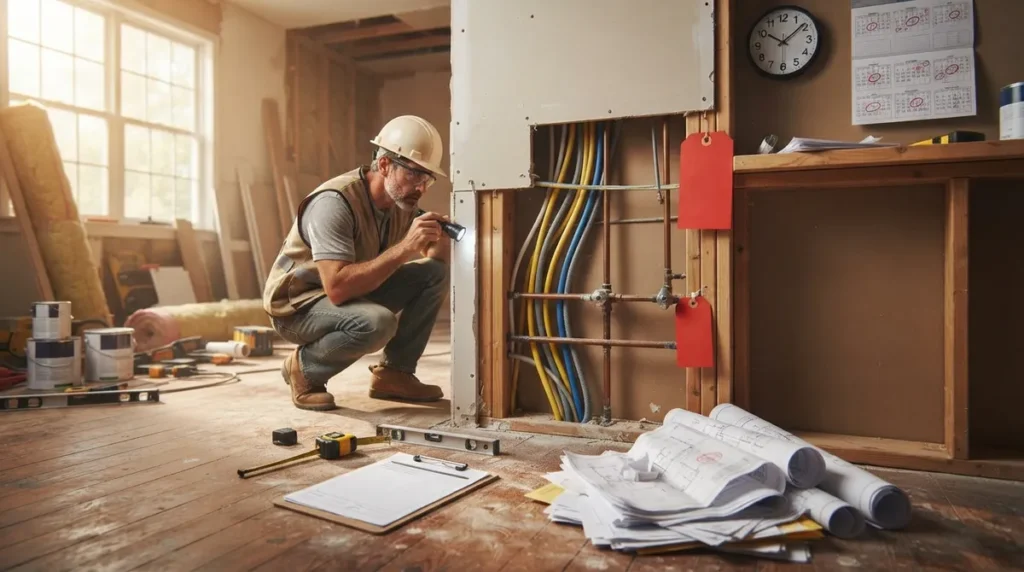
Concealed electrical, plumbing, structural, or mechanical work is often the trickiest part. If a wall was closed up around wiring that was never inspected, the county may require it to be opened again, or supported by a sealed engineering letter confirming it meets code. That's where having a team with in-house engineers, like the ones at 1 Contractor Solutions, can save weeks of back-and-forth with outside consultants.
Confirming the Right Jurisdiction Before You File Anything
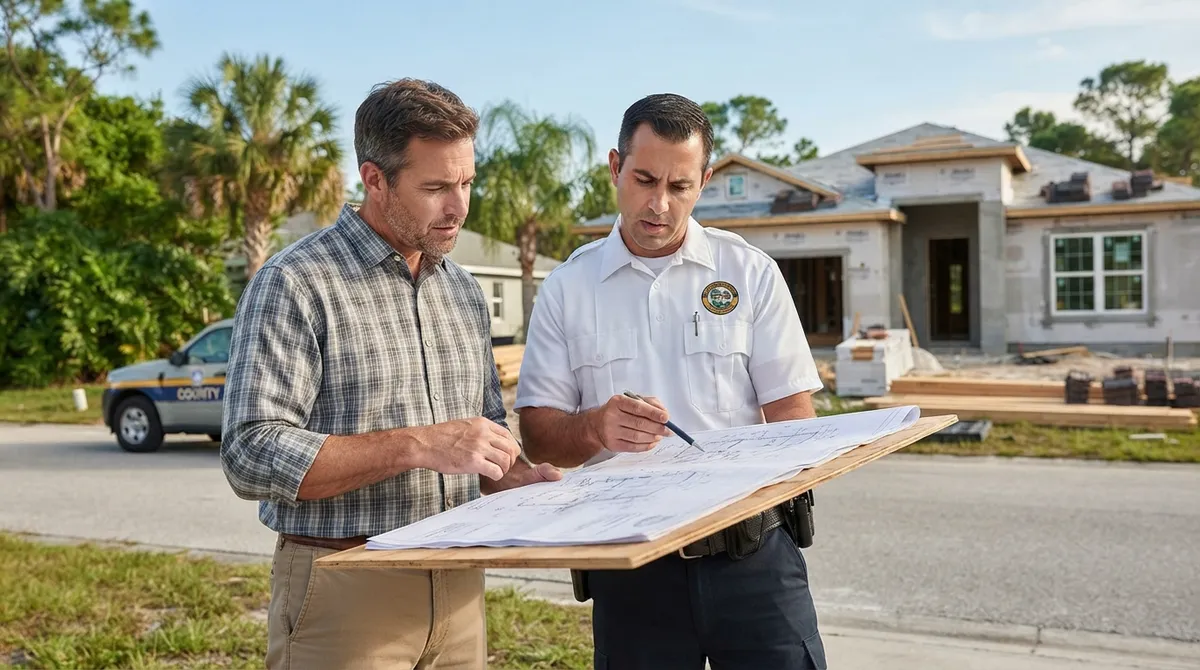
Here's a detail that trips up a lot of people: not every property near Sarasota is actually governed by Sarasota County. The City of Sarasota, Venice, and North Port each run their own permitting departments with different portals, fee schedules, and procedures.
Filing with the wrong office wastes time you don't have when a closing date is looming. Before submitting anything, confirm:
- Whether the property sits in unincorporated Sarasota County or inside a municipal boundary.
- Which building department has jurisdiction over the specific address.
- Whether any additional agencies, like fire or stormwater, need to sign off.
Tools like the building department lookup and open permit search can help you confirm this quickly, rather than guessing and losing a week to a misdirected application.
Realistic Timelines: How Long Does This Actually Take
Nobody wants to hear "it depends," but timelines genuinely vary based on the scope of the unpermitted work, how complete the documentation is, and how backed up the reviewing department happens to be.
| Scenario | Typical Planning Range |
|---|---|
| Minor unpermitted work with good documentation | 4–6 weeks |
| Moderate scope, missing some as-builts | 6–10 weeks |
| Concealed structural/electrical work requiring exposure | 8–12+ weeks |
| Contested violations heading to Special Magistrate | Several months |
Non-government estimates suggest retroactive permitting in Sarasota can range roughly from four to twelve weeks depending on complexity, though this isn't a guaranteed county processing time. It's a planning range, not a promise, and it should always be confirmed with the applicable jurisdiction directly.
What About Fees?
One detail that surprises a lot of sellers: after-the-fact permit fees in Sarasota can be significantly higher than standard permit fees. Some published guidance describes a structure where the after-the-fact fee totals roughly four times the standard fee, essentially the regular fee plus a threefold penalty. Fee schedules vary by jurisdiction, project type, and valuation, so this figure should always be verified with the specific building department before budgeting for the fix.
Step-by-Step: What to Do When You Discover the Problem
- Pull the permit history immediately. Don't wait for the title company to chase this down; get ahead of it yourself or with help.
- Confirm the correct jurisdiction. Sarasota County, the City of Sarasota, Venice, and North Port each have separate systems.
- Gather or create as-built documentation. This includes drawings, photos, and any existing permit records.
- Engage a licensed contractor or engineer if concealed work needs certification or exposure.
- Submit the after-the-fact permit application with all required fees and documentation.
- Schedule and pass required inspections. A submitted application alone doesn't resolve anything, inspections must be completed and passed.
- Obtain final sign-off, which may include a Certificate of Occupancy or Certificate of Completion, depending on the scope.
Each of these steps takes coordination, and missing even one document can bounce an application back to the start of the queue. This is exactly the kind of process where a dedicated permit facilitation and filing team earns its keep, tracking every submission and chasing reviewer comments so the homeowner or agent isn't stuck on hold with the county.
Who Needs to Get Involved
Depending on the property and the type of work, different professionals may need to weigh in before the permit can close out.
- General contractors handling the physical corrections or completing unfinished work.
- Structural or MEP engineers certifying concealed work meets code, especially through structural engineering or MEP engineering review.
- Drafters producing accurate as-built drawings for submission.
- Realtors coordinating communication between buyer, seller, and lender so nobody is blindsided.
- Permit specialists managing the filing, tracking, and inspection scheduling from start to finish.
For solar companies specifically, unpermitted prior electrical or roof work discovered during a solar installation review can create its own version of this headache. Coordinating structural documentation early, through resources built for solar contractors, helps avoid the same closing-delay scenario on future transactions.
When the Deadline Is Tight: What a Permitting Professional Actually Does
If your closing date is only weeks away, here's what a Florida permitting specialist typically does to compress the timeline as much as possible:
- Runs a full permit-history search to identify every open, missing, or expired permit tied to the address.
- Confirms the correct jurisdiction and reaches out directly to the reviewing office.
- Assembles or produces as-built drawings and coordinates any required engineering certifications.
- Lines up licensed contractors for any physical corrections needed before inspection.
- Schedules inspections and manages reviewer comments so nothing sits unanswered.
- Communicates realistic milestones to the realtor, buyer, seller, and lender so expectations stay grounded.
It's worth being upfront here: no permitting professional can guarantee approval or override the authority of the building department. What a good team can do is remove the guesswork, keep the paperwork moving, and prevent avoidable delays caused by missing documentation or misdirected applications.
Commercial and Larger Residential Projects
If the unpermitted work involves a commercial property or a larger residential development, there may be additional close-out conditions layered on top of the standard permit process, including:
- Final fire department approval
- Stormwater or right-of-way approvals
- Recorded easements
- Signed and sealed engineering certifications
- Updated site plans reflecting current conditions
- Landscape approvals and paid reinspection fees
These added layers are exactly why commercial brokers and property managers often bring in a dedicated plan review coordination team rather than trying to track every agency approval independently.
Where to Find Sarasota County's Official Resources
Sarasota County's Building Services division operates the PDS One Stop at 870 Apex Road in Sarasota, which handles permitting questions in person. The general building contact number is 941-861-5000, with inspection-scheduling hotlines at 941-861-3271 and 941-861-3273. Office hours are generally Monday through Friday from 7:30 a.m. to 4:00 p.m., though there's typically an early Thursday closure, and hours should always be confirmed before a visit.
For a deeper look at the county's formal escalation process, the Sarasota County Code Enforcement Citizen Guide is a solid primary source. And for anyone comparing how nearby counties handle similar issues, resources on Manatee County, Charlotte County, and Lee County permitting can offer useful context, since Southwest Florida jurisdictions often face similar retroactive permitting challenges.
A Friendly Reminder: You're Not the First Person This Has Happened To
If you're feeling overwhelmed right now, take a breath. Unpermitted work shows up in Sarasota-area transactions more often than most people realize, and it's rarely the buyer's or seller's fault personally. Sometimes it's a previous owner's shortcut from a decade ago. Sometimes it's a contractor who skipped a step. Either way, the county has an established process for fixing it, and there are professionals whose entire job is making that process less painful.
1 Contractor Solutions has spent more than 15 years handling exactly this kind of situation across Florida, including throughout Sarasota, Venice, and North Port. With in-house drafting and engineering, and status as a licensed private provider, the team can move a stalled permit forward without waiting on outside consultants to call back. You can follow us on LinkedIn or follow us on Facebook for updates on Florida permitting changes, and you can also visit us on Google — 1 Contractor Solutions to see how the team has helped other Sarasota-area clients through similar closing delays.
Bringing It All Together
A closing delayed by unpermitted work in Sarasota feels like a roadblock, but it's really more like a detour. The path forward involves confirming the jurisdiction, pulling accurate documentation, engaging the right professionals, and staying in close communication with everyone involved in the transaction. It takes patience, but it's absolutely fixable, and most sellers who move quickly find a way to reach the closing table without losing the deal.
If you're facing this situation right now and want an experienced team to handle the permit-history search, documentation, and filing on your behalf, get a free quote from 1 Contractor Solutions and let's get your closing back on track together.
FAQs
Can unpermitted work delay or stop a home closing in Sarasota?
Absolutely, and it happens more often than you'd think. Lenders, title companies, and insurers all want proof that the work was permitted and inspected, so if that documentation isn't there, everyone tends to hit pause until it's sorted out.
How do I find out whether a Sarasota property has open or missing permits?
The friendliest starting point is a permit-history search through the county or applicable city portal, since records vary depending on whether the property sits in unincorporated Sarasota County or inside a city like Venice or North Port. A quick lookup now can save a whole lot of stress later.
How long does it take to resolve unpermitted work in Sarasota?
It really depends on the scope, but many straightforward cases wrap up in four to twelve weeks with good documentation. Concealed structural or electrical work tends to take longer since it may need to be exposed or certified before it can be approved.
How much does an after-the-fact permit cost in Sarasota County?
Fees are typically higher than a standard permit, sometimes described as roughly four times the normal fee once penalties are added. Exact costs vary by project and jurisdiction, so it's worth confirming directly with the building department before budgeting.
Can a buyer close while unpermitted work is still unresolved?
It's possible in some cases, but it usually depends on the lender, title company, and how significant the issue is. Many buyers and sellers work out an agreement, like an escrow holdback, while the permit gets finalized, but that's always a case-by-case conversation with the professionals involved.
We do this work every day across all 67 Florida counties. Call (866) 314-6931 and we will tell you what your situation actually requires — including when you do not need us.
Related services
Permit Facilitation & Filing
You have a crew scheduled, a client asking for dates, and a permit sitting somewhere in a queue you cannot see. We file it, w…
See the servicePlan Review Coordination
A permit in plan review is not one queue. On a commercial project it can be six queues, each with its own reviewer, its own c…
See the serviceReady to get your permit moving?
One call tells you which jurisdiction controls your project, what it will take, and what it will cost. Most of the time we can scope it on the phone.