
Blog
Florida Reroof Inspections: What Each Stage Checks (2026)
Learn which Florida reroof inspections apply, from sheathing and dry-in to final, and why your local building department's permit list controls the process.
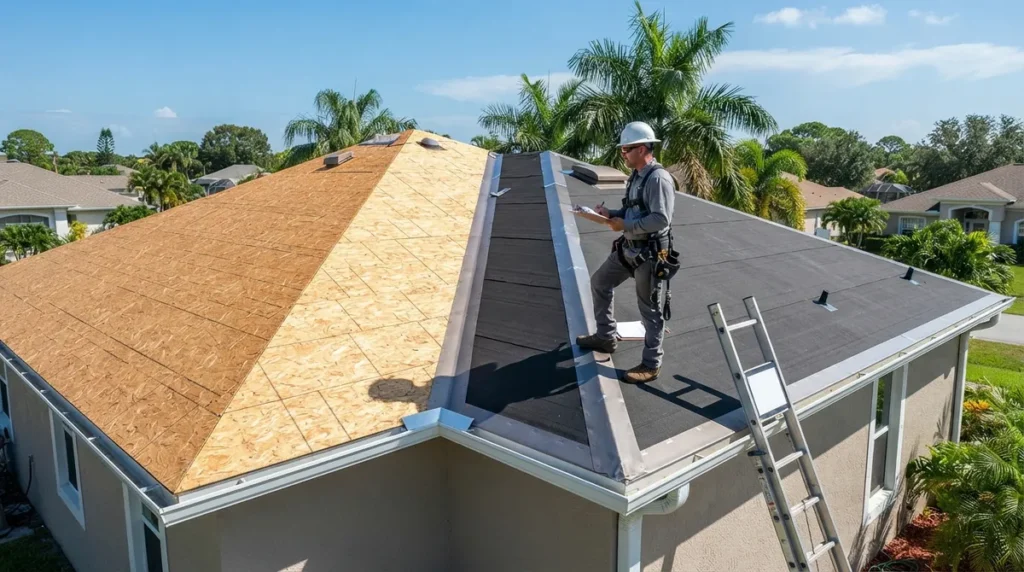
Key Takeaways
-
Florida reroof inspections have no single statewide checklist; the inspection list printed on your approved permit from your local building department controls your project.
-
Four stages commonly appear across Florida: sheathing/deck, dry-in and flashing, in-progress roof covering, and final, but not every jurisdiction requires all four for every job.
-
Dry-in and flashing approval is the inspection most jurisdictions treat as essential, and many require it passed before any roof covering is installed.
-
Never cover work early: installing shingles, tile, or metal before a required inspection can force you to tear material back off for the inspector.
-
Check local readiness rules before calling for an in-progress inspection; for example, Seminole County requires at least 50% of the roof dried in and flashed.
-
Affidavits with dated photos can replace some on-site inspections only where your local building department accepts them, so never assume a neighboring county's rule applies.
You've signed the contract, the shingles or tiles are on order, and the crew is ready to tear off. Then somebody asks the question that stalls a lot of Florida roofing jobs: what inspections are required for a reroof in Florida, and in what order? It's a fair thing to wonder, because the answer isn't one tidy statewide checklist. Florida reroof inspections are administered by your local building department, and the exact stages, names, and scheduling rules can change from one county or city to the next.
The good news is that most reroof programs follow a familiar pattern. Inspectors want to see the roof deck properly attached, the underlayment and flashing installed correctly, the roof covering installed to the approved product instructions, and the finished job complete. In this friendly 2026 guide, we'll walk through each common inspection stage, show how local rules differ, and share practical tips so you never cover work an inspector still needs to see.
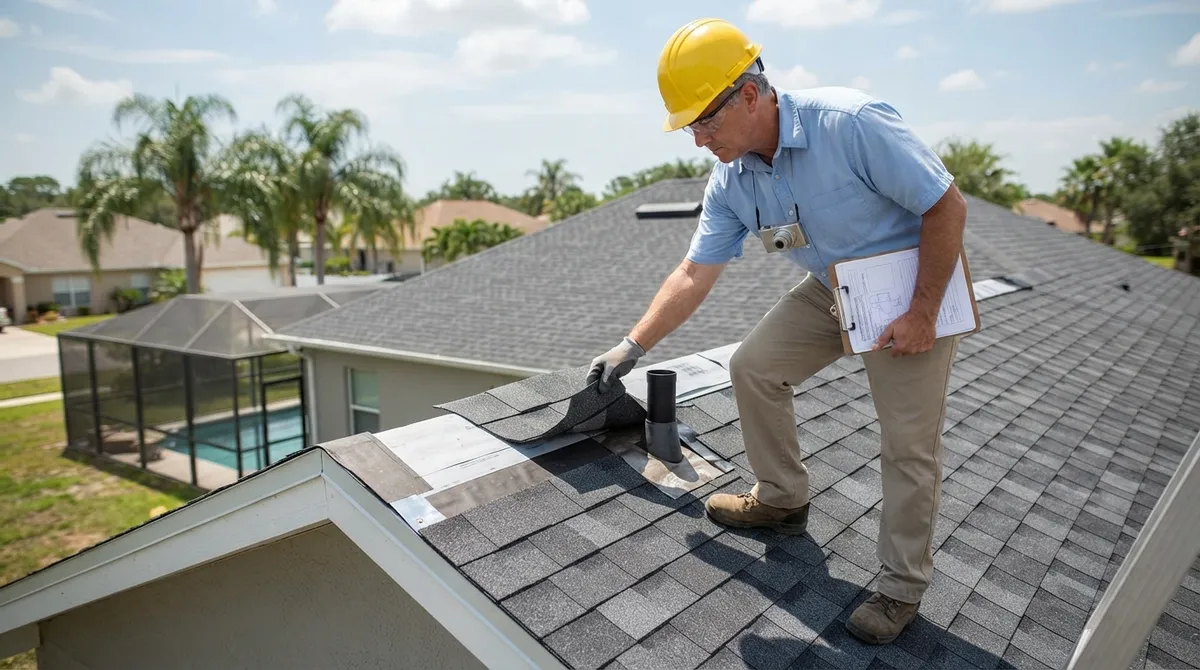
The Short Answer: Your Permit Is the Controlling Guide
If you only remember one thing, remember this: the inspection list printed on your approved permit controls your project. There is no single statewide count of required reroof inspection stages. Each local building department sets and publishes its own procedures under the Florida Building Code, 8th Edition (2023), and then adds its own scheduling rules.
That said, four stages show up again and again across Florida jurisdictions:
- Roof deck or sheathing inspection (when required)
- Dry-in (underlayment) and flashing inspection
- In-progress roof covering inspection (in many jurisdictions)
- Final inspection
Not every jurisdiction requires every stage for every reroof. A simple shingle replacement in one city might involve only a dry-in and a final, while a tile or metal job elsewhere could involve all four. When in doubt, check the current permit checklist from your building department before any work gets covered.
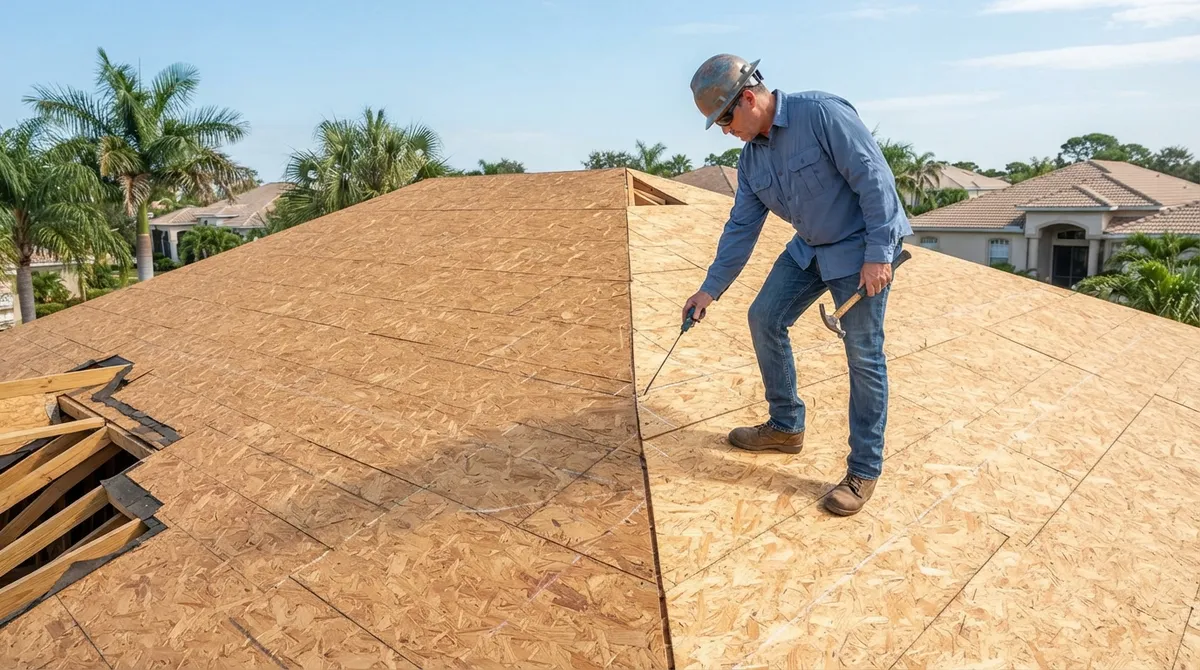
Stage 1: Roof Deck or Sheathing Inspection
The deck is the foundation of everything that goes on top of it, so it makes sense that inspectors want eyes on it before it disappears under underlayment. A sheathing inspection verifies that the deck is properly attached and in sound condition. It happens before the deck is covered.
When it's typically required
Sheathing inspections are not universal for every reroof. Some jurisdictions require them specifically for owner-builder reroofs, or when deck attachment has to be verified because of the roof's age, the nailing pattern, or what the tear-off reveals. Some local programs allow qualifying contractors to submit a decking affidavit with photos instead of an on-site visit. That's an important detail: an affidavit option is not a statewide substitute, and it only works if your local building department accepts it.
What the inspector looks at
- Fastener type, spacing, and pattern on the deck
- Condition of the sheathing (rot, delamination, damage)
- Any replaced or new sections and how they were attached
- Overall readiness to receive underlayment
Lake County's reroof checklist, for example, lists inspection items that can include decking, sheathing and roof nailing, depending on the project type. That's a good illustration of how the same stage can carry different names and different triggers depending on where you pull your permit.
Stage 2: Dry-In and Flashing Inspection
Think of the dry-in as the moment your roof becomes weather-ready. This is the inspection most Florida jurisdictions treat as non-negotiable. St. Lucie County, for instance, lists dry-in and final inspections for all reroofs, with decking and in-progress inspections depending on project conditions.
What a dry-in inspection typically checks
- Underlayment type, installation, and laps
- Drip edge at eaves and rakes
- Valley treatment
- Flashing at walls, chimneys, and transitions
- Penetration details (vents, pipes, stacks)
- Any secondary water barrier required for the project
Here's the critical sequencing point: local rules may require approval of the dry-in before roof covering is installed. If you install shingles, tile, or metal on top of an underlayment that hasn't passed, you may be asked to remove material so the inspector can see what's underneath. That's a costly, frustrating setback, and it's completely avoidable by confirming your jurisdiction's sequence first.
Stage 3: In-Progress Roof Covering Inspection
An in-progress inspection checks the roof covering while installation is underway. It matters most for systems where fasteners get hidden once the next course goes down, and where the local department wants an on-site check of installation quality.
Some jurisdictions get very specific about when this inspection can be called. Seminole County's 2024 contractor guidance, for example, specifies that at least 50% of the roof must be appropriately dried in and flashed for the in-progress inspection. That's a local rule, not a statewide threshold, but it shows why reading your jurisdiction's procedures matters. Calling for an inspection before the roof is ready can mean a failed inspection and a re-inspection fee.
What inspectors may verify
- Fastener type, quantity, and placement per the product approval and installation instructions
- Starter course and first-course installation
- Proper exposure and alignment of the roof covering
- Compliance with the product approval for the specific system installed
If you want to understand the paperwork side of product compliance, our guide on how to read a Florida product approval number for roofing is a helpful companion read.
Stage 4: The Final Inspection
The final inspection is the finish line. It's commonly required after the full roof assembly is complete, and it's the inspection that lets the permit be closed out.
What the final inspection commonly covers
- Overall installation details of the completed roof covering
- Penetrations, flashing, and drainage
- Edge details and ridge or hip treatment
- Whether the site has been cleared of debris and tear-off material
Some jurisdictions also ask for documentation at final. That can include the permit card on site, product approvals or installation instructions, photos, and a signed or notarized affidavit. Having this folder ready before the inspector arrives saves time and avoids a return trip.
A failed final isn't the end of the world, but it does keep your permit open. If that happens, our walkthrough on what to do when a Florida final inspection fails explains how to correct and re-schedule.
Quick Comparison: The Four Common Reroof Inspections
| Inspection | When it happens | What it verifies | Always required? |
|---|---|---|---|
| Sheathing / decking | Before deck is covered | Deck attachment, nailing, condition | No, depends on jurisdiction and project |
| Dry-in / flashing | After underlayment and flashing, before roof covering | Underlayment, laps, drip edge, valleys, penetrations | Very commonly yes |
| In-progress | During roof covering installation | Fasteners, installation per approval | No, varies by jurisdiction and system |
| Final | After completion | Finished installation, flashing, site cleanup | Commonly yes |
How Inspection Requirements Differ Across Florida
To see just how local these rules can be, here's how a few jurisdictions describe their own reroof procedures, based on their published guidance:
| Jurisdiction | What published guidance indicates |
|---|---|
| St. Lucie County | Dry-in and final for all reroofs; decking and in-progress depending on project conditions. Permit needed when reroof work exceeds 25% of the existing roof area within a 12-month period (verify current applicability and exceptions). |
| Seminole County | 2024 contractor guidance requires at least 50% of the roof dried in and flashed for the in-progress inspection. |
| Lake County | Checklist references Florida Building Code 8th Edition (2023) and lists items that can include dry-in/flashing, secondary barrier, decking, and roof nailing, depending on project type. |
| Monroe County | Publishes separate owner-builder residential reroof requirements. |
Notice the pattern: same state, same code edition, yet very different inspection combinations. That's exactly why a copy-and-paste checklist from a neighboring county can steer you wrong. If your project touches the 25% threshold, our article on how to navigate Florida's 25% roof rule in 2026 breaks that concept down in plain English.
Can an Affidavit Replace an On-Site Inspection?
Sometimes, but only where your local building department says so. Some jurisdictions let qualified contractors submit a decking or installation affidavit with dated photos in place of a live inspection for certain stages. Others require an inspector on site, period. Never assume an affidavit is acceptable just because a different county allows it.
If you're exploring alternatives to the standard county inspection queue, a licensed private provider may be an option in some projects. Our guide on how to use private provider inspections in West Palm Beach shows how that route can work, and our overview of private provider plan review and inspections explains the service itself.
A Simple Step-by-Step Plan for Passing Your Reroof Inspections
- Confirm the jurisdiction. City limits and county lines can be tricky. Make sure you know which building department actually controls the address.
- Pull the current permit checklist. Look for the inspection list, scheduling rules, and any affidavit or photo options.
- Gather your documents. Product approvals, installation instructions, the permit card, and any required notarized forms should be ready before you start.
- Don't cover work early. Wait for sheathing and dry-in approval where required before installing the next layer.
- Call for each inspection at the right time. Respect local readiness rules, like Seminole's 50% dry-in threshold for in-progress.
- Take dated photos. Even if photos aren't required, they protect you if a question comes up later.
- Schedule the final promptly. An open permit can cause headaches later, especially at a sale or refinance.
What Happens If You Skip or Miss an Inspection
Skipping an inspection or covering work before approval is one of the most common reasons a reroof permit gets stuck. The building department may require you to uncover work, provide an engineer's letter, or add documentation before they'll close the permit. If that's where you are, our articles on how to handle covered work that missed inspection in FL and engineer letter vs. missed inspection lay out your options.
And if the roof was completed with no permit at all, don't panic. There are real paths forward. Start with what to do if your reroof was done without a permit in Florida or how to legalize an existing roof in Florida.
Tips for Different Readers
For general and roofing contractors
Build a jurisdiction-by-jurisdiction cheat sheet and update it each year. Inspection sequences, scheduling windows, and documentation rules shift over time. If you're running volume across several counties, our Roof Permit Partnership Program is built for exactly that workflow.
For homeowners and owner-builders
If you're the permit holder on an owner-builder reroof, expect closer scrutiny. Some jurisdictions specifically require a sheathing inspection for owner-builder jobs. Read your county's owner-builder requirements closely, and consider our owner-builder permits support if the paperwork feels overwhelming.
For real estate professionals
An open or expired reroof permit can surface during title work or an inspection and delay a closing. Encourage sellers to confirm that the permit was finalized well before listing.
For solar companies
If a solar install is planned on a roof that's about to be replaced, coordinate timing so the final roof inspection is complete first. That keeps the roof assembly documented and the solar permit clean.
Where a Permitting Team Fits In
Reroof permits look simple on paper, but the details are where jobs slow down: which inspections apply, which documents are accepted, whether the affidavit route is open, and how to respond to a correction notice. 1 Contractor Solutions works as an outsourced permitting department across all 67 Florida counties. We prepare and file applications, track them, coordinate plan review, work reviewer comments, and carry the permit through closeout, with in-house drafting and engineering when sealed documents are needed. You can explore our roof permit services or our permit facilitation and filing to see how it works. If you'd like to hear what other customers say, visit us on Google — 1 Contractor Solutions and read their reviews.
Want to keep learning? You can follow us on LinkedIn or follow us on Facebook for Florida permitting updates, and our marketing partners at Brain Buzz Marketing help us share them.
Wrapping Up: Know Your List, Then Don't Cover Early
So, what inspections are required for a reroof in Florida? Most projects involve some combination of sheathing, dry-in and flashing, in-progress, and final inspections, but your local building department and the inspection list on your permit decide exactly which ones apply to you. Read the checklist, confirm the sequence, keep your documents and photos organized, and never cover work an inspector still needs to see. Do that, and a reroof permit goes from stressful to routine.
If you'd rather hand the paperwork to people who do this every day, get a free quote and we'll tell you which jurisdiction controls your roof, what it takes, and then go make it happen. Permits approved. Projects moving.
FAQs
What inspections are required for a reroof permit in my Florida county or city?
It depends on your local building department. Common stages include sheathing, dry-in and flashing, in-progress, and final inspections, but not every jurisdiction requires all four. The inspection list on your approved permit is the controlling guide for your project.
Can I install shingles or other roof covering before the dry-in inspection passes?
Usually not. Many jurisdictions require dry-in approval before roof covering goes on, and covering it early can mean tearing material back off so the inspector can see the underlayment and flashing. Always confirm your local sequence before you cover anything.
Does Florida require a roof sheathing inspection before a reroof?
Not statewide for every job. Some jurisdictions require it for owner-builder reroofs or when deck attachment must be verified, and some allow a decking affidavit with photos instead. Your building department decides which applies to you.
Can a Florida reroof inspection be completed by affidavit instead of an on-site inspection?
Sometimes, but only if your local building department accepts it. Some programs let qualifying contractors submit an affidavit and photos for certain stages, while others require an inspector on site. It's never a statewide substitute.
What documents should I have ready for a reroof inspection?
Keep the permit card on site, along with product approvals and installation instructions for the roof system. Some jurisdictions also want dated photos and a signed or notarized affidavit, so check your local checklist ahead of time.
We do this work every day across all 67 Florida counties. Call (866) 314-6931 and we will tell you what your situation actually requires — including when you do not need us.
Related services
Permit Facilitation & Filing
You have a crew scheduled, a client asking for dates, and a permit sitting somewhere in a queue you cannot see. We file it, w…
See the servicePlan Review Coordination
A permit in plan review is not one queue. On a commercial project it can be six queues, each with its own reviewer, its own c…
See the serviceReady to get your permit moving?
One call tells you which jurisdiction controls your project, what it will take, and what it will cost. Most of the time we can scope it on the phone.