
Blog
Engineer Letter for After-the-Fact Permit in Florida (2026)
Learn when Florida building departments want an engineer letter for after-the-fact permits, what it includes, and what it can't do.
Key Takeaways
-
An engineer letter does not legalize unpermitted work or guarantee approval; the local building official retains full discretion over whether completed work is accepted.
-
Call your local building department before hiring an engineer to confirm whether they accept engineer letters for your type of work and to get their current submittal checklist.
-
The letter must be signed and sealed by a Florida-licensed Professional Engineer; an out-of-state seal or unsealed letter is likely to be rejected.
-
Engineers should only certify conditions they can actually verify through exploratory openings, measurements, photos, or testing; a letter saying 'looks fine' carries little weight.
-
Keep covered work accessible: building officials may require opening drywall, removing finishes, testing, or additional inspections before accepting concealed work.
-
No statewide standard exists for after-the-fact permit fees, penalties, engineer letter costs, or timelines, so get project-specific quotes after verifying local requirements.
Finding out that work on your property was never permitted can feel like a punch to the stomach. Maybe a buyer's inspector flagged it. Maybe a lender is asking questions. Maybe you inherited a lanai, a re-roof, or a remodel from a previous owner and just learned there was never a permit. Take a breath. This happens all the time in Florida, and there is a legitimate path forward.
One piece of that path is the engineer letter for an after the fact permit in Florida. It sounds simple, and in the right situation it really can help. But it is also one of the most misunderstood documents in permitting. It is not a magic wand, and it does not legalize anything by itself. In this guide, we will walk through what an engineer letter actually is, when building departments want one, what a good letter contains, and how to avoid the mistakes that cost owners weeks of delay. Whether you are a contractor cleaning up a job, a realtor racing a closing date, or a homeowner trying to do the right thing, you will leave knowing exactly what to do next.
What an After-the-Fact Permit Really Is
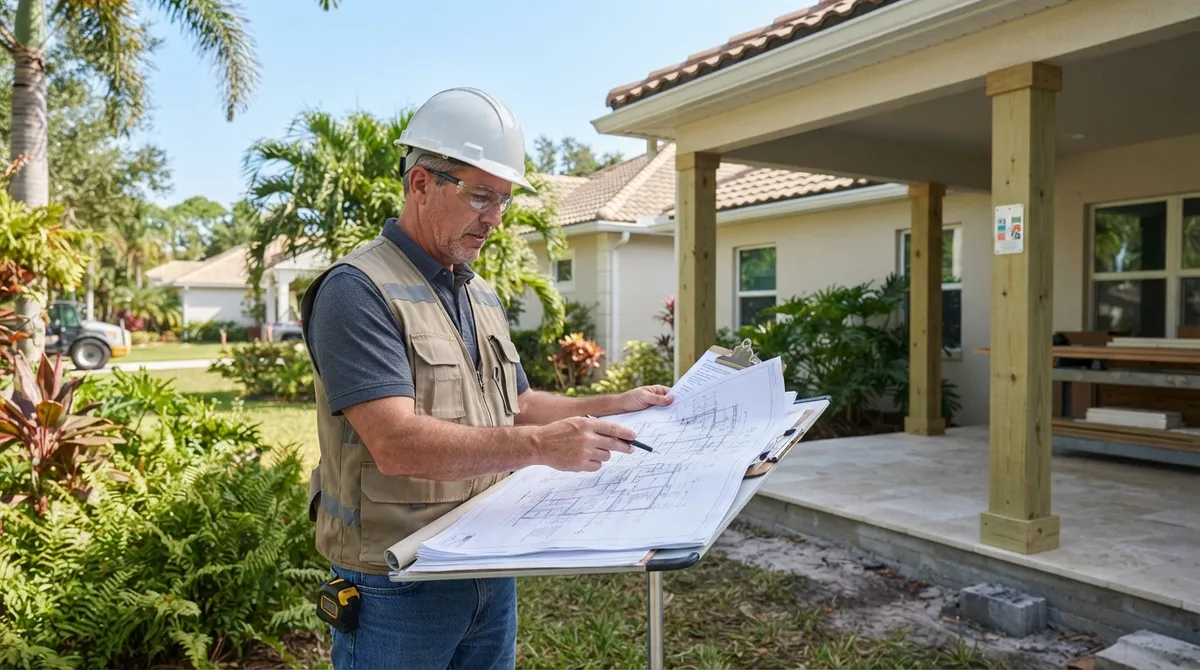
An after-the-fact permit is a local building permit application for work that was already completed without the required permit. Florida law, under Florida Statutes § 553.79, generally requires a permit before covered construction, alteration, repair, or demolition begins. The local building department, not an engineer, decides whether completed work can be approved.
That last point matters. Many owners assume that if they hire an engineer, the problem goes away. In reality, the engineer is a supporting player. The building official is the decision-maker, and every jurisdiction runs its own process. If you want the full roadmap, our guide to how to get an after-the-fact permit in Florida breaks down the application side step by step.
What Is an Engineer Letter, and Why Do Building Departments Ask for One?
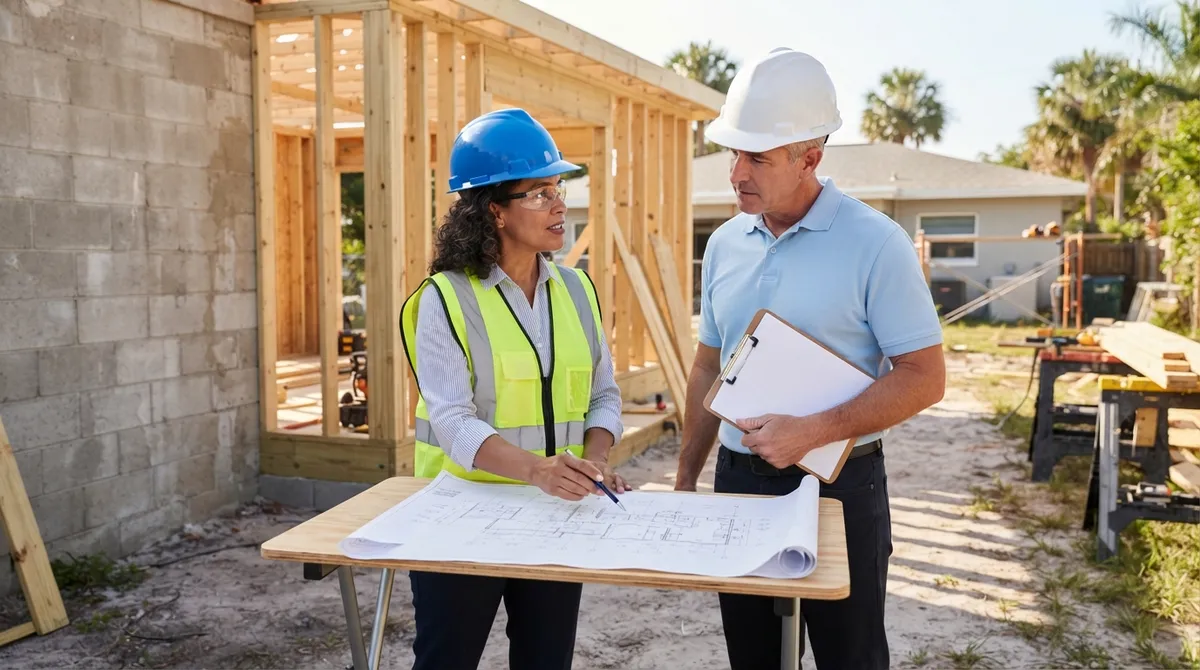
An engineer letter is a signed and sealed document from a Florida-licensed Professional Engineer (PE). In the after-the-fact context, it typically evaluates existing or concealed construction and states what the engineer observed, how it was verified, and what standards it was measured against.
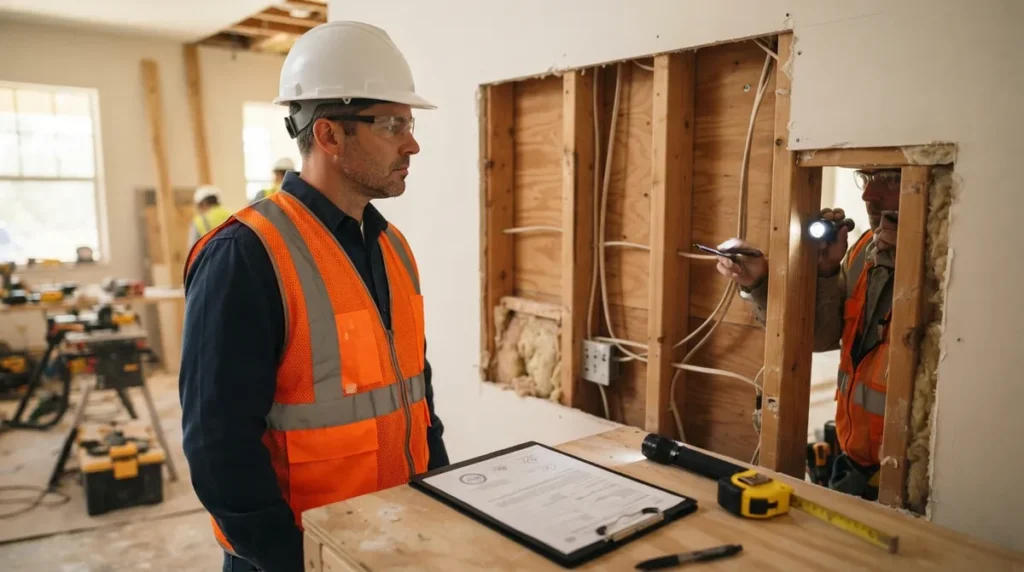
Building departments ask for these letters when something cannot be inspected the normal way. Think about it from the inspector's seat. Normally, a framing inspector sees the nailing, the connections, and the anchors before the drywall goes up. If the work was done without a permit, those inspections never happened, and now the walls are closed, the roof is shingled, or the slab is poured. A PE can step in, look at what can be reasonably verified, and document it.
Common situations where an engineer letter comes up include:
- Structural work that was covered before anyone inspected it, such as framing, tie-downs, or footings
- Roof framing or truss modifications that need verification
- Screen enclosures, lanais, and pool cages built without plans
- Retaining walls, decks, and patio covers
- Garage conversions and additions with unknown structural details
Our deeper explainer on who writes engineer letters for Florida permits covers the licensing side if you want to dig further.
Important Reality Check: A Letter Is Not a Permit
Let us be very clear, because this is where owners get burned. An engineer's letter is not a universal substitute for an after-the-fact permit, approved plans, or required inspections. It does not legalize the work. It does not close a code enforcement case. And it does not remove your responsibility, or your contractor's, for code compliance.
The local authority has full discretion. For example, Cape Coral's published engineer-letter guidance states that work requiring inspection should remain exposed until inspected. If it was covered, the building official may require opening or removing finishes, testing, additional inspections, or other corrective work. The city also notes that submitting a letter does not guarantee acceptance.
| What an Engineer Letter CAN Do | What an Engineer Letter CANNOT Do |
|---|---|
| Document verified conditions of existing or concealed work | Replace the after-the-fact permit application |
| Support the building official's evaluation | Guarantee approval or acceptance |
| Identify deficiencies that need correction | Close a code enforcement case on its own |
| Supplement plans, calculations, and inspections | Replace required final inspections |
What a Good Florida Engineer Letter Includes
Requirements vary by jurisdiction and project type, but where a local authority allows engineer letters, its guidance often asks for a consistent set of details. A strong letter typically includes:
- Project and permit information: the address, permit number or application reference, and a clear description of the work.
- The missed inspection and the reason: which inspection did not happen and why.
- Inspection date and scope: when the engineer visited and what was examined.
- Verification methods: measurements, photographs, exploratory openings, testing, or other methods used.
- Applicable code and design criteria: which edition of the Florida Building Code, wind speed, exposure, and other design parameters were used.
- Product approvals where relevant: for items such as roofing products, windows, or doors.
- Signature and seal: a Florida-licensed PE must sign and seal the letter.
Notice that last item. The engineer must be licensed in Florida. An out-of-state seal or an unsealed letter is a quick way to get a rejection.
The Honest Limit: Engineers Only Certify What They Can Verify
Here is something that might surprise you in a good way. A trustworthy engineer will not simply sign off on whatever you hand them. A PE should document only what can be reasonably verified. If the engineer cannot see the connection, measure the member, or otherwise substantiate the condition, a responsible letter will not claim that concealed work complies.
Depending on access, verification may involve:
- Exploratory openings in drywall, soffits, or ceilings
- Direct measurements of members, spacing, and connections
- Photographs documenting visible conditions
- Testing, where applicable
- Other forensic methods suited to the condition
This is actually good news for you. A letter built on real verification carries weight with reviewers. A letter that just says "looks fine" does not, and building officials know the difference.
Letter, Plans, or Both? Matching the Fix to the Problem
Not every after-the-fact situation needs the same documentation. The right approach depends on the type of work and what your local department wants. Here is a general comparison to help you think it through.
| Situation | Often Requested | Notes |
|---|---|---|
| Covered framing or hidden structural work | Engineer letter, possible exploratory openings | Official may require opening finishes |
| Addition or enclosure with no drawings | As-built drawings, sealed plans, calculations | Letter alone is rarely enough |
| Re-roof done without a permit | Permit application, product approvals, inspections | Truss or deck verification may be needed |
| Minor, easily inspected work | Standard after-the-fact permit and inspection | Letter may not be needed at all |
If drawings are part of the picture, take a look at our as-built drawings service and our overview of as-built drawings vs. permit plans to see which one fits your job.
Step-by-Step: How to Handle an Engineer Letter for an After-the-Fact Permit
Here is a practical sequence that keeps you out of trouble and avoids paying for documents the building department will not accept.
- Identify the authority having jurisdiction. Near city lines, it is not always obvious whether the county or the city controls your property. Our building department lookup tool helps you confirm who to call.
- Call and ask what they require. Before you hire anyone, ask whether they accept engineer letters for your type of work, and request their current submittal checklist.
- Check for open permits and violations. Our open permit search can reveal existing records that change your approach.
- Gather what you have. Collect photos, receipts, contractor names, dates, and any old drawings or product information.
- Schedule the engineer's site visit. Make sure areas needing verification are accessible, and be prepared for exploratory openings if requested.
- Submit with your application. The letter supports the after-the-fact permit application; it does not replace it.
- Respond to comments and complete inspections. Expect reviewer comments, and be ready to correct deficiencies and pass final inspections.
Costs and Timelines: Why There Is No Single Answer
Everyone wants a number, so let us be honest about this. No statewide standard exists for after-the-fact permit fees, penalties, engineer letter costs, or processing times. These vary by jurisdiction, by project type, and by how much verification the engineer must do. Some departments charge penalty multipliers on permit fees; others handle things differently.
What drives your total:
- The scope and complexity of the unpermitted work
- Whether concealed conditions must be opened up
- Whether sealed plans or calculations are needed alongside the letter
- Local fees and any penalty structure
- How many correction rounds the reviewers request
For a closer look at the money side, see our guide on after-the-fact permit costs in Florida.
Who Needs This Most: Quick Guidance by Audience
Homeowners and residential property owners: If you bought a home with surprise unpermitted work, you are not alone and you are not in trouble for what a prior owner did, though the property still needs to be brought into compliance. Start with a call to your building department. Our homeowner resources can point you in the right direction.
General contractors: Cleaning up a job that skipped a step is stressful, but a clear, documented plan protects your license and your client relationship. See how we support general contractors with filing, tracking, and revisions.
Realtors and investors: A permit problem can derail a closing fast. Early engineering input can help you understand scope before deadlines start slipping. Learn more about our realtor and closing support.
Solar companies and design trades: If an install or structure went in without proper documentation, structural verification and clean sealed paperwork can speed approvals and keep crews moving.
Common Mistakes That Slow Everything Down
After seeing so many of these files, a few patterns show up again and again. Avoid these and you are already ahead:
- Hiring an engineer before calling the building department. You may pay for a letter that is not even the format they accept.
- Assuming a letter equals approval. It does not. Plan for the full permit process.
- Covering up or finishing more work first. Keep areas accessible so verification is possible.
- Using an unlicensed or out-of-state engineer. A Florida PE seal is essential.
- Skipping product approvals. Roofing, windows, and doors often need documented approvals.
- Ignoring a violation notice. Deadlines in enforcement cases do not pause while you decide.
If you are already facing a notice, our article on what to do when you get a code enforcement notice is a good next read.
How 1 Contractor Solutions Can Help
This is exactly the kind of tangled situation we love untangling. 1 Contractor Solutions works as Florida's outsourced permitting department, and our drafting and engineering are done in house, with our own engineer signing and sealing the work. That means when a reviewer asks for a correction, we fix it directly instead of chasing an outside consultant.
We handle after-the-fact and expired permits, prepare engineer letters, coordinate plan review, and carry the file through approval and closeout across all 67 Florida counties. Not sure which department controls your property or what yours will accept? We will tell you before you spend a dime on the wrong document. You can also see what our customers say: Visit us on Google — 1 Contractor Solutions. And if you like staying in the loop, follow us on LinkedIn or follow us on Facebook for permitting tips.
For official background on Florida's permit requirement itself, you can read Florida Statutes § 553.79 on the Florida Legislature's website.
Final Thoughts: Start With the Right Call
An engineer letter can be a genuinely helpful tool when concealed or existing work needs professional verification. But it works best as part of a bigger plan: confirm the right jurisdiction, learn exactly what that building department accepts, document only what can be verified, and follow through with the permit, inspections, and any corrections.
You do not have to figure this out alone. Our team answers around the clock and typically responds within 30 minutes, and se habla español. If unpermitted work is standing between you and a sale, a finished project, or just peace of mind, reach out today and get a free quote. Let us help you turn a stressful problem into a closed permit.
FAQs
Do I need an engineer letter for an after-the-fact permit in Florida?
Not always. It depends on your local building department and the type of work. Easily inspected work may only need a standard permit and inspection, while concealed or structural work often calls for a sealed engineer letter. Always ask your authority having jurisdiction first.
Can an engineer's letter replace a required inspection?
No, not as a guarantee. A letter can supplement verification for covered work, but the building official decides what is accepted. They may still require exposing the work, testing, or additional inspections.
Does the engineer have to be licensed in Florida and seal the letter?
Yes. Where engineer letters are accepted, they generally need to be signed and sealed by a Florida-licensed Professional Engineer. An unsealed or out-of-state letter is likely to be rejected.
Will the building department make me open walls or remove finishes?
Possibly. If work was covered before inspection, the building official may require exploratory openings, removal of finishes, testing, or even partial demolition. Requirements vary by jurisdiction and project.
How much does an engineer letter for an after-the-fact permit cost?
There is no statewide standard price. Costs depend on the scope of work, how much verification is needed, local permit fees, and any penalties. A reputable provider can give you a project-specific quote after reviewing your situation.
We do this work every day across all 67 Florida counties. Call (866) 314-6931 and we will tell you what your situation actually requires — including when you do not need us.
Related services
Permit Facilitation & Filing
You have a crew scheduled, a client asking for dates, and a permit sitting somewhere in a queue you cannot see. We file it, w…
See the servicePlan Review Coordination
A permit in plan review is not one queue. On a commercial project it can be six queues, each with its own reviewer, its own c…
See the serviceReady to get your permit moving?
One call tells you which jurisdiction controls your project, what it will take, and what it will cost. Most of the time we can scope it on the phone.