
Blog
12 Things to Know Before Getting a Pergola Permit in Cape Coral
Planning a pergola in Cape Coral? Learn the 12 key permit rules, documents, size limits, and inspections before you build in 2026.
Key Takeaways
-
Cape Coral requires a building permit for any new pergola, applied for through the City's online 'Shade Structure' application with 'Pergola' selected as the work type.
-
Freestanding pergolas (under 20% of perimeter attached to the main structure) are capped at 200 sq. ft. combined per single-family property; duplexes get 100 sq. ft. per unit, up to 200 sq. ft.
-
Plans must be engineered, signed, and sealed by a Florida-licensed professional, and the structure must meet Florida Building Code wind-load requirements.
-
Required documents include a site plan, architectural/structural plan, and burrowing owl/gopher tortoise affidavit; confirm current pergola fees with the City, since the $427 figure listed is for gazebos.
Picture this: you've pinned the perfect cedar pergola, your Saturday crew is lined up, and the lumber is sitting in the driveway. Then a neighbor mentions you might need a permit. Sound familiar? Don't worry, you're in good company, and you've caught it at the right time.
In Cape Coral, a pergola is not a "just build it" project. The City requires a building permit, reviewed for building and zoning compliance (plus environmental review when it applies). The City's January 2026 residential guideline spells out the documents, plans, and inspections involved. This guide walks you through the 12 things worth knowing before you apply for a pergola permit in Cape Coral, whether you're a homeowner, a general contractor, a designer, or a real estate pro helping a client.
One quick note: fees, forms, and rules can change, and every parcel is a little different. Treat this as a friendly roadmap, then confirm the details with the City's current permit portal before you build.
1. Yes, Cape Coral Requires a Permit for a New Pergola
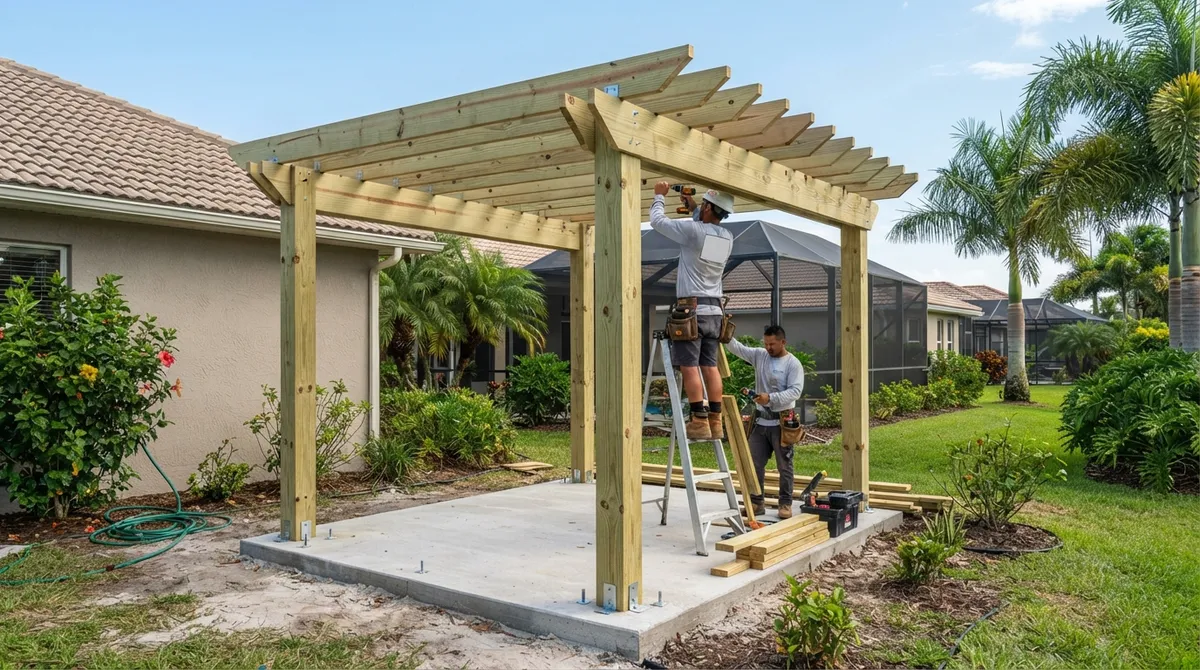
Let's start with the big one. Cape Coral requires a building permit for a new pergola. The City's residential guideline points applicants to the online application called "Shade Structure: Gazebo, Pergola, Shade-Shelter, Tiki," where you select "Pergola" as the work type.
Why does this matter? Pergolas in Southwest Florida live in a wind-heavy environment. A structure that looks light and airy still has to resist uplift and lateral loads. The permit process exists to make sure it stays put when the weather turns.
2. Know Whether Your Pergola Is Attached or Freestanding
Cape Coral treats these two types differently, so figure out which one you're building before you draw anything.
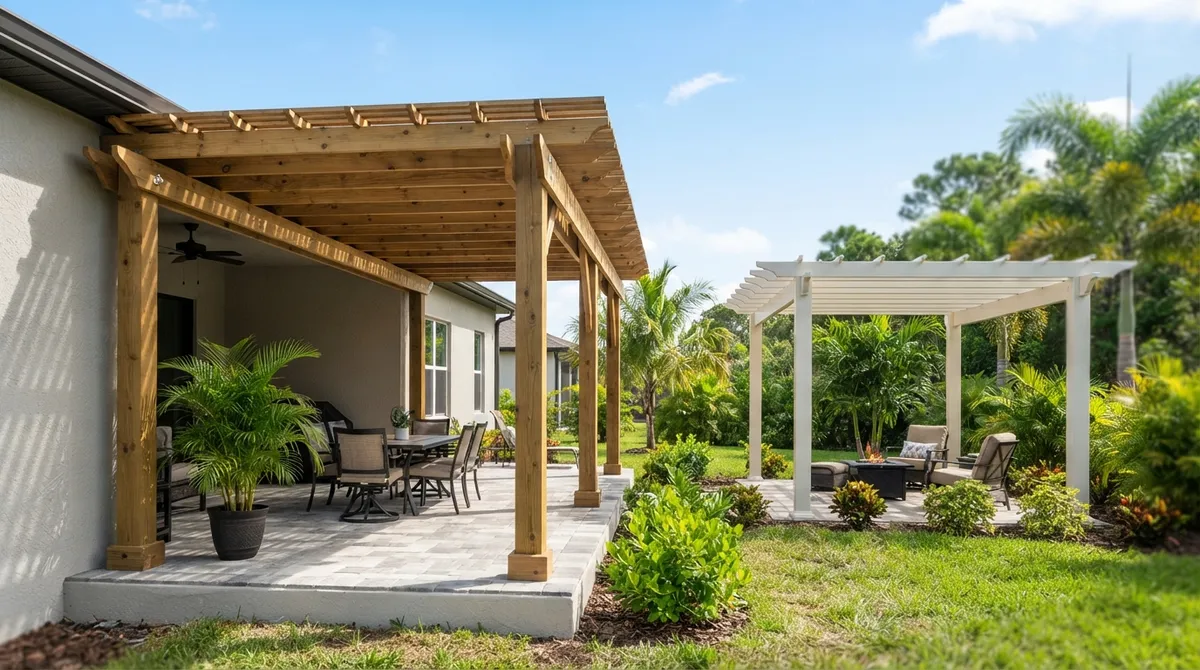
The City defines an attached pergola as one with at least 20% of its perimeter attached to the primary structure. Anything below that threshold is treated as freestanding.
| Feature | Attached Pergola | Freestanding Pergola |
|---|---|---|
| Definition | At least 20% of perimeter attached to the primary structure | Less than 20% attached (stands on its own) |
| Size limit | No stated limit on number or maximum size, but must meet zoning and building requirements | 200 sq. ft. combined per single-family property |
| Duplex allowance | Follows applicable zoning and building rules | 100 sq. ft. per unit, up to 200 sq. ft. per duplex |
3. Mind the Freestanding Size Cap
This is the rule that surprises people most. Freestanding pergolas are limited to a combined 200 square feet per single-family residential property. For duplexes, it's 100 square feet per unit, up to 200 square feet for the duplex.
"Combined" is the key word. If you already have another freestanding pergola on the lot, it counts toward that total. For other development types, the City says allowances may be determined by the Community Development Director or designee.
4. Gather the Required Documents
The City's January 2026 guideline lists three documents as always required:
- A site plan showing where the pergola sits on the parcel
- An architectural/structural plan for the pergola itself
- A burrowing owl/gopher tortoise affidavit
Depending on your parcel and project, you may also need a Notice of Commencement and an eagle management affidavit. The City's document center notes that a Notice of Commencement applies when project value is $2,500 or more, so verify whether it applies to your build.
5. Plans Need to Be Engineered, Signed, and Sealed
Here's where many DIY applications stall. The City's guideline requires engineered, signed and sealed plans. That means a Florida-licensed professional has to stamp the structural design, not just a nice sketch from a home improvement store.
If you're wondering who is qualified to do that, our guide on who seals structural drawings for Florida permits breaks it down in plain English. And if you want a deeper look at what goes into a permit-ready set, see structural plans for a Florida residential permit in 2026.
6. Design to the Florida Building Code and Wind Loads
Pergolas must be built to the Florida Building Code, including wind-load requirements. In Cape Coral, that is not a technicality. Footings, post connections, beam sizing, and anchoring into the existing structure all get scrutinized.
For attached pergolas, the connection to your home is a common review comment. For freestanding ones, the foundation and uplift resistance take center stage.
7. Check Setbacks, Height Limits, and Placement
Pergolas must meet applicable setbacks and the height limit for your zoning district. Because Cape Coral has many different lot types, canal lots, corner lots, and more, setbacks are not one-size-fits-all.
A few placement rules from the City's summary sheet are worth flagging:
- Attached pergolas over a front entrance or walkway must not extend beyond the most forward part of the primary structure.
- Waterfront-yard pergolas must not unreasonably block an adjoining lot's view of a canal or other waterway.
- Pergolas are not permitted on docks.
Always confirm placement against the current code and your parcel's zoning before design begins.
8. Understand Who Can Apply
The City says applications may be submitted by a general, building, or residential contractor, or by an owner-builder. Owner-builders must provide an Owner/Builder Affidavit, and additional forms apply if you use a private provider.
Thinking about doing it yourself? That's allowed, but it comes with responsibility. We walk through the process in how do you get an owner builder permit, and our owner-builder permit services page shows how we can help.
9. Expect Multiple Reviews
Your application doesn't go to just one reviewer. The City's guideline identifies building and zoning review, plus environmental review when applicable. Each reviewer can issue comments, and each comment needs a clear response.
| Review Type | What It Checks |
|---|---|
| Building | Structural design, wind loads, Florida Building Code compliance |
| Zoning | Setbacks, height, lot coverage, size limits |
| Environmental (when applicable) | Protected species conditions and related affidavits |
If your application comes back with comments, don't panic. It's normal. Our article on how to fix and resubmit a denied permit covers the general approach, and our revisions and resubmittals service handles the back-and-forth for you.
10. Budget for Fees, But Verify the Numbers
Let's talk money, carefully. Cape Coral's miscellaneous permit fee schedule effective January 1, 2026 lists a $427 gazebo permit fee. That figure doesn't establish the fee for a pergola, so confirm the applicable pergola fee with the City before you budget. Additional fees may apply, including a stated 2.5% Florida Building Code enforcement surcharge on covered permits.
Beyond permit fees, remember to budget for engineering, drafting, and any survey or site plan work. The cheapest mistake is the one you catch before you submit.
11. Plan for Inspections
Listed inspections for a Cape Coral pergola include a foundation inspection and a structural final. If a Notice of Commencement or private provider is involved, additional documentation or inspections may apply.
A simple way to stay organized:
- Submit your complete application package online
- Respond to every review comment promptly
- Schedule the foundation inspection before pouring or covering footings
- Complete the structural final once the pergola is finished
- Keep your approved plans and permit card on site
If you're curious about speeding up inspections, a private provider option may fit your schedule, and we explain how it works in how to use private provider plan review in Fort Myers.
12. If You Already Built One, There's a Path Forward
Maybe the pergola is already standing, and now you've learned it needed a permit. Take a breath. This happens to Florida homeowners all the time, and there's a way to handle it.
Legalizing an existing pergola usually means documenting what was built, getting engineering verification, and filing an after-the-fact permit. Our guide on how to get an after-the-fact permit for a pergola in Florida walks through the steps, and 7 steps to legalize unpermitted work in Florida gives the broader picture.
This matters for sellers too. Unpermitted structures can surface during inspections or appraisals and slow a closing. If that sounds like your situation, read how to sell a Florida house with unpermitted additions.
Quick Checklist Before You Apply
- Decide: attached (20%+ perimeter attached) or freestanding?
- Confirm your total freestanding area stays within the 200 sq. ft. cap
- Verify setbacks, height, and any waterfront view considerations
- Get engineered, signed and sealed plans
- Prepare a site plan and the burrowing owl/gopher tortoise affidavit
- Check whether a Notice of Commencement or eagle affidavit applies
- Confirm current fees on the City's permit portal
Who This Helps Most
Homeowners get peace of mind knowing the structure is safe and legal. General contractors and design trade professionals save time by getting the plans right the first time. Real estate professionals and investors avoid closing surprises. Even solar companies planning rooftop or shade-structure work can benefit from understanding how local review works.
Our team at 1 Contractor Solutions handles permit filing, tracking, plan review coordination, and in-house sealed drawings across all 67 Florida counties. You can also explore our Cape Coral permitting page for local details, and see what customers say when you visit us on Google — 1 Contractor Solutions. Want to stay in the loop? Follow us on LinkedIn or follow us on Facebook.
Ready to Build With Confidence?
A pergola should be a place to relax, not a source of stress. With the right plans and a clear process, your Cape Coral pergola permit can move forward smoothly, and we're happy to carry the paperwork load. Get a free quote and we'll tell you exactly what your parcel needs, then file, track, and see it through to final inspection.
FAQs
Do I need a permit to build a pergola in Cape Coral, Florida?
Yes! Cape Coral requires a building permit for a new pergola, applied for through the City's online "Shade Structure" application with "Pergola" selected as the work type. Applications go through building and zoning review, plus environmental review when applicable.
How large can a freestanding pergola be in Cape Coral?
Freestanding pergolas are limited to a combined 200 square feet per single-family residential property, or 100 square feet per duplex unit (up to 200 square feet per duplex). Attached pergolas have no stated size limit but must still meet zoning and building requirements.
What documents are required for a Cape Coral pergola permit?
The City's January 2026 guideline lists a site plan, an architectural/structural plan, and a burrowing owl/gopher tortoise affidavit as always required. A Notice of Commencement and an eagle management affidavit may also be needed depending on your parcel and project.
Do pergola plans in Cape Coral need to be engineered and sealed?
Yes, the City's guideline requires engineered, signed and sealed plans, and the pergola must meet Florida Building Code wind-load requirements. A licensed professional should prepare these so your application doesn't stall in review.
Can I build a pergola over a dock in Cape Coral?
No, the City says pergolas are not permitted on docks. For waterfront yards, pergolas also shouldn't unreasonably block an adjoining lot's view of a canal or other waterway.
We do this work every day across all 67 Florida counties. Call (866) 314-6931 and we will tell you what your situation actually requires — including when you do not need us.
Related services
Permit Facilitation & Filing
You have a crew scheduled, a client asking for dates, and a permit sitting somewhere in a queue you cannot see. We file it, w…
See the servicePlan Review Coordination
A permit in plan review is not one queue. On a commercial project it can be six queues, each with its own reviewer, its own c…
See the serviceReady to get your permit moving?
One call tells you which jurisdiction controls your project, what it will take, and what it will cost. Most of the time we can scope it on the phone.