
Blog
After-the-Fact Permit Requirements in Florida: 2026 Guide
Florida has no single after-the-fact permit checklist. Learn what local departments require, how inspections work, and what it may cost in 2026.
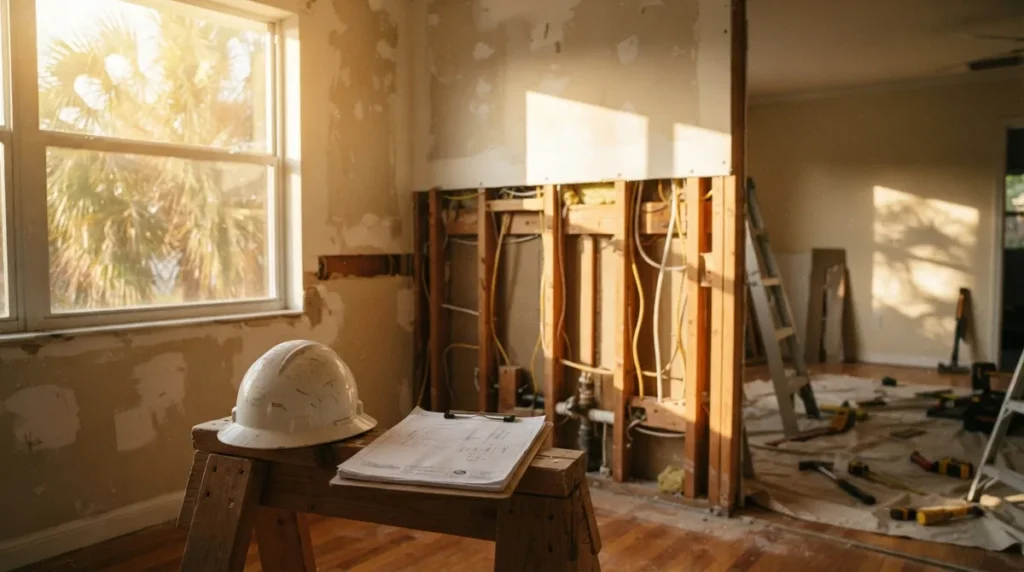
Key Takeaways
-
Florida has no statewide after-the-fact checklist; each county and city building department sets its own submittal requirements, fees, and inspection process, so confirm the jurisdiction first.
-
Applying for an after-the-fact permit does not legalize unpermitted work; it must pass all required reviews and inspections before approval.
-
Inspectors may require concealed work like walls or ceilings to be opened, though photos, testing, or sealed engineer letters are sometimes accepted instead.
-
The $7,500 owner exemption under §553.79 has limits and does not automatically cover every trade or property type, so verify with the enforcing agency before relying on it.
-
Check for open, expired, or prior permits on the property and address any pending code enforcement citations, since these can add charges and complicate approval.
-
Avoid guessing the jurisdiction, filing thin plans without professional drawings, or starting corrections before speaking with the department, as these commonly cause delays.
So you just discovered that a patio enclosure, a re-roof, or a kitchen remodel was never permitted. Maybe a previous owner did it. Maybe a contractor skipped the paperwork. Maybe a buyer's inspector flagged it three days before closing. Take a breath. This happens to Florida property owners every single day, and it is usually fixable.
Knowing the after the fact permit requirements in Florida is the first step toward fixing it. Here is the part that surprises most people: there is no single statewide checklist. Florida law sets the framework, but each county and city building department decides what it wants to see, what it will charge, and how inspections work. That is why the same unpermitted deck can be a simple paperwork job in one city and an engineering project in another.
In this guide, we walk you through what the law says, what documents you will typically need, how inspections work, what it may cost, and how to avoid the most common mistakes. Whether you are a homeowner, general contractor, solar installer, realtor, or designer, you will leave with a clear plan.
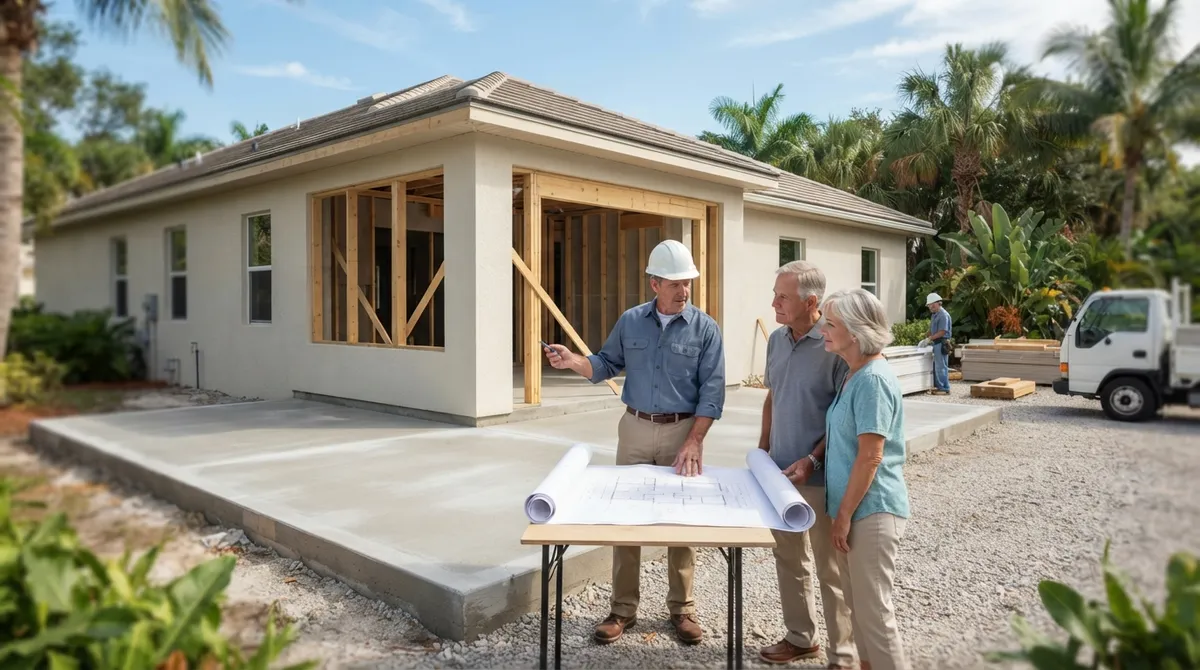
What Is an After-the-Fact Permit in Florida?
An after-the-fact permit is a permit you apply for once the work is already built. Some departments call it a retroactive permit, an as-built permit, or a permit for work done without a permit. The goal is the same: bring completed work into the official record by proving it meets the Florida Building Code.
Florida Statutes §553.79(1)(a) makes it unlawful to construct, alter, modify, repair, or demolish a building without first obtaining a permit from the appropriate enforcing agency, subject to statutory exceptions. So when work skips that step, the property owner generally needs to document, review, inspect, and correct the work through the local building department's process.
Here is the key point: after-the-fact is not a uniform statewide permit category. It is a local process applied under state law. If you want a deeper walkthrough of how the process plays out, see our guide on how to get an after-the-fact permit in Florida.
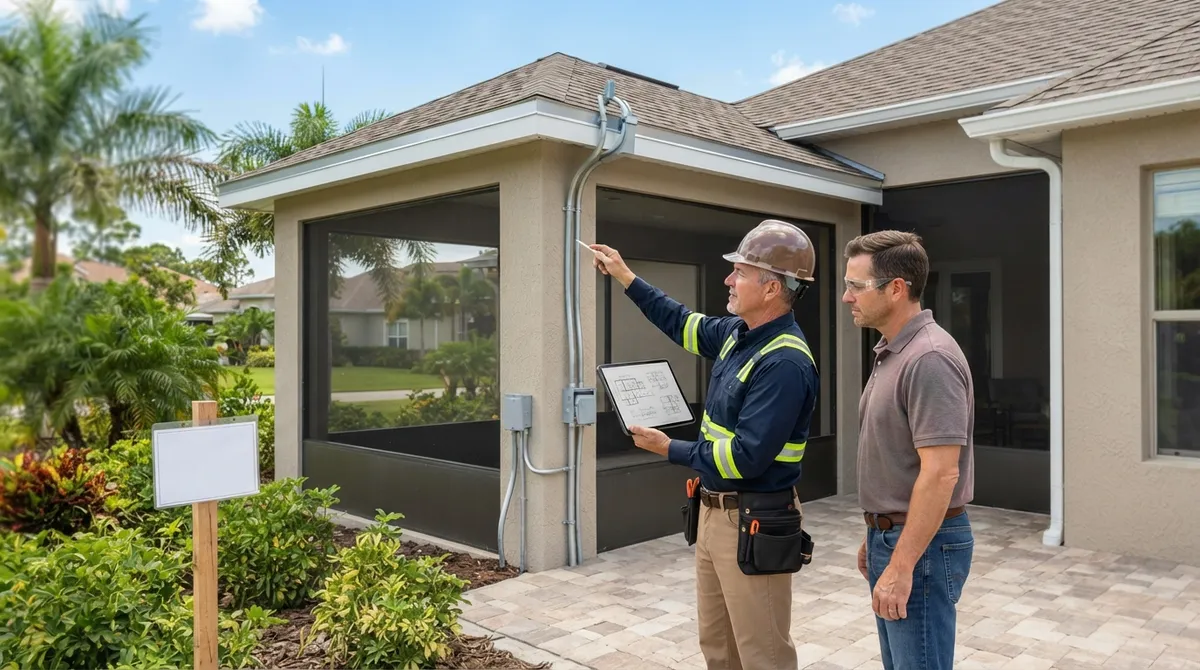
Does Florida Law Allow After-the-Fact Permits?
Yes, in practice. Building departments across the state accept applications for completed work and review it for code compliance. But a permit application does not legalize anything by itself. The work must pass the required reviews and inspections, and the jurisdiction may pursue enforcement separately.
That second point matters. Getting the permit and resolving a code case are related, but they are not always the same thing. If you already received a notice, our page on code compliance violations explains how those cases move alongside permitting.
The $7,500 owner exemption: read the fine print
The 2026 text of §553.79 includes a provision that local governments issuing building permits must exempt an owner of a single-family dwelling, or the owner's contractor, from a permit for certain work valued at less than $7,500 on the owner's property. Sounds great, right?
Do not assume it covers your situation. The exemption is subject to the statute's scope and terms, and it does not automatically apply to every trade, property type, or local approval. Structural, electrical, plumbing, and mechanical work often carry their own rules. Always confirm with the enforcing agency before relying on it.
What the Local Building Department Typically Requires
Because requirements vary, the best approach is to expect a core set of items and then confirm the exact submittal list with your jurisdiction. Most departments will ask for some combination of the following.
| Typical Requirement | What It Usually Means | Who Often Prepares It |
|---|---|---|
| Permit application | Describes the completed work, scope, and valuation | Owner or licensed contractor |
| Plans or as-built drawings | Shows what was actually built and where | Drafter, architect, or engineer |
| Site plan or survey | Confirms setbacks, lot coverage, and placement | Surveyor or drafter |
| Engineering documents | Verifies structural, electrical, or mechanical compliance | Florida licensed engineer |
| Product approvals | Documents windows, doors, roofing, or other rated products | Contractor or manufacturer |
| Contractor information | License and registration details for the permit | Licensed contractor |
Your jurisdiction may ask for more or less. Some want photographs of concealed conditions. Others want a sealed engineer letter. A few require both. Our building department lookup tool can help you identify which authority actually controls your address, which is not always obvious near city lines.
Step-by-Step: How the Process Usually Works
While every department has its own flavor, the path generally looks like this:
- Confirm the jurisdiction. Find out whether the city, the county, or a special district reviews your project.
- Search for existing records. Check for open, expired, or prior permits on the property using an open permit search.
- Document what exists. Measure, photograph, and draw the completed work as it was built.
- Gather professional support. Engineering and drafting are often needed to prove structural and system compliance.
- Submit the application and plans. File with the building department, paying the required review fees.
- Respond to reviewer comments. Expect corrections or requests for more information.
- Schedule inspections. The inspector verifies the work, and may require concealed elements to be exposed.
- Close out the permit. Pass final inspection and obtain closure or any required certificate.
That is the short version. Each step has its own traps, which is why many owners hand the whole thing to a team that does it daily.
How Inspections Work on Completed Work
Inspections are where after-the-fact projects get interesting, because the inspector cannot see what is hidden behind drywall, under a slab, or inside a roof assembly. The building department has several ways to deal with that.
- Exposing concealed work. The authority may require walls, ceilings, or finishes to be opened so inspectors can verify framing, wiring, plumbing, or fastening.
- Alternative evidence. In some cases, photographs, testing, or professional certifications may be accepted in place of demolition.
- Engineer verification. A Florida licensed engineer may evaluate the work and issue a sealed letter documenting compliance.
- Corrections or reconstruction. If the work does not meet the applicable Florida Building Code or local requirements, it may need to be corrected, or in serious cases rebuilt, before approval.
The honest truth: nobody can promise you will avoid opening a wall. What a good team can do is make the strongest possible case for alternatives, and keep any demolition as small as possible. Learn more about inspection support and how field verification fits into the process.
When a sealed engineer letter helps
For structural elements like additions, enclosures, trusses, and foundations, an engineer's evaluation is often the bridge between "it exists" and "it passes." Our in-house engineering team produces sealed drawings and engineer letters, so when a reviewer raises a question, it gets answered without waiting on an outside consultant.
What Do After-the-Fact Permits Cost?
Here is another place where honesty beats a nice round number. Florida law authorizes reasonable permit fees, but there is no single statewide after-the-fact surcharge or penalty. Costs depend entirely on your jurisdiction and your project.
| Cost Category | What to Ask the Building Department |
|---|---|
| Permit fee | How is the fee calculated, and is any after-the-fact multiplier applied? |
| Plan review fee | Is review billed separately from the permit? |
| Inspection and reinspection fees | What is charged for each inspection and for failed ones? |
| Code enforcement charges | Is a citation, lien, or hearing already pending? |
| Professional services | Drafting, engineering, survey, and testing costs |
One more useful fact from §553.79: if work fails inspection and the inspector or building code administrator does not provide a code-based reason within five business days, a 10% refund of permit and inspection fees may apply. That is a specific statutory situation, not a general discount for after-the-fact permits.
For a deeper look at budgeting, read our breakdown of after-the-fact permit costs in Florida.
Requirements by Project Type
Different work triggers different documentation. Here is a quick view of what reviewers often focus on.
| Project Type | Common Focus Areas |
|---|---|
| Roofing | Product approvals, decking, fastening, and wind-load compliance |
| Additions and enclosures | Structural verification, setbacks, foundation, and tie-downs |
| Windows and doors | Impact ratings, product approvals, and installation details |
| Solar | Structural attachment, electrical diagrams, and utility coordination |
| Electrical, plumbing, mechanical | Licensed contractor involvement and rough-in or final verification |
If you are dealing with one of these, we have dedicated resources for roof permits, impact window and door permits, and solar contractors.
Why Local Rules Make a Big Difference
Florida has 67 counties and hundreds of municipalities, and they do not all behave the same way. Wind regions, flood zones, and local amendments change what reviewers expect. A project near the coast may need flood documentation that an inland project never sees.
If you are in a major market, start with the county page for your area, such as Hillsborough County, Miami-Dade County, Broward County, or Sarasota County. Or browse our full Florida coverage to find your jurisdiction.
Who Needs to Apply, and Do You Need a Licensed Contractor?
Many owners ask whether they must hire a licensed contractor to apply. The answer depends on the work and the jurisdiction. Some departments accept owner-builder applications for certain projects, while others require a licensed contractor for specific trades. Our guide to owner-builder permits covers what is generally possible, and what usually is not.
For contractors, remember that unlicensed work creates its own issues. Our overview of who can pull a permit in Florida is a helpful companion read.
Real-World Situations We See Constantly
- Closing under pressure. A buyer's inspector or appraiser finds unpermitted work and the lender wants it resolved. Our realtor and closing support helps agents keep deals alive.
- Inherited problems. A prior owner built an addition and left no paperwork behind.
- Contractor walked away. The permit was never pulled, or it expired before final inspection. See our page on after-the-fact and expired permits.
- Violation notice received. Code enforcement flagged the work, and the clock is ticking.
- Insurance or refinance hurdles. Unpermitted work can complicate selling or refinancing a Florida home.
If your situation feels urgent, our urgent permit rescue service is built for exactly these moments.
Common Mistakes to Avoid
- Assuming the application legalizes the work. It does not. Passing review and inspection does.
- Relying on the $7,500 exemption without checking. It has limits and does not cover everything.
- Starting corrections before talking to the department. You may redo work that could have been verified another way.
- Guessing the jurisdiction. Filing with the wrong authority wastes weeks.
- Skipping professional drawings. Thin plans lead to rejected submittals and repeated comments.
- Ignoring open citations. Pending enforcement can add charges and complicate the process.
How 1 Contractor Solutions Can Help
We are Florida's outsourced permitting department. 1 Contractor Solutions handles the full after-the-fact path: figuring out which jurisdiction controls your address, preparing as-built drawings and sealed engineering in house, filing the application, tracking it, working every reviewer comment, and carrying it through final approval. We also operate as a licensed private provider, which can help move plan review faster where it is available.
We respond within 30 minutes, day or night, and we work across all 67 Florida counties. Curious how others have felt about working with us? You can visit us on Google — 1 Contractor Solutions to read reviews, and you can follow us on LinkedIn or follow us on Facebook for permitting updates.
For official statutory language, you can review Florida Statutes §553.79 directly on the Florida Legislature's website.
Your Next Step
Unpermitted work feels stressful, but it is a solvable problem. Start by identifying the right jurisdiction, gathering what you know about the work, and getting honest guidance on what that department will actually ask for. The sooner you start, the more options you tend to have.
Ready to stop worrying and start fixing it? Get a free quote and tell us your address and your problem. We will tell you what it will take, and then we will go do it.
FAQs
How do I get an after-the-fact building permit in Florida?
You apply through your local building department with a description of the completed work, plans or as-built drawings, and any required engineering or product approvals. The department reviews it, may require inspections or exposure of concealed work, and issues approval only after the work passes. Since every jurisdiction has its own checklist, confirm the submittal list before you file.
Will inspectors make me open walls or ceilings?
Sometimes, yes. The authority may require concealed work to be exposed so it can be verified, though other evidence like photographs, testing, or sealed engineer certifications may be accepted in certain cases. A good team can often help limit how much needs to be opened.
How much does an after-the-fact permit cost in Florida?
There is no single statewide surcharge, so cost depends on your jurisdiction and project. Ask the local department about permit, plan review, inspection, reinspection, and code enforcement charges, and plan for professional drafting or engineering on top of that.
What happens if unpermitted work fails inspection?
The department may require corrections or, in serious cases, reconstruction before approving the work. A permit application alone does not legalize anything, so the work must pass the required reviews and inspections. Fixing issues early usually keeps costs and delays down.
Can unpermitted work affect selling or refinancing my Florida home?
It can. Buyers, lenders, appraisers, and insurers may flag unpermitted work, and that can delay or complicate a closing. Resolving it with an after-the-fact permit before listing often keeps the deal on track.
We do this work every day across all 67 Florida counties. Call (866) 314-6931 and we will tell you what your situation actually requires — including when you do not need us.
Related services
Permit Facilitation & Filing
You have a crew scheduled, a client asking for dates, and a permit sitting somewhere in a queue you cannot see. We file it, w…
See the servicePlan Review Coordination
A permit in plan review is not one queue. On a commercial project it can be six queues, each with its own reviewer, its own c…
See the serviceReady to get your permit moving?
One call tells you which jurisdiction controls your project, what it will take, and what it will cost. Most of the time we can scope it on the phone.