
Blog
Best Help for After-the-Fact Roofing Permits in Florida
Unpermitted roof in Florida? Learn how after-the-fact roofing permits work, what officials require, and how to choose the best help to resolve it.
Key Takeaways
-
Florida has no statewide after-the-fact roofing application or fee schedule; each city and county sets its own process, checklists, and costs, so first confirm which building department has authority over your property.
-
Florida Statutes § 489.127 caps the civil penalty for contractor permit violations at $2,000, but local permit, reinspection, and enforcement fees are separate and vary by jurisdiction.
-
Before removing or altering any roofing materials, call the building department, since some jurisdictions accept photos or affidavits while others may require exposing concealed components for inspection.
-
Local thresholds differ widely: St. Lucie requires a permit for reroofs over 25% of roof area in 12 months, while Santa Rosa cites a $2,500 threshold, so never assume a neighboring county's rules apply.
-
Don't rely on the under-$7,500 owner exemption without confirming it with the local enforcing agency, and check whether a Notice of Commencement is required, as Lee County requires it above $5,000.
-
Choose permitting help with local jurisdiction experience, end-to-end filing and closeout services, and clear fees, and avoid anyone who guarantees approval, since only the building official can grant it.
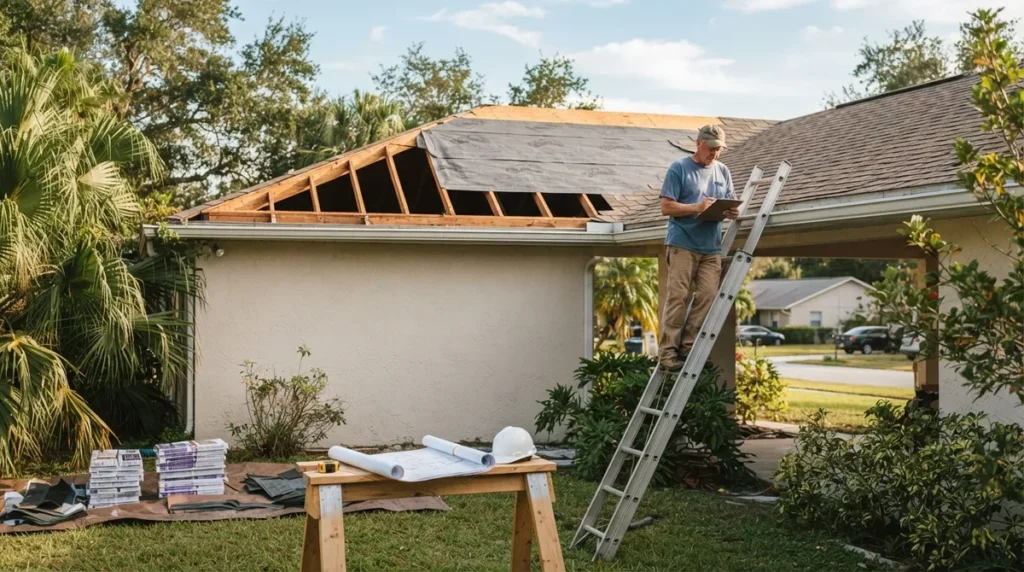
Here's a scenario we hear all the time: a roofer finished the job, the shingles look great, and then someone realizes the permit was never pulled. Maybe a prior owner skipped it. Maybe a contractor vanished. Maybe a buyer's lender just flagged it right before closing. Whatever the cause, you're now staring at an unpermitted roof and wondering what on earth to do next.
Take a breath. This is fixable, and you are far from alone. Finding the best help for after-the-fact roofing permits in Florida comes down to knowing how the process works, which questions to ask, and who can carry the paperwork across the finish line while you get back to your life (or your next job).
In this friendly guide, we'll walk through what an after-the-fact roofing permit really is, what building departments typically want to see, what unpermitted work can cost you, and how to choose a partner you can trust. We'll keep it practical, honest, and jargon-light.

What Is an After-the-Fact Roofing Permit?
An after-the-fact roofing permit is simply a permit sought once roofing work has already started or has been finished. Florida law generally requires a permit before covered building work begins, and the local building department with jurisdiction decides how to resolve work that skipped that step. The governing framework is found in Florida Statutes § 553.79.
Here's the part that surprises people: there is no single statewide after-the-fact roofing application. There's no uniform fee schedule either. Each city and county sets its own process, checklists, and costs. That means the first job is always figuring out who actually has authority over your property, and that isn't always obvious near city lines. Our building department lookup tool can point you in the right direction, and this guide on which Florida jurisdiction reviews my project explains the reasoning.
Why Unpermitted Roofs Come Back to Haunt Owners
An unpermitted roof rarely stays hidden forever. It tends to surface at the worst possible moments:
- Real estate closings: lenders, title companies, and buyers' inspectors often catch open or missing permits.
- Insurance events: a claim can get complicated when the roof lacks permit history.
- Code enforcement: a neighbor complaint or an inspector's drive-by can trigger a notice.
- Refinancing and appraisals: missing permits can stall underwriting.
If you're a buyer or seller facing this, our guide on what owners need to know about an unpermitted roof in Florida is a helpful companion read.
What Florida Law Says About Unpermitted Work
Florida takes permit compliance seriously, particularly for licensed contractors. Florida Statutes § 489.127 identifies proceeding without applicable permits and inspections as contractor misconduct, and its civil-penalty provision caps a civil penalty at $2,000.
That $2,000 figure is not a statewide estimate of what you'll pay. Local permit fees, reinspection charges, and enforcement costs can be separate, and amounts vary by jurisdiction. For a deeper dive, see our article on the penalty for building without a permit in Florida.
Quick Reference: Key Legal Points
| Topic | What to Know |
|---|---|
| Permit requirement | Generally required before covered work starts (§ 553.79) |
| Contractor penalty cap | Civil penalty capped at $2,000 under § 489.127 |
| Local fees and enforcement | Separate from statutory penalties and vary by jurisdiction |
| Small-work exemption | Limited exemption for certain work under $7,500 on an owner's single-family dwelling; confirm locally |
Local Rules Vary: A Few Real Examples
Don't assume a neighboring county's rules apply to you. Thresholds and exceptions are local, and a few examples show how different they can be:
- St. Lucie County: guidance says a permit is required for reroof work exceeding 25% of the existing roof area within a 12-month period.
- Charlotte County: lists a limited exception for roof repairs under 100 square feet when trusses or rafters aren't involved.
- Lee County: its roof guide calls for a Notice of Commencement when project value is greater than $5,000.
- Santa Rosa County: its roofing checklist states a $2,500 threshold.
These are local examples, not statewide rules. Always confirm with the building department that actually governs your property. If you're in one of these areas, we work in St. Lucie County, Charlotte County, and Lee County, along with every other Florida county.
What Building Departments Typically Ask For
Every jurisdiction publishes its own checklist, but most after-the-fact roofing submittals share common building blocks. Expect some combination of the following:
- A permit application with contractor or owner-builder information.
- Roof system documentation, including product approvals for the roof covering and underlayment.
- Manufacturer specifications and installation details.
- Photographs, records, or affidavits showing how the work was done. Note that an affidavit isn't automatically accepted everywhere.
- Inspections, which may include decking, dry-in, in-progress, and final, depending on the scope and local policy.
Product approvals deserve special attention. Miami, for example, requires applicable Miami-Dade Notice of Acceptance or Florida Product Approval documentation for roofing materials. If that distinction is new to you, our explainer on Miami-Dade NOA vs. Florida Product Approval will clear it up.
The Concealed-Work Challenge
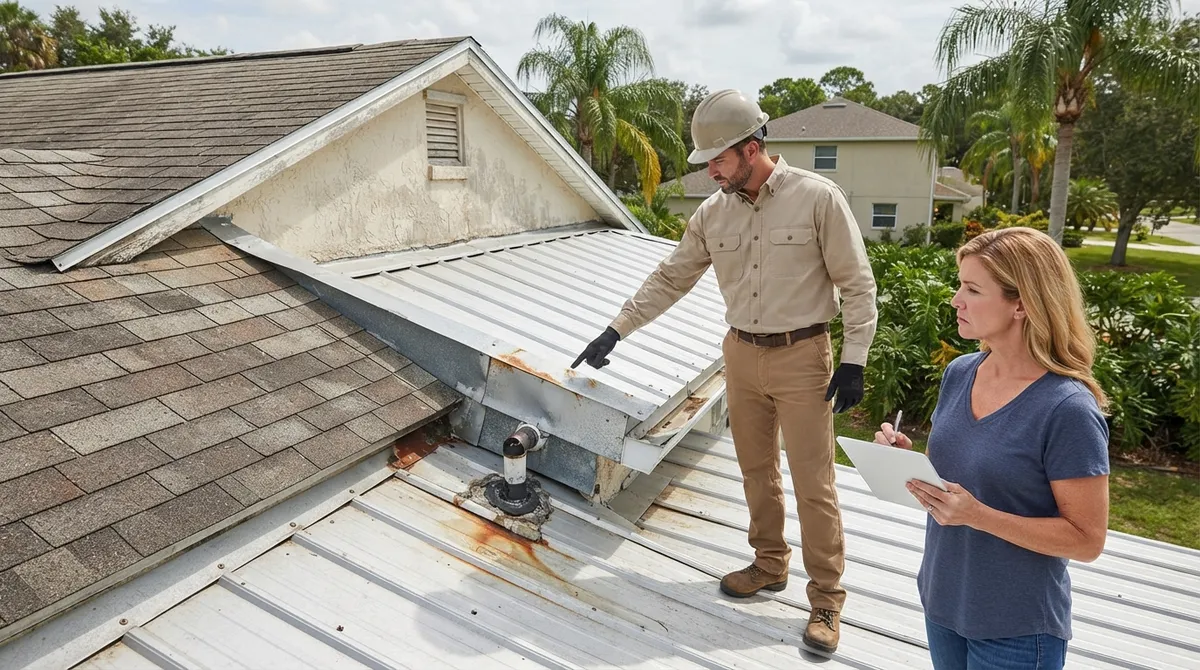
Here's the tricky bit. A finished roof hides what's underneath, and that's exactly what officials want to verify. Depending on the jurisdiction and scope, a building official may ask for photos, records, or even exposure of covered roof components to confirm compliance.
St. Lucie County, for instance, describes decking, dry-in, certain in-progress, and final inspections for roof work, while allowing specified affidavit and photo documentation in some cases. Other departments may be stricter.
Our friendly advice: call the building department (or have a professional do it) before you remove or alter any roofing materials. Tearing off shingles on a hunch can create more problems than it solves. For related structural questions, see our piece on truss verification after the fact in Florida.
How to Get an After-the-Fact Roofing Permit: Step by Step
While every jurisdiction differs, the general path looks like this:
- Confirm your jurisdiction. Identify which city or county building department governs the property.
- Ask about their after-the-fact process. Request the roofing checklist, fee schedule, and inspection requirements.
- Gather your documents. Collect product approvals, invoices, photos, warranties, and contractor details.
- Engage the right licensed professionals. This may include a licensed roofing contractor or a design professional for engineering letters.
- Submit and track the application. Respond promptly to reviewer comments.
- Schedule and pass inspections. Then close out the permit.
Our step-by-step guide on how to get an after-the-fact roof permit in Florida goes even deeper, and our after-the-fact permit application guide covers the paperwork side.
What Does the Best Help Actually Look Like?
Not all permitting help is created equal. The best partner for an after-the-fact roofing permit should do more than hand you a form. Look for these qualities:
- Jurisdiction savvy: real experience in your specific city or county, not just Florida in general.
- End-to-end service: filing, tracking, reviewer comment responses, revisions, and closeout.
- In-house engineering: so a flagged comment gets fixed fast, not outsourced and delayed.
- Honest expectations: a good provider will never guarantee approval, because only the building official decides.
- Clear scope and fees: you should know exactly what's included before you sign.
- Responsiveness: permits are time-sensitive, especially with a closing date looming.
Comparing Your Options
| Approach | Best For | Watch Out For |
|---|---|---|
| Doing it yourself | Simple, well-documented jobs in a familiar jurisdiction | Missed documents, repeated rejections, lost time |
| Original roofer only | Roofers who are still reachable and licensed | Limited paperwork or engineering capacity |
| Permitting service | Complex files, tight deadlines, multi-jurisdiction work | Verify scope, fees, and local experience |
| Permitting service with in-house engineering | Files needing sealed letters, as-builts, or structural verification | Confirm who seals the work and their licensure |
Where a Florida Permitting Service Fits In
A good permitting service can identify the correct authority, organize applications and supporting records, coordinate with a licensed roofing contractor or design professional when needed, and track reviews and inspections. What it cannot do is guarantee approval or replace the building official's decision. Be wary of anyone who promises otherwise.
This is exactly where 1 Contractor Solutions comes in. We act as Florida's outsourced permitting department across all 67 counties, with filing experience in more than 400 municipalities. Our drafting and engineering are in house, and our own engineer signs and seals the work, so when a reviewer flags something, we fix it rather than waiting on an outside consultant. Learn more about our after-the-fact and expired permit services or our dedicated roof permit services. You can also see what customers say on Google: Visit us on Google — 1 Contractor Solutions.
Help Tailored to Who You Are
Different people come to this problem from different angles, and the right support looks a little different for each:
- Roofing and general contractors: you need volume, speed, and clean closeouts. Our roofing contractor support and Roof Permit Partnership Program are built for this.
- Realtors and buyers: you need answers before a closing deadline. See our realtor closing support.
- Homeowners: you need clear, calm guidance without the jargon. Our homeowner resources are a good starting point.
- Solar companies and design trades: roof condition and structural documentation often tie directly into your installs and drawings, which is where our structural engineering support helps.
If you're in a rush, our urgent permit rescue service is designed for denials, stop-work orders, and closings held up by permit problems.
Common Mistakes to Avoid
After helping with thousands of permit files, a few pitfalls come up again and again:
- Assuming an exemption applies. The under-$7,500 owner exemption is limited and must be confirmed with the local enforcing agency.
- Applying the wrong county's rules. Thresholds vary widely, so check locally.
- Ripping up the roof too early. Talk to the building department first.
- Skipping the Notice of Commencement. Some counties require it above certain values. Read up on the Notice of Commencement in Florida.
- Hiring without checking credentials. Verify scope, fees, local experience, and any required license.
You may also find it useful to understand typical expenses in our breakdown of how to estimate after-the-fact roof permit costs in Florida.
Ready to Get Your Roof Legit?
An unpermitted roof feels stressful, but it's a solvable problem with the right plan and the right partner. Start by confirming your jurisdiction, gather what documentation you have, and don't disturb the roof until you know what the building department wants. From there, a knowledgeable permitting team can take the heavy lifting off your plate.
Whether you're a roofer cleaning up a file, a realtor racing a closing date, or a homeowner who just inherited a surprise, we'd love to help. Reach out today and get a free quote for your after-the-fact roofing permit, and let's get this wrapped up so you can move forward with confidence. Prefer to stay connected? Follow us on LinkedIn or follow us on Facebook for Florida permitting tips and updates.
FAQs
Can I get a Florida roof permit after the roof has already been replaced?
Often, yes! Most building departments have a process for after-the-fact roofing permits, but the details vary by city and county. The department may ask for documentation, photos, and inspections to verify the work, so it's best to call them before touching anything on the roof.
Will the building department make me remove roofing to inspect concealed work?
It depends on your jurisdiction and the scope of work. Some departments accept photos, records, or affidavits, while others may require exposing covered components. Because an affidavit isn't automatically accepted everywhere, ask your local office what they'll need before removing any materials.
What penalties or extra fees apply for roofing without a permit in Florida?
Under Florida Statutes § 489.127, the civil penalty for the applicable contractor violation is capped at $2,000. Local permit, reinspection, or enforcement charges may also apply, and those amounts depend entirely on your jurisdiction.
Can a permitting service apply for an after-the-fact roof permit on my behalf?
Yes, a permitting service can help identify the right authority, organize your documents, coordinate with licensed professionals, and track reviews and inspections. What it can't do is guarantee approval, since that decision always rests with the local building official.
Do I need a licensed roofing contractor to correct unpermitted roof work in Florida?
In many cases, a licensed contractor or an owner-builder arrangement will be needed, depending on the local department's rules and the scope of work. Check with your building department and verify any provider's license and local experience before you hire.
We do this work every day across all 67 Florida counties. Call (866) 314-6931 and we will tell you what your situation actually requires — including when you do not need us.
Related services
Permit Facilitation & Filing
You have a crew scheduled, a client asking for dates, and a permit sitting somewhere in a queue you cannot see. We file it, w…
See the servicePlan Review Coordination
A permit in plan review is not one queue. On a commercial project it can be six queues, each with its own reviewer, its own c…
See the serviceReady to get your permit moving?
One call tells you which jurisdiction controls your project, what it will take, and what it will cost. Most of the time we can scope it on the phone.