
Blog
6 Steps to Fix a Retroactive Permit in Florida (2026)
Learn the 6 essential steps to legalize unpermitted construction with a retroactive permit in Florida, from documentation to final inspection.
Key Takeaways
-
After-the-fact permits in Florida can cost 2-3 times more than standard permits due to penalty fees set by each jurisdiction under Florida Building Code section 109.4, plus potential engineering and corrective repair costs.
-
Unpermitted work can block real estate closings, trigger insurance claim denials, and in severe cases result in demolition orders—addressing it proactively before code enforcement discovers it saves significant time and money.
-
Florida has no statewide retroactive permit process; each of 67 counties and hundreds of municipalities handles them differently, making it critical to identify your correct local building department before filing anything.
-
Inspectors may require concealed work (electrical wiring, plumbing, structural framing) to be exposed for visual verification, which often means opening drywall, ceilings, or flooring—a costly but necessary step for permit approval.
-
Documentation required includes as-built drawings, site plans, sealed engineer/architect plans for structural work, contractor license information, and product approvals—having these prepared before submission accelerates the review process significantly.
-
Finalizing a retroactive permit doesn't automatically resolve zoning violations, floodplain issues, fire code problems, HOA restrictions, or separate code-enforcement cases, which must be addressed independently to fully clear the property.
So you just found out there's unpermitted work hiding somewhere in your Florida property. Maybe a home inspector flagged it during a sale. Maybe a neighbor called code enforcement about that lanai you enclosed three summers ago. Or maybe you're a contractor who inherited someone else's mess and now you're the one explaining it to the homeowner. Take a breath. This happens more often than you'd think, and a retroactive permit in Florida is exactly the tool designed to fix it. You're not the first person to deal with this, and you won't be the last.
In Florida, this process is officially called an "after-the-fact permit," and it's how you legalize construction or renovations that were started or finished without the required approval. It's not fun, and it's rarely cheap, but it's absolutely doable when you have the right people guiding you. Whether you're a homeowner, a general contractor cleaning up a job, a realtor trying to close a sale, or a solar installer discovering an undocumented roof modification, this guide walks you through exactly what to expect. Let's get you sorted out, step by step.

What Is a Retroactive Permit in Florida, Really?
A retroactive permit — or after-the-fact permit — is simply the permit you should have pulled before work began, applied for after the fact. Florida's building code generally requires permits before you start regulated construction, structural changes, and most electrical, plumbing, mechanical, or HVAC work. When that step gets skipped, whether by a previous owner, an unlicensed handyman, or an overly confident DIY weekend, the current property owner is usually the one left holding the bag.
Here's the tricky part: there's no single statewide process that every Florida county follows the same way. Some jurisdictions treat it as a standard permit application simply stamped "after the fact." Others route it through a separate violation-remediation process tied to code enforcement. That's why knowing your specific local building department matters so much before you file anything.
Why This Matters More Than You Think
Unpermitted work isn't just a paperwork technicality. It can affect your insurance claims, delay or kill a real estate closing, and in some cases trigger demolition orders if the work can't be brought into compliance. Getting ahead of it — rather than waiting for code enforcement to find it first — almost always saves you time, money, and stress.
Step 1: Confirm You Actually Need an After-the-Fact Permit
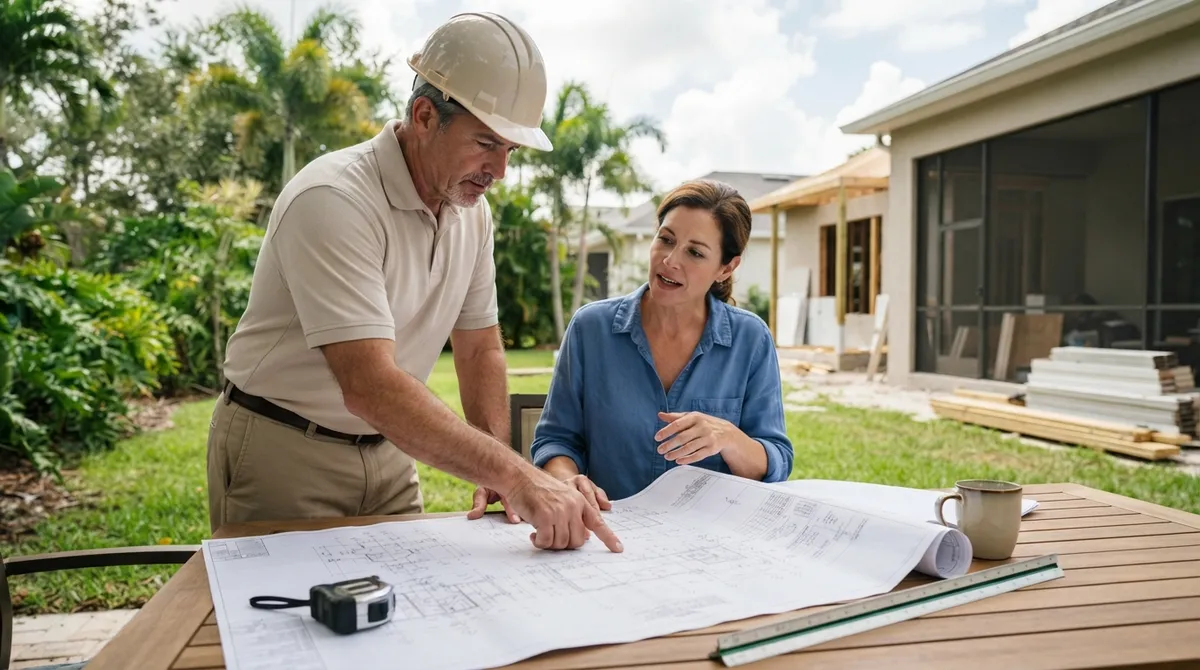
Not every home project requires a permit in Florida, so the first move is figuring out whether your situation truly qualifies. Cosmetic work like painting or new flooring usually doesn't need one. But additions, structural alterations, electrical panel upgrades, new roofing systems, pools, and most plumbing or HVAC replacements almost always do.
- Pull your property's permit history through your county's open permit search tool to see what's on file already
- Compare existing structures against what's documented — additions, garages, sheds, and enclosed patios are common culprits
- Check whether the work involved structural, electrical, plumbing, or mechanical systems, which almost always require permits
- Ask whether a previous contractor or owner told you "it's grandfathered in" — this is rarely true and should always be verified
If you're not sure, this is exactly the kind of question our team fields daily. We can help you determine which Florida jurisdiction reviews your project before you spend a dollar on drawings.
Step 2: Identify the Correct Jurisdiction and Gather Documentation
This step trips up more people than any other. Florida has 67 counties and hundreds of municipalities, and boundary lines don't always match what your mailing address suggests. A home with a Tampa mailing address might actually fall under unincorporated Hillsborough County jurisdiction rather than the city itself.
Once you've confirmed the correct building department, you'll need to assemble documentation showing the work as it currently exists. Depending on the scope of the project, this typically includes:
- Site plans showing the property layout and any structures added or modified
- As-built drawings reflecting exactly what was constructed, not what was originally proposed
- Architectural or structural plans sealed by a Florida-licensed engineer or architect, if the work involves load-bearing elements
- Contractor information, including license numbers if a licensed contractor performed the work
- Photographs documenting the construction, especially anything now concealed behind finishes
- Product approval documentation for windows, doors, roofing materials, or other code-regulated products
This is where having in-house drafting and engineering becomes a genuine time-saver. Rather than shuttling documents between a drafter, a separate engineer, and the building department, a single team can produce as-built drawings and sealed engineering documents together, cutting weeks off the back-and-forth.
Step 3: Prepare for Inspections — Including Opening Concealed Work
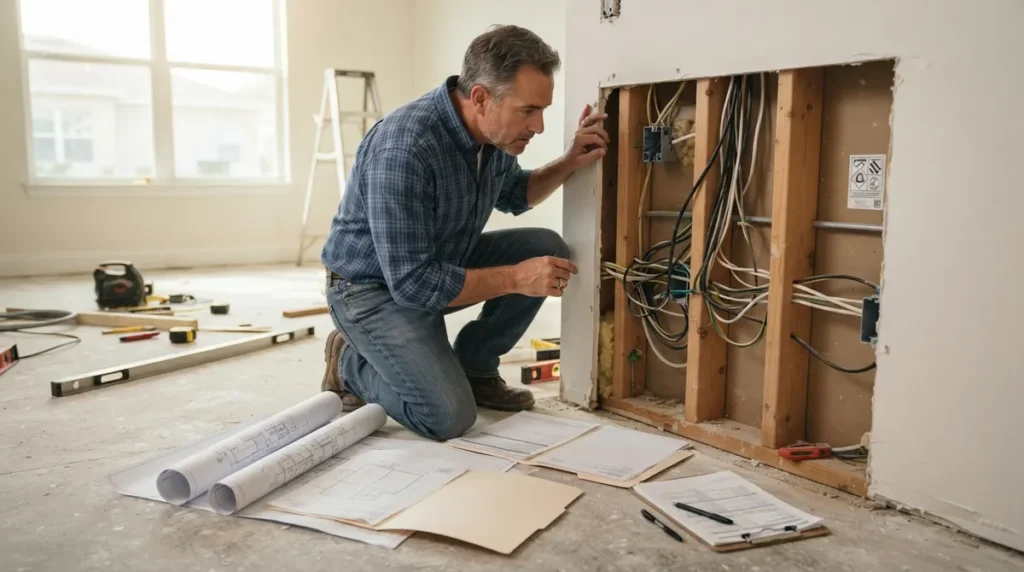
Here's the part nobody loves talking about: if the unpermitted work is hidden behind drywall, flooring, ceiling finishes, or poured concrete, your building department may require it to be exposed for inspection. There's no way around this if the inspector can't verify code compliance visually. It's frustrating, but it's also the whole point of the process — the state needs to confirm the work is actually safe, not just that it looks fine on the surface.
| Type of Concealed Work | Common Inspection Requirement |
|---|---|
| Electrical wiring behind walls | Partial drywall removal or camera inspection where permitted |
| Plumbing under slab or behind walls | Access panels or exposed sections at connection points |
| Structural framing under finishes | Removal of drywall or ceiling material at key structural points |
| Enclosed patios or additions | Full inspection of footing, framing, and roof-to-wall connections |
If deficiencies show up during this process, you may need corrective repairs, additional engineering documentation, or in rare cases, removal of noncompliant work before the permit can close.
Step 4: Understand the Fees — They're Not the Same as a Standard Permit
Florida Building Code section 109.4 specifically allows local building departments to charge an additional fee when construction begins before a permit is issued. This isn't a statewide flat rate — each jurisdiction sets its own calculation. That said, industry guidance commonly suggests after-the-fact permit fees can run roughly two to three times the standard permit cost, though this varies significantly by county and should always be confirmed directly with the applicable building department.
| Cost Factor | What Affects the Price |
|---|---|
| Base permit fee | Set by the local jurisdiction, based on project scope and value |
| After-the-fact penalty fee | Additional multiplier applied per FBC 109.4, jurisdiction-specific |
| Engineering or architectural fees | Required if structural or sealed drawings are needed |
| Corrective repair costs | Varies widely depending on what inspections reveal |
| Multiple inspection fees | Some jurisdictions charge per required inspection visit |
For a clearer breakdown of what to budget, our after-the-fact permit Florida cost guide walks through typical scenarios in more detail.
Step 5: File, Track, and Work Every Reviewer Comment
Once your documentation is assembled, it's time to submit. This is where a lot of well-intentioned homeowners and even contractors get stuck — not because the work itself is wrong, but because the paperwork bounces back with reviewer comments that need to be addressed precisely, in the format the reviewer expects.
- Submit the application along with all required plans and supporting documents
- Respond promptly to any requests for additional information or clarification
- Track your application status regularly, since some departments don't proactively notify you of holds
- Coordinate revisions and resubmittals quickly to avoid restarting the review clock
- Schedule required inspections as soon as the permit is issued
This is genuinely where a permitting partner earns their keep. At 1 Contractor Solutions, we track every open item across every county we serve — including Pinellas, Manatee, Broward, and Miami-Dade — so nothing sits in a queue unnoticed for weeks.
Step 6: Confirm the Permit Doesn't Leave Other Issues Unresolved
Here's something that catches people off guard: finalizing a retroactive permit doesn't automatically resolve everything. Zoning issues, floodplain requirements, fire code matters, HOA restrictions, and separate code-enforcement violations can all exist independently of the building permit itself. Getting the permit closed is a huge milestone, but it's worth double-checking that nothing else is still lingering.
If you're a realtor or buyer navigating this during a transaction, this is especially important — realtor and closing support services exist specifically to untangle these overlapping issues before they derail a sale.
Who Actually Needs to Worry About This?
Retroactive permits touch more corners of the Florida property world than people expect:
- General contractors who take over a project mid-stream and discover prior unpermitted phases
- Solar companies installing systems on roofs where prior modifications were never documented
- Realtors and buyers who uncover open or missing permits during due diligence
- Homeowners who inherited work from a previous owner or contractor
- Design professionals needing sealed drawings to legalize existing conditions
If you're a property owner in Sarasota, Tampa, St. Petersburg, or anywhere in between, chances are your county building department has handled dozens of these cases already — you're genuinely not alone.
Frequently Overlooked Details Worth Knowing
A few things people often don't realize until they're deep into the process:
- Buying a home with unpermitted additions doesn't automatically make it your legal problem to fix, but it will likely affect financing, insurance, and resale — addressing it before closing is almost always cheaper
- A retroactive permit is not an automatic stamp of approval; the completed work still has to meet current Florida Building Code standards
- Building departments can, in rare and serious cases, require demolition if the work truly can't be brought into compliance safely
- Getting a permit doesn't automatically clear a separate code-enforcement case — those are sometimes handled by entirely different departments
If any of this sounds like your situation, don't wait for a violation notice to force your hand. Reaching out early tends to go a lot smoother than reacting under pressure.
Ready to Get This Sorted?
Unpermitted work doesn't have to derail your renovation, your sale, or your sanity. With the right documentation, the right engineering, and someone who knows exactly how your local building department handles after-the-fact applications, this process is absolutely manageable — and often faster than people expect once it's in capable hands. Our team at 1 Contractor Solutions has spent more than 15 years handling exactly these situations across all 67 Florida counties, and we genuinely enjoy untangling the ones other firms turn away.
If you're dealing with unpermitted work, an expired permit, or a stop-work order threatening your project timeline, reach out and get a free quote — we respond within 30 minutes, day or night, and se habla español. You can also visit us on Google — 1 Contractor Solutions to see how we've helped other Florida property owners get back on track, or follow us on LinkedIn and follow us on Facebook for updates on Florida permitting rules as they evolve. For broader background on Florida's building code requirements, the Florida Building Commission maintains current code information worth bookmarking.
FAQs
Can I get a retroactive or after-the-fact permit in Florida?
Yes, in almost all cases you can! Florida building departments have a process for exactly this situation, though it varies a bit by county. The key is documenting the work accurately and being ready for inspections, sometimes including opening up concealed areas.
How much does a retroactive permit cost in Florida?
It depends on your jurisdiction, but expect to pay more than a standard permit fee since Florida Building Code allows an additional after-the-fact charge. Add in potential engineering fees and repairs, and costs can range from a few hundred dollars to significantly more depending on complexity.
Will I have to open walls or ceilings for an after-the-fact inspection?
Possibly, especially if the work is structural, electrical, or plumbing related and can't be verified visually. It's not anyone's favorite step, but it's how the inspector confirms everything is actually safe behind the finishes.
Does a retroactive permit resolve a Florida code-enforcement violation?
Not always automatically — the permit addresses the building code side, but a separate code-enforcement case may need its own resolution. It's worth checking with your local department to make sure both boxes get checked.
What happens if I buy a Florida home with unpermitted additions?
You'll want to address it before or shortly after closing, since it can affect insurance, financing, and future resale. The good news is that with the right documentation and a bit of patience, most situations can absolutely be legalized.
We do this work every day across all 67 Florida counties. Call (866) 314-6931 and we will tell you what your situation actually requires — including when you do not need us.
Related services
Permit Facilitation & Filing
You have a crew scheduled, a client asking for dates, and a permit sitting somewhere in a queue you cannot see. We file it, w…
See the servicePlan Review Coordination
A permit in plan review is not one queue. On a commercial project it can be six queues, each with its own reviewer, its own c…
See the serviceReady to get your permit moving?
One call tells you which jurisdiction controls your project, what it will take, and what it will cost. Most of the time we can scope it on the phone.