
Blog
6 Steps to Legalize Unpermitted Construction in Florida
Learn how to legalize unpermitted construction in Florida with six clear steps, from jurisdiction checks to as-builts, inspections, and final closeout.
Key Takeaways
-
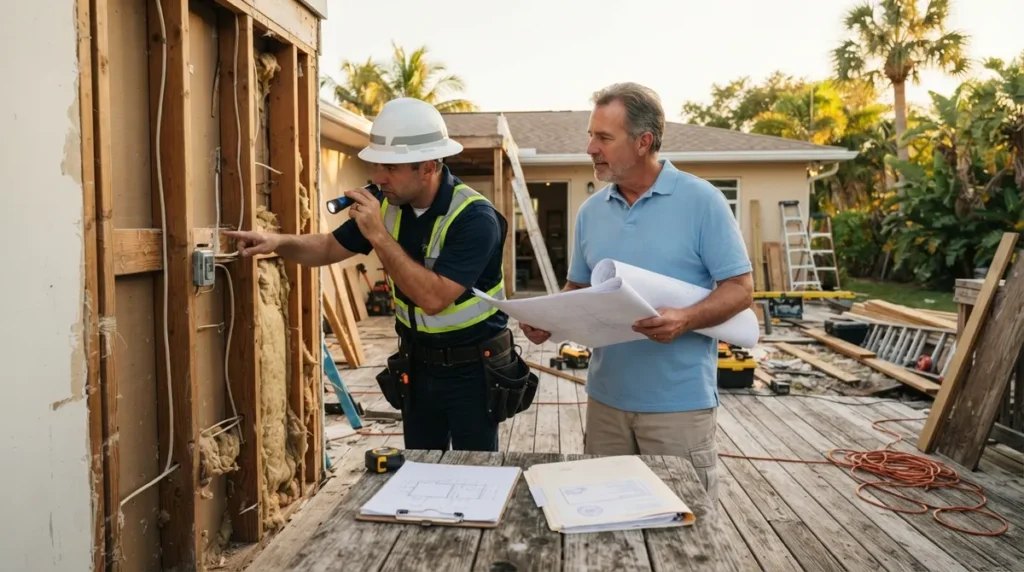
Applying for an after-the-fact permit does not legalize unpermitted work by itself; approval depends on the local building department's review, inspections, and proof of code compliance.
-
Confirm which jurisdiction controls your address (city or unincorporated county) before filing, since building departments have different rules and fees.
-
Check for open permits and enforcement cases first; submitting an application does not automatically close a violation, so resolve notices directly with the issuing agency.
-
Prepare as-built drawings, site plans, product approvals, and engineer letters where needed, since reviewers must see exactly what exists today.
-
Expect possible inspection requirements such as opening concealed areas, additional testing, or corrective work; full removal is less common but possible if compliance cannot be shown.
-
Budget based on the local fee schedule, which often adds charges for work begun without a permit, and verify current figures with the agency since Florida sets no statewide fee multiplier.
Let's start with some good news: if you've discovered unpermitted work on your Florida property, you are far from alone, and there is usually a path forward. Maybe a prior owner finished the garage without paperwork. Maybe a contractor vanished before the final inspection. Maybe a buyer's inspector flagged something right before closing. Whatever the story, take a deep breath. Thousands of Floridians have been exactly where you are.
The goal of this guide is simple. We want to show you how to legalize unpermitted construction in Florida in six clear steps, without the panic. You will learn who decides what, what paperwork tends to be required, and where people commonly trip up. One important note up front: applying for an after-the-fact permit does not legalize the work by itself. Approval depends on your local building department's review, inspections, and proof that the work meets code.
Whether you are a homeowner, a general contractor, a solar installer, or a real estate professional, these steps apply to you. Let's dig in.
Why Unpermitted Work Matters in Florida
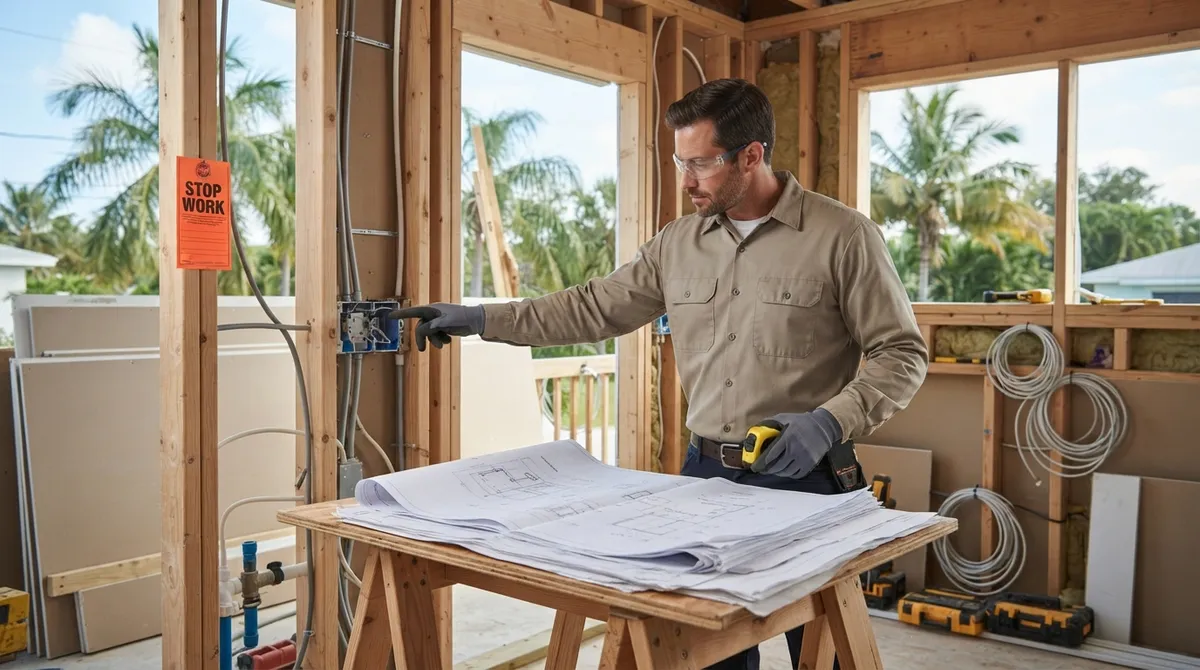
Florida Statutes §553.79 generally requires a permit from the appropriate state or local enforcing agency before covered construction, alteration, repair, or demolition begins. When work skips that step, nobody has verified that it is safe, structurally sound, or code-compliant.
That gap can show up later in some very inconvenient ways:
- Stalled closings: Lenders, title companies, and buyers often want clean permit history.
- Code enforcement action: A notice of violation or stop-work order can arrive if the work is spotted.
- Insurance headaches: Unverified work can complicate claims.
- Safety risks: Hidden wiring, plumbing, or framing issues are exactly what inspections are designed to catch.
The good news is that many jurisdictions offer a route to review existing work. It is often called an after-the-fact permit or a retroactive permit. Our guide on unpermitted work in Florida and how to legalize it offers more background if you want to go deeper.
Step 1: Identify the Correct Jurisdiction
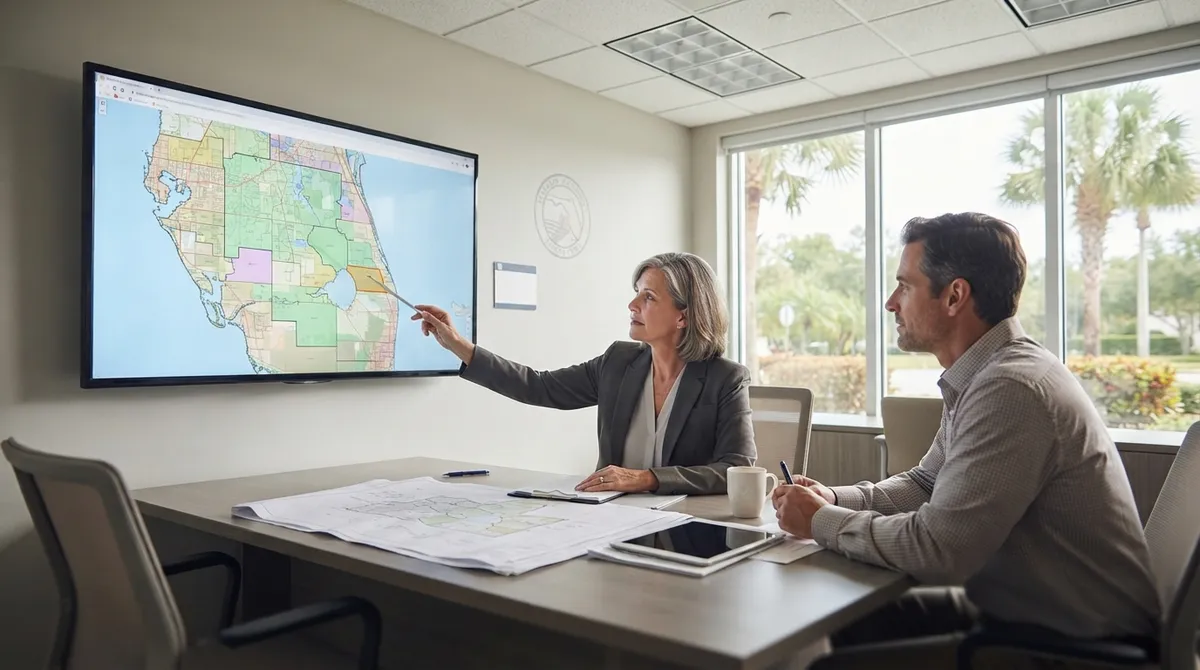
This sounds basic, but it trips up more people than you would expect. Your property might sit in a city, or it might sit in unincorporated county territory, and the two have different building departments with different rules. Near city lines, the answer is not always obvious.
Before you do anything else, confirm which agency actually controls your address. The local building department with jurisdiction over the property determines which permits and approvals apply. You can use our building department lookup tool to point you in the right direction, and our guide to which Florida jurisdiction reviews my project walks through the confusing edge cases.
Questions to Ask the Building Department
- Does this jurisdiction accept after-the-fact (retroactive) permit applications for my type of work?
- Is there an open code-enforcement case or violation on the property?
- What application forms, drawings, and reports are required?
- What are the current fees, including any added charges for work begun without a permit?
- What inspections will be required, and will any concealed work need to be exposed?
Write down the answers and the name of whoever you spoke with. You will thank yourself later.
Step 2: Check for Open Permits and Enforcement Cases
Before you file anything new, find out what is already on record. An old expired permit or an open violation changes your strategy completely.
Here is why this matters. Submitting an application does not automatically close an enforcement case. If a notice of violation has been issued, you need to resolve it directly with the issuing agency. Treat the permit application and the enforcement matter as two related but separate tracks.
Our open permit search tool can help you spot lingering records. If you do find an expired permit tied to the same work, you may be looking at a different fix than a brand-new application. Our article on expired permits versus after-the-fact permits explains how to tell which situation you are in.
If a notice has already landed in your mailbox, do not ignore it. Our post on how to respond to a Florida unpermitted work notice lays out a calm, practical response.
Step 3: Document the Existing Conditions
Now comes the part where your paperwork does the heavy lifting. Because the work is already built, reviewers need to see exactly what exists today. That documentation is typically called as-built drawings.
A typical application may require:
- A completed permit application for the local jurisdiction
- Plans showing existing conditions (as-built plans)
- Site plans showing setbacks and property lines, where relevant
- Product approvals or manufacturer documentation for windows, doors, roofing, and similar items
- Contractor or owner-builder documentation
- Engineering or other professional reports where warranted
Requirements depend on the scope of work and on local review, so use the list as a starting point rather than a guarantee. Our as-built drawings service and site plans service cover this stage, and our guide to preparing as-builts for an after-the-fact permit is a handy checklist.
Common Documentation by Project Type
| Project Type | Typical Documentation | Often Involves |
|---|---|---|
| Room addition or enclosure | As-built floor plan, site plan, structural verification | Engineer review, setback check |
| Roof replacement | Product approvals, fastening details, roof plan | Engineer letter, inspection |
| Electrical or plumbing work | Riser or load information, fixture details | MEP review, possible testing |
| Pool, deck, or cage | Site plan, structural details, barrier information | Engineer verification |
| Solar installation | Structural and electrical documentation | Engineer letter, inspection |
Every jurisdiction has its own flavor, so always confirm with the local building department before you assume anything.
Step 4: Bring In Engineering Support Where Needed
Here is where many owners feel a flutter of worry, so let's make it friendly. When a structure was built without oversight, reviewers often want a licensed professional to verify that it is sound. That can take the form of a sealed engineer letter, field verification, or structural drawings.
Engineering support is especially common for:
- Additions, enclosures, and converted garages
- Roof framing, trusses, and tie-downs
- Retaining walls, decks, and pool cages
- Electrical and plumbing alterations
Our team handles this in house, which means that when a reviewer flags something, we can fix it without waiting on an outside consultant to call someone back. You can explore our engineering services, including structural engineering, MEP engineering, and engineer letters. Curious about the paperwork side? Our article on getting an engineer letter for unpermitted work is a great primer.
Remember, a professional can prepare and support your submission, but the local building official makes the approval decision.
Step 5: Prepare for Inspections and Possible Exposure
Inspectors need to verify what they cannot see. If framing, wiring, plumbing, or other components are hidden behind finished surfaces, the jurisdiction may ask for more.
Depending on the situation, that can mean:
- Exposing concealed work: Small openings in drywall or ceilings so the inspector can see inside.
- Additional testing: Pressure tests, electrical testing, or other verification.
- Corrective work: Fixing anything that does not meet current requirements.
- Removal and reconstruction: In cases where compliance cannot be established, some work may need to be taken out and redone.
Does that last one sound scary? It is less common than people fear, but it is a real possibility, which is why careful documentation up front pays off. Our guide on whether you will really have to demolish unpermitted work addresses that worry directly, and you can read what to expect in what happens during a Florida after-the-fact site inspection.
How Inspection Outcomes Typically Play Out
| Situation | Likely Next Step |
|---|---|
| Work is visible and matches plans | Inspection passes; permit moves toward final |
| Work is concealed but verifiable by opening | Small openings made, then re-inspection |
| Work does not meet current code | Corrective work, then re-inspection |
| Compliance cannot be demonstrated | Partial or full removal, then rebuild with permit |
Some owners also ask about private providers. Depending on the jurisdiction and project, a licensed private provider may be able to perform plan review or inspections. Learn more about private provider inspections and how they differ in our article on private provider versus the building department.
Step 6: File, Respond to Comments, and Close Out
With documentation and engineering in hand, you are ready to submit. Then comes the part that feels like a conversation: plan reviewers read your package and send back comments. Do not be discouraged by comments. They are completely normal.
Here is how the final stretch usually unfolds:
- File the complete application and pay the applicable fees.
- Track the review status and watch for reviewer comments.
- Respond to every comment with revised drawings or clarifications.
- Schedule required inspections once the permit is issued.
- Pass final inspection and obtain closeout documents, such as a certificate of completion or occupancy where applicable.
Fast, thorough responses keep things moving. Our revisions and resubmittals service and plan review coordination exist for precisely this stage. If your jurisdiction sends back a correction notice, our walkthrough on how to respond to a correction notice after the fact can help.
Closeout matters just as much as approval. If the work affects occupancy, you may also need a certificate of occupancy.
What Does It Cost?
Everyone wants a number, and we wish we could hand you one. The honest answer is that Florida law does not set one universal after-the-fact fee multiplier. Fees vary by jurisdiction, and each local agency publishes its own fee schedule and ordinances. Some charge extra for work begun without a permit, plus inspection and reinspection fees.
Your total cost typically depends on these factors:
- The local permit fee schedule and any added charges
- The size and complexity of the work
- Whether engineering or testing is needed
- Whether corrective work or exposure of concealed components is required
- Whether an enforcement case adds its own fines or fees
For a deeper look at how pricing works, see our article on after-the-fact permit costs in Florida. Always verify the current figures with the local agency before budgeting.
Who Can Help You Through the Process?
You can certainly tackle some of this yourself, especially if you are comfortable talking with building departments. Many owners, though, prefer a guide. A Florida permitting-services professional can help identify the correct jurisdiction and permit scope, assemble as-built documentation, coordinate qualified design or engineering support, respond to plan-review comments, and arrange inspections.
At 1 Contractor Solutions, we act as Florida's outsourced permitting department. We take on after-the-fact and expired permits that others decline, and we work across all 67 Florida counties. Homeowners can start with our homeowner resources, general contractors can explore our GC support, and agents with a closing on the line can see our realtor and closing support. If the clock is ticking, our urgent permit rescue page is the place to start.
We would love to hear how we have helped others, and you can visit us on Google — 1 Contractor Solutions to read what customers say. You can also follow us on LinkedIn and follow us on Facebook for Florida permitting tips. For the statutory background, the Florida Legislature publishes the text of Florida Statutes §553.79 online.
Quick Recap of the Six Steps
- Identify the correct jurisdiction for your property.
- Check for open permits and enforcement cases.
- Document existing conditions with as-built drawings.
- Bring in engineering support where needed.
- Prepare for inspections and possible exposure of concealed work.
- File, respond to comments, and close out the permit.
Ready to Get Your Property Squared Away?
Legalizing unpermitted construction in Florida can feel like a mountain at first, but taken one step at a time, it is a very climbable hill. You do not have to carry the load alone. Whether you inherited the problem or created it with the best of intentions, the right plan and the right team can turn uncertainty into an approved, closed permit.
Ready for a friendly hand? Get a free quote from our team today. We respond within 30 minutes, day or night, and se habla español. Let's get your project permitted, approved, and moving.
FAQs
Can I get an after-the-fact permit for unpermitted construction in Florida?
Often, yes. Many local building departments review unpermitted work through an after-the-fact (retroactive) permit application. Just remember that applying does not legalize the work on its own, since approval depends on the jurisdiction's review, inspections, and proof of code compliance.
Will I have to open walls or ceilings for an inspection?
Possibly. If framing, wiring, plumbing, or other components are hidden and cannot be verified, the jurisdiction may require small openings, additional testing, or corrective work. In cases where compliance cannot be established, removal and reconstruction may be required.
Does applying for an after-the-fact permit clear a code-enforcement violation?
Not automatically. A notice of violation or stop-work order is handled by the agency that issued it, so you should resolve it directly with them. Submitting a permit application is usually an important step, but it does not by itself close an enforcement case.
How much does an after-the-fact building permit cost in Florida?
It varies. Florida law does not set one statewide after-the-fact fee multiplier, so each city and county publishes its own fee schedule and ordinances. Check the current local schedule, and factor in possible engineering, testing, and corrective work.
Who decides whether my unpermitted work gets approved?
The local building official makes the approval decision, not a permitting service provider. A Florida permitting professional can help you assemble as-built documentation, coordinate engineering, respond to review comments, and schedule inspections to give your application its best chance.
We do this work every day across all 67 Florida counties. Call (866) 314-6931 and we will tell you what your situation actually requires — including when you do not need us.
Related services
Permit Facilitation & Filing
You have a crew scheduled, a client asking for dates, and a permit sitting somewhere in a queue you cannot see. We file it, w…
See the servicePlan Review Coordination
A permit in plan review is not one queue. On a commercial project it can be six queues, each with its own reviewer, its own c…
See the serviceReady to get your permit moving?
One call tells you which jurisdiction controls your project, what it will take, and what it will cost. Most of the time we can scope it on the phone.