
Blog
DIY vs. Pro Help: Florida Code Compliance Showdown
Comparing DIY permitting versus professional help for Florida building department code compliance, timelines, and approvals.
Key Takeaways
-
Florida requires permits before covered building work begins (new construction, alterations, repairs, demolition), and getting a permit doesn't guarantee compliance—the completed work must follow approved plans and pass all required inspections.
-
For complex projects involving structural changes, additions, solar installations, or after-the-fact permitting, professional permitting services significantly reduce delays and rejection risks compared to DIY filing with building departments.
-
Identify your exact building department jurisdiction before submitting plans, as authority isn't always obvious near county or city lines; use jurisdiction lookup tools to confirm which department reviews your specific address.
-
Florida operates under the 8th Edition (2023) Florida Building Code effective December 31, 2023, but local amendments vary by county and city, so verify applicable rules with your specific building department.
-
Plan drafting errors are common in DIY submissions without licensed design professionals; experienced permitting partners with in-house drafting and sealed engineering can resolve reviewer comments immediately, shaving weeks off timelines.
-
After-the-fact permitting requires careful documentation and often structural review; building departments scrutinize these applications closely, making professional guidance essential to avoid fines or demolition orders.
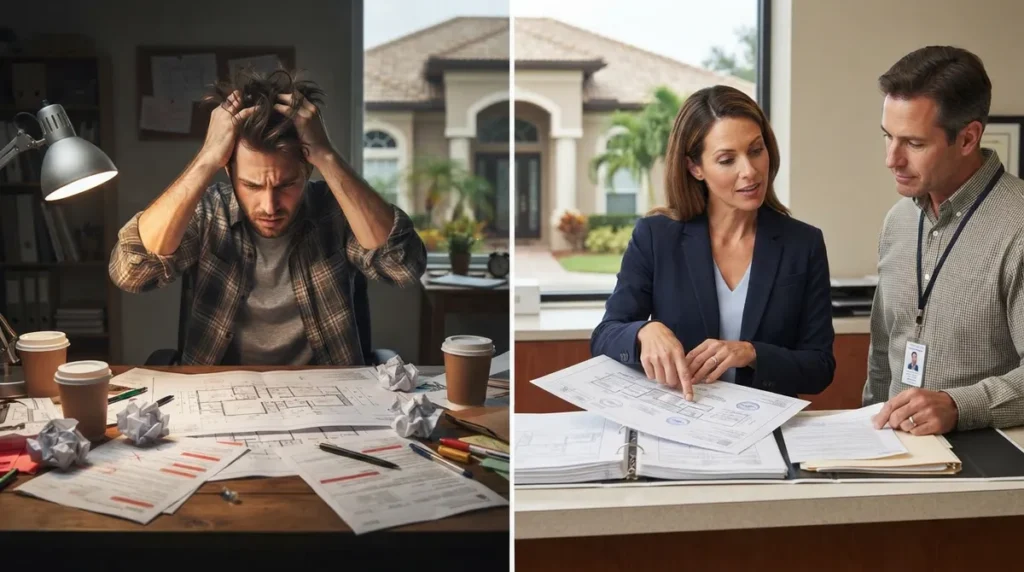
Picture this: you just bought a fixer-upper in Bradenton, or maybe you're a general contractor juggling five projects across three counties, and suddenly you're staring down a stack of building department paperwork wondering if you're actually compliant or just hoping for the best. You're not alone. Every single day, homeowners, contractors, solar installers, and real estate professionals across Florida ask the same question: should I handle code compliance with my local Florida building department myself, or bring in a permitting professional? Grab a cup of coffee, because we're about to break this down together, friend to friend.
Code compliance isn't just a box to check. It's the difference between a smooth project and a nightmare that stalls your closing, triggers a stop-work order, or leaves you personally liable for unpermitted work. So let's compare the DIY route against working with a dedicated Florida permitting service, and figure out which path actually gets you to the finish line faster (and with fewer gray hairs).
What Code Compliance With a Florida Building Department Actually Means
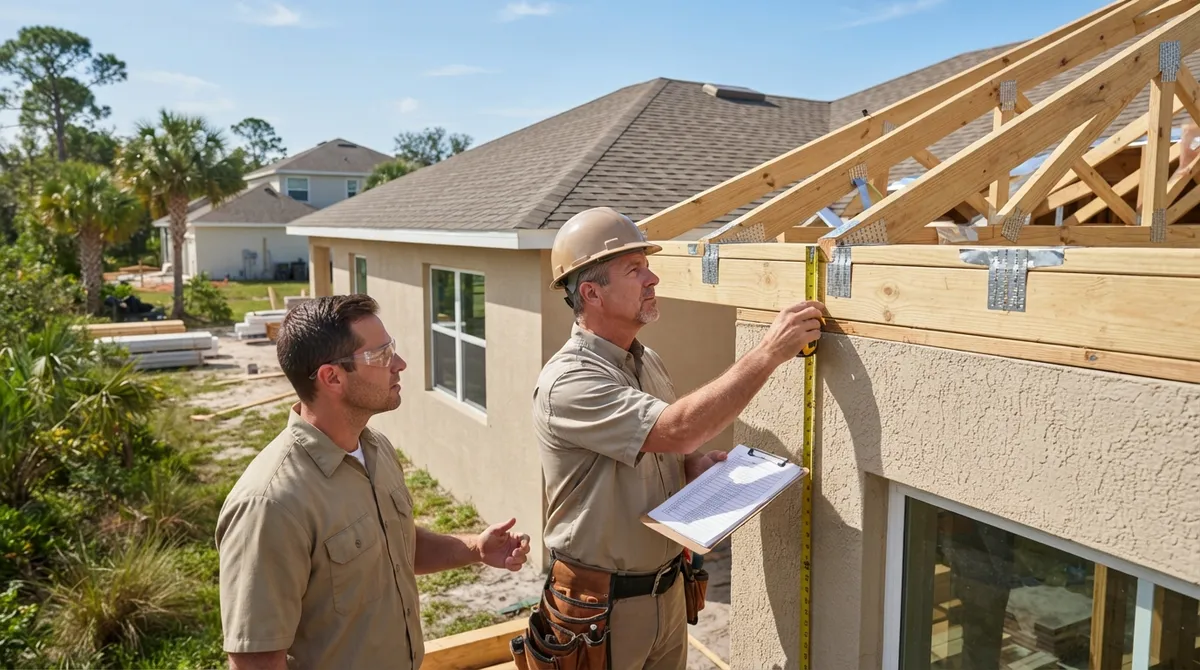
Let's start with the basics, because honestly, a lot of confusion begins right here. In Florida, building-code compliance is administered primarily by your local building department or another designated enforcing agency. That department reviews your permit application and plans, issues the permit, and either conducts or arranges the required inspections.
Florida Statutes § 553.79 generally requires a permit before covered building work begins, whether that's new construction, an alteration, a repair, or a demolition. The statute also requires plan review before a permit gets issued, unless a specific exception applies. And here's a detail people often miss: getting a permit doesn't automatically mean your project is compliant. The completed work has to follow the approved plans and permit conditions, and you still need to pass every required inspection as construction moves forward.
As of December 31, 2023, Florida operates under the Florida Building Code, 8th Edition (2023), according to the Florida Building Commission. But local amendments can vary, so it's always smart to confirm with your specific county or city which edition and local rules apply to your project.
The DIY Approach: Going Straight to Your Local Building Department
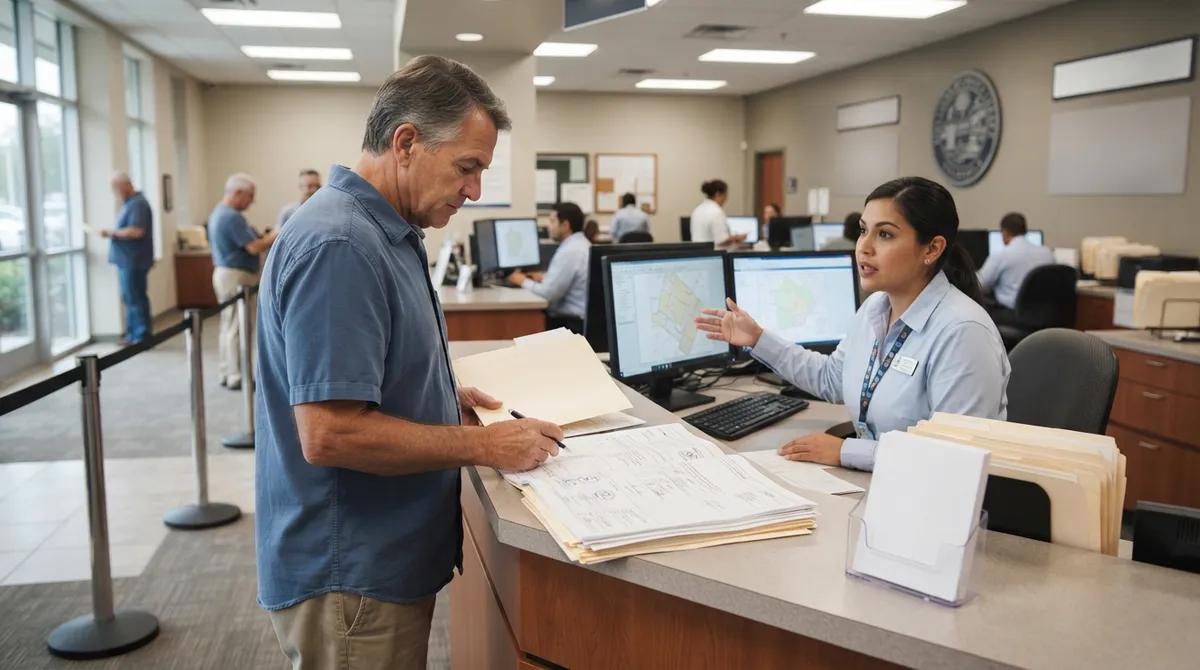
There's something admirable about wanting to handle things yourself. Maybe you're a hands-on homeowner in Sarasota planning a lanai addition, or a small contractor who's done this a hundred times. Going direct to the building department can work, especially for simple, well-defined projects.
Pros of Handling It Yourself
- No third-party fees, which keeps your budget tighter on small jobs
- Direct communication with the reviewer, so nothing gets lost in translation
- You control the pace, at least in theory (more on that below)
- Good learning experience if you plan to do more projects down the road
Cons of Handling It Yourself
- You're responsible for knowing which jurisdiction actually reviews your project, which isn't always obvious near county or city lines
- Plan drafting mistakes are common if you're not a licensed design professional
- Reviewer comments can pile up, and each round of revisions adds weeks
- You still need sealed engineering documents for many structural or MEP scopes
- Scheduling inspections and tracking status becomes a part-time job
For a straightforward permit, like a water heater swap, DIY filing might make sense. But for anything involving structural changes, additions, solar installations, or after-the-fact permitting, the complexity climbs fast.
The Professional Route: Working With a Florida Permitting Service
This is where a company like 1 Contractor Solutions steps in. They're not a construction contractor and they don't replace your local building official's authority. Instead, they act as your outsourced permitting department, handling permit facilitation and filing, plan drafting, engineering, and everything in between.
What a Permitting Partner Actually Does
- Identifies exactly which building department has jurisdiction over your address
- Prepares or reviews plans, including architectural drafting and sealed structural engineering drawings
- Files the application and tracks it through every stage of review
- Responds to reviewer comments and manages revisions and resubmittals
- Coordinates inspections and closeout, including Certificate of Occupancy or Certificate of Use paperwork
The big advantage here is that firms with in-house drafting and engineering can fix reviewer flags immediately instead of waiting on an outside consultant to call back. That alone can shave weeks off a timeline, which matters a lot if you're a solar company trying to hit installation deadlines or a realtor with a closing on the calendar.
Side-by-Side Comparison: DIY vs. Professional Permitting Help
| Factor | DIY With Building Department | Professional Permitting Service |
|---|---|---|
| Time Investment | High, especially tracking and follow-up | Low, service handles tracking and communication |
| Plan Drafting Accuracy | Risk of errors without licensed professional | In-house sealed drawings reduce rejection risk |
| Jurisdiction Identification | Can be confusing near county/city lines | Handled as part of the service |
| Handling Reviewer Comments | You respond directly, learning curve applies | Experienced team resolves comments quickly |
| Best For | Simple, low-complexity permits | Additions, solar, commercial, after-the-fact permits |
| Cost | Lower upfront, but delays can cost more overall | Service fee, often offset by faster approvals |
Common Pain Points Each Audience Faces
Different readers have different headaches, and it helps to see yourself in these scenarios.
General Contractors
You're juggling multiple job sites and can't afford a permit sitting untouched in a queue. Tracking status across several Florida counties eats into time you'd rather spend managing crews. A dedicated general contractor permitting partner keeps every application moving so your schedule doesn't slip.
Solar Companies
Distributed energy projects need code-compliant structural and electrical documentation, and delays cost you installation slots. Solar contractors benefit hugely from faster approvals and coordinated MEP engineering that speaks the same language as local reviewers.
Real Estate Professionals
An open or expired permit can derail a closing overnight. Realtors and investors need quick permitting research to evaluate properties honestly, before a buyer walks away.
Florida Homeowners
You just want your addition or remodel approved without becoming a part-time bureaucrat. Homeowners often don't realize how much documentation is required until they're deep into the process.
Step-by-Step: How to Check Your Compliance Status Before You Build
- Confirm which building department has jurisdiction over your address using a building department lookup tool
- Search for any existing open permits tied to the property using an open permit search
- Verify which Florida Building Code edition and local amendments apply to your scope of work
- Gather required documents: site plans, structural details, and any sealed engineering drawings
- Submit your application and track every review comment carefully
- Schedule and pass all required inspections before requesting final sign-off
Skipping any of these steps is exactly how projects end up stuck in limbo, or worse, flagged for a code compliance violation.
When After-the-Fact Permitting Becomes Necessary
Sometimes work happens before a permit is pulled, whether by a previous owner or an overeager contractor. Florida does allow a path to legalize this through after-the-fact and expired permit processes, but it requires careful documentation and often a structural review. This is one area where DIY becomes genuinely risky, since building departments scrutinize these applications closely, and mistakes can trigger fines or demolition orders.
A Quick Look at Recent Permitting Trends
| Data Point | Figure | Source Context |
|---|---|---|
| Total Florida permits issued in 2025 | 904,693 | Down 6.1% from 2024 (Shovels analysis) |
| New-construction permits in 2025 | 63,066 | Up 3.8% year over year |
| Current Florida Building Code edition | 8th Edition (2023) | Effective December 31, 2023 |
These numbers tell a story: fewer overall permits but more new construction, which suggests building departments are handling a shifting mix of project complexity. That's exactly the environment where having an experienced partner managing your submission pays off.
Which Option Wins? It Depends on Your Project
Here's the honest truth. If you're pulling a simple permit for a like-for-like water heater or a minor repair, going straight to your local building department can absolutely work, especially if you're comfortable navigating forms and waiting out review cycles. But once your project involves structural changes, additions, solar installations, commercial scope, or anything with a complicated permit history, professional help usually wins on time saved, accuracy, and peace of mind.
Companies serving Florida's 67 counties, including areas like Manatee County, Hillsborough County, and Pinellas County, exist specifically because permitting complexity has grown alongside code updates and local amendments. Whether you're in Bradenton, Tampa, or St. Petersburg, having someone who already knows the local building department's quirks can save you real time.
Frequently Considered Questions Before You Decide
Before wrapping up, it's worth noting that many readers also wonder about specific document requirements or what happens after a plan review fails. If your application gets rejected, don't panic. It's a normal part of the process, and understanding why permits get rejected can help you avoid repeat mistakes on future submissions.
For design professionals who'd rather focus on creative work than paperwork, outsourcing drafting only services or full plans and engineering support can be a smart move. It frees up your time while still producing approval-ready documents.
Final Thoughts: Building Confidence, One Permit at a Time
Look, navigating code compliance with a Florida building department doesn't have to feel like solving a puzzle blindfolded. Whether you choose to go it alone or bring in professional support, the goal is the same: a safe, legal, and properly documented project that won't come back to bite you later. We genuinely believe that with the right information (and maybe the right team), you can get there with far less stress than you expect.
If you'd rather skip the guesswork and let experienced professionals handle your plan review coordination, permit tracking, and sealed engineering drawings, reach out and get a free quote today. You can also see what real clients say by checking out 1 Contractor Solutions on Google, or connect with the team through LinkedIn and Facebook for updates on Florida permitting news. For more official guidance, the Florida Building Commission's code information system and the Jacksonville Building Inspection Division are both solid resources worth bookmarking. Whatever path you choose, here's to smoother permits and projects that actually get built.
FAQs
How do I check whether my project needs a building permit in Florida?
Great question, and one we hear all the time! Generally, if you're constructing, altering, repairing, or demolishing anything covered under Florida Statutes § 553.79, you'll need a permit. Your safest bet is checking directly with your local building department, or using a jurisdiction lookup tool to confirm before you start swinging a hammer.
Which Florida Building Code edition applies to my permit application?
As of right now, Florida operates under the 8th Edition (2023) of the Florida Building Code, which took effect December 31, 2023. That said, local amendments can vary by county or city, so it's always worth double-checking with your specific building department before finalizing plans.
What happens if my Florida permit application fails plan review?
Don't worry, this happens more often than you'd think, and it's not the end of the world! You'll typically receive specific comments about what needs correcting, and you'll have the chance to revise and resubmit. Working with a team experienced in resubmittals can speed this process up significantly.
Can I get a permit for work that was already completed without one in Florida?
Yes, absolutely, Florida allows for after-the-fact permitting in many cases! It does require careful documentation and sometimes a structural review, but it's a legitimate path to legalize existing work. We always recommend getting professional guidance here since building departments scrutinize these applications closely.
Can a Florida permitting service submit plans and manage building department comments for me?
They sure can, and honestly, that's exactly what makes life easier for busy contractors and homeowners alike! A good permitting partner handles filing, tracks your application, and responds to reviewer comments on your behalf, though they'll always work within the authority of your local building official.
We do this work every day across all 67 Florida counties. Call (866) 314-6931 and we will tell you what your situation actually requires — including when you do not need us.
Related services
Permit Facilitation & Filing
You have a crew scheduled, a client asking for dates, and a permit sitting somewhere in a queue you cannot see. We file it, w…
See the servicePlan Review Coordination
A permit in plan review is not one queue. On a commercial project it can be six queues, each with its own reviewer, its own c…
See the serviceReady to get your permit moving?
One call tells you which jurisdiction controls your project, what it will take, and what it will cost. Most of the time we can scope it on the phone.